AI Manages $30K Ad Budget, Outperforms Human Agency

AI system Computer fully automated $30K in Meta ads, delivering 3.5x revenue and a 63% ROAS lift, beating a human agency.
The article presents a case in which an AI system called Computer managed $30,000 in Meta ad spend for the seafood brand Get Maine Lobster. The system automated creative analysis, ad production, and media buying into an end-to-end closed loop. Results surpassed the brand's existing agency, with revenue reaching 3.5x and ROAS rising 63%. The article notes that this challenges the traditional agency model reliant on human optimizers and established strategies, showing that AI can optimize in real time at finer granularity. For small and medium advertisers, AI tools may reduce dependence on expensive agencies; for large brands, human-AI collaboration may become a new direction. However, the case comes from a single brand and platform, and technical details and long-term effects remain to be verified.
According to a Twitter user's post, an AI system called Computer managed $30,000 in Meta ad spend for the seafood brand Get Maine Lobster, and the results not only beat the brand's existing agency but also delivered 3.5x revenue growth and a 63% ROAS improvement. This case reveals the potential of AI in automating the entire ad delivery workflow.

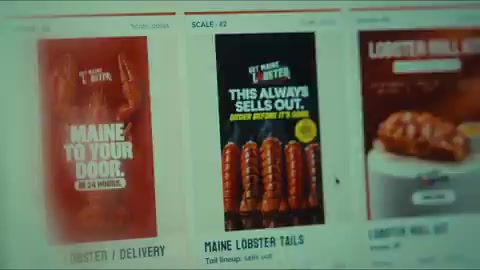
Full-Workflow AI Automation in Ad Delivery
Computer's core capability lies in automating all three key stages of ad operations—creative analysis, ad production, and media buying. Traditionally, these tasks are divided among human teams or agencies and involve a large amount of repetitive judgment and manual work. Driven by algorithms, Computer can analyze creative performance in real time, generate new ad assets, and dynamically adjust bids and budget allocation.
This end-to-end automation means advertisers can respond to market changes more quickly and reduce human delays and subjective bias. According to the person who shared the case, Computer managed $30,000 in ad spend, and under the same conditions its results were significantly better than the brand's usual advertising strategy.
The Meta ad auction mechanism is the premise for understanding this case. Meta uses a real-time bidding (RTB) model: when a user opens the app, the system convenes advertisers to bid within milliseconds and decides which ad to show and calculates the actual charge based on signals such as bid, estimated click-through and conversion rates, and ad quality. Therefore, the core advantage of an automated system is that it can adjust bids and audience combinations at high frequency and fine granularity. Traditional optimizers are limited by manpower and time and usually optimize on a daily or weekly basis, while algorithms can continuously experiment across dimensions such as budget, audience, and placement, capturing optimization opportunities that humans find hard to cover.
The division of labor among creative analysis, ad production, and media buying is the classic three-stage model of ad operations. Creative analysis is responsible for identifying which assets, copy, and visual elements drive conversions; ad production is responsible for producing and iterating assets at scale; media buying is responsible for allocating budgets, setting audiences, and bidding on the platform. In the past, these three stages were handled separately by creative teams, design production, and media optimizers, and information transfer lagged. End-to-end automation connects these three points into a closed loop: the system directly generates new assets based on creative performance data and immediately puts them into media buying tests, shortening the "discover—produce—deliver" cycle. This is also the structural reason why AI systems can quickly open up a performance gap.
Performance Comparison: 3.5x Revenue and a 63% ROAS Increase
Compared with Get Maine Lobster's original ads, Computer delivered 3.5x revenue and 63% higher ROAS. ROAS (Return on Ad Spend) is the core metric for measuring advertising efficiency, and a 63% increase means that every dollar of ad spend brings in significantly more revenue.
This result directly challenges the effectiveness of the traditional agency model. In the advertising industry, agencies usually rely on experienced optimizers and established delivery strategies, but AI systems can perform real-time optimization at a finer granularity and may discover optimization opportunities that humans find hard to detect.
ROAS (Return on Ad Spend) is calculated as: revenue generated by ads ÷ ad spend. For example, if $10,000 in spend brings in $40,000 in revenue, ROAS is 4, which can also be expressed as 400%. The "63% higher ROAS" in the article refers to the relative increase, meaning the new ROAS is about 1.63 times the original ROAS, not an absolute increase of 63 percentage points. ROAS differs from ROI (return on investment): the former only measures the ratio of ad revenue to ad spend and does not deduct product costs, operating expenses, and so on. Therefore, high ROAS does not equal high profit, and evaluation should also combine gross margin and customer acquisition cost for a comprehensive judgment.
The Outlook for AI Applications in Advertising
Although this case comes from a single brand and a single platform (Meta), it provides strong evidence for AI applications in marketing. As generative AI and reinforcement learning technologies mature, stages such as ad creative production, audience targeting, and budget allocation are gradually being taken over by AI.
For small and medium-sized advertisers, AI tools may reduce reliance on expensive agencies and provide more cost-effective options. For large brands, collaboration between AI and human teams may become a new direction to explore.
At present, the detailed technical details and long-term effects of this case have not been made public, but it is already enough to prompt the industry to pay further attention to AI-driven ad operations.
(Note: This article is based on publicly shared content; please refer to official information for specific data and results.)
Related articles
 Tech Frontiers
Pushing the Limits of Extreme Sudoku on a 16GB GPU: Insights from Depth and Flow Matching
A researcher trained a 16.54M-parameter model on a 16GB GPU to solve extreme Sudoku, finding effective depth breaks the 60% plateau and flow matching with improved sampling pushes accuracy past 99% with ~50× lower layer-evaluation budget.
 Tech Frontiers
AI Agent Approval Workflows: Why Human Confirmations Always Get Mindlessly Clicked
Why do AI agent approval workflows always get mindlessly clicked? A Reddit discussion shows that separating rules from keys, low-frequency high-risk approvals, and GitHub Environments-style gates are the keys to effective approvals.
 Tech Frontiers
MuJoCo: An Analysis of DeepMind's Open-Source General-Purpose Physics Simulator
An in-depth analysis of Google DeepMind's open-source physics simulator MuJoCo: high-performance C++ kernel, MJCF modeling format, contact solving principles, MJX GPU acceleration, and robot reinforcement learning use cases.