AI's New Species FDE in Practice: Core Responsibilities and Career Guide

FDE is a forward deployed engineer connecting AI capabilities with business systems, with the core being engineering implementation.
The article explores FDE (Forward Deployed Engineer), an emerging role in the AI era, whose core value lies in truly installing large model capabilities into business systems rather than leaving them at the demo stage. Using Instructor Li's experience and the "Ma's Learning Assistant" agent case, it summarizes FDE responsibilities as business requirement translation, engineering integration, and on-site debugging and iteration, clarifies boundaries with algorithm, backend, and product roles, and emphasizes a "T-shaped" skill structure. It also covers interview focus areas and career preparation advice.
What Is an FDE? The Forward Deployed Engineer in the AI Era
FDE (Forward Deployed Engineer) is emerging as a key role in the wave of large model deployment. It is neither a pure research position nor traditional backend development, but rather a bridge between the customer site and engineering implementation. Instructor Li has nearly seven to eight years of AI industry experience, having served as a core business lead at a leading domestic AI company and a biometrics firm, where he led the construction of projects such as facial recognition and fingerprint recognition, and has been involved in multiple AI application domains including finance and banking. In his view, the core value of an FDE lies in truly "installing" AI capabilities into business systems, rather than leaving them at the demo stage.
To intuitively illustrate how FDEs work, the livestream showcased an agent called "Ma's Learning Assistant." It is not an ordinary chat window, but one that has already been integrated with the learning platform's Q&A system and course resources. When a user asks "I want to learn FDE—are there corresponding courses?" the agent can retrieve similar Q&As within the platform and jump to the relevant links. This ability to stitch AI answers together with backend business systems is a microcosm of an FDE's daily work—modifying the learning platform's backend logic so that the agent doesn't just "talk" but can also "act."
Three Core Responsibilities: From Requirement Translation to System Integration
Drawing on the livestream demo and Instructor Li's project experience, an FDE's responsibilities can be summarized at three levels. The first is business requirement translation. Clients often cannot articulate what AI can do, so the FDE needs to break down vague business pain points into implementable technical solutions. The second is engineering integration. Like "Ma's Learning Assistant," the FDE connects large model capabilities to existing platforms, handling engineering details such as retrieval augmentation, similarity matching, and link redirection, ensuring that AI output is consistent with business data flows. The third is on-site debugging and iteration. In the livestream, Instructor Li mentioned a browser redirection issue that arose during local mapped-domain debugging—such on-site environment differences are the norm that FDEs must face, requiring rapid diagnosis and alternative solutions.

These three responsibilities determine that an FDE needs both full-stack development capability and product thinking plus customer communication skills. Unlike pure algorithm roles that pursue model metrics to the extreme, FDEs focus more on "whether it can be used, whether it works well, and whether the business accepts it."
Retrieval-Augmented Generation (RAG) is the technical paradigm most commonly used by FDEs in engineering integration. Its basic idea is: rather than relying on knowledge memorized in model parameters, retrieve relevant snippets from external knowledge bases (such as course documents, FAQs, business databases) when a user asks a question, then splice these snippets as context into the prompt so that the large model generates answers based on real materials. The value of RAG lies in mitigating the large model's "hallucination" problem, making answers traceable, and allowing the knowledge base to be updated at any time without retraining the model. For FDEs, the key engineering effort in RAG centers on document chunking strategies, vectorization and index construction, similarity threshold tuning, and mapping retrieval results to business links—which is precisely the technical foundation that enables "Ma's Learning Assistant" to redirect answers to course pages within the platform.
Role Division: The Boundaries Between FDE, Algorithm, Backend, and Product
In team collaboration, the FDE sits at the intersection of the algorithm team and the business team. Algorithm engineers handle model selection and performance tuning, backend engineers ensure system stability and interface standards, and product managers define functional boundaries. The FDE connects these pieces: understanding the algorithm's output format, designing backend integration solutions, and feeding technical feasibility back to product. The agent demonstrated in the livestream, which connects the Q&A system with course modules, involves coordination across retrieval logic, data mapping, and frontend redirection—something difficult for any single role to accomplish independently.

This division of labor requires FDEs to have a "T-shaped" skill set: sufficiently deep in AI application development, and sufficiently broad in business understanding and engineering collaboration. For developers looking to transition, this means not stopping at the level of calling APIs, but deeply understanding data flows, system architecture, and customer scenarios.
The T-shaped skill structure is a common metaphor in career development: the vertical stroke represents depth in a specialized field, and the horizontal stroke represents breadth of cross-domain knowledge. For FDEs, vertical depth typically lies in AI application development, including prompt engineering, RAG pipeline construction, agent orchestration, and API calls; horizontal breadth covers backend architecture, databases and permission systems, frontend interaction, and customer business logic. The point of the T-shape is that FDEs don't need to be expert-level in every direction, but must have the ability to deliver independently along the depth axis while being broad enough horizontally to understand and coordinate the languages and constraints of algorithm, backend, and product teams. A common pitfall for career switchers is being too broad horizontally but insufficient vertically, resulting in someone who can only coordinate but cannot actually deliver.
Interview and Career Guide: What to Prepare for an FDE Position
Interviews for FDE positions typically revolve around three dimensions. The first is project delivery experience: interviewers will probe how you resolved conflicts between AI capabilities and existing systems in real business settings—such as inconsistent data formats, slow API responses, and complex permission systems. The second is full-stack and integration capability, including backend development, API design, engineering implementation of Retrieval-Augmented Generation (RAG), and basic deployment and debugging skills. The third is business communication and on-site adaptability: whether you can quickly assess the boundaries of a problem at a customer site and propose executable alternatives.

In terms of career direction, demand for FDEs is concentrated in industries with intensive AI application deployment, such as education, finance, and enterprise services. When preparing for interviews, it is recommended to prepare a complete case of "integrating AI capabilities into a business system," clearly explaining requirement breakdown, technology selection, integration challenges, and final results. At the same time, maintaining hands-on practice with mainstream large model APIs, vector retrieval, and agent frameworks is more persuasive than reciting concepts.
Agent frameworks refer to a class of development frameworks used to orchestrate the collaboration of large models with tools and data sources. Their core abstractions typically include: Tool calling, enabling the model to perform retrieval, query databases, and invoke business interfaces; Memory, preserving multi-turn conversations and user context; and task planning and workflow control. FDEs often need to use such frameworks in projects to connect model capabilities to existing systems. Therefore, the "hands-on practice with agent frameworks" assessed in interviews is essentially about whether you can reliably translate model output into concrete operations on business systems and handle engineering details such as timeouts, failure retries, and result validation—not merely build a demo.
Conclusion: FDE Is the "Last Mile" of AI Deployment
The reason FDEs are called a new species of the AI era is that they fill the engineering gap between model capabilities and business value. Instructor Li's hands-on demonstration of transforming a learning platform shows that an FDE's work results in visible, usable system-level changes, rather than metric improvements in a lab. For developers, seizing the FDE role means finding a differentiated path in the AI application wave—one where you understand both technology and business.
One-line Summary
FDE is a forward deployed engineer who connects AI capabilities with business systems, with the core being engineering implementation.
Paragraph Summary
The article centers on FDE (Forward Deployed Engineer), an emerging role in the AI era, pointing out that its core value lies in truly installing large model capabilities into business systems rather than leaving them at the demo stage. Drawing on Instructor Li's industry experience and the "Ma's Learning Assistant" agent case, the author summarizes FDE responsibilities at three levels—business requirement translation, engineering integration, and on-site debugging and iteration—and clarifies the boundaries between FDEs and algorithm, backend, and product manager roles, emphasizing that FDEs need a "T-shaped" skill structure. The interview and career section notes that assessments focus on project delivery experience, full-stack integration capability, and on-site adaptability and communication, recommending that candidates prepare a complete case of integrating AI into a business system and maintain hands-on practice. The conclusion positions FDE as the "last mile" of AI deployment.
Related articles
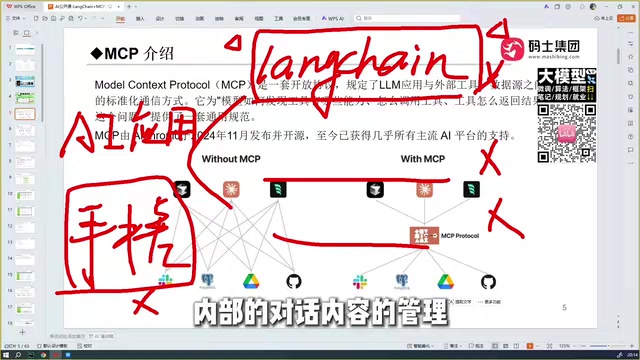
LangChain + MCP in Practice: Architecture Protocol and Agent Tool Integration
Starting from LangChain and Agent encapsulation, this article explains how the MCP protocol solves cross-model, cross-framework tool reuse, compares MCP with Function Calling, and outlines the LangChain stack and Agent development.

Codex in Practice: From Environment Setup to Skills and MCP Calls
Codex is OpenAI's AI coding assistant. This guide covers its positioning, how it compares to Claude Code, model configuration pitfalls, and practical Skills and MCP usage for beginners.
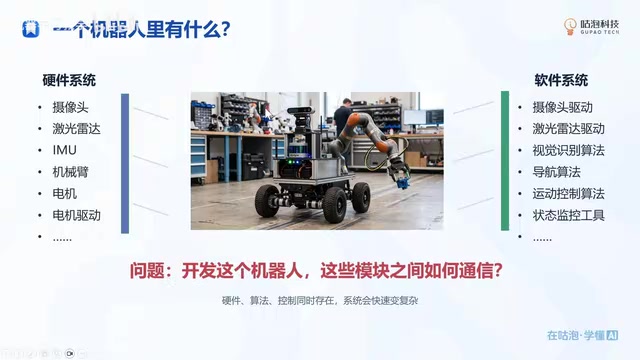
Getting Started with ROS2 Robot Development: Core Concepts and Environment Setup
This article introduces the core concepts and environment setup of ROS2 robot development, explains why ROS2 unifies module communication and facilitates collaborative work, and outlines the Turtlesim simulation experiment to help beginners get started quickly.