Codex in Practice: From Environment Setup to Skills and MCP Calls
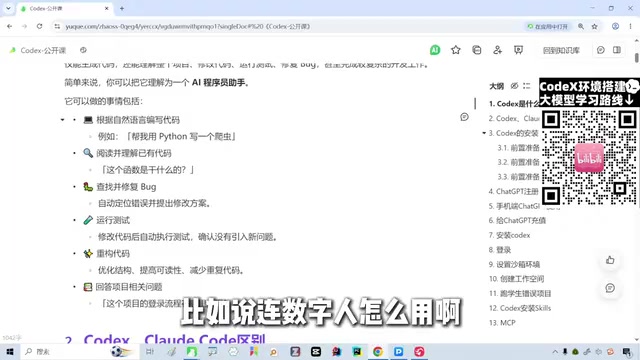
Codex is an AI coding agent that understands natural language—not knowing it could cost you in job interviews.
The article introduces Codex, OpenAI's AI coding assistant, as an agentic tool that drives code generation, testing, and operations via natural language. It notes that companies increasingly require high AI code generation rates, compares Codex with Claude Code, warns about the instability of external model setups, and explains how Skills and MCP turn Codex into a genuine productivity tool.
Codex is an AI coding assistant launched by OpenAI—think of it as a "coding buddy" that understands natural language. It's essentially an agentic tool: you issue commands, and it completes a series of development tasks for you. Today, on platforms like Douyin, even digital-human operations teams are using Codex to boost efficiency, while plenty of programmers with eight or nine years of experience still haven't touched it—a gap that can become a real liability in a job search.
What Codex Is and Why You Need to Learn It Now
Codex's core capability is driving code generation, testing, operations, and other development tasks through natural language. You don't need to master Java or HTML—just tell it "write me such-and-such feature in Java" and it produces runnable code. That means even people without a programming background can use it to get real work done.
According to observations shared by a Bilibili creator during a livestream class, many companies have already started requiring AI code generation rates above 90%, with performance penalties for falling short. Judging generation rates by lines of code isn't fair to frontend versus backend—frontend code is naturally more voluminous than backend—but the trend is clear: if you can't use these tools, you're likely to be screened out in interviews.
Agent is the key concept for understanding Codex's positioning. Traditional code completion tools (like early GitHub Copilot) only suggest the next line while you type—they're passive by nature. Agentic tools, by contrast, can autonomously plan and execute multi-step tasks: when you give a high-level instruction like "write an API with login validation in Java," it breaks that down into subtasks—creating files, writing the implementation, running tests, fixing errors—and calls on external capabilities like the file system, terminal, and browser along the way. This "plan—execute—observe—correct" loop is the dividing line between today's AI coding tools and earlier assistants, and it explains why Codex can cover testing and operations, not just code writing.
Codex vs. Claude Code: How to Choose
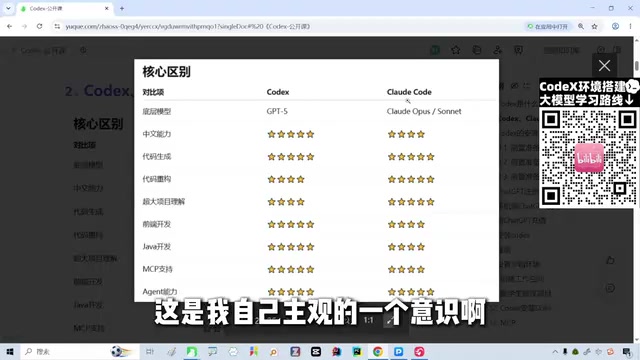
There are plenty of similar tools on the market, and Codex and Claude Code are the two most discussed. The creator's subjective take: for the same task, Codex produces somewhat better results than Claude Code. He also notes that this judgment has a shelf life and things may have changed since.
Claude Code faces serious account-ban issues, so many people try pairing it with domestic models like DeepSeekAd. But according to feedback from the creator and his students, configuring Codex with DeepSeek is extremely unstable—some get it working, others fail repeatedly, and he himself couldn't succeed after trying many tutorials. So if you have to choose between the two, he recommends going straight with Codex plus GPT, which is the most stable for everyday use.
Environment Setup and the Real Pitfalls of Model Configuration
This lesson targets students who've never used Codex, so it starts from installation. The creator's core advice: the whole point of using Codex is to use GPT—don't bother with external models.
Codex and GPT have merged, and some speculate that Codex officially restricts external models, which would explain why DeepSeek setups work inconsistently. You can try the relay stations and CC4H-type solutions circulating online, but the creator has no successful configuration experience to share. For beginners, the path of least resistance is to install Codex and stick with the official GPT channel.
Relay stations are third-party API proxy services: instead of connecting directly to OpenAI's official API, users send requests to the relay, which forwards them and bills accordingly. They exist mainly because official APIs have regional restrictions, payment barriers, or account-ban risks. Using one requires changing Codex's API Base URL to the relay's address and entering the key they issue. The risks: request contents pass through a third-party server, creating the possibility of leaked code and conversations; the relay could also shut down or throttle at any time, making the service suddenly unavailable. The CC4H solution mentioned in the article falls into this category, and the creator's failure to configure it shows how little stability these unofficial channels guarantee.
Skills and MCP: Turning Codex into a Productivity Tool
The source material doesn't go deep on concrete Skills and MCP demonstrations, but based on the course's positioning, this is the key to Codex advancing from "can write code" to "can get work done for you." Skills let Codex master the playbook for specific tasks, while MCP handles connecting external tools and data sources—only the two together can cover complete workflows like testing and operations.
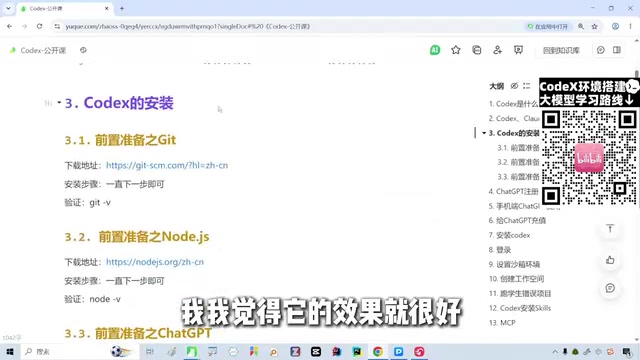
The creator repeatedly stresses one judgment: once you're proficient with Codex, it can replace a substantial chunk of productivity. This isn't to say it will replace programmers, but that those who can't use it will lose out in the efficiency race. For those who haven't started yet, getting it installed and running one complete generation matters more than agonizing over which model to choose.
MCP (Model Context Protocol) is an open protocol released by Anthropic in late 2024 to standardize how AI models connect to external tools and data sources—often described as "the USB-C port for AI applications." Before MCP, every external system you integrated (databases, Git repos, ticketing systems) required custom adapter code; with a unified protocol, any MCP-compatible client can mount existing MCP Servers directly to read database schemas, query logs, commit code, and more. For Codex, MCP determines how many external resources it can "see" and "operate on," making it the infrastructure that expands Codex from a code generator into a full workflow executor.
Skills can be thought of as packaged task playbooks: bundling the steps, prompts, scripts, and constraints for a type of task into a reusable unit, so Codex follows an established process for similar requests instead of reasoning from scratch every time. It solves the problem of unstable LLM output—the same request can produce wildly different results across generations, while a Skill locks in "how to do it," making results more controllable and more aligned with team standards. MCP governs "what it can access," and Skills govern "what process to follow"—together they form the progression described in the article, from writing code to doing the work for you.
One-line Summary
Codex is an AI coding agent that understands natural language—and not knowing how to use it could hurt you in a job search.
Paragraph Summary
The article introduces Codex, OpenAI's AI coding assistant, positioning it as an agentic tool that drives code generation, testing, and operations through natural language—even people without a programming background can use it to get real work done. Citing a Bilibili creator's observations, the author notes that some companies now require AI code generation rates above 90%, and that not knowing these tools can get you screened out in interviews. On tool choice, the creator subjectively finds Codex produces better results than Claude Code but acknowledges this judgment has a shelf life; Claude Code faces serious account-ban issues, while pairing Codex with models like DeepSeek is extremely unstable, so the path of least resistance for beginners is the official GPT channel. The article also identifies Skills and MCP as the key to advancing Codex from writing code to doing work for you, and emphasizes that getting it installed and running one complete generation matters more than agonizing over which model to choose.
Related articles

AI's New Species FDE in Practice: Core Responsibilities and Career Guide
An in-depth look at the three core responsibilities of the AI-era FDE (Forward Deployed Engineer), role boundaries with algorithm, backend, and product teams, and an interview and career preparation guide, illustrated with a real-world learning platform agent transformation case to help developers understand this key role in the last mile of AI deployment.
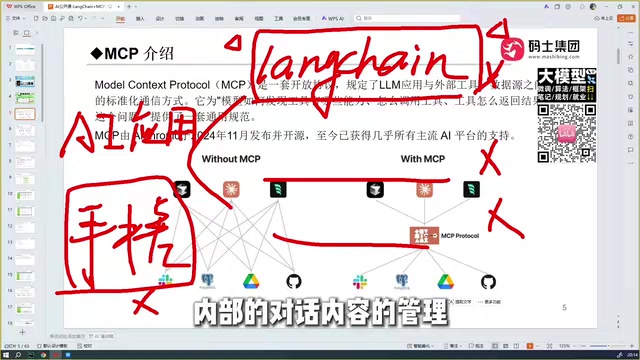
LangChain + MCP in Practice: Architecture Protocol and Agent Tool Integration
Starting from LangChain and Agent encapsulation, this article explains how the MCP protocol solves cross-model, cross-framework tool reuse, compares MCP with Function Calling, and outlines the LangChain stack and Agent development.
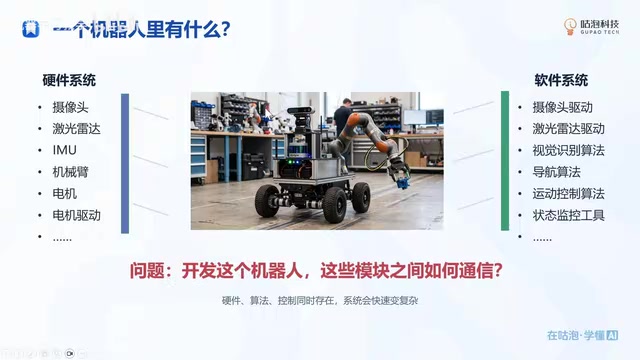
Getting Started with ROS2 Robot Development: Core Concepts and Environment Setup
This article introduces the core concepts and environment setup of ROS2 robot development, explains why ROS2 unifies module communication and facilitates collaborative work, and outlines the Turtlesim simulation experiment to help beginners get started quickly.