@ai-sdk/workflow 2.0.92 Released: Dependency Upgrades Strengthen Workflow Stability
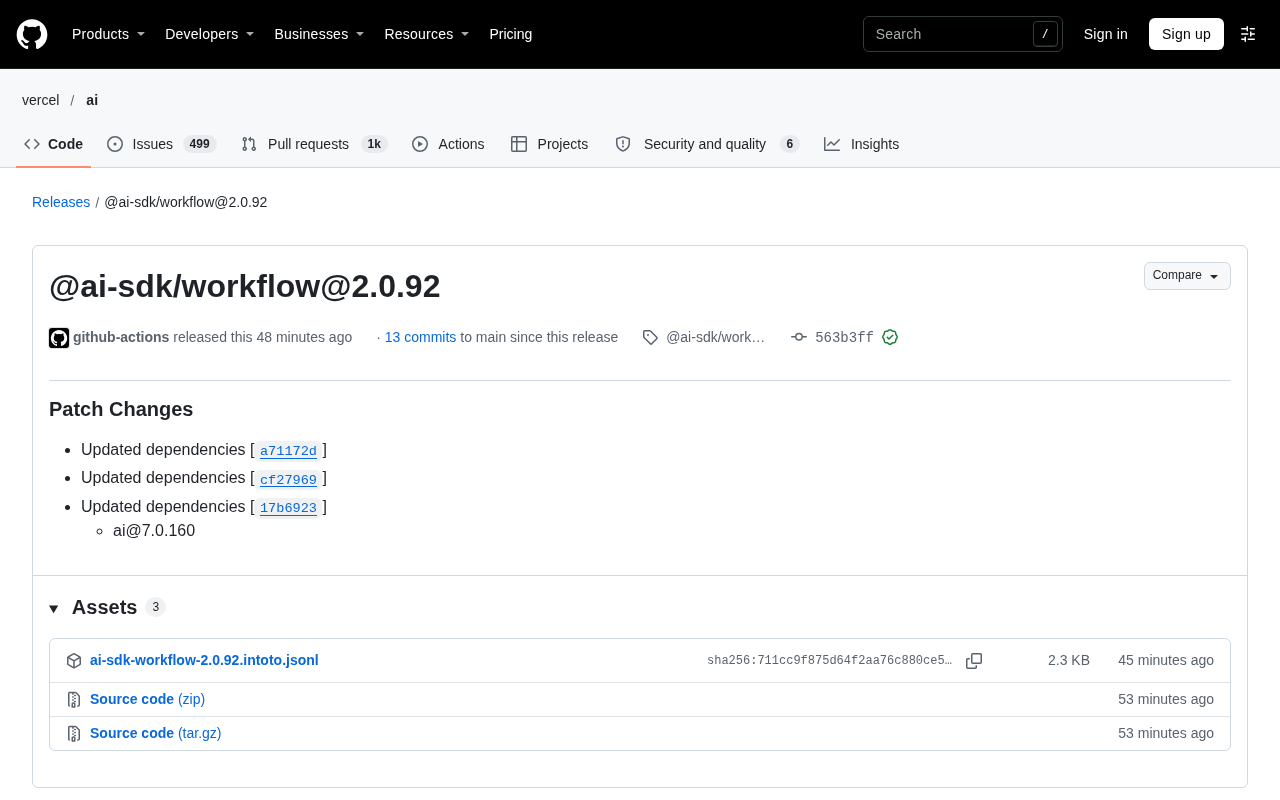
@ai-sdk/workflow releases patch version 2.0.92, synchronously upgrading the ai package to 7.0.160.
This article interprets the release of @ai-sdk/workflow 2.0.92. The version introduces no new features or breaking changes; its core action is updating dependencies and upgrading the upstream `ai` package to 7.0.160, corresponding to three dependency update commits. The 13 commits since the previous version were automatically released by the github-actions bot, with GPG signatures on commits, reflecting high iteration activity and supply chain security practices. The article analyzes how patch updates propagate in the Node.js ecosystem, notes that lockfiles may affect effective versions, and recommends a maintenance-window upgrade with version consistency checks and CI testing before deployment.
Version at a Glance: The Dependency Ecosystem Behind a Minor Release
According to the official GitHub release page, @ai-sdk/workflow has released version 2.0.92. This is a patch release (Patch Changes) whose core action is updating several dependencies and, in turn, upgrading the ai package to 7.0.160. The release was completed by the github-actions bot on 02 Nov at 19:22 and includes 13 commits since the previous version, with commit records carrying GitHub-verified signatures.
Judging from the wording of the changelog, this update introduces no new features or breaking changes and focuses on maintaining dependency consistency. For developers who rely on @ai-sdk/workflow to build AI workflows, patch releases like this typically require no application code changes, but it is still worth verifying behavioral stability in a test environment.
Breaking Down the Changes: The Ripple Effect of the Dependency Chain
The release notes list three "Updated dependencies" entries, corresponding to three commit hashes (a71172d, cf27969, 17b6923). These dependency updates ultimately manifest in the ai package version being synchronized from the previous version to 7.0.160.
The Typical Pattern of Patch Updates
In the Node.js ecosystem, toolkits like @ai-sdk/workflow often depend on the upstream ai core package for foundational capabilities such as model invocation and streaming. When the upstream package ships fixes, downstream workflow packages inherit those fixes through dependency upgrades. This update does not separately list specific fixes in the release notes, indicating that the changes mainly come from automatic propagation of upstream dependencies.
Semantic Versioning (SemVer) and the Patch Number
In the Node.js/npm ecosystem, version numbers typically follow the Semantic Versioning specification (SemVer), in the form major.minor.patch. An increment to the patch number (such as 92 in 2.0.92) conventionally indicates "backward-compatible bug fixes" and should not include new features or breaking API changes. This is precisely the basis for categorizing this release as "dependency maintenance" and concluding that "no application code changes are needed." However, SemVer is a community convention rather than an enforced rule, and unexpected behavioral changes can still occur in real projects, so CI regression testing remains a necessary step.
Dependency Propagation and Lockfiles
The upgrade of the ai package by @ai-sdk/workflow propagates to users through npm's dependency resolution mechanism. package-lock.json (or yarn/pnpm lockfiles) pins the exact versions of the entire dependency tree, so upgrading a direct dependency alone may not synchronize to the latest ai package—re-resolution or manual version bumping may be required. Understanding this helps explain why the article recommends "checking the version of the ai package in the lockfile."
Practical Impact on Developers
For teams that directly use @ai-sdk/workflow, upgrading to version 2.0.92 means gaining the cumulative fixes in upstream ai@7.0.160. If the project pins dependency versions via a lockfile, running npm update or manually bumping the version number will complete the synchronization. Since this is a patch-level change, it is not expected to break existing API invocation patterns, but it is still recommended to run workflow-related test cases in CI.
Maintenance Status as Seen from Release Cadence
13 commits corresponding to a single patch release indicates that the repository maintains a high level of iteration activity. The release was executed by an automated bot, and the commits carry GPG signature verification, reflecting a certain level of standardization in supply chain security.
The Pros and Cons of Automated Releases
An automated release process can shorten the time window from commit to user availability, but it also means changes are more granular. Developers who want to understand exactly what changed need to trace commit records or the upstream ai package's changelog. For production dependencies, it is advisable to combine the project's own regression tests when deciding whether to upgrade immediately.
GPG Signatures and Supply Chain Security
The article mentions that commits "carry GPG signature verification," which is part of software supply chain security practices. GPG (GNU Privacy Guard) signatures allow committers to sign commits or tags with a private key, and verifiers can use the public key to confirm that the commit indeed comes from the claimed author and that the content has not been tampered with. In open source projects, enabling signature verification reduces the risk of malicious commits slipping into releases after an account is compromised, and it is also a practice encouraged by supply chain security frameworks such as SLSA. The fact that the release is executed by the github-actions bot and retains signatures indicates that the repository maintains traceability in its automated processes.
Changesets and Automated Releases
The combination of "13 commits corresponding to one patch release" and "automatically released by a bot" is common in workflows that adopt tools like Changesets: contributors declare the change level in PRs, and the bot aggregates them, automatically generates the changelog, increments the version number, and publishes to npm. This explains why the release notes only list "Updated dependencies" without specific fix descriptions—the details are scattered across the changelogs of the individual upstream packages.
Upgrade Recommendations and Caveats
This update is dependency maintenance in nature and is suitable for completion within a routine maintenance window. Before upgrading, check the version of the ai package in the lockfile to confirm whether it already satisfies the project's compatibility requirements for other AI SDK components. If the project uses multiple @ai-sdk/* packages simultaneously, keeping the ai core package version consistent helps avoid issues with inconsistent type definitions or runtime behavior.
Since the release notes do not provide specific fix details, if workflow execution anomalies occur, prioritize checking whether they are caused by dependency version rollback or caching. Overall, 2.0.92 is a routine dependency synchronization update that maintains the availability of the workflow package and consistency with the upstream ecosystem.
One-line Summary
@ai-sdk/workflow releases patch version 2.0.92, synchronously upgrading the ai package to 7.0.160.
Paragraph Summary
This article interprets the release information of the @ai-sdk/workflow 2.0.92 patch version. This version introduces no new features or breaking changes; its core action is updating dependencies and, in turn, upgrading the upstream ai package to 7.0.160, corresponding to three dependency update commits. The 13 commits since the previous version were automatically released by the github-actions bot, and the commits carry GPG signatures, reflecting high iteration activity and a certain level of supply chain security standardization. The article analyzes the propagation mechanism of patch updates in the Node.js ecosystem, explains how downstream toolkits inherit upstream fixes through dependency upgrades, and points out that lockfiles may affect the actually effective versions. For developers, this is a maintenance upgrade, recommended to be completed within a routine maintenance window; before upgrading, check the consistency of the ai package version, and deploy only after running workflow tests in CI.
Related articles

Skykea Showdown: A Hilarious Variety Show Experience of a Minecraft Airship Building Competition
Skykea Showdown is a Minecraft airship building racing variety show. This article analyzes its two-phase build + hole race format, airship mod lift physics, secret mission design, and team confrontation dynamics—ideal for game content creators.
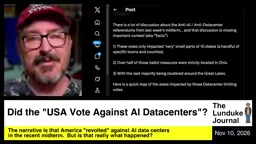
Did the US Midterms Vote No to AI Data Centers? A Map Reveals the Truth
After the US midterms, media claimed voters rejected AI data centers, but a map shows restrictive votes are concentrated in a few Ohio townships, affecting less than 1% of US towns—the national anti-AI wave is exaggerated.
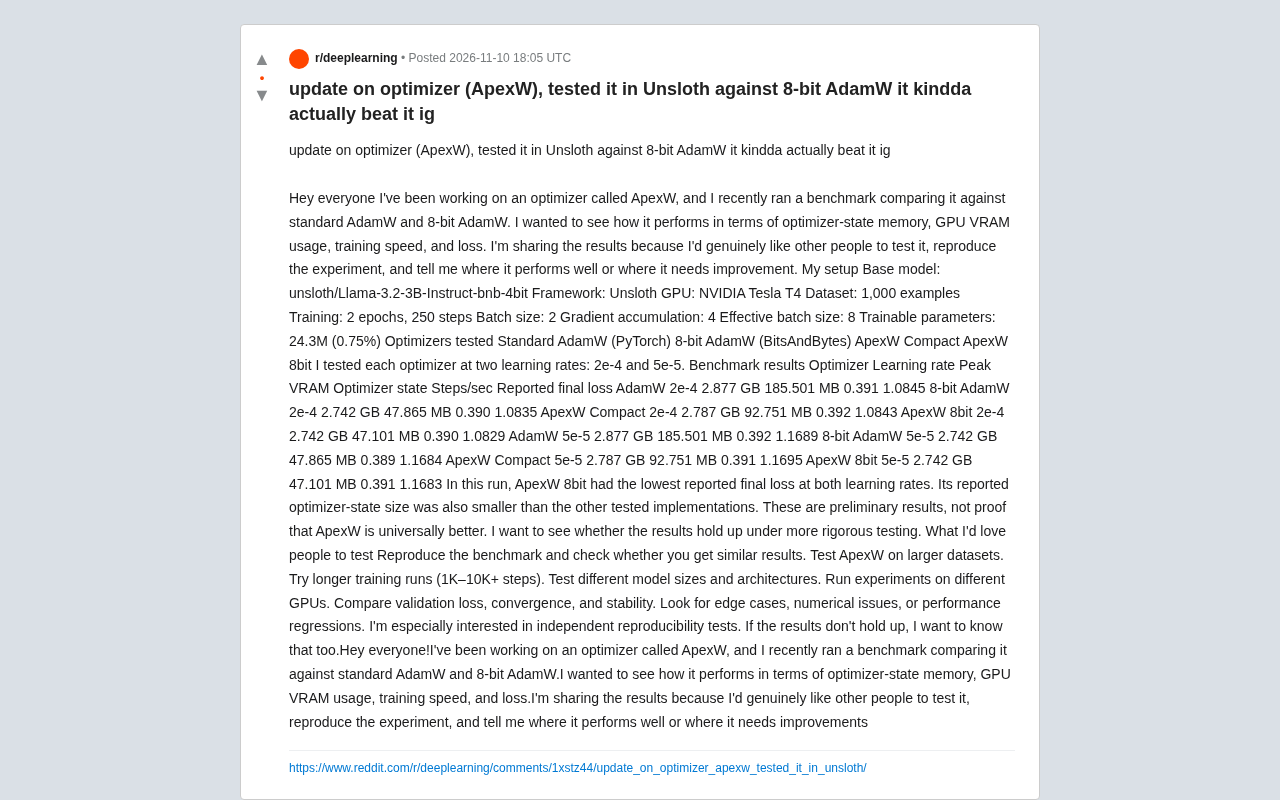
ApexW Optimizer Benchmark: Matches 8-bit AdamW in Unsloth with Lower Memory Usage
Developer shares benchmark of ApexW optimizer in Unsloth: ApexW 8bit has lower optimizer state memory (47.101 MB) and slightly better final loss than 8-bit AdamW, but similar speed. Needs independent reproduction.