Animal Conservationist Maya Higa's Advice to Her 9-Year-Old Self

Animal conservationist Maya Higa discusses growth, values, and how attention shapes experience.
Based on a National Geographic interview with Maya Higa, founder of Alvea Sanctuary, the article presents her candid reflections from childhood to core values. She advises her 9-year-old self to be less competitive, believing that time "wasted" around farms and animals is precisely what shaped her identity. She lists a wide-ranging set of influences, from Jane Goodall, Steve Irwin, and Bill Nye to Pop Smoke, showing that sources of enlightenment aren't limited to a single domain. Her core values include stewardship, confidence, dependability, warmth, and cadence drawn from horseback riding. Her mother's "looking for the pony in the manure" perspective becomes her methodology for coping with hardship, and after falling in love with invertebrates she finds beauty everywhere. The article closes with two takeaways for tech and AI content creators: attention is trainable, and acting first to build credibility beats perfectionism.
From "Fake Confidence" to "the Rhythm on Horseback": A Conservationist's Philosophy of Growth
Maya Higa is the founder and executive director of Alvea Sanctuary, a nonprofit animal sanctuary and conservation education center. In a National Geographic Creator Cohort 2026 interview, she began with "one sentence to my 9-year-old self" and opened up candidly about growth, values, and observing nature. There's no grand narrative here—mostly concrete epiphanies brought on by farms, horses, and bugs.

Less Competitiveness, More "Wasting Time"
Maya tells her 9-year-old self: you can be a little less competitive. As a child she cared intensely about grades and extracurriculars, and instead felt guilty about the farm time and outdoor activities she truly loved. But looking back on her childhood, the time "wasted" around animals is precisely what shaped her. This reflection has relevance for kids and parents whose schedules are packed to the brim today—passion itself isn't a distraction; it's the raw material of identity formation.
The People Who Influenced Her: From Jane Goodall to Pop Smoke
The list she offers spans a wide range: her sister, Jane Goodall, Steve Irwin, Victor Wembanyama, Bill Nye, Michelle Obama, and Pop Smoke. Jane Goodall shaped how she sees science and wildlife; Steve Irwin's infectious energy made her want to pass on some of that enthusiasm herself; and Bill Nye made science fun during her childhood. What's interesting about this list is that science education, pop culture, and family relationships are placed on equal footing—the forces that shape a person are never confined to a single domain.
Jane Goodall is a British primatologist who has conducted long-term field research on chimpanzees at Gombe Stream National Park in Tanzania since 1960, and was the first to systematically document chimpanzees making and using tools—overturning the then-prevailing definition that "only humans use tools." She emphasizes that animals have emotions and individuality, and her science writing and global speaking tours have made wildlife conservation a public issue. Steve Irwin was an Australian wildlife conservationist and television host, known for The Crocodile Hunter, who showcased reptiles and dangerous animals to the public in a highly infectious way; he died in 2006 after being stung by a stingray while filming. Bill Nye is an American science educator who made science experiments entertaining through the TV show Bill Nye the Science Guy, influencing a generation of American children. Together these three form a lineage of "popularizing scientific knowledge": professional research, media charisma, and childhood enlightenment.
Five Keywords: Stewardship, Confidence, Dependability, Warmth, and Cadence
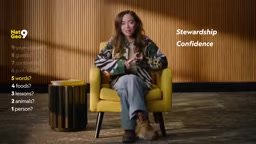
Maya's core values include: stewardship (leaving things better than you found them—whether the planet, the wilderness, or the people around you), confidence (she openly admits to "fake it until you make it"—pretend to be confident until you actually are), dependability (doing what you say you'll do), warmth (making people feel safe), and cadence. The last is the only word she'd consider tattooing on her body—the sense of rhythm you enter with a horse while riding; once the cadence is broken, everything falls apart. It's almost a metaphor for her approach to life: momentum matters more than speed.
The term stewardship, in the context of environmental protection and land ethics, usually refers to a "stewardship responsibility"—the idea that humans, as trustees of nature and resources, have a duty to leave them in a better state than when they took them over. It differs from "conservation," which emphasizes not consuming, and from "preservation," which emphasizes non-interference; instead it's closer to an active, intergenerational ethic of care, commonly found in the U.S. National Park management system and discussions of religious ecology.
"Fake it until you make it" is a common self-suggestion strategy in the English-speaking world, first popularized in 1970s business and self-help culture, and in recent years partially validated by psychological research: repeatedly acting with confidence can improve actual performance and self-efficacy. But it has also been criticized as potentially masking genuine incompetence. Maya's usage leans toward a gentler version—take on the role first, then fill in the capabilities through action, rather than deceiving others.
"Looking for the Pony in the Manure": Perspective Determines Experience
A saying from her mother became her methodology for coping with hardship: "You can always find your pony in the manure." You can say "how disgusting," or you can say "wow, I have a horse, and this pile of manure is the only reason." Maya also mentions that only as an adult did she realize all adults have no idea what they're doing—everyone is experiencing life for the first time—and this "disenchantment" actually makes one humble. She further points out that the beauty in life depends on your ability to notice it. Ever since she fell in love with invertebrates, any country and any city can bring her joy, because bugs are everywhere.

"Looking for the pony in the manure" comes from a widely circulated optimism fable: two children are led into a room full of horse manure; the pessimist complains about the stench, while the optimist excitedly digs through it, convinced there must be a pony hidden in the pile. The story is often used in popular explanations of positive psychology and cognitive reappraisal—changing emotional experience by reinterpreting the meaning of a situation. Maya's mother's version is an everyday use of this fable, emphasizing the selectivity of attention and interpretive framing rather than denying the hardship itself.
An Ideal Day and an Unfulfilled Wombat Dream
Her ideal evening is: grab a bottle of beer, take the horse for a walk, eat an apple herself while the horse grazes, and finally the horse eats the apple core, then they walk home together at sunset. She most wants to go to Australia to see its endemic wildlife, and is especially obsessed with wombats—"they poop cubes, what?" Although wombats are common in Australia, she has never seen one in person. Foods she must eat every day include sourdough bread, pickles, onion rings, and oranges.

The wombat is a marsupial endemic to Australia, stocky and a skilled burrower, whose droppings are uniquely cube-shaped. Research shows that this square shape comes from differences in elasticity in different regions of its intestines, which mold the waste into sharply angled blocks that are easy to use for marking territory on rocks or wood without rolling away. Although wombats are common in parts of Australia, they are mostly nocturnal and live in burrows, so tourists don't easily spot them in the wild—which explains why Maya has been fascinated for so long yet has never seen one.
Takeaways for Tech and AI Content Creators
On the surface this interview is a personal Q&A, but it offers two transferable insights for content creators in tech and AI. First, Maya emphasizes that "noticing beauty" is a trainable ability—in an environment of information overload, where you direct your attention determines the quality of your experience, which stands in contrast to content consumption in the age of algorithmic recommendation. Second, her candor about "fake it until you make it" dissolves the perfectionist threshold of professional identity: whether it's conservation education or tech popularization, acting first and building credibility through action is often more effective than waiting until you're "ready."
Her story also suggests that the infectiousness of science communication doesn't come from piling up data, but from the storyteller's long-term relationship with the subject—whether it's Jane Goodall's gaze on wildlife or Bill Nye turning science into play, it's always "people" passing on enthusiasm. For AI popularization, this may be more worth learning from than model parameters.
Related articles

5.3-Inch Phone Crowdfunding: Small-Screen Revival or a $599 Compromise?
Enough Phone crowdfunds on Kickstarter with a 5.3-inch screen, 8GB RAM, and 50MP sensor at $599. The Vergecast asks: can small phones find a middle ground?
Asahi Linux Ditches MIT for GPL: A Farce Aimed at Omarchy?
Asahi Linux switched its code license from MIT to GPL V2, accusing Omarchy of stealing code and commercializing it. Analysis suggests the move is poorly justified and violates the MIT license, exposing political divisions and AI controversies in the open source community.

Understanding NVIDIA Dynamo Frontend in 5 Minutes: An OpenAI-Compatible Entry Point for Inference Architecture
What is the NVIDIA Dynamo frontend? Based on the official 5-minute series, this article explains how it uses an OpenAI-compatible API as a stable boundary to enable backend engine replacement, routing, and KV cache reuse in a decoupled architecture.