Anthropic Model Benchmarking: Fable 5 vs 5.1 vs 5.2 Comparison
A comparison of the incremental iterations from Anthropic Fable 5 to 5.2, emphasizing that benchmark scores are only a reference and developers should build continuous evaluation mechanisms.
The article examines the relationship and positioning of three versions—Fable 5, 5.1, and 5.2—based on Anthropic model comparison material circulating on Reddit. The author notes that minor version iterations within the same family typically mean limited architectural changes, more often adjustments to training data, alignment strategies, or inference efficiency, so understanding version differences matters more than looking at scores alone. While benchmarks provide useful cross-version reference, they suffer from limitations such as task narrowing and contamination, and real-world performance is also affected by prompt design, context length, and tool calling. The article advises developers to treat benchmark scores as reference rather than decision basis, run small-scale A/B tests on actual business data, and build a swappable model integration layer to cope with the uncertainty of model selection brought by rapid iteration.
Anthropic's model iteration pace is accelerating, but publicly available benchmark data is often scattered and hard to compare across versions. A comparison piece titled "Anthropic Model Benchmarking Fable 5 vs 5.1 vs 5.2" recently appeared on Reddit, attempting to examine all three versions within a single framework.
The Relationship and Positioning of the Three Versions
Judging by the naming, Fable 5, 5.1, and 5.2 belong to different iterations of the same model family. Fable 5 serves as the base version, while 5.1 and 5.2 are incremental updates built on top of it. This versioning convention is not uncommon in the AI model space and typically implies smaller architectural changes—more often adjustments to training data, alignment strategies, or inference efficiency.
For developers, understanding the differences between versions matters more than simply looking at scores. If 5.1 and 5.2 only offer marginal gains on specific tasks, the necessity of upgrading depends on the concrete use case. Conversely, if a version delivers a qualitative leap in key capabilities, it's worth prioritizing migration.
In the AI model space, the version numbering strategy itself carries information. Major version jumps usually correspond to architectural-level changes—for example, a shift from Transformer to Mixture-of-Experts (MoE) structures, or a fundamental adjustment to the training objective function. Incremental versions after the decimal point, on the other hand, often mean parameter fine-tuning, data mix updates, RLHF alignment strategy iterations, or inference optimization.
Taking Anthropic's naming conventions as an example, minor version updates within the same family typically maintain API interface compatibility, but may have subtle differences in context window, tool-calling formats, or safety policies. When evaluating Fable 5 against 5.1 and 5.2, developers should focus on what the official release notes say about training data cutoff dates, changes to alignment methods, and inference cost adjustments—because these are the key variables that determine migration value, not mere benchmark score fluctuations.
Benchmark Dimensions and Interpretation
The original material presents the three versions' benchmark performance in comparative form. It's worth noting that benchmarks themselves have limitations: they measure a model's ability on standardized tasks, whereas real-world performance is often affected by prompt design, context length, tool calling, and other factors.
Looking at the comparison results, the differences between versions are not evenly distributed across all dimensions. On some tasks, 5.2's improvement over 5.1 is fairly pronounced, while on others the three are not far apart. This suggests that model selection should not rely solely on overall rankings, but should incorporate targeted evaluation against the key metrics of one's own business.
How to View Version Comparisons Rationally
When facing version comparison data, the following approach is recommended: treat benchmark scores as reference rather than decision basis, run small-scale A/B tests on actual business data, and pay attention to cost changes brought by model updates. Anthropic's iteration cadence means today's optimal choice may be surpassed by the next version, so building a swappable model integration layer is more pragmatic than locking into a single version.
Benchmarks are standardized tools for measuring model capabilities. Common types include knowledge Q&A (such as MMLU), code generation (such as HumanEval), mathematical reasoning (such as GSM8K), and instruction following (such as IFEval). However, benchmarks have several structural limitations: first, contamination—test sets may have entered training data, inflating scores; second, saturation—when models generally approach perfect scores, the benchmark loses discriminative power; third, task narrowing—standardized tasks struggle to cover real-world scenarios like multi-turn dialogue, long-context retrieval, and tool-calling orchestration.
Therefore, when interpreting the comparison data for Fable 5, 5.1, and 5.2, priority should be given to dimensions that are not yet saturated and are close to business scenarios. At the same time, note whether test configurations (such as the number of few-shot examples, temperature parameters) are consistent—otherwise the credibility of cross-version comparisons drops significantly.
The core value of A/B testing in model selection lies in controlling variables. The recommended approach: fix the prompt template and context structure, replace only the model version, split traffic on the same business flow at a small proportion (e.g., 5%–10%), and observe metrics such as task completion rate, user satisfaction, latency, and per-call cost. Statistical significance must be considered—score differences under small samples may simply be noise.
Furthermore, building a swappable model integration layer means abstracting model calls into a unified interface, decoupling prompts, tool definitions, and output parsing from the specific model, so that version switching requires only configuration changes rather than rewriting business logic. In an era of rapid model iteration, this engineering practice has more long-term value than chasing the optimal score of a single version.
Practical Implications for Developers
The value of such community-produced comparison material lies in providing a quick entry point for understanding version differences, but its data sources and testing methods should be treated with caution. Discussions on Reddit often contain subjective experience elements and complement official evaluation reports.
For teams currently using Anthropic models, it's advisable to follow capability change notes in official changelogs while also referencing community real-world feedback to form your own version evaluation checklist. Before upgrading, verify compatibility in edge scenarios first, then gradually roll out to core paths.
Overall, the evolution from Fable 5 to 5.2 reflects the incremental nature of model iteration. Developers need to establish a continuous evaluation mechanism rather than making a one-time selection.
Related articles

Jensen Huang Steps Down as Nvidia CEO, Asian Governments Scramble to Respond to Chip Supply Shifts
Jensen Huang's departure as Nvidia CEO triggers chain reactions across Asian governments: some confirm chip supply commitments, others monitor local AI project impacts and handle related investigations. This article analyzes supply chain stability, project risks, and compliance uncertainty.
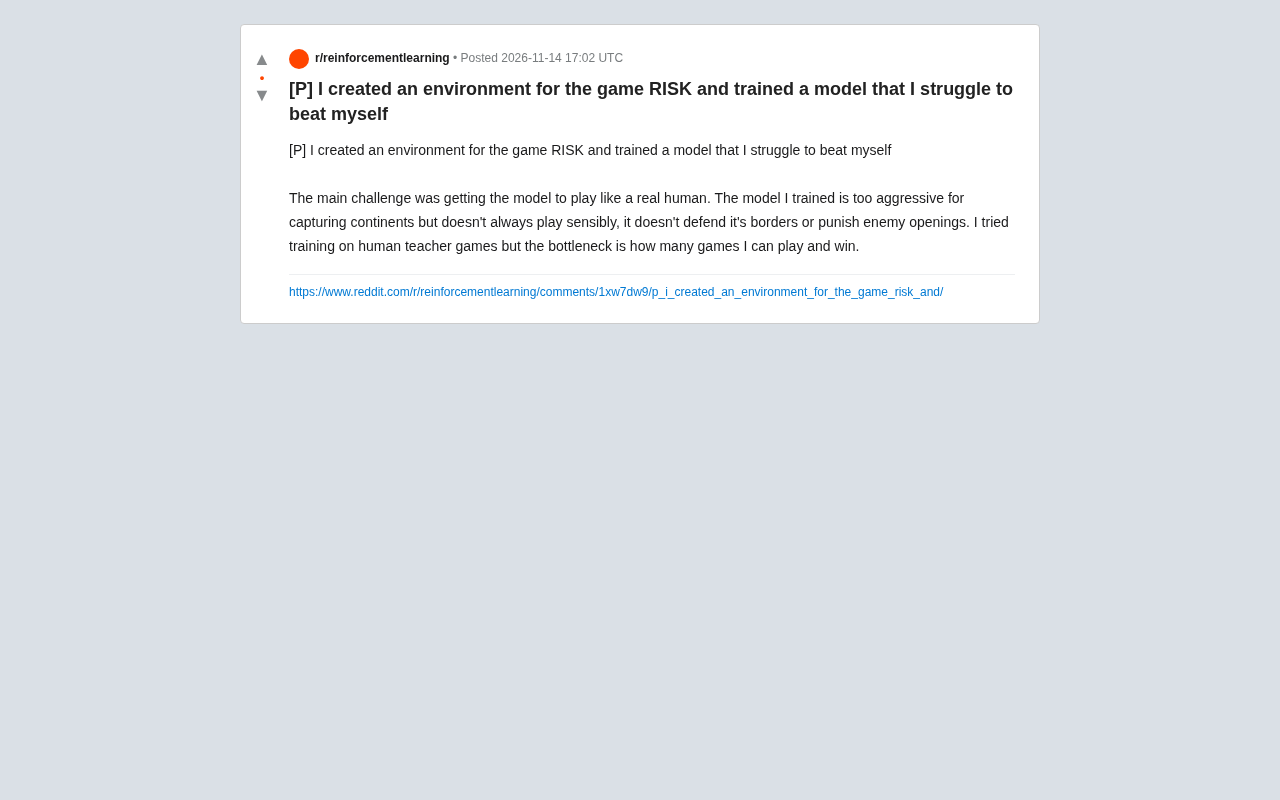
Reddit Player Builds RISK Game Environment and Trains an AI That's Nearly Impossible to Beat
Reddit player builds a RISK training environment and trains an aggressive AI model that's nearly unbeatable. Strong at expansion but weak at defense, the author hits a bottleneck trying human data training, revealing common game AI development challenges.
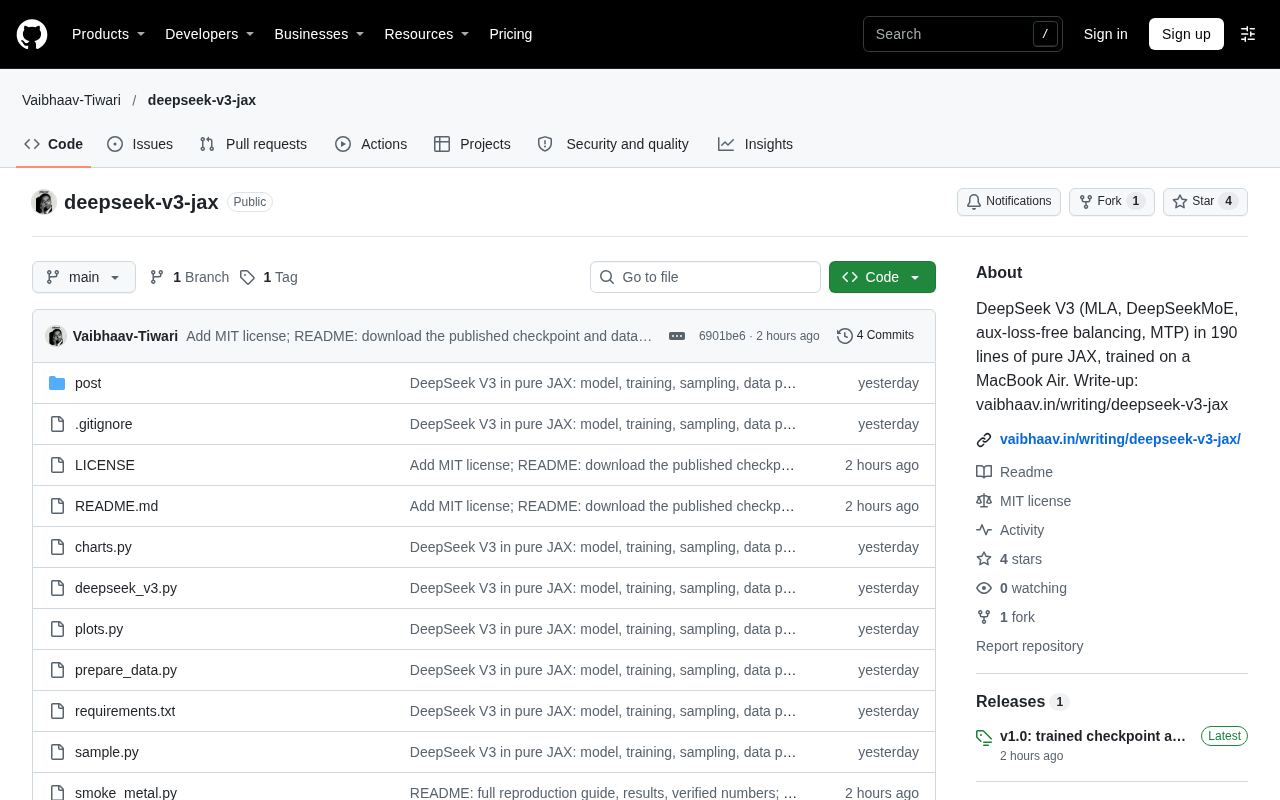
200 Lines of Pure Jax Reimplements DeepSeek V3: Minimalist Open-Source Project Hits HN
A Hacker News project reimplements DeepSeek V3 in ~200 lines of pure Jax, showcasing the model's core architecture in minimalist form for learners and researchers. This article analyzes its value and offers getting-started tips.