Apple Keyboard's Graylist: Which Words Won't Your iPhone Help You Spell?

Apple's keyboard has a "graylist" that bypasses controversial words in prediction and correction, sparking debate over boundaries and transparency.
*The Guardian* reports that Apple's keyboard maintains a "graylist" that bypasses sensitive terms like gender-related controversy in spelling prediction, autocorrect, and suggestions, without preventing manual input. The article analyzes this as a typical approach by tech platforms to set content boundaries in "proactive output" areas, balancing usefulness and brand safety. The report received 212 points and 133 comments on Hacker News, with discussion focusing on who defines the graylist, whether it's transparent, and whether it affects user expression. For ordinary users, the graylist is barely noticeable, but it may manifest as a "sluggish" keyboard when expressing controversial views. The article reminds us that smart keyboards' "intelligence" comes not only from language models but also from content strategy.
Recently, a report from The Guardian sparked heated discussion on Hacker News: behind Apple's keyboard prediction and autocorrect lies a "graylist" containing sensitive or controversial terms, which means your iPhone won't proactively help you spell these words. The article received 212 points and 133 comments on HN, drawing considerable attention.
What Is Apple's "Graylist"?
According to The Guardian, Apple maintains an internal list in its keyboard system, referred to as a "graylist." Unlike a "blacklist" that completely blocks content, the graylist doesn't outright prevent users from typing these words—instead, it makes the system "bypass" them in spelling prediction, autocorrect, and suggestion features. In other words, you can type these words manually, but your iPhone won't proactively complete or correct them for you.
Examples cited in the report include phrases with gender-related controversy, such as "male chauvinist pig." These terms often sit in sensitive areas of social discourse, and Apple chooses to keep the keyboard silent rather than actively recommend them.
Keyboard spelling prediction and autocorrect typically rely on language models to estimate probabilities based on context, then use post-processing rules to rank or filter candidate words. The so-called "graylist" is essentially a vocabulary strategy at the post-processing level: the model itself may not be specially trained on these words, but when the system outputs candidate words or performs corrections, it actively skips or down-weights specific entries based on an internal list. This differs from a "blacklist" that completely blocks input—the latter is usually reserved for illegal or extreme content—while the graylist is closer to soft guidance, aiming to prevent the system from actively steering users toward controversial expressions while preserving users' freedom to type on their own. This approach is relatively common in proactive recommendation scenarios such as search suggestions and keyboard autocomplete.
Why Does Apple Do This?
From a product logic perspective, keyboard prediction systems need to strike a balance between "usefulness" and "safety." If autocorrect replaces a neutral word with an offensive one, the user experience would be terrible—and the brand risk significant. The graylist can be understood as a preventive filter: the system doesn't actively push users toward controversial expressions, but it doesn't take away their right to type them either.
This design philosophy is not uncommon among tech companies. Platforms typically set stricter content boundaries in "proactive output" areas such as recommendations, autocomplete, and search suggestions, while leaving more room in user-initiated input. Apple's graylist is precisely this logic applied at the keyboard level.
Autocorrect and spelling prediction fall under "proactive output"—if the system replaces a user's originally neutral input with offensive or controversial terms, the result can range from awkward communication to a full-blown brand PR crisis. Tech companies typically impose stricter content boundaries in these areas than on user-initiated input, because proactive recommendations imply that the platform bears some responsibility for the output. The graylist can be seen as a preventive content strategy: it doesn't deprive users of the right to type any word, but the system won't proactively push controversial expressions in front of them. This layered logic of "strict on recommendations, lenient on input" is widespread in search suggestions, keyboard autocomplete, app store recommendations, and similar scenarios.
What Is the HN Community Debating?
Among the 133 comments on Hacker News, the discussion focused on several directions. Some commenters found the approach understandable—keyboards shouldn't proactively suggest offensive expressions; others questioned who draws the boundaries of the graylist, whether it's transparent, and whether it affects expression without users' knowledge.
Other comments discussed the relationship between training data and post-processing rules for keyboard prediction models from a technical angle. Since the original material only provided the report link and the scale of community discussion, the specific comment content was not fully captured—only the overall heat and direction of the discussion can be presented here.
In the Hacker News discussion, a common technical point of contention is how training data and post-processing rules divide responsibilities in keyboard prediction models. The model learns word frequencies and contextual probabilities from large-scale corpora, and may itself assign higher weights to certain controversial terms; the graylist, as a post-processing rule, intervenes after the model outputs. The problem is that post-processing rules are often opaque, making it hard for users to tell whether a particular "no suggestion" is due to low model probability or the rules actively skipping it. This opacity is precisely one of the community's concerns: who draws the graylist boundaries, based on what criteria, whether they adjust as social issues evolve, and whether users have the right to know or opt out of these strategies.
What Does This Mean for Ordinary Users?
For most users, the graylist is barely noticeable—you're unlikely to notice when the system "doesn't" suggest a word. But when you genuinely want to express a controversial opinion, you may find your iPhone's keyboard is more "sluggish" than expected. Understanding this mechanism helps users distinguish: is the system being conservative, or does your own typing habit need adjustment?
From a broader perspective, such mechanisms remind us that the "intelligence" of smart keyboards comes not only from language models but also from an entire content strategy. Apple's graylist is just the tip of the iceberg—the autocomplete rules of various platforms deserve equal attention.
One-line Summary
Apple's keyboard has a "graylist" that bypasses controversial words in prediction and correction, sparking debate over boundaries and transparency.
Paragraph Summary
The Guardian reports that Apple's keyboard maintains a "graylist" that bypasses sensitive terms like gender-related controversy in spelling prediction, autocorrect, and suggestions, without preventing manual input. The article analyzes this as a typical approach by tech platforms to set content boundaries in "proactive output" areas, balancing usefulness and brand safety. The report received 212 points and 133 comments on Hacker News, with discussion focusing on who defines the graylist, whether it's transparent, and whether it affects user expression. For ordinary users, the graylist is barely noticeable, but it may manifest as a "sluggish" keyboard when expressing controversial views. The article reminds us that smart keyboards' "intelligence" comes not only from language models but also from content strategy.
Related articles
 Tech Frontiers
Pushing the Limits of Extreme Sudoku on a 16GB GPU: Insights from Depth and Flow Matching
A researcher trained a 16.54M-parameter model on a 16GB GPU to solve extreme Sudoku, finding effective depth breaks the 60% plateau and flow matching with improved sampling pushes accuracy past 99% with ~50× lower layer-evaluation budget.
 Tech Frontiers
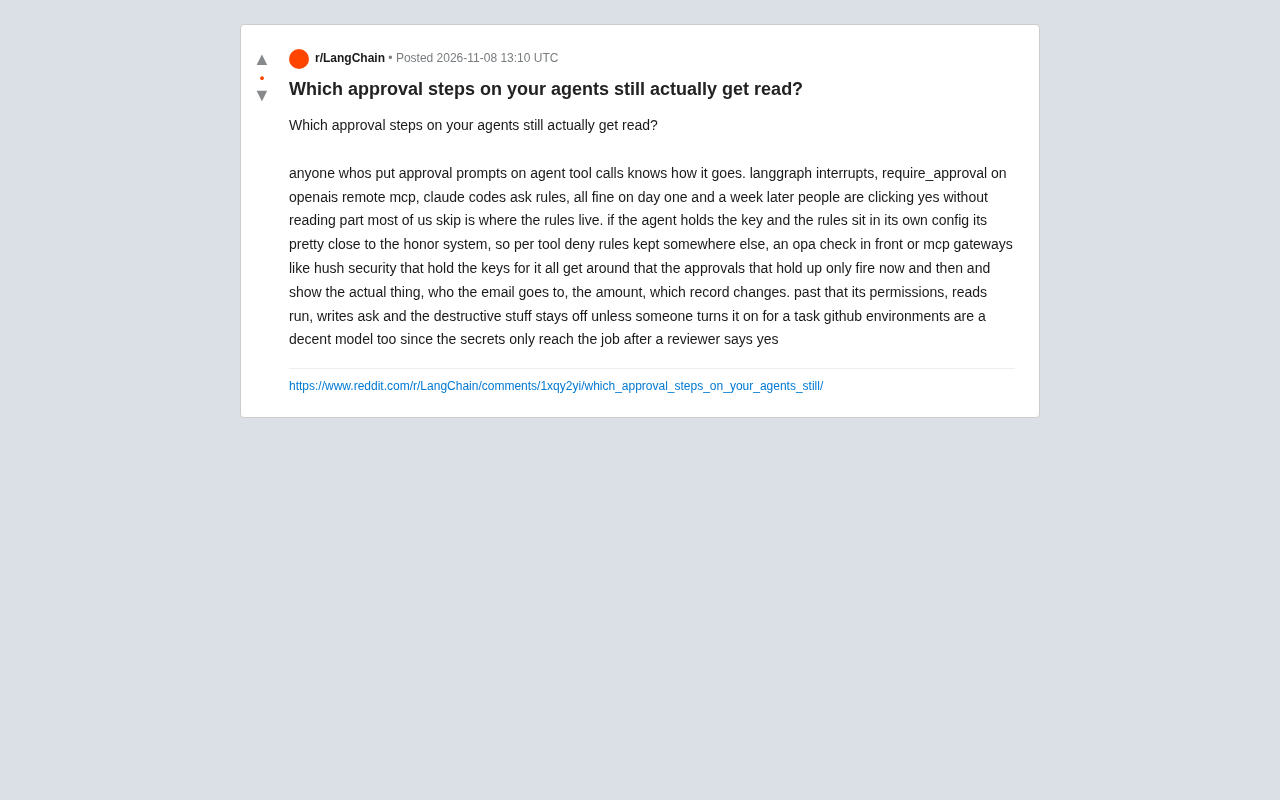
AI Agent Approval Workflows: Why Human Confirmations Always Get Mindlessly Clicked
Why do AI agent approval workflows always get mindlessly clicked? A Reddit discussion shows that separating rules from keys, low-frequency high-risk approvals, and GitHub Environments-style gates are the keys to effective approvals.
 Tech Frontiers
MuJoCo: An Analysis of DeepMind's Open-Source General-Purpose Physics Simulator
An in-depth analysis of Google DeepMind's open-source physics simulator MuJoCo: high-performance C++ kernel, MJCF modeling format, contact solving principles, MJX GPU acceleration, and robot reinforcement learning use cases.