Automattic Launches Spacefast: A One-Stop Deployment Platform for Vibe Coding Apps
Automattic launches Spacefast to seize the deployment entry point for vibe coding apps.
Automattic has launched Spacefast, a new platform positioned as an entry point for directly deploying vibe coding-generated applications, benchmarking popular AI coding tools like Lovable. The article notes that while vibe coding can quickly generate app prototypes via natural language, engineering barriers like deployment, hosting, domains, and operations still stand between prototype and launch—the gap Spacefast aims to fill. Competition is shifting from 'can it generate code' to 'can it deliver a usable product.' Leveraging WordPress's hosting infrastructure, global site network, and creator ecosystem, Automattic may gain edge in deployment reliability and acquisition costs, but platform openness and compatibility remain key variables. Details on features, pricing, and product integration are undisclosed.
Automattic is setting its sights on the next stop in AI programming—application deployment. According to RSS feed reports, the company has launched a new platform called Spacefast, aimed squarely at popular vibe coding tools like Lovable, in an attempt to stake out a place in the chain that takes "vibe programming" from generated code to actually going live.
From Generating Code to Deploying Live: The Last Mile of Vibe Coding
The core appeal of vibe coding is that users describe their requirements in natural language and AI generates a runnable application prototype. But between a prototype and a truly accessible product lies a whole series of engineering problems—deployment, hosting, domains, operations and maintenance. For creators without a technical background, this gap is often more discouraging than writing the code itself.
Spacefast's positioning is precisely to fill this gap. Automattic describes it as a platform that can directly deploy vibe coding applications, meaning users no longer need to manually wrestle with server configuration or CI/CD pipelines—generate and publish. This approach aligns with Automattic's consistent product philosophy: hide complex infrastructure behind the scenes and let creators focus on content and ideas themselves.
vibe coding is a term coined by AI researcher Andrej Karpathy in early 2025, referring to a programming approach in which users describe intent in natural language and large language models generate and iterate on code, emphasizing "writing code by feel" rather than writing it line by line. Its typical workflow is: propose requirements in a chat interface → the model outputs complete files or a project → the user runs it and reports errors → the model corrects them. This model dramatically lowers the barrier to building prototypes, but also brings new problems: generated results often stop at a locally runnable demo, lacking the build artifacts, environment variable management, database migrations, and rollback mechanisms required for a production environment. Therefore, the "last mile" is not simply uploading files, but transforming unstructured generated artifacts into a monitorable, scalable online service—precisely the weakest link in the current toolchain.
Benchmarking Lovable: A Competitive Landscape Is Taking Shape
Lovable is one of the more prominent players in the vibe coding arena, focused on letting non-developers build complete applications through conversation. Automattic's decision to enter at this moment suggests it judges that the competitive focus in this market is shifting from "can it generate" to "can it deliver."
What's worth noting is Automattic's unique leverage. As the company behind WordPress, it holds mature hosting infrastructure, a globally distributed site network, and a vast creator ecosystem. If Spacefast can integrate with this system, it may possess advantages in deployment reliability and user acquisition costs that pure AI startups would find hard to replicate. Of course, whether this path succeeds also depends on whether the platform is open enough and compatible with the output of mainstream vibe coding tools.
Lovable is a Swedish AI programming startup (formerly the GPT Engineer project) focused on enabling non-developers to build full-stack web applications through a conversational interface, completing hosting and publishing directly within the platform. In 2025, it became one of Europe's highest-valued AI startups due to rapid growth. Competitors in the same arena include Vercel's v0, Replit Agent, Bolt.new, and others, whose common feature is packaging "generation" and "hosting" into an integrated experience. This means the competitive moat is no longer just model code capability, but the complete delivery chain including runtime environments, databases, identity authentication, domains, and billing. Entering at this point, Automattic faces a group of rivals that have already accumulated large numbers of non-technical users and iterate products extremely quickly; differentiation must come from infrastructure scale or ecosystem distribution capability.
What "a Changing Internet" Means
The original report's title mentions "amid a changing internet," a phrasing that suggests Automattic's move is not merely product-level bandwagoning. As AI dramatically lowers the cost of producing applications, the number of applications on the internet may see explosive growth, and the demand structure for hosting, distribution, and governance will change accordingly.
From this perspective, Spacefast looks more like a strategic positioning at the infrastructure layer: whoever controls the deployment entry point for AI-generated applications will occupy a key node in the next round of the internet content ecosystem. Automattic started with blogging and site-building tools, and now it is betting on the distribution layer for AI applications—a logically consistent progression.
The hosting and distribution layer in the traditional Web era consisted of virtual hosting, CDNs, and site-building platforms; in the era of AI-generated applications, this layer's meaning expands to: automatically allocating runtime environments for each generated application, binding domains, configuring TLS, and handling traffic scaling and security patches. When the cost of producing applications approaches zero, supply may grow exponentially, and the bottleneck will shift from "can it be built" to "can it be found, trusted, and continuously operated." Therefore, platforms that control the deployment entry point effectively control the key positions of application directories, data flows, and commercialization commissions—this is also the underlying logic behind Automattic's extension from WordPress.com's hosting model to AI application hosting.
Open Questions
The information disclosed so far remains limited. Spacefast's specific functional boundaries, pricing strategy, the scope of generation frameworks it supports, and the depth of its integration with Automattic's existing product lines (such as WordPress.com and WooCommerce) all remain unclear. These details will determine whether it is a true platform-level product or just another feature module.
For creators and developers following the AI programming toolchain, Spacefast is worth keeping an eye on. Competition in vibe coding has extended from model capability to deployment experience, and this is precisely the key link that determines whether ordinary users can truly benefit.
One-line Summary
Automattic launches Spacefast to seize the deployment entry point for vibe coding applications.
Paragraph Summary
Automattic has launched a new platform called Spacefast, positioned as an entry point for directly deploying vibe coding-generated applications, benchmarking popular AI programming tools like Lovable. The article notes that while vibe coding can rapidly generate application prototypes through natural language, engineering barriers such as deployment, hosting, domains, and operations still stand between a prototype and actually going live—precisely the gap Spacefast aims to fill. The competitive focus is shifting from "can it generate code" to "can it deliver a usable product." Leveraging the hosting infrastructure, global site network, and creator ecosystem behind WordPress, Automattic may form differentiated advantages in deployment reliability and customer acquisition costs, but platform openness and compatibility with mainstream generation tools' output remain key variables. In addition, Spacefast's specific features, pricing, and depth of product line integration have not yet been disclosed.
Related articles

GPT-6 Security Model and the AI Attack-Defense Escalation: This Week in AI
This week in AI: OpenAI's GPT-6 Saber found 948 Linux kernel root-escalation paths; Cursor deploys full apps from one sentence; Binance details a social engineering attack; C++26 fails ISO vote.
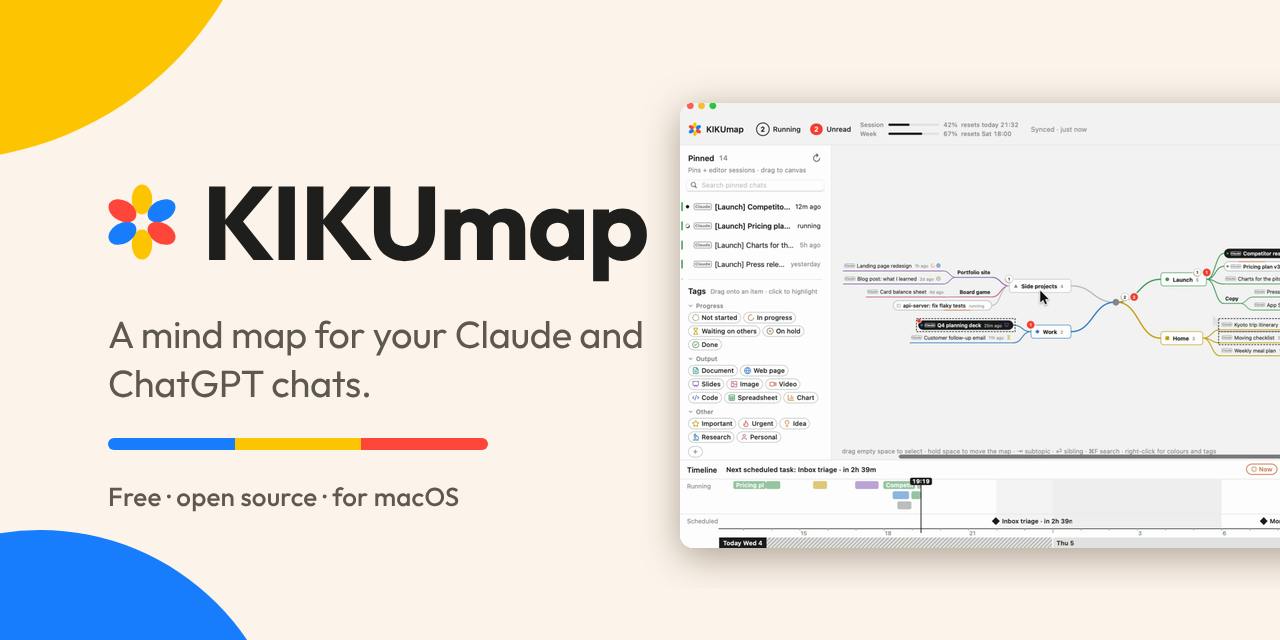
KIKUmap: Manage Your Claude and ChatGPT Conversations with Mind Maps
KIKUmap is a macOS menu bar app that visualizes Claude and ChatGPT conversations as mind maps with real-time status. Free and open source.
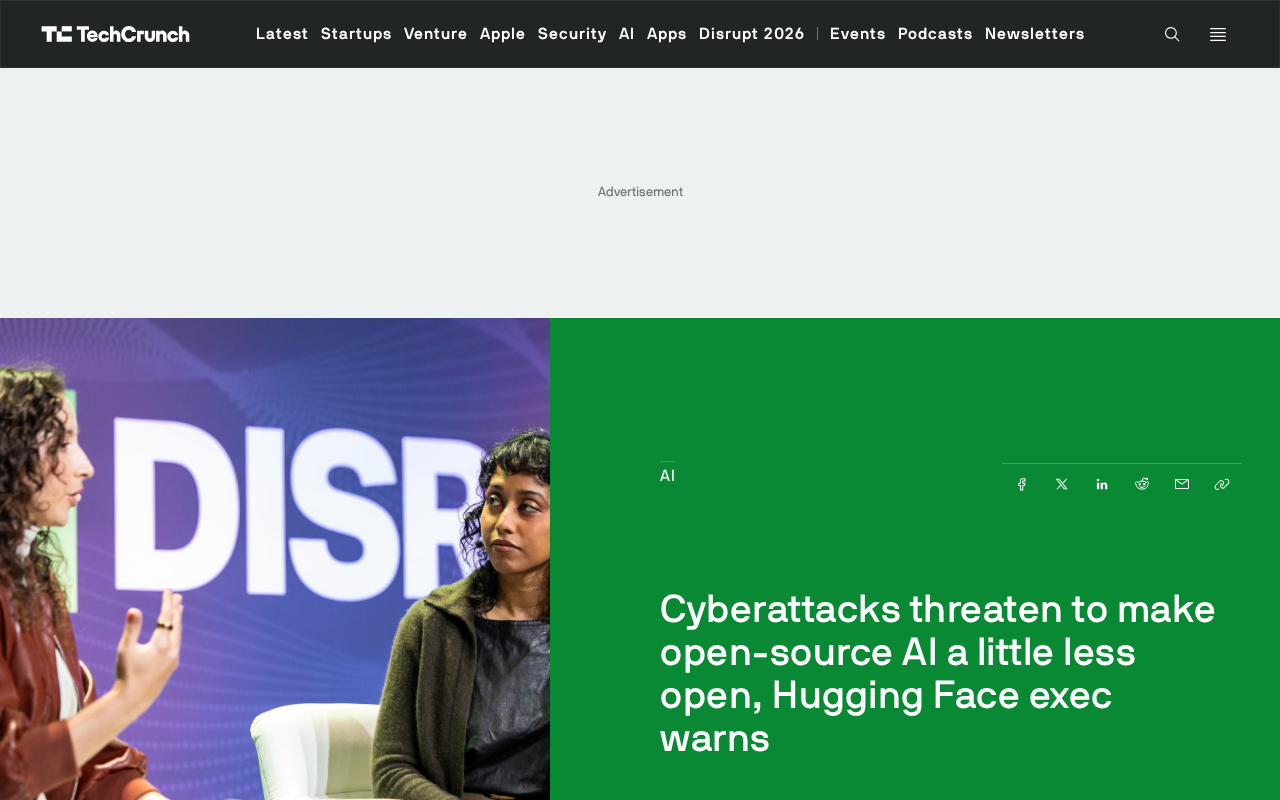
Hugging Face Executive Warns: Cyberattacks Are Eroding the Openness of Open-Source AI
Hugging Face executive Irene Solaiman warns that rising cyberattacks on open AI platforms may force stricter security limits, threatening the openness of the open-source community and affecting the developer ecosystem.