Beyond Reddit: Where to Find Serious AI Discussion Communities
Reddit's voting mechanism and scaling erode serious AI discussion; combining multiple platforms is the realistic strategy.
Starting from one Reddit user's experience, the article points out that serious AI discussion in subreddits like r/MachineLearning is being drowned out by memes and low-quality replies. The voting mechanism naturally rewards emotional short comments, pushing patient technical discussion to the bottom; community growth further lowers the signal-to-noise ratio. The author analyzes the limitations of existing alternatives: Discord official servers (such as those of frontier labs and Hugging Face) have focused discussion but cling to their own narratives, lacking cross-perspective criticism; large platforms have high traffic but uneven quality, while official communities have controllable quality but limited horizons. The article outlines feasible paths such as academic Slacks, niche subreddits, and open-source project Issue areas, and points out that the core contradiction lies in the difficulty of simultaneously maximizing traffic, openness, and discussion quality. It ultimately recommends combining multiple platforms and offers practical strategies such as clarifying the discussion type, starting small, and contributing proactively.
Why Reddit Is Increasingly Struggling to Host Serious AI Discussion
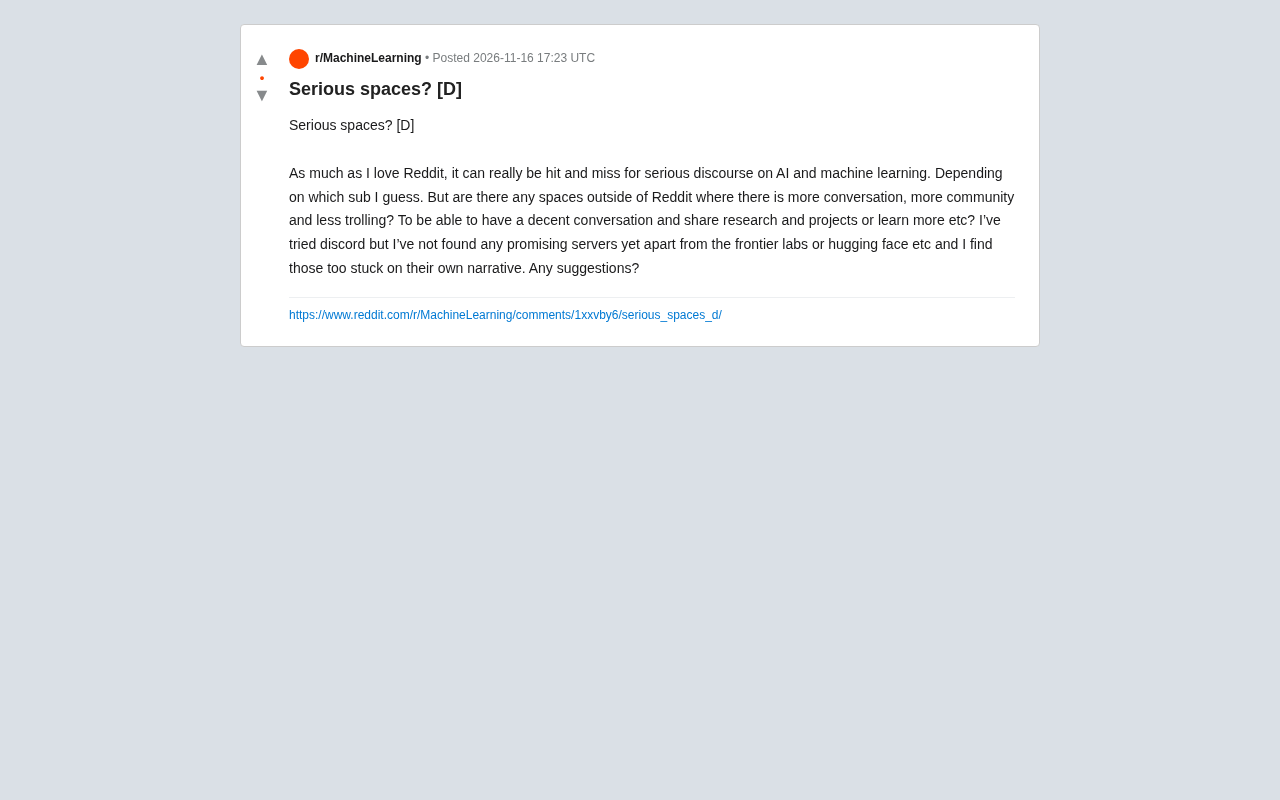
One Reddit user's experience in subreddits like r/MachineLearning is fairly representative: "Reddit is hit or miss for serious AI and ML discussion, depending on which sub." What he misses is a community where people can share research, projects, and deep learning insights—not threads drowned out by memes and low-effort replies.
This isn't an isolated case. Reddit's voting mechanism naturally rewards emotional, strongly opinionated short comments, while technical discussions that require background knowledge and patience tend to sink to the bottom. As a subreddit grows, the signal-to-noise ratio inevitably declines. The image below is a screenshot of the original post, where the poster clearly expresses a desire for a space with "more conversation, fewer trolls."
Signal-to-Noise Ratio originates from communications engineering and refers to the ratio of useful information to irrelevant interference. In a community context, it measures the relative amount of high-quality content (such as rigorous arguments and reproducible experiments) versus low-value interaction (such as memes, personal attacks, and repeated questions). As a community grows, content produced by new members tends to lean toward low-barrier expression, while producing high-quality content requires expertise and time investment—and its growth is far slower than that of low-quality content. As a result, the overall signal-to-noise ratio declines monotonically as user numbers rise. Reddit's voting mechanism further amplifies this effect: short, emotional, strongly opinionated comments can rack up likes within minutes, while long-form posts requiring background knowledge easily sink in algorithmic ranking, creating a feedback loop of "bad money driving out good."
Limitations of Existing Alternatives: Discord and Official Communities
The poster tried Discord but found that, apart from official servers from frontier labs or organizations like Hugging Face, it's hard to find vibrant, neutral communities. The problem with official servers is that they "cling too tightly to their own narrative"—discussions tend to revolve around their own models or tools, lacking critical exchange across perspectives.
This reveals a paradox of serious communities: openness and focus are hard to achieve simultaneously. Large platforms have high traffic but uneven quality; official communities have controllable quality but limited horizons. For people who want to discuss research progress, reproduce experiments, or critically analyze papers, neither type of space is entirely ideal.
Hugging Face is the core hub of the current open-source AI community, operating the Model Hub, dataset repositories, Spaces app hosting, and forum discussion areas. Its official Discord server gathers a large number of model authors and practitioners, with channels subdivided by task type (such as NLP, CV, and RL) and specific projects. Unlike Reddit's anonymous voting, Discord's visible identity and real-time nature raise the barrier to interaction, but they also bring problems: information is hard to accumulate, and historical discussions are not searchable. The "clinging to its own narrative" phenomenon of official servers stems from their operational logic: servers are maintained by model or tool teams, so discussions naturally revolve around their own products, with lower tolerance for competitors or fundamental criticism, limiting cross-perspective exchange.
Several Possible Directions for Serious AI Discussion Spaces
The original post doesn't provide a standard answer, but drawing on common suggestions from community discussions, several paths can be outlined:
1. Academic Slacks and Mailing Lists
Many research groups and workshops (in niche areas such as ML security and interpretability) operate invitation-only Slacks or Google Groups. These spaces have fewer people and higher barriers, but discussion depth and reply quality are notably better. The downside is that discovery channels are obscure, often requiring a personal referral.
2. Niche Subreddits and Forums
Reddit itself isn't entirely without value—the key is finding low-subscriber niche subs. For example, subreddits focused on specific model architectures or evaluation methods have low troll density and more active moderation. Similarly, some independent forums (such as LessWrong's AI section) still maintain a tradition of long-form discussion.
LessWrong is a community forum focused on rationalism, cognitive biases, and AI alignment, founded by Eliezer Yudkowsky in 2009. It is known for long-form discussion and strict content norms, encouraging users to write structured argumentative posts and filtering high-quality content through "karma" and "curated" mechanisms. Its AI section (the AI Alignment Forum) is an important gathering place for researchers in the AI safety field, with discussions often involving deep topics such as alignment theory, decision theory, and existential risk. Unlike Reddit's instant voting, LessWrong's discussion cycles are longer, and commenters need to read the full text and give substantive responses, which helps maintain high discussion depth—but also leads to lower content update frequency and a higher barrier for new users to integrate.
3. Paper Reproduction Communities and Open-Source Project Discussion Areas
GitHub repository Issue sections, the discussion boards of Papers with Code, and some open-source models' Discord channels gather people who actually get their hands dirty. Here conversations revolve around specific code and experimental results, with less empty debate.
The Core Contradiction: The Trade-off Between Community Scale and Discussion Quality
The confusion in the original post essentially points to a structural problem: traffic, openness, and discussion quality are hard to maximize simultaneously. Public servers on Reddit and Discord pursue growth, which inevitably brings in more low-quality interaction; high-quality spaces often rely on invitation-only access or high barriers to maintain their atmosphere.
What the poster wants is "more conversation, more community, less trolling," but these three demands naturally exist in tension within the same space. A more realistic strategy is to use multiple platforms in combination: use Reddit for news and broad perspectives, use Discord or Slack for in-depth project discussions, and use mailing lists to track frontier research.
Practical Advice for Those Seeking Serious AI Communities
- First clarify the type of discussion: Is it about papers, reproducing experiments, job hunting, or philosophical speculation? Different goals correspond to different platforms.
- Start small: Following individual researcher communities or small workshops in niche fields is more effective than joining a server with tens of thousands of members.
- Contribute proactively: Asking specific questions in GitHub Issues or paper discussion areas often attracts high-quality replies.
- Accept imperfection: No single platform can meet all needs at once; combining multiple platforms is the norm.
The original post doesn't offer an ultimate answer, but it accurately captures a common dilemma shared by many AI practitioners. Serious discussion spaces still exist—they just require more proactive effort to find and maintain.
One-line Summary
Reddit's voting mechanism and scaling erode serious AI discussion; combining multiple platforms is the realistic strategy.
Paragraph Summary
Starting from one Reddit user's experience, the article points out that serious AI discussion in subreddits like r/MachineLearning is being drowned out by memes and low-quality replies. The voting mechanism naturally rewards emotional short comments, pushing patient technical discussion to the bottom; community growth further lowers the signal-to-noise ratio. The author analyzes the limitations of existing alternatives: Discord official servers (such as those of frontier labs and Hugging Face) have focused discussion but cling to their own narratives, lacking cross-perspective criticism; large platforms have high traffic but uneven quality, while official communities have controllable quality but limited horizons. The article outlines feasible paths such as academic Slacks, niche subreddits, and open-source project Issue areas, and points out that the core contradiction lies in the difficulty of simultaneously maximizing traffic, openness, and discussion quality. It ultimately recommends combining multiple platforms and offers practical strategies such as clarifying the discussion type, starting small, and contributing proactively.
Related articles
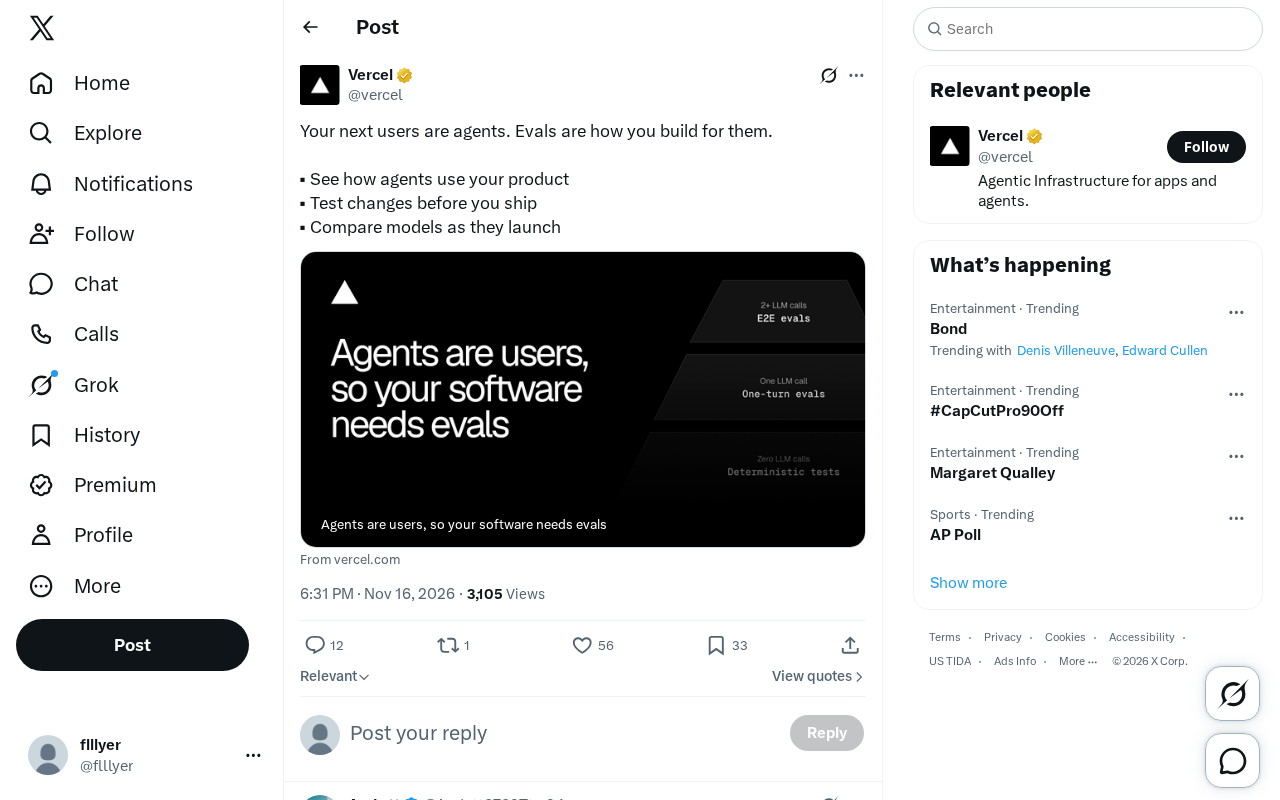
The AI Agent Era: Building a New Product Paradigm with Evals
AI Agents are becoming the next users of products. This article explains how to use Evals to observe Agent usage behavior, test changes before launch, and compare new model performance, helping product teams establish a development methodology for the Agent era.
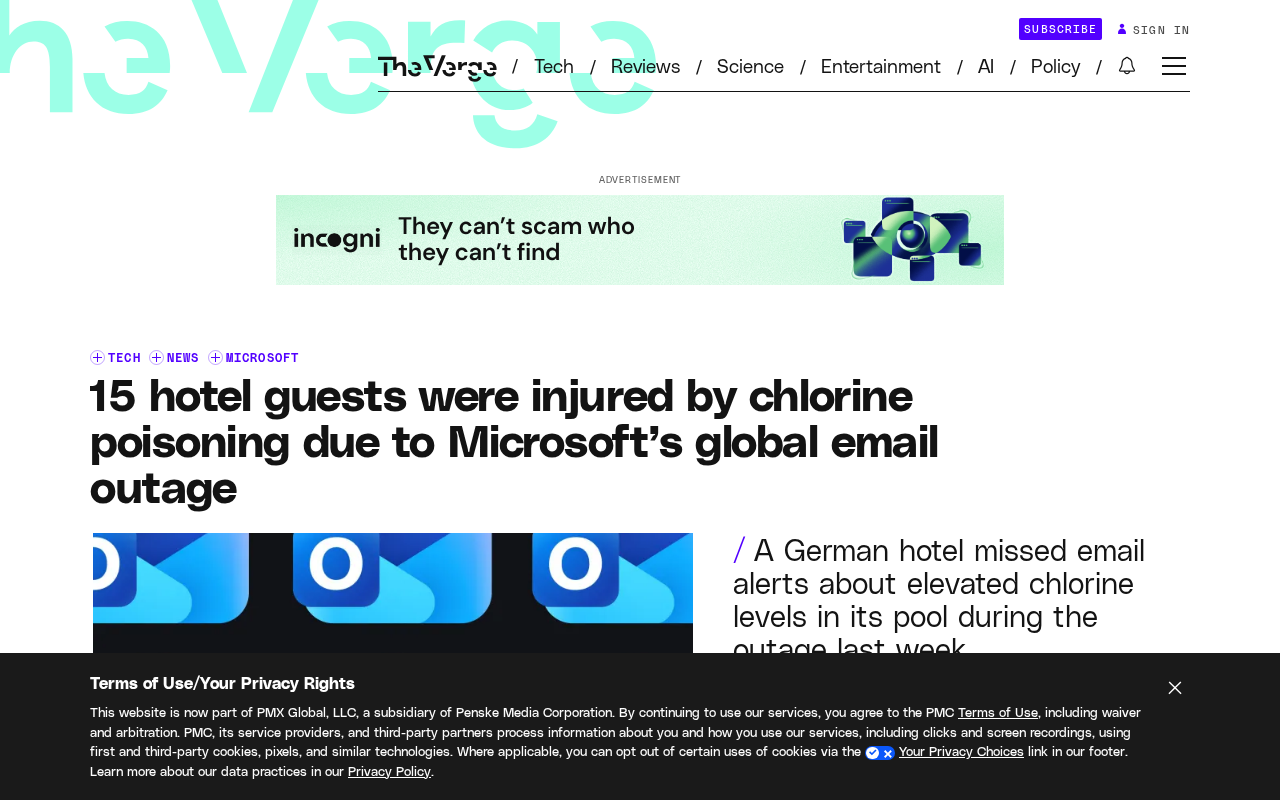
Microsoft Global Email Outage Leads to Chlorine Leak at German Hotel, Injuring 15
A Microsoft 365 and Outlook global outage prevented a chlorine safety alert from reaching a German Phantasialand hotel, injuring 15 guests and exposing the fragility of cloud-dependent safety systems.
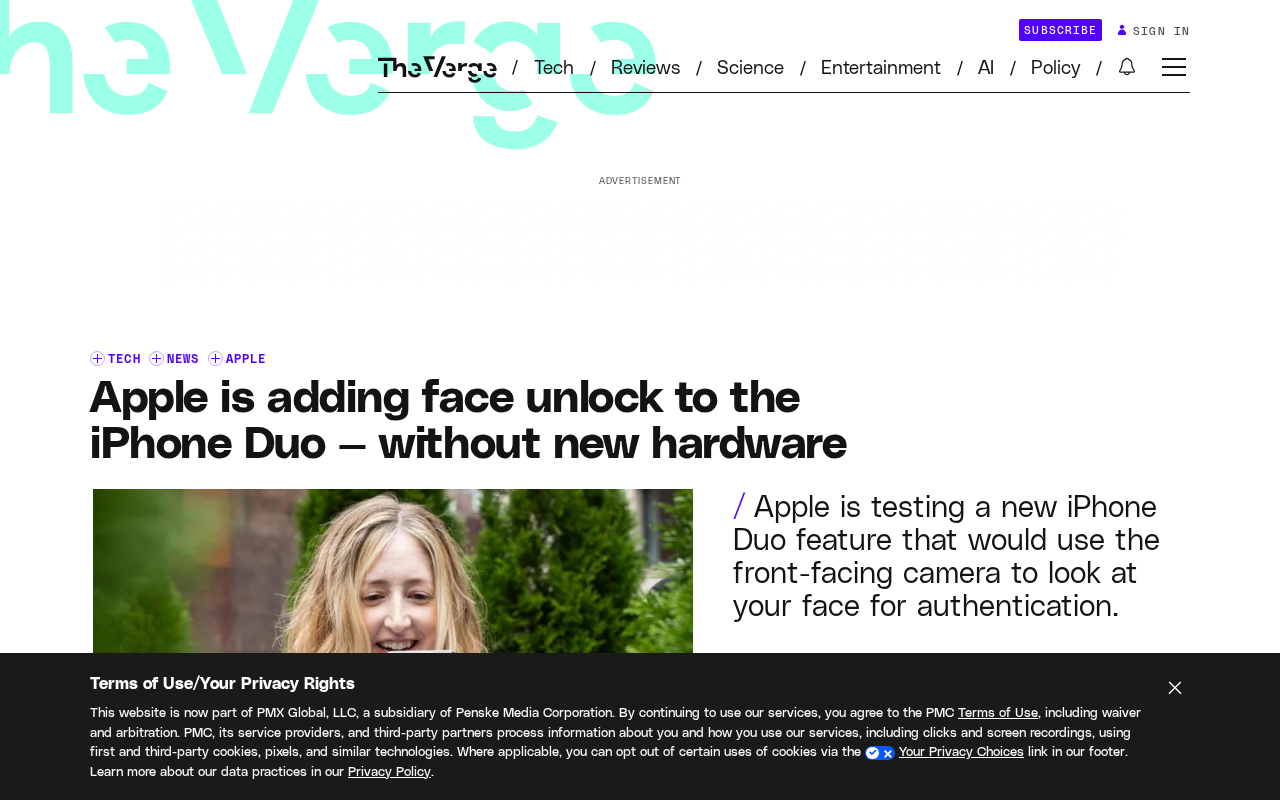
iPhone Duo to Support Face Unlock Using Only the Front Camera
Apple is developing front-camera-only face unlock for the iPhone Duo, now testing in the iOS 27.3 beta. We analyze the technical approach, user experience, and security trade-offs.