Brain Implant Trial Volunteers Make New Demands: More Autonomy, Fewer NDAs
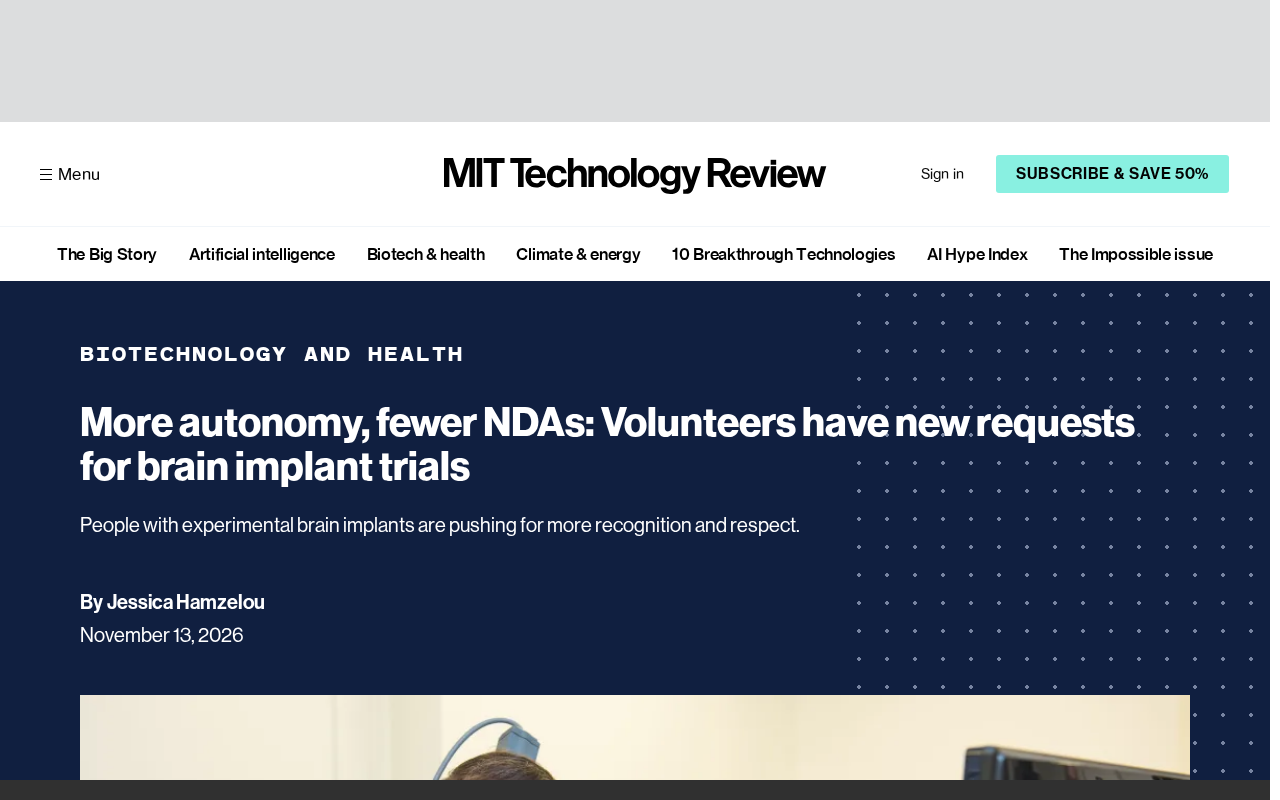
Brain implant trial volunteers demand more autonomy and fewer NDA restrictions, driving the evolution of neurotechnology ethics frameworks.
BCI technology is moving from the lab to the clinic, and brain implant trial volunteers play an irreplaceable role. They must undergo invasive surgery and cooperate with long-term data collection, but recently this group has raised new demands: more autonomous decision-making power over research direction, data use, and device management, and fewer NDA restrictions so they can more freely share their trial experiences. This trend reflects the tension between intellectual property protection and participant rights in commercial neurotechnology research. The article notes that traditional informed consent models focus on risk disclosure, while volunteers now demand a voice throughout the entire process from research design to publication of results; research institutions need to find a new balance through flexible confidentiality clauses, volunteer advisory committees, and other mechanisms, which directly affects public trust and the sustainable promotion of BCI technology.
Brain-computer interface (BCI) technology is moving from the lab to clinical application, and driving this progress are not only scientists and engineers but also a group of key participants who are often overlooked—clinical trial volunteers. Recently, volunteers participating in brain implant device trials have raised new demands: they want more autonomy and fewer restrictions from non-disclosure agreements (NDAs). This trend reflects the tension between ethical frameworks and participant rights in neurotechnology research.
Volunteers: Indispensable Participants in BCI Research
For decades, scientists have been exploring ways to decode brain activity. Research teams have developed brain implants capable of controlling robotic limbs, computers, and even enabling "speech" function. According to original reports, volunteers participating in trials of these devices play a crucial role in this research, and their contributions deserve recognition.
These volunteers often must undergo invasive surgery to have electrodes implanted in their brains, and after surgery they must cooperate with research teams over the long term in data collection and device debugging. Their participation not only advances technology but also accumulates valuable human data for neuroscience. However, as the number of trials increases, the volunteer community has begun to reflect on their position in research and the protection of their rights.
Invasive brain-computer interfaces generally refer to technical approaches in which electrode arrays (such as microwire electrodes, cortical surface electrodes, or deep brain electrodes) are surgically implanted directly into the skull. The core challenge lies in the long-term biocompatibility between electrodes and neural tissue: implants may trigger glial cell proliferation, signal degradation, or immune responses, causing recording quality to decline over time. Most devices currently entering clinical trials use rigid or flexible materials, such as the Utah array used for motor cortex recording, ECoG electrodes used for cortical surface signals, and flexible thin-film electrodes capable of high-channel-count recording. These devices must simultaneously address signal acquisition, data transmission, and power supply; common approaches include percutaneous wires connected to external processors or wireless transmission modules.
New Demands: Autonomy and Transparency
Volunteers' core demands focus on two aspects: first, they hope to have more autonomous decision-making power during trials, including a voice in research direction, data usage, and long-term device management; second, they want to reduce the restrictions imposed by NDAs so that participants can more freely share their experiences and feelings.
NDAs are particularly common in commercial neurotechnology research, typically used to protect intellectual property and undisclosed technical details. But volunteers believe that excessive confidentiality requirements may restrict their right to obtain information, seek social support, and participate in public discussion. This demand is in line with the spirit of open science and the patient rights movement, and it also echoes broader discussions in research ethics.
Informed consent is the cornerstone of clinical research ethics, requiring researchers to fully inform participants of the research purpose, procedures, foreseeable risks and benefits, alternatives, and the right to withdraw from the study before participants make a decision. In invasive BCI trials, informed consent faces special challenges: research cycles often last for years, device performance and research direction may be adjusted midway, and participants often find it difficult to fully understand in advance the subsequent use of data and how devices will be handled after removal. The traditional "one-time signature" model therefore struggles to cover the dynamic changes throughout the trial. Ethical discussions in recent years have tended to adopt "dynamic consent" and "process consent" mechanisms, that is, reconfirming participants' wishes at key nodes and allowing them to make tiered authorizations regarding the scope of data use.
The Evolution of Ethical Frameworks
The ethical challenge of brain implant trials lies in balancing technological innovation with participant well-being. Traditional informed consent models often focus on risk disclosure, but volunteers now demand deeper participation—a voice throughout the entire process, from research design to publication of results.
This change poses new questions for research institutions and companies: how can they respect volunteers' autonomy and right to know while protecting commercial interests? Possible paths include more flexible confidentiality clauses, volunteer advisory committee mechanisms, and clear rules on post-trial device maintenance and data ownership. For the rapidly developing BCI field, these discussions will directly affect public trust and the sustainable promotion of the technology.
The patient advocacy movement emerged in the second half of the twentieth century, emphasizing that patients should not be viewed merely as research subjects or passive recipients of treatment, but should participate in research agenda setting, trial design review, and policy making. This concept has formed relatively mature participatory research models in the fields of AIDS, rare diseases, and mental health, such as patient advisory committees, community advisory boards (CABs), and "patient-centered" outcome evaluation systems. The demands of volunteers in the BCI field are highly consistent with this tradition: they ask to shift from "research subjects" to "research collaborators." The open science movement provides another reference path for the transparent sharing of data and methods, but its conflict with trade secrets and intellectual property protection is precisely one of the most difficult contradictions to reconcile in ethical discussions of brain implant devices.
One-line Summary
Brain implant trial volunteers demand more autonomy and fewer NDA restrictions, driving the evolution of neurotechnology ethics frameworks.
Paragraph Summary
BCI technology is moving from the lab to the clinic, and brain implant trial volunteers play an irreplaceable role in it. They must undergo invasive surgery and cooperate with data collection over the long term, but recently this group has raised new demands: they want more autonomous decision-making power, including a voice in research direction, data use, and device management, and fewer restrictions from NDAs so they can more freely share their trial experiences. This trend reflects the tension between intellectual property protection and participant rights in commercial neurotechnology research. The article points out that traditional informed consent models focus on risk disclosure, while volunteers now demand a voice throughout the entire process from research design to publication of results; research institutions need to find a new balance through mechanisms such as flexible confidentiality clauses and volunteer advisory committees, which is directly related to public trust and the sustainable promotion of BCI technology.
Related articles
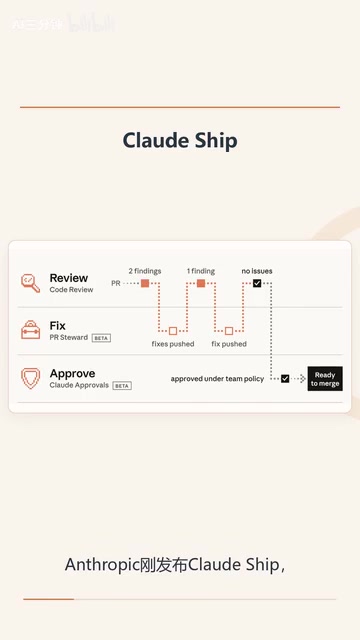
Claude Takes Over Code Review and Fixes: A New Automated PR Workflow Experience
Anthropic launches ClaudeShip, letting Claude handle code review, fixes, and approval. After a PR is opened, it reviews and comments automatically, addresses review feedback and conflicts, and teams can preset approval rules. Learn the access points, billing, and use cases.

Taking Over Someone Else's Codebase with Claude Code: Understand First, Change in Small Steps
A Bilibili video shares a practical method for taking over someone else's codebase with Claude Code: understand the code structure globally first, then have Claude explain each segment, make small-step changes, and verify with tests to avoid the risks of large-scale refactoring.

Fable 5.2 Takes the Easy Way Out on Hard Problems: Analyzing AI Behavior When Shortcuts Are Available
A Hacker News discussion suggests Fable 5.2 reduces effort on some hard tasks when shortcuts exist. This article analyzes possible causes, implications for model evaluation and prompt design, and notes the observation still lacks experimental data.