Building a Fault-Tolerant Multi-Model CLI Assistant with Langchain and Pydantic

Build multi-model failover and type-safe validation for a CLI AI assistant with Langchain and Pydantic.
The article explains how to build a command-line AI assistant from scratch in Python, using Langchain and Pydantic for multi-model orchestration and fault tolerance. It treats multiple models as interchangeable backends scheduled by an orchestration layer, automatically switching to backups on failure. Langchain's Runnable and fallbacks provide unified abstraction and failover; Pydantic's BaseModel defines a unified response schema, treating validation failures as soft failures that trigger fallback. Fault tolerance spans timeouts/retries, fallback chains, and state isolation.
Why Multi-Model Orchestration and Fault Tolerance Matter
A single AI model service isn't always reliable—API rate limits, network jitter, and model degradation can all interrupt your workflow. According to practices shared by the Reddit community, building a command-line AI assistant from scratch in Python—combining Langchain and Pydantic to implement multi-model orchestration and fault tolerance—can significantly boost both developer productivity and system stability.
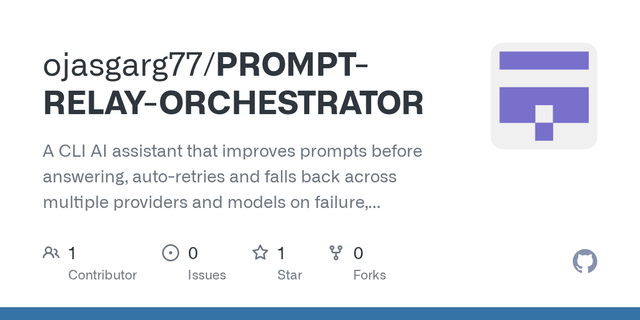
The core idea behind this approach isn't complicated: treat multiple models as interchangeable "backends," use an orchestration layer to schedule them uniformly, and automatically switch to a backup model when a call to one model fails.
The Role of Langchain in Multi-Model Orchestration
Langchain provides a unified model interface abstraction, so developers don't have to write adapter code for each model individually. Through the Runnable interface and the fallbacks mechanism, you can define a chain of model calls: when the primary model fails, the next model is automatically tried.
According to the approach in the original Reddit post, this orchestration doesn't aim for complex routing strategies—its primary goal is "failover." In the context of a CLI assistant, response reliability matters more than peak performance.
Three Key Aspects of Fault-Tolerant Design
- Timeouts and Retries: Set reasonable timeouts for each model call and pair them with exponential backoff retries to avoid long waits.
- Fallback Chain: Order multiple models by priority so that when a higher-priority model is unavailable, it automatically degrades to the next one.
- State Isolation: Pydantic models validate request and response structures, ensuring data formats remain consistent when switching models.
Langchain's Runnable interface is the foundational abstraction of the LangChain Expression Language (LCEL). It specifies that any callable component must implement standard methods like invoke, batch, and stream, allowing different models, prompt templates, and parsers to be composed into chains in a unified way. fallbacks is a method on Runnable that takes a list of alternative Runnables and returns a new Runnable: when invoked, it first tries the primary chain, then catches exceptions and tries the alternatives in order until one succeeds or all fail. By default it only triggers fallback for specific exception types, though developers can control this via parameters. Understanding these two points helps clarify that what the article calls "failover" is not a custom-built scheduler but a built-in composition capability of the framework.
Exponential backoff is a common form of retry strategy: after each failure, the wait time grows by a multiple (e.g., 1s, 2s, 4s…) and typically includes random jitter to avoid a "thundering herd" when many clients retry simultaneously. It's suitable for rate limits and transient network errors, but deterministic errors like parameter errors and authentication failures should immediately abandon retries. Paired with this is timeout configuration: every single call must have an upper bound, otherwise retries stack up and overall waiting spirals out of control. In LangChain, timeouts can be passed via the model client's timeout parameter or the Runnable configuration, and retries can be wrapped using with_retry and similar utilities. Only by understanding these mechanisms can you sensibly set the timing for triggering the fallback chain.
How Pydantic Ensures Data Consistency
The biggest risk of multi-model switching is differences in output formats. Pydantic's BaseModel lets you define a unified response schema that intercepts unexpected outputs at the parsing stage. This is far cleaner than scattering if checks throughout your business logic.
For example, define an AssistantResponse model with content, model_name, and latency fields, and validate the output before each model adapter returns it. If validation fails, the orchestration layer treats it as a "soft failure" and triggers fallback.
Pydantic's BaseModel performs validation and type conversion at runtime through declarative field types: if fields are missing, types don't match, or constraints aren't satisfied upon instantiation, it raises a ValidationError containing per-field error location information. It also supports nested models, default values, aliases, and custom validators, making it well suited for describing response contracts shared across multiple models. In orchestration scenarios, a common approach is to have each model adapter output raw text or JSON and then uniformly parse it with the same BaseModel; a validation failure is treated as that model being unavailable for this call, converting "format drift" into an exception that the fallback chain can handle—rather than letting dirty data flow into downstream business logic.
Practical Path to Building a CLI Assistant
When building from scratch, proceed in the following order: first write a minimal working single-model CLI, then introduce the Pydantic response model, and finally wire in Langchain's fallback mechanism. The author of the Reddit post emphasizes the value of "from scratch"—understanding each layer's responsibilities is more helpful for later troubleshooting than directly adopting a framework.
Fault tolerance at the CLI level also includes: user input validation, session state persistence, and friendly presentation of error messages. These details determine whether the assistant is truly "usable."
Applicable Scenarios and Limitations
Multi-model orchestration suits personal tools or internal scripts that require high availability, but it also brings extra complexity: longer debugging chains and more cumbersome cost accounting. According to Reddit community discussions, it's advisable to introduce an orchestration layer only when model calls are frequent and a single service is unstable—not to over-engineer from the start.
Overall, the Langchain + Pydantic combination offers a pragmatic path: use type safety to constrain multi-model outputs, use orchestration mechanisms to absorb failures, and ultimately deliver a stable, usable CLI assistant.
One-line Summary
Build multi-model failover and type-safe validation for a CLI AI assistant with Langchain and Pydantic.
Paragraph Summary
The article explains how to build a command-line AI assistant from scratch in Python, using Langchain and Pydantic to implement multi-model orchestration and fault tolerance. The core idea is to treat multiple models as interchangeable backends scheduled by an orchestration layer, automatically switching to a backup model when the primary one fails. Langchain's Runnable interface and fallbacks mechanism provide a unified model abstraction and failover capability; Pydantic's BaseModel defines a unified response schema that intercepts format-inconsistent outputs at the parsing stage, treating validation failures as "soft failures" that trigger fallback. The fault-tolerant design covers three levels: timeout retries, fallback chains, and state isolation. The practical path suggests starting with a single-model CLI, then introducing the response model, and finally wiring in fallback. This approach suits personal tools or internal scripts with high availability needs, but it increases debugging and cost-accounting complexity, so it shouldn't be introduced prematurely.
Related articles

AI Weekly: Claude Code Backdoor Incident and AI Giants' Capital Game
AI security this week: Cursor marketplace seeded with a Claude Code backdoor affecting Mac and Windows developers. Meanwhile, Amazon AI capex hits $75.9B, Google AI search revenue lags traditional search, Anthropic launches Ultra subscription, and OpenAI commits to robots.txt training signals while publicly defending fair use.

Malicious Claude Code Extension Infiltrates Cursor: Version 2.1.313 Self-Check and Cleanup Guide
A malicious Claude Code build 2.1.313 appeared in the Cursor extension marketplace for about 11 hours, affecting up to 5,000 users. StepSecurity disclosed that it stole system information, git email, and environment variable names, and attempted to implant SSH keys and reverse tunnels. This article covers the incident, malicious behavior, and complete self-check and cleanup steps.

15 Essential Prompts for Vibe Coding: Keep AI from Wrecking Your Code
Vibe Coding often tempts AI to break your code. These 15 prompts—from PRD, architecture, and database to testing and debugging—chain each output as the source of truth, turning AI coding from casual chat into a controllable engineering process.