Can AI Cure Cancer in Ten Years? Anthropic CEO's Bold Claim and Doctors' Skepticism
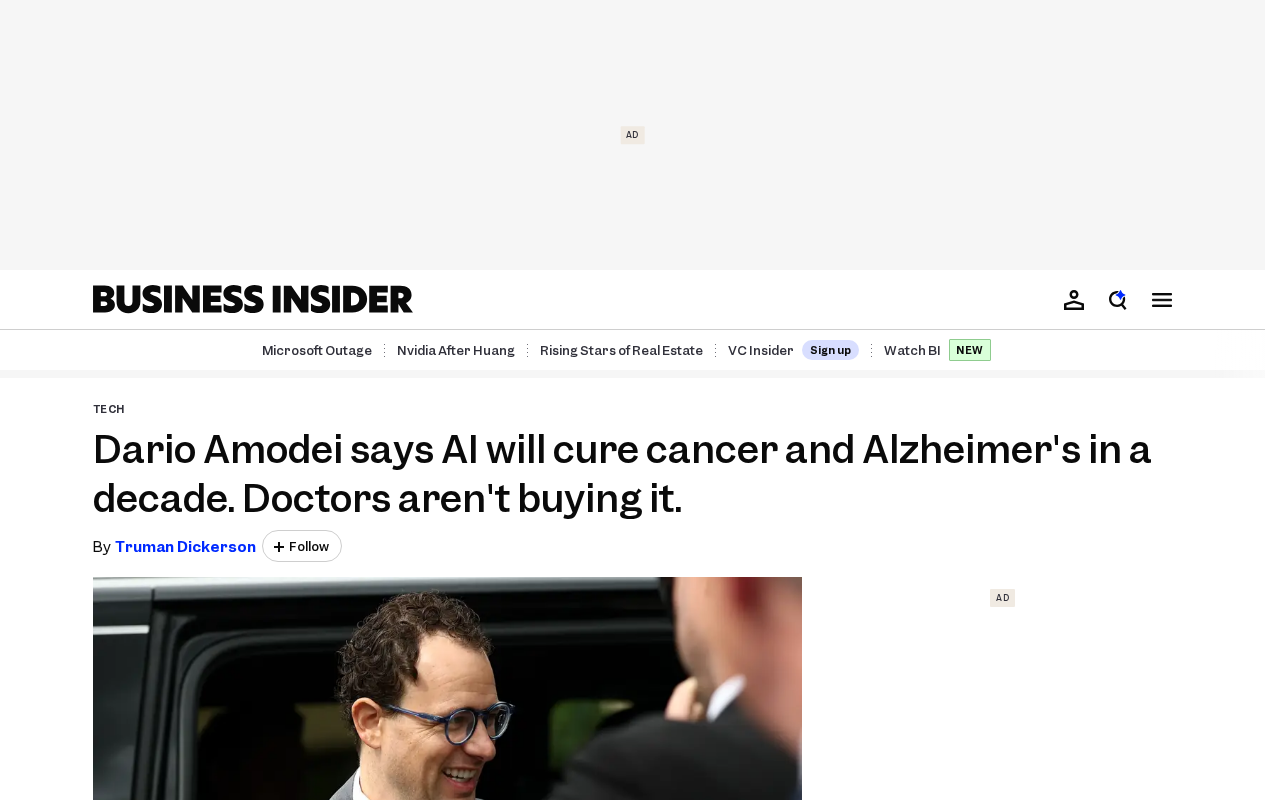
Amodei predicts AI will cure cancer in ten years; doctors question whether he underestimates clinical validation complexity.
Anthropic CEO Dario Amodei proposed that AI will cure cancer within ten years, sparking debate in tech and medical circles. Techno-optimists believe exponential growth in compute and algorithms can accelerate research stages like protein prediction and drug screening into substantive breakthroughs. Doctors are broadly skeptical, citing that cancer comprises hundreds of pathological mechanisms, clinical trial cycles cannot be compressed by algorithms, AI-discovered candidate drugs have high failure rates, and many biological unknowns remain between target and patient. The article notes the real disagreement lies in differing definitions of "cure": tech circles mean turning cancer into a manageable chronic disease, while the medical community understands complete elimination. The author argues cautious optimism is more valuable—AI can cut upfront drug discovery costs, but clinical implementation still requires patience.
Anthropic CEO Dario Amodei recently made a striking prediction: AI will cure cancer within ten years. The claim quickly sparked discussion in both tech and medical circles, and the reaction from doctors has been overwhelmingly—skepticism.
A Techno-Optimist's Timeline
Amodei's assertion isn't an isolated slogan. As the head of a leading AI company, he has long argued for AI's accelerating effect in biomedicine: from protein structure prediction to drug molecule screening, AI is already shortening certain stages of the cycle. In his view, this acceleration will compound over the next decade into substantive breakthroughs against cancer.
This narrative is hardly rare in Silicon Valley. Techno-optimists habitually extrapolate medical progress from the exponential growth of compute and algorithms, treating "curing cancer" as a problem that can be engineered and broken down into parts.
Why Doctors Aren't Convinced
The medical community's skepticism has a real basis. Cancer is not a single disease but a collection of hundreds of pathological mechanisms, each with different evolutionary paths at the molecular level, in immune evasion strategies, and in drug resistance.
Doctors' core doubts center on three points: clinical trial cycles are measured in years, and regulatory approval cannot be compressed by algorithms; candidate drugs discovered by AI still require real-world validation, with failure rates remaining stubbornly high; and most fundamentally—between "finding a target" and "curing a patient" lies a vast amount of biological unknowns.
In other words, what AI can accelerate is the early-stage pipeline of research, not the later-stage clinical validation. Conflating the two is the most common leap in tech narratives.
According to discussion on Hacker News, this topic received 5 points with 0 comments—the buzz has yet to build, but the disagreement itself is already clear.
Why Clinical Trial Timelines Are Hard to Compress
A drug typically must go through Phase I, II, and III clinical trials from candidate molecule to market, often taking 6 to 10 years or more overall. Each phase must sequentially accumulate safety, dosage, and efficacy data, and participant recruitment, follow-up observation, and adverse event monitoring all depend on real patients and time spans. Regulatory agencies (such as the FDA) base their review standards on statistical significance and risk-benefit ratios; algorithms cannot replace the human body's actual response to drugs. Even if AI dramatically shortens the target discovery and molecular design stages, that portion accounts for a limited share of the entire R&D chain, and the rigid timelines of later stages remain the bottleneck.
The High Failure Rate from Target to Drug
Even after identifying a cancer-related molecular target, candidate drugs still face extremely high attrition rates in subsequent development. Industry statistics show that the proportion of anticancer drugs entering clinical trials that ultimately receive approval is typically only in the single digits percentage-wise, with failure causes including unacceptable toxicity, insufficient efficacy, emergence of resistance mechanisms, and poor biomarker population selection. AI-generated molecules may look excellent computationally, but whether they can reliably work in the complex human microenvironment still depends on a large number of biological mechanisms that are not yet fully understood. This is precisely why the medical community sees a huge gap between "AI discovery" and "clinical availability."
The Real Focus of the Disagreement
What's worth noting is not whether the number "ten years" is accurate, but that the two sides do not share the same definition of "cure." The tech world may mean turning cancer into a manageable chronic disease, while the medical community hears complete elimination. This semantic mismatch often leaves the debate with each side talking past the other.
Even if AI delivers acceleration on the research side, accessibility, cost, and equity of the healthcare system remain another hurdle. A therapy designed by AI in the lab still has a long way to go before reaching the average patient.
The Semantic Gap Between "Cure" and "Chronic Disease Management"
In oncology, "cure" usually means long-term disease-free survival after treatment with very low risk of recurrence; "manageable chronic disease" refers to suppressing tumor progression through continuous medication or maintenance therapy, where patients live with the tumor but the lesion cannot be completely eliminated. Some blood cancers and early-stage solid tumors can already achieve relatively high cure rates, but most advanced cancers currently can only have survival extended. When the tech world uses the word "cure," it often broadly refers to significantly reducing cancer mortality or converting it into a manageable state, which is not equivalent to the strict clinical definition of cure—and this is one of the root causes of the two sides' inability to align.
Cautious Optimism Is More Valuable
Amodei's prediction serves a purpose in advancing the agenda—it makes capital and talent more willing to flow into the intersection of AI and biomedicine. But understanding it as a timeline underestimates the complexity of medicine.
A more reasonable stance is: acknowledge that AI is significantly reducing the upfront costs of drug discovery, while remaining patient about the pace of clinical implementation. Ten years may be enough to change the research paradigm, but curing cancer is likely not a promise that a single generation of algorithms can deliver on its own.
One-line Summary
Amodei predicts AI will cure cancer in ten years; doctors question whether he underestimates the complexity of clinical validation.
Paragraph Summary
Anthropic CEO Dario Amodei proposed that AI will cure cancer within ten years, sparking discussion in tech and medical circles. Techno-optimists believe exponential growth in compute and algorithms can accelerate research stages such as protein prediction and drug screening, ultimately compounding into substantive breakthroughs. The medical community is broadly skeptical, citing reasons including that cancer is a collection of hundreds of pathological mechanisms, clinical trial cycles are measured in years and cannot be compressed by algorithms, AI-discovered candidate drugs have high failure rates, and there remain many biological unknowns between target and patient. The article notes that the real focus of the disagreement is the differing definitions of "cure": the tech world mostly means turning cancer into a manageable chronic disease, while the medical community understands it as complete elimination. The author argues that cautious optimism is more valuable—AI can reduce upfront drug discovery costs, but patience is still needed regarding the pace of clinical implementation.
Related articles

Van Hollen on Holding Trump Accountable: Hearings and Building the Evidentiary Record
Senator Chris Van Hollen on holding the Trump administration accountable: focused hearings to expose corruption and wrongdoing, plus building an evidentiary record now to preserve space for future criminal charges.

Generating SVG and 3D Models with the Codex Plugin: A Hands-On Guide for Developers with Zero Art Background
Codex's SVG & 3D Design plugin lets developers with zero art background generate vector graphics and 3D models via code—editable, Blender-ready, with best practices built in.
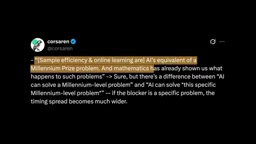
Why Recursive Self-Improvement Holds Up: Responding to Six Major Objections One by One
Dwarkesh Patel responds point by point to six major objections about recursive self-improvement and superintelligence by 2030: whether verifiable proxy metrics exist, the human-link threshold for RSI, whether the math explosion can be analogized to AI research, the experimental compute bottleneck, reward hacking and the motivation for power-seeking, and whether METR acceleration rates can be extrapolated.