ChatGPT's New Genie Plugin: Conversational Analysis of Business Data

Genie lets ChatGPT understand enterprise metrics via business ontology, auto-query data and run SQL, and give traceable answers.
The Genie plugin extends ChatGPT from general Q&A into enterprise business analysis. It introduces a business ontology layer to constrain how the model interprets terms like "activation rate," then locates data, generates and runs SQL, and routes complex questions to domain-specific Genie Agents. Answers include rich citations for traceability, and long-running agents like Dots can carry the same business context. Value depends on data governance maturity, and permissions must be assessed.
From General Conversation to Business Intelligence: The Genie Plugin Lets ChatGPT Understand Your Data
ChatGPT's capabilities are expanding from general Q&A into vertical business scenarios. The recently launched Genie plugin has a clear core objective: bring your business context into ChatGPT. This means users no longer need to manually organize data or explain what metrics mean—they can directly ask complex business questions in natural language, such as "Why is the activation rate low?" or "Which accounts are at risk?"
According to the official description, Genie doesn't simply dump data into the LLM. Instead, it understands metric definitions based on your business ontology, automatically locates the correct data sources, and executes SQL queries to deliver answers with rich citations. This design approach is worth noting—it attempts to solve two long-standing pain points in enterprise data analysis: inconsistent metric definitions and the difficulty of finding the right data.
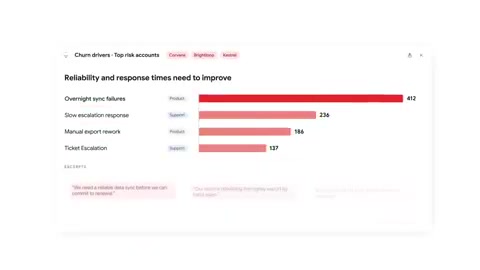
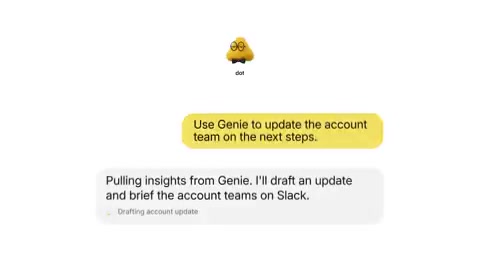
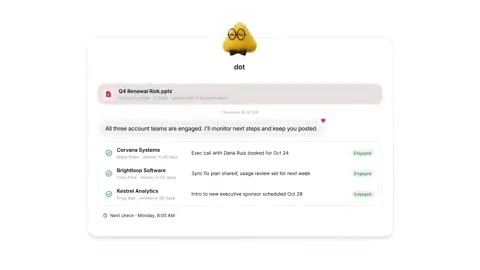
An Analysis Pipeline Driven by Business Ontology
Understanding Metrics, Not Guessing at Them
Traditionally, the biggest obstacle to having an LLM do data analysis is that the model doesn't know what "activation rate" specifically means at your company. Genie's solution is to introduce a business ontology layer—an abstraction that constrains how the model interprets questions using the enterprise's already-defined metric system and business semantics. This way, the same question yields answers consistent with each organization's own definitions, reducing the bias introduced by the model's free interpretation.
Business Ontology is a core concept in enterprise knowledge modeling, referring to a formal, structured description of entities, concepts, and their interrelationships within a business domain. In the context of data analysis, a business ontology typically includes metric definitions (e.g., how "activation rate" is calculated), dimension hierarchies (e.g., region, channel, product line), entity relationships (e.g., how accounts relate to transactions), and business rule constraints. It is essentially a semantic abstraction layer that codifies scattered business knowledge into a machine-readable, normalized model. Unlike a simple metadata catalog, a business ontology emphasizes the logical relationships and business meaning between concepts, thus constraining the space in which the LLM interprets natural language questions. The higher the quality of the ontology, the less ambiguity in the model's semantic mapping—this is also the prerequisite for tools like Genie to reliably produce trustworthy analytical results.
Automatically Finding Data, Running SQL, and Routing Onward
Genie's execution pipeline covers the full journey from semantic understanding to data retrieval: first interpret the metric, then find the appropriate data tables, then generate and run SQL. When a question is complex enough, it can hand off deeper investigation to domain-specific Genie Agents. This layered routing architecture lets simple and complex questions each follow their own path, avoiding a one-size-fits-all process for every analytical need.
Genie Agents can be understood as specialized analysis agents preconfigured for specific business domains (e.g., marketing, risk control, finance), each bound to that domain's relevant data tables, metric definitions, and query logic. When the main pipeline determines that a question exceeds general processing capability, it routes the task to the corresponding domain agent, which completes multi-step investigation within a more focused context. This architecture resembles "expert triage": the general layer handles intent recognition and task decomposition, while the domain layer handles deep execution. The value of layering lies in reducing the complexity of any single call, while letting each agent maintain only its own domain's semantic mappings—facilitating iteration and permission isolation.
Long-Running Task Agents Can Also Reuse Business Context
Beyond the plugin form within ChatGPT, the official announcement also mentions that long-running agents like Dots can carry the same business context within their own runtime to execute extended tasks. This is particularly critical for business scenarios requiring continuous monitoring and repeated queries—context doesn't need to be re-injected every turn, and the agent maintains a consistent understanding of business semantics over task cycles lasting hours or longer.
This also hints at a trend: business context is becoming reusable infrastructure rather than just the input to a single conversation. The more clearly an organization organizes its ontology and metric definitions, the more reliable the output it can get from such tools.
Long-running Agent refers to an AI agent capable of continuously executing tasks over hours or even days. Unlike single-turn conversational interaction, it must maintain state, memory, and contextual consistency across sessions. In business analysis scenarios, such agents are commonly used to continuously monitor metric anomalies, periodically inspect account risk, or track the progress of an investigation task. The technical challenge lies in context window management—how to maintain semantic consistency without re-injecting all business knowledge each time, which typically relies on externalized ontology storage and retrieval mechanisms. Agents like Dots running with business context are precisely turning the ontology from a "conversation input" into part of the "agent runtime environment."
Citations Enhance Credibility
Genie emphasizes that answers come with rich citations. In enterprise analysis scenarios, whether a conclusion can be traced back to specific data tables and query logic directly determines whether the business side will trust it. Cited answers let users verify exactly what the model queried and on what basis—far more practical than merely producing a plausible-sounding block of analysis text. For teams requiring auditing or cross-department collaboration, this traceability is often the dividing line between a tool that can genuinely be deployed and one that can't.
Answer Citation in AI analysis tools refers to annotating information sources alongside output conclusions, including cited data tables, fields, SQL query statements, and the provenance of metric definitions. In enterprise settings, the value of this mechanism goes beyond credibility—it also meets the basic requirements of audit compliance and cross-department collaboration. The business side needs to verify "how this number was calculated," while the data team needs to trace "which table the model queried." Analysis results lacking citations are often regarded as black-box output and struggle to enter formal decision-making processes. Therefore, the completeness of the citation mechanism is often used as one of the key indicators for evaluating whether an AI analysis tool can be productionized.
Things to Think Through Before Deployment
No matter how powerful the tool, the prerequisite remains that the enterprise's own business ontology and metric definitions are sufficiently standardized. If metric definitions are inconsistent, data sources are scattered, and governance is lacking, the room for Genie to operate will also be limited. In other words, the upper bound of such a plugin's value depends heavily on the maturity of the enterprise's data infrastructure.
Furthermore, connecting business data to ChatGPT also means carefully evaluating permissions and access control. The official information focuses on capability descriptions; the specific permission boundaries and data isolation mechanisms still need to be confirmed by enterprises one by one during actual deployment.
For data teams, the direction Genie represents is worth following: natural language querying is no longer a demo-level toy but is beginning to connect to real metric systems and SQL execution pipelines. The real test is whether enterprises are ready to organize this context into a machine-usable form.
Related articles
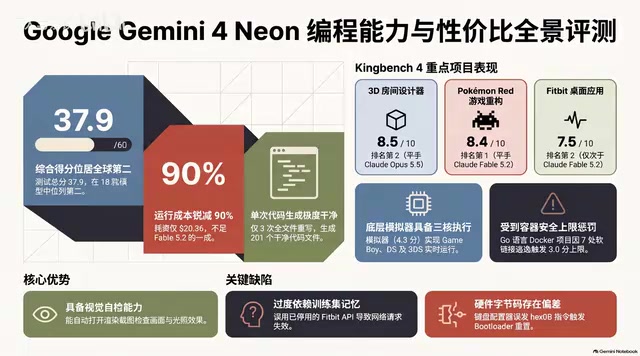
Gemini 4 Neon Hands-On: Value King or Confident Catastrophe?
Gemini 4 Neon review: 1M-token context, four thinking levels, 201 files in one KingBench4 pass at one-tenth Fable 5.2's cost—but it hallucinates fake data, leaves 7 symlink escapes, and bricks keyboards.

Google Gemini 4 Neon Hands-On: 6 3D Works That Impress and Fail
Hands-on with Google Gemini 4 Neon on a 3060 laptop: 6 3D works tested. Sunshower Fishing Harbor and mechanical keyboard impress; soft-body physics and faces fall short.
Gemini 4 Neo Web Novel Writing Test: Faint AI Flavor, Textured Dialogue
Bilibili creator's first-look review of Gemini 4 Neo for Chinese web novel writing: testing a Three Kingdoms transmigration opening with faint AI flavor, emotionally textured dialogue, and strong crisis building, plus comparison of 4A/4H/4C models and full workflow demos.