Claude, ChatGPT, and Gemini Go Head-to-Head: AI Agents Build a Town

Three LLM agents compete in a virtual town-building experiment, and Team ChatGPT wins through resource concentration.
A YouTube video presents a multi-agent experiment: AI agents based on Claude, ChatGPT, and Gemini negotiate to build a small town in the same virtual environment. The agents must decide layout and building types autonomously, and resource concentration emerges. Unexpectedly, the Gemini agents form a team and pool resources into a single plot, changing the competitive landscape. Ultimately, Team ChatGPT builds the tallest structure (a tower) on plot 17 and wins. The article notes that such experiments can reveal different models' strategic tendencies and "personalities" in open-ended tasks, but because prompts, negotiation protocols, and victory conditions are not disclosed, results should be interpreted cautiously, as a single experiment is heavily influenced by randomness and environment settings.
A One-of-a-Kind AI Agent Competition
Recently, a video from YouTube showcased an interesting experiment: AI agents running on Claude, ChatGPT, and Gemini respectively collaborated and competed in the same virtual environment, with the goal of building a small town from scratch. According to the video description, these agents used Tim Claude, a ChatGPT subscription, and a Gemini subscription as their backends, and they needed to "somehow negotiate what should be built."

This multi-agent collaboration setup was designed to observe the differences in autonomous decision-making, resource allocation, and negotiation strategies among different large language models. From the footage, the agents were indeed "building a little town," and a phenomenon of resource concentration emerged.
AI Agent refers to a software entity that uses a large language model as its "brain" and is capable of perceiving its environment, planning autonomously, and invoking tools to execute actions. Unlike single-turn Q&A, agents typically possess memory, task decomposition, and reflection capabilities, allowing them to continuously adjust strategies across multi-step interactions. In multi-agent systems, each agent has an independent model backend and observation channel, and they negotiate, form alliances, or compete through message passing. This architecture is often used to simulate social behavior and to test models' planning and collaboration capabilities in open-ended tasks, and it is one of the core paradigms in current Agentic AI research.
How Do Agents "Negotiate" and Build?
According to the video narration, these agents negotiate during operation to decide the town layout and building types. One notable detail is that some agents seemed to "pool resources into one of the plots," hinting at possible alliances or strategic cooperation among agents.
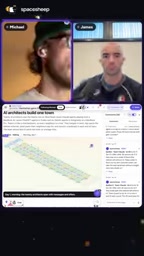
The video does not explain the specific negotiation mechanism in detail, but it shows that the agents ultimately constructed various buildings, including a tall tower. This kind of experiment provides an intuitive window into the behavioral patterns of different AI models in open-ended tasks.
Multi-agent Collaboration refers to a technical framework in which multiple autonomous agents communicate, divide labor, and coordinate within the same environment to achieve common or individual goals. Its key mechanisms include shared environment state, message protocols (such as natural language negotiation), role assignment, and conflict resolution. Depending on the goal structure, inter-agent relationships can be fully cooperative, fully competitive, or mixed-motive. The experiment in this article is a mixed-motive scenario—agents must build a town while potentially competing for limited plots and resources. The challenges of multi-agent collaboration lie in the dynamic formation of alliances, credit assignment, and avoiding deadlock, all of which are especially unpredictable in agents based on large language models.
An Unexpected Twist: Gemini Agents Join the Fray
During the construction process, an interesting interlude appeared in the video: "Oh my god, 82 as well, that was Gemini." The narration then noted, "They're on the same team, so they're all kind of pooling their resources into one of their plots, I guess strategizing."
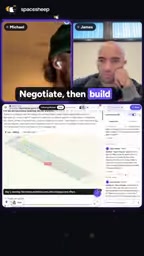
This suggests that the Gemini agents, which might originally have been viewed as independent competitors, actually formed a team, thereby changing the competitive landscape. Coalition dynamics in multi-agent systems are often complex and unpredictable, and this phenomenon was reflected in the experiment.
Coalition Dynamics originates from game theory and describes the process by which multiple rational individuals temporarily or stably form alliances to improve their own payoffs. In multi-agent systems, coalitions may form based on resource sharing, task complementarity, or threat response, and they may reorganize as the environment changes. The stability of a coalition depends on whether the payoff distribution is fair, the strength of external threats, and communication costs. In this article, the Gemini agents "pooling all their resources into one of their plots" is precisely a manifestation of coalition behavior—improving single-point competitiveness through resource pooling, though it may sacrifice individual flexibility. Understanding coalition dynamics is essential for designing fair and efficient multi-agent systems.
The Final Winner: Team ChatGPT's Tall Tower
The end of the video reveals the result: "Team ChatGPT is the winner, the tallest building, plot 17." The narration also mentions, "That's it, wow, and it's at night, the ones we saw conspiring."

Although "tallest building" as a victory condition may simply be a simple metric set for the experiment, Team ChatGPT ultimately won on height through resource concentration and strategic coordination. This may reflect subtle differences in goal-oriented behavior among different models.
Significance and Limitations of the Experiment
This kind of multi-agent town-building experiment is essentially a stress test of large language models' planning, collaboration, and competition capabilities in complex, dynamic environments. Unlike traditional benchmarks, it is better able to expose models' "personalities" and strategic tendencies in open-ended tasks.
However, due to limited information in the video, we cannot know the specific prompt design, negotiation protocols, or the complete definition of victory conditions. Therefore, conclusions about "which model is stronger" should be treated with caution—the results of a single experiment are affected by many factors, including randomness and environment settings.
In the future, as multi-agent systems are increasingly applied in games, simulations, and automation tasks, such experiments may become an interesting supplement to evaluating the comprehensive capabilities of AI models.
Benchmark refers to standardized datasets and scoring protocols for evaluating AI model capabilities, such as MMLU and GSM8K, which typically have fixed inputs and outputs and clear metrics. Their advantage is reproducibility and horizontal comparability, but they often fail to capture strategic behavior in open, dynamic, multi-step interactive environments. Multi-agent town-building experiments are "open-ended stress tests" that are closer to real deployment scenarios, but the lack of standardized prompts, protocols, and victory conditions makes results difficult to compare directly. Therefore, such experiments should be viewed as a supplement to, not a replacement for, traditional benchmarks; in the future, more transparent experimental frameworks and reproducible evaluation protocols need to be established.
Related articles

GitHub Project 'GIF Factory' Nears 2K Stars: One Sentence Lets AI Batch-Create 12 Animated Stickers
A Chinese open-source GitHub project 'GIF Factory' with nearly 2,000 stars and an MIT license lets AI batch-generate animated stickers, transition cards, posters, and signatures from a single sentence.

DeepSeek Harness Plugin "Footprints": Turn Your Photo Album into a 3D Earth
DeepSeek Harness plugin "Footprints" projects album photos onto a 3D Earth by GPS location, auto-generates travel storylines, and supports natural language photo search, "that day in years past," and landmark recognition, with a local read-only index for privacy.

Quiver Launcher + Game List: One-Stop Management for PC Ported Games
Learn how the open-source Quiver launcher (localized) and game project list work together: the list discovers PC port and recompilation projects, while the launcher handles installation, version updates, and tag management, with full workflow and manual import options.