Claude Code Cost-Saving Guide: Four Hidden Pitfalls and Three-Layer Cost Optimization

List prices dropped, but cache cliffs, runaway sub-agents, high-tier premiums, and inefficient output still drive up bills.
The article points out that many teams upgrading to Opus 5.5 enjoy official price cuts and cache discounts yet still face high monthly bills, due to four hidden cost pitfalls: cache lifetime shrinking to 5 minutes under API/cloud gateways (a 120K-token idle context going from $0.024 to $0.60), built-in Explore agents inheriting the main model (costing 7x in multi-agent scenarios), 5x High-tier price surges past 100K tokens and ~2.5x premiums for high-resolution images, and inefficient upgrades plus redundant output. It then presents an official three-layer ledger solution: assign models by task, run lightweight models first before escalating hard problems, use Medium daily, and compress context while hot before leaving. The author notes these are single-source reference values and recommends small-scale testing first.
Why Are Bills Higher Even Though List Prices Dropped?
Many teams discovered an odd phenomenon after upgrading to Opus 5.5: official list prices dropped 20%, caching costs dropped 60%, yet monthly bills still burn through money fast. According to a Bilibili creator citing Anthropic's five consecutive official cost manuals in a video, the problem isn't pricing—it's four "money-leaking pitfalls" hidden in the background.
The cost of these pitfalls can be illustrated with a simple scenario: step away for 6 minutes to grab a coffee, come back and let the model continue the next sentence, and the cost may be nearly 30 times higher. Understanding these mechanisms matters more than simply switching models when it comes to determining bill magnitude.
Pitfall One: Cache Cliff and Output Assassins
Cache Lifetime Isn't One Hour—It's Five Minutes
The cache retention time within the subscription is one hour, but once you go through the API, cloud gateway, or extra credits, the lifetime shrinks to 5 minutes. The video provides a measured data point: after a 120K-token context sits idle for 6 minutes, what was originally a $0.024 cache read instantly becomes a $0.60 context rewrite.
What's more worth remembering is the overall magnitude of cache benefits. When running 40 rounds of tasks with a cumulative 2.8 million input tokens sent, zero cache costs $11.20, while with 96% cache hit rate it costs only $0.99. That's an order of magnitude difference, which also explains why "pause a while before chatting again" is a very expensive operation.
What is Prompt Caching? LLM APIs typically charge by input tokens, and Prompt Caching allows the server to retain the intermediate computation results (KV Cache) of a long prefix (such as system prompts or codebase context) for a period of time. If the next request hits the same prefix, it can be reused directly and billed at a price far below normal input (commonly around 10%), thereby significantly reducing costs. But cache has a TTL (time-to-live), and after expiration it needs to be recalculated and written anew, with the price returning to normal input levels. Therefore, "pause a while before chatting again" causes the cache to go cold, turning originally cheap cache reads into expensive context rewrites—this is exactly the cost cliff caused by the 5-minute lifetime mentioned in the article.
The Pricing Weight of Output Tokens
Another hidden point mentioned in the video: the cost of one output token equals that of 100 cached tokens, and the model's hidden thinking is also counted as output. In other words, making the model "think a bit longer" puts the bill pressure mainly on the output side, not the input side.

Why is output more expensive than input? In LLM API pricing, the unit price of output tokens is usually far higher than that of input tokens (commonly 3-5 times or even more), because autoregressive generation requires serial computation token by token, which cannot be processed in parallel like input, and places greater demand on compute and latency. Additionally, some models (especially reasoning models) count "hidden thinking" or reasoning processes as output tokens, even if this content is not shown to users. When the model is asked to "think a bit longer," all the extra thinking tokens generated are billed at the output unit price, so bill pressure naturally concentrates on the output side. The comparison in the article that "1 output token equals 100 cached tokens" is an extreme manifestation of this weight gap.
Pitfall Two: Sub-agents Run Wild, Main Model Foots the Bill
The built-in Explore agent inherits the main model by default. When it searches files or reads logs, this work—which could have been delegated to a lightweight model—is all billed at Opus's high price. The video points out that in multi-agent planning scenarios, costs can even reach 7 times that of regular usage.
This is an easily overlooked architectural issue: the orchestration logic of multi-agent systems itself isn't wrong, but if cheaper models aren't designated for low-value, high-frequency tasks like "reading logs and finding files," costs will be silently amplified.
What are sub-agents and multi-agent orchestration? In agent frameworks like Claude Code, the main model can spawn sub-agents to execute specific subtasks—for example, the Explore agent is responsible for searching files, reading logs, and locating code. Sub-agents often inherit the main model's configuration and pricing by default, meaning these low-value retrieval tasks are also billed at the main model's (e.g., Opus's) high price. The value of multi-agent orchestration lies in division of labor, but if cheaper models aren't separately designated for sub-agents, costs will be silently amplified—especially when multiple sub-agents are frequently invoked during the planning phase, where accumulated token consumption can reach several times that of regular usage.
Pitfall Three: High Tier and High-Resolution Images
When context crosses 100K tokens, the High tier's price surges 5 times. Sending high-resolution large images similarly triggers a premium of about 2.5 times. When these two rules stack, the combination of long conversations plus image input is the most prone to runaway costs.
What are the High tier and tiered context pricing? Some model services divide tiers by task difficulty or context length (such as Medium/High/Max), with different tiers corresponding to different reasoning intensity and unit prices. When context exceeds a certain threshold (such as 100K tokens), some tiers trigger higher pricing multipliers, because long context significantly increases VRAM and compute overhead. High-resolution image input works the same way: images are split into large numbers of visual tokens for computation, and the higher the resolution, the more tokens, the more obvious the premium. Long conversations combined with image input happen to trigger both rules simultaneously, making it the most runaway-prone combination scenario.
Pitfall Four: Inefficient Upgrades and Verbose Output
The last pitfall is more about usage habits: unnecessary tier upgrades and redundant content in model output both drive up bills. The video mentions that starting from a lower tier combined with official audit cleanup rules can directly save about 25%.
The Official Three-Layer Ledger: A Practical Cost-Stopping Solution

The video summarizes the optimization solution into three layers, with the logic moving from "who does what work" to "how to control rounds" to "choosing tiers by task difficulty."
Layer One: Assign Models by Task
Lock tasks like Explore and log-reading to the High tier, and leave core code-changing work to Opus 5.5. The video mentions a measured test on a 2.2 million-token source code investigation: an Opus team lead paired with lightweight models achieved comparable accuracy at one-third lower cost. This is the most cost-effective layer of change because it doesn't sacrifice result quality.
Layer Two: Automated Testing to Compress Rounds
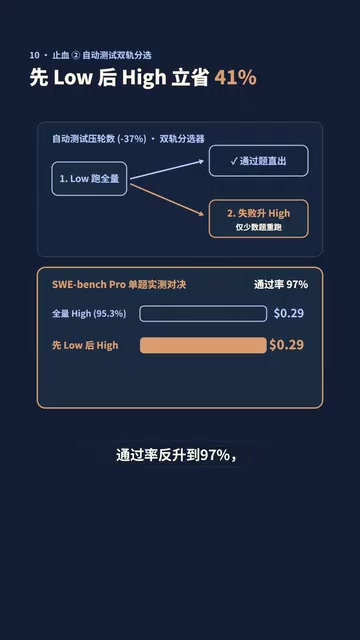
First run the full suite with lightweight models, then escalate failed cases to the High tier for re-runs. The video's result: the pass rate actually rose to 97%, and per-run cost dropped from $0.29 to $0.17, saving 41%. The insight here is that using expensive models on "filtered hard problems" is more cost-effective than using them on "all tasks."
Layer Three: Use Medium Daily, Switch Tiers for Extremely Hard Tasks
Stably use the default Medium tier for daily tasks, and switch to Fable 5.2's High tier for extremely hard tasks. The video claims this combination scores on par with Opus's Max tier while saving half the cost.
Wrap-Up Actions Before Leaving
The video also mentions a specific operation: before leaving, while context is still hot, run a Contact compression at a cost of about 0.25%; if you wait for the cache to go cold, input alone will cost 0.75. This may seem like a detail, but it directly corresponds to the cause of the first pitfall.
How to Interpret These Numbers
It should be noted that the above cost figures and savings ratios all come from the official manuals cited by the Bilibili creator and personal measurements, representing reference values from a single source. Different teams vary greatly in task structure, context length, and invocation methods, so actual savings will differ. It's recommended to first run small-scale controlled tests according to the three-layer ledger before deciding whether to adjust configurations comprehensively.
The core logic doesn't depend on specific numbers: assign high-frequency, low-value tasks to cheap models, reserve expensive models for filtered hard problems, and avoid letting caches go cold unnecessarily. These three principles hold under any pricing system.
One-line Summary
List prices dropped, but the cache cliff, runaway sub-agents, high-tier premiums, and inefficient output are still driving up bills.
Paragraph Summary
The article points out that many teams, after upgrading to Opus 5.5, enjoy official price cuts and cache discounts yet still face high monthly bills. The root cause lies in four hidden cost pitfalls in the background: first, cache lifetime shrinks to 5 minutes under API or cloud gateways, and after a 120K-token context sits idle for 6 minutes, read cost rises from $0.024 to $0.60; second, the built-in Explore agent inherits the main model by default, and multi-agent scenarios can cost 7 times regular usage; third, after context crosses 100K tokens, the High tier costs 5 times more, and high-resolution large images carry about a 2.5 times premium; fourth, inefficient upgrades and redundant output. The article then presents the official three-layer ledger solution: assign models by task, run the full suite with lightweight models before escalating hard problems, use the Medium tier daily, and emphasize running context compression while the cache is still hot before leaving. The author cautions that these numbers are reference values from a single source and recommends small-scale controlled testing before comprehensive adjustment.
Related articles
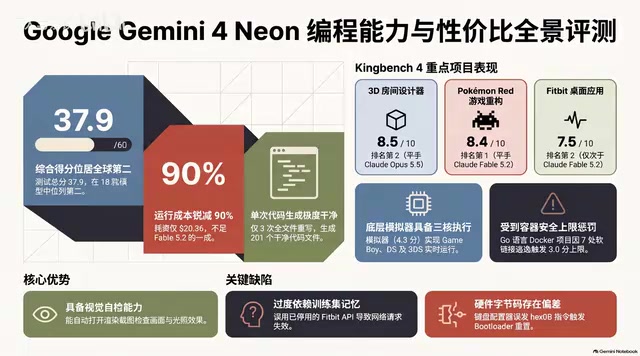
Gemini 4 Neon Hands-On: Value King or Confident Catastrophe?
Gemini 4 Neon review: 1M-token context, four thinking levels, 201 files in one KingBench4 pass at one-tenth Fable 5.2's cost—but it hallucinates fake data, leaves 7 symlink escapes, and bricks keyboards.

Google Gemini 4 Neon Hands-On: 6 3D Works That Impress and Fail
Hands-on with Google Gemini 4 Neon on a 3060 laptop: 6 3D works tested. Sunshower Fishing Harbor and mechanical keyboard impress; soft-body physics and faces fall short.
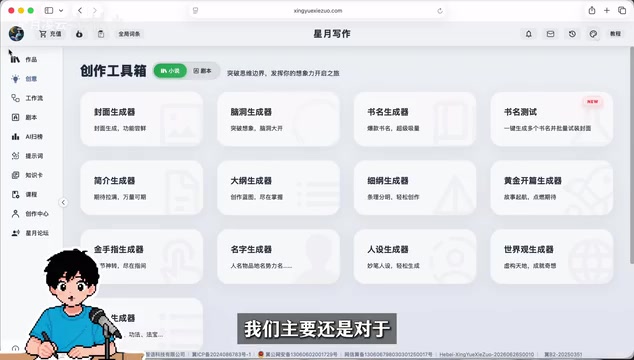
Gemini 4 Neo Web Novel Writing Test: Faint AI Flavor, Textured Dialogue
Bilibili creator's first-look review of Gemini 4 Neo for Chinese web novel writing: testing a Three Kingdoms transmigration opening with faint AI flavor, emotionally textured dialogue, and strong crisis building, plus comparison of 4A/4H/4C models and full workflow demos.