Claude Code Turned Into a Game Studio: 49 AI Agents Working Together

An open-source project uses 49 agents and 72 skills to turn Claude Code into a game dev team mirroring a studio hierarchy.
The Donchitos/Claude-Code-Game-Studios project on GitHub transforms Claude Code from a general coding assistant into a complete game development studio, with 49 AI agents and 72 workflow skills organized by a coordination system mimicking a real studio hierarchy. Implemented in Shell, it directly calls Claude Code's CLI with low deployment overhead. Its design differs from a single long prompt playing multiple roles—it solidifies functions into independent agents answering 'who does it' and 'how.' The article notes that more agents doesn't mean higher quality; communication costs, context loss, and decision ownership still need testing, and stars reflect attention not maturity—so try it on a small scale first.
Turning Claude Code into a Game Development Team
An open-source project called Donchitos/Claude-Code-Game-Studios has been gaining attention on GitHub. Its goal is clear: transform Claude Code from a general-purpose coding assistant into a complete game development studio—with 49 built-in AI agents and 72 skills, organized by a coordination system that mirrors a real studio hierarchy. The project currently has 28,601 stars and 4,014 forks, with 538 new stars in a single day—a clear sign of its popularity.
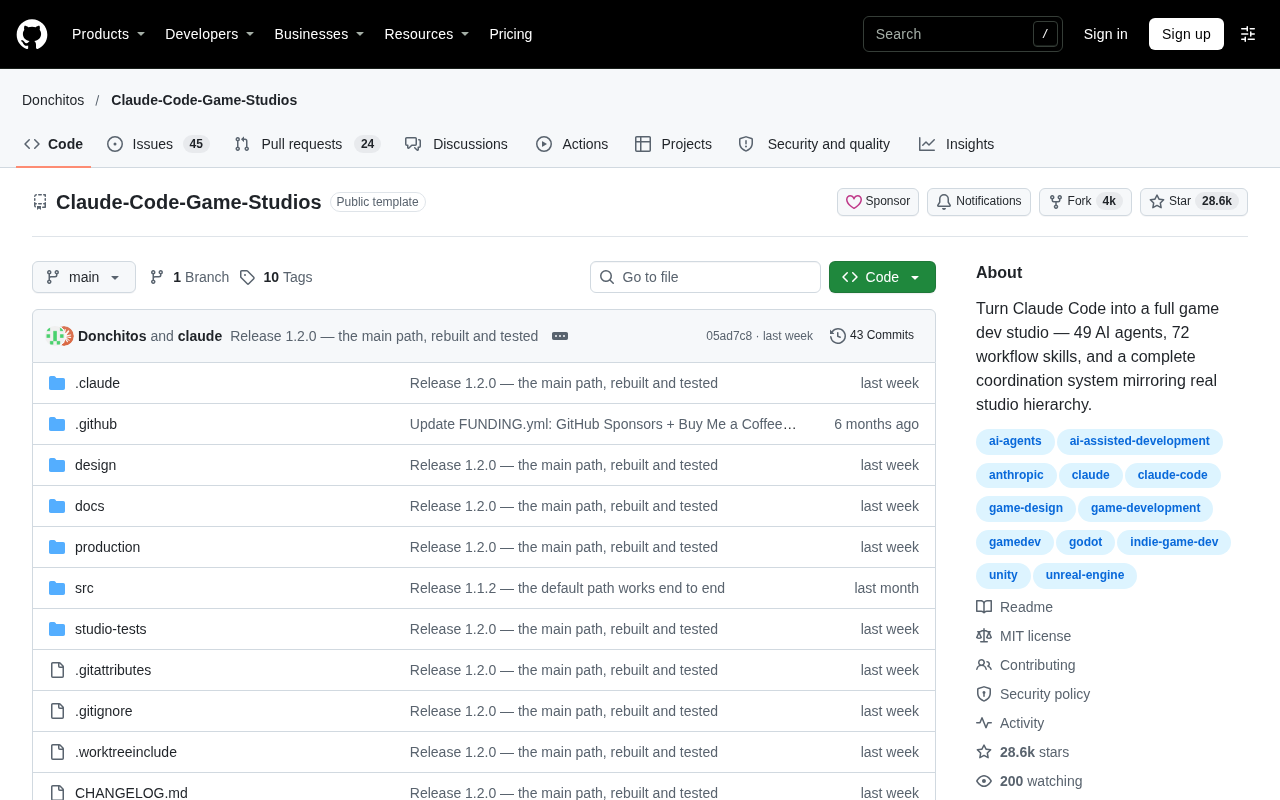
The core idea isn't to have one large model do everything, but to break game development into agents with different roles, then organize them through workflow skills. For developers familiar with Claude Code, this means handling multiple stages from design to implementation within the same toolchain.
What Exactly Are the 49 Agents and 72 Skills?
According to the project description, the system is implemented in Shell and includes 49 AI agents and 72 workflow skills. Agents correspond to different functional roles in a studio, while skills correspond to reusable workflows. Together they form a division of labor structure that answers "who does it" and "how it's done."
This design approach differs noticeably from single-prompt engineering. The traditional method is to write a long prompt asking the model to play multiple roles, whereas this project solidifies roles into independent agent entities, each with relatively clear responsibility boundaries. The 72 skills act like a toolbox for agents to call upon in specific tasks.
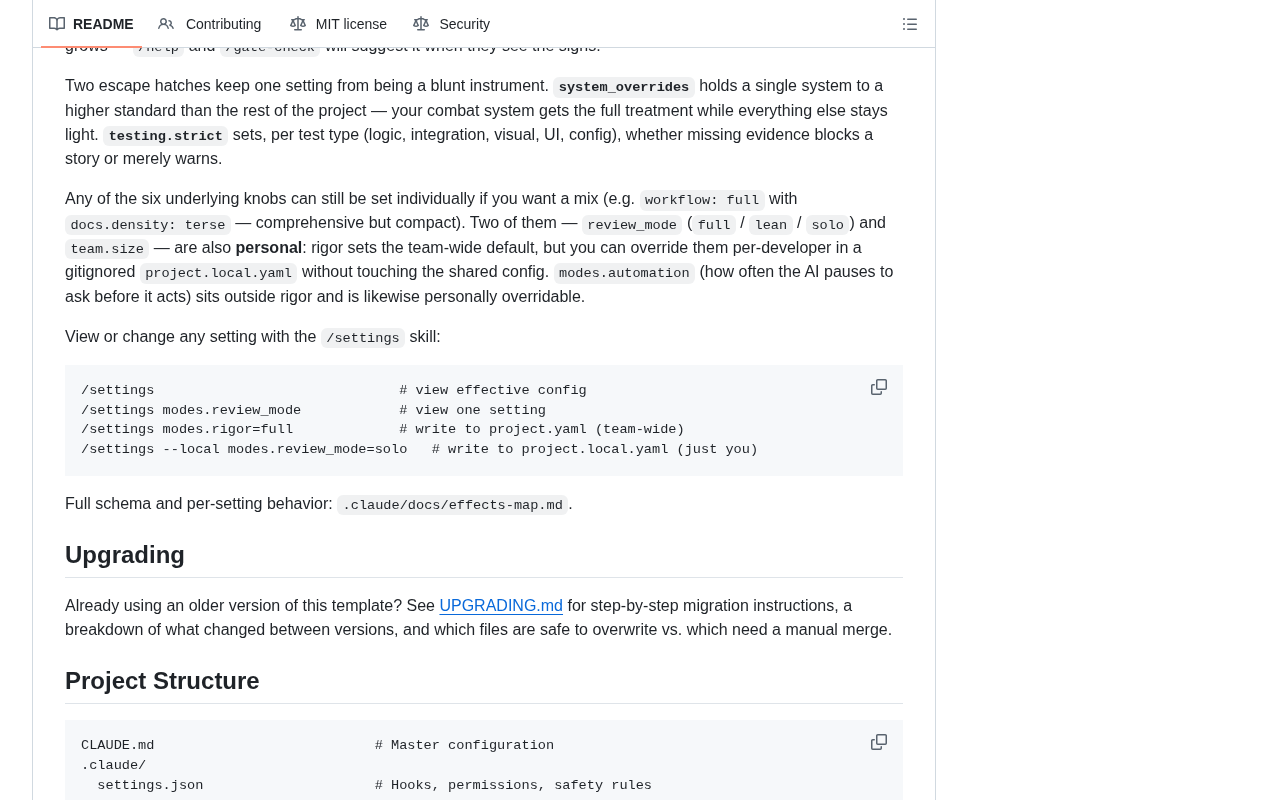
The project claims its coordination system "mirrors real studio hierarchy." This is the key differentiator from ordinary agent collections: agents aren't flat—there are reporting and collaboration relationships, so multi-agent outputs can converge through the workflow.
Claude Code and the Subagent Mechanism
Claude Code is Anthropic's command-line AI coding tool. Beyond regular conversational coding, it supports registering custom agents and slash commands through configuration directories (such as .claude/agents and .claude/commands). Each agent is essentially a Markdown/config definition with frontmatter metadata (name, description, available tools), delegated to by the main agent when needed, and subagents have independent context windows. This is precisely the technical foundation that enables this kind of project to organize work with "49 agents": agents aren't simultaneously online model instances, but role definitions scheduled per task, each holding local context. Understanding this helps assess the real cost of multi-agent collaboration—every delegation means context reloading and summary passing.
What Multi-Agent Collaboration Means for Game Development
Game development is inherently a multi-disciplinary field, requiring frequent alignment among design, programming, art, and testing. Using a single general-purpose AI assistant for all stages easily leads to context confusion and unclear responsibilities. Splitting functions into multiple agents can theoretically make each stage's output more focused.
However, more agents doesn't automatically mean higher quality. The communication cost among 49 agents, context transfer loss, and who ultimately makes decisions are all issues that need verification in actual use. Whether the 72 skills cover the complexity of real workflows also requires hands-on judgment from developers.
From an engineering perspective, using Shell to implement this system is a pragmatic choice—it can directly call Claude Code's command-line capabilities, has a low deployment barrier, and makes it easy for developers to modify agent configurations and skill scripts as needed.
Coordination Overhead in Multi-Agent Systems
The core challenge of multi-agent systems isn't the "number of roles" but orchestration: who decides task decomposition, how state is passed between agents, and who arbitrates conflicts. Common patterns include hierarchical (a manager agent decomposes tasks and aggregates results), pipeline (sequential handoff by stage), and blackboard (shared state for agents to read and write). The "mirroring real studio hierarchy" mentioned in the article is a hierarchical approach—its advantage is a clear decision convergence path, at the cost of upper-layer agents becoming context bottlenecks and errors amplifying along the hierarchy. In engineering practice, structured artifacts (design docs, task lists, interface contracts) are usually introduced as the source of truth between agents rather than relying on natural language conversation, otherwise information loss accumulates rapidly with the number of agents.
Who Should Use It, and What to Watch Out For
This project is better suited for teams or individuals already familiar with Claude Code who want to structure their AI-assisted development process. If you only occasionally use AI to write a few snippets of code, this 49-agent system may seem excessive; but if you're pushing a game project that requires multi-stage coordination, its layered approach is worth learning from.
One caveat: the project's stars are growing fast, but star count reflects attention, not maturity. The actual effectiveness of multi-agent systems depends heavily on the specific task, prompt design, and coordination quality between agents. It's recommended to try its skills and agent configurations on a small scale first before deciding whether to deeply integrate them into your workflow.
One-line Summary
An open-source project uses 49 agents and 72 skills to turn Claude Code into a game development team that mirrors a studio hierarchy.
Paragraph Summary
The Donchitos/Claude-Code-Game-Studios project on GitHub attempts to transform Claude Code from a general-purpose coding assistant into a complete game development studio, with 49 built-in AI agents and 72 workflow skills, organized by a coordination system that mimics a real studio hierarchy. Implemented in Shell, it can directly call Claude Code's command-line capabilities with a low deployment barrier. Its design differs from a single long prompt playing multiple roles—it solidifies functions into independent agent entities that separately answer "who does it" and "how it's done." The article also notes that more agents doesn't equal higher quality; communication costs, context loss, and decision ownership still need real-world testing, and star count reflects attention, not maturity—so it's advisable to try it on a small scale before deciding whether to deeply integrate it.
Related articles

Microsoft Fabric Database Agent in Action: From Reactive Firefighting to Intelligent Detective
A deep dive into the Microsoft Fabric Database Agent: how to enable it, supported monitoring scenarios, a blocking-issue demo, and the roadmap from reactive to autonomous operations.

Zendesk Uses ChatGPT Enterprise to Build a Sales Agent with 1,000 Daily Active Users
Zendesk opened ChatGPT Enterprise to all employees, who built about 600 apps themselves, including a sales expansion agent with about 1,000 daily active users. This article analyzes how it turns internal data into sales opportunities and its "don't wait" implementation strategy.

Google Releases Gemini 4 Carbon: Its Strongest Model Yet, Debuting with a Cybersecurity Focus
Google releases Gemini 4 Carbon, calling it its strongest model, with a cybersecurity focus. It tops the third-party composite ranking at 59 points but leads by only one or two. This article analyzes its security test results, staged rollout, token pricing, and the divergence between self-reported and third-party tests on hallucinations.