Claude Duet Launches: The Proactive AI Assistant That Alerts You First
Claude Duet uses proactive reminders and permission boundaries to explore AI's shift from tool to assistant.
Anthropic's Claude Duet moves AI assistants from passive response to proactive reminders: it continuously scans authorized calendars and email, spotting easily overlooked issues like scheduling conflicts and asking about them. It follows a rhythm of morning briefings, periodic daytime check-ins, and reminders only when needed to avoid high-frequency interruptions, while separating problem-spotting from decision-making—sending messages, payments, and signing documents all require user approval. Duet is currently a research preview available first to Pro and Max users in the US, and Anthropic acknowledges it may misread information or misjudge priorities. The article argues this marks a shift in AI assistant competition from answer quality to proactively spotting problems.
AI assistants are moving from "you ask, I answer" toward "you didn't ask, but I'll remind you anyway." Anthropic's new app Claude Duet turns this kind of proactive interaction into a product. According to an introduction video on Bilibili, Duet can proactively flag scheduling conflicts that are easy to overlook—before the user even says a word.
From Passive Response to Proactive Reminders
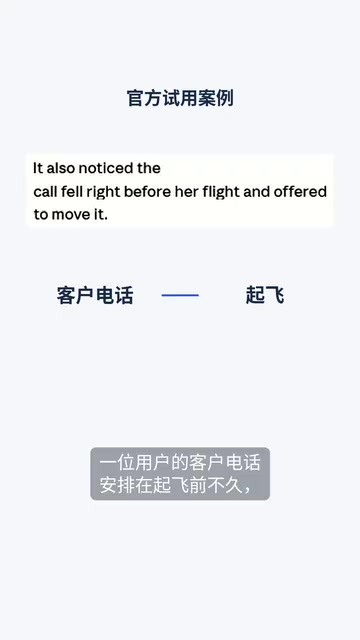
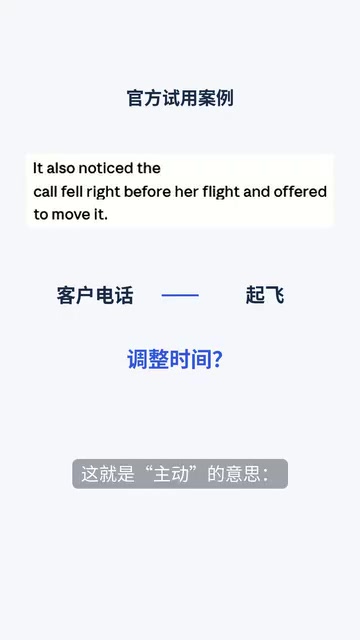
Traditional AI assistants work by waiting for user input. Duet takes a different approach: across the calendars, email, and other information sources you've authorized it to access, it continuously watches for things that may need your attention. The trial case Anthropic published is a telling example—a user had a client call scheduled shortly before a flight. Duet noticed the two events were too close together and proactively asked whether the time should be adjusted, even though the user hadn't noticed the conflict themselves.
This "proactiveness" isn't aimless pestering. Duet is positioned to watch for the problems you'd otherwise have to dig through email and calendars repeatedly to find—not to make decisions for you.
How calendar, email, and other data sources are connected: Duet can only read calendar and email data after the user actively authorizes it. This is typically done through standard authorization protocols such as OAuth, where users can choose which specific permissions to grant (for example, read-only calendar access, or email access as well) and can revoke them at any time in settings. Unlike handing over an account password, this kind of authorization gives third-party apps only limited, revocable access—and it's the prerequisite for proactive AI to safely "see" a user's context.
Work Rhythm: Morning Briefing, Daytime Check-ins
According to Anthropic's introduction, Duet follows a fixed work rhythm: it organizes key items every morning, checks for updates periodically during the day, and messages you only when needed. This design keeps proactive reminders measured, so they don't turn into a barrage of high-frequency notifications.

From a product-logic standpoint, this rhythm borrows from how human assistants work—start with a morning briefing, then stay attentive throughout the day. The difference is that AI can continuously scan information within the authorized scope and won't miss things just because it's busy.
Spotting Problems and Making Decisions Are Two Different Things
Duet draws a clear line in its permission design: it can prepare materials in advance and draft emails, but before sending messages, making payments, signing documents, or deleting content, it must wait for user approval.
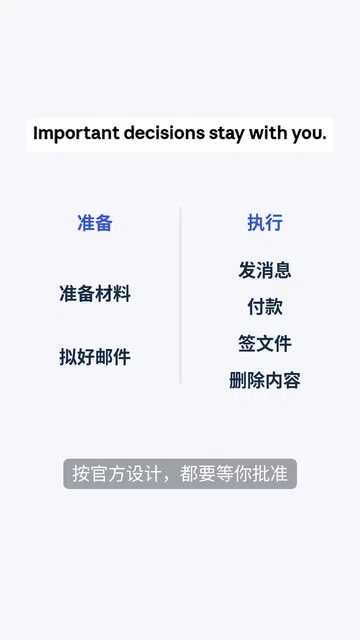
This boundary is worth noting. The biggest risk with proactive AI is acting beyond its authority. Duet separates "spotting problems" from "making decisions for you," preserving proactiveness while keeping ultimate control in the user's hands. This design approach may become a reference model for future proactive AI products.
Acting beyond authority: In the AI context, acting beyond authority refers to an agent performing operations with real consequences—such as sending messages, modifying schedules, making payments, or deleting data—without the user's explicit permission. Because proactive AI can trigger actions on its own, its risk of overstepping is higher than that of passive Q&A. Common safeguards include splitting "suggesting" and "executing" into two steps, requiring mandatory human confirmation for high-risk operations, and setting operation whitelists and frequency limits. Duet requiring user approval before sending messages, making payments, or signing documents is a direct response to this risk.
Research Preview Stage: Limitations Remain
Duet is currently a research preview, initially available to Pro and Max users in the United States, with an application channel possibly added later. Anthropic also acknowledges that it may misread information or misjudge priorities.
This is a reminder that the value of proactive AI rests on the accuracy of information. If calendar or email data is itself incomplete, or if the AI's judgment of priorities goes off track, proactive reminders may instead create noise. What Duet wants to save you is the effort of repeated checking—but whether this mechanism can run reliably in real-world scenarios still needs more user validation.
Research Preview: This is a common release format for AI products, referring to a version whose features are not yet fully stable and that is opened to a small group of users to collect feedback. It usually means the product may change at any time, has known flaws, and comes with no service-level commitment. For users, a research preview is suitable for trying out new things and providing feedback, but it shouldn't be relied on for critical matters; for vendors, it's a common practice for validating product direction and controlling risk before formal commercialization.
The Competition in Proactive AI Has Only Just Begun
Duet's arrival shows that the competitive focus for AI assistants is shifting from "answer quality" to "the ability to proactively spot problems." As model capabilities gradually converge, whoever can more accurately understand user context and intervene more judiciously is more likely to win everyday usage scenarios.
For ordinary users, this means AI is starting to take on part of the role of an "assistant" rather than a "tool." For developers, Duet's design around permission boundaries and work rhythm offers a product sample worth referencing. Proactive reminders sound simple, but finding the balance between being unobtrusive and being useful is no easy task.
Related articles

RAG Interview Essentials: Breaking Down the Full Offline Indexing and Online Retrieval Pipeline
A complete breakdown of the RAG retrieval-augmented generation workflow: offline document loading, chunking, vectorization, and indexing; online query rewriting, vector retrieval, reranking, and generation, plus core interview points and system optimization directions.

AI Large Models for Absolute Beginners: Principles and API Calling in Practice
From AI's evolution to large model training principles and core concepts like Token, Temperature, and Top-P, this article explains system prompts, Function Call, RAG, and memory with hands-on examples and four API call scenarios—ideal for beginners.

Will GitHub Die? Open Source Maintainer Burnout and the Collaboration Crisis in the AI Era
Lex Fridman podcast discussion on open source maintainer burnout and GitHub's predicament: massive pull requests overwhelm core maintainers, and AI worsens code bloat. Using math journal peer review and Poincaré conjecture verification as analogies, the article analyzes why verification in knowledge production must be deliberately slow, and how open source communities can avoid the failure mode of maintainers exiting.