Claude's Safety Classifier Is Hurting Developers: Why a Premium Subscription Can't Retain Users

Claude safety classifier false positives block legitimate reverse engineering and device porting; user threatens to cancel $200 subscription.
A Reddit user doing reverse engineering is considering canceling their $200/month Claude Max subscription due to frequent safety classifier misjudgments. While porting OpenWRT to their personal Unifi U6 Pro, Claude repeatedly flagged it as a "network attack" and refused—despite the operation being protected by EU Right to Repair laws. The user says false positives on security-adjacent topics have worsened recently, and prompt adjustments no longer bypass them. The high price amplifies reliability expectations, and frequent refusals undermine willingness to pay. The article highlights the safety-usability balancing act and the risk of driving away high-paying professional users.
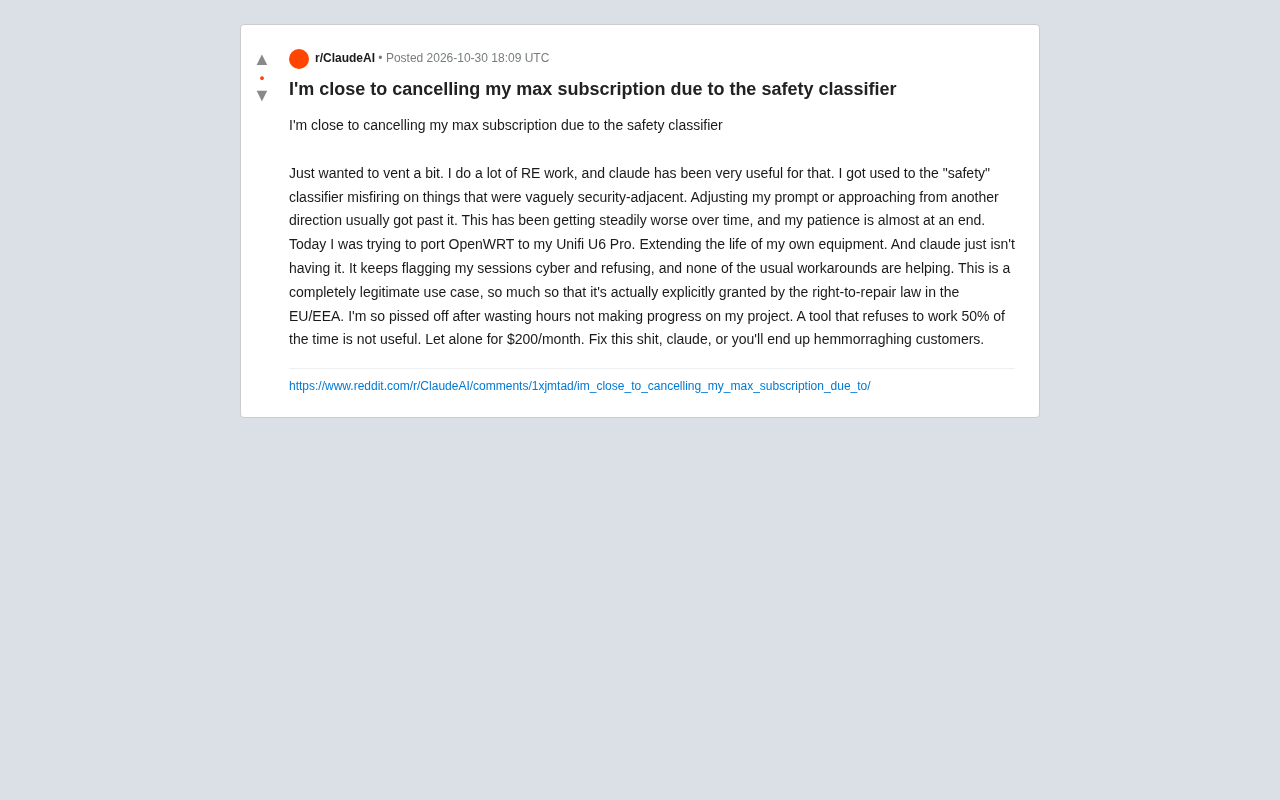
A Reddit user posted that they are considering canceling their $200/month Max subscription due to frequent misjudgments by Claude's safety classifier. The user works in reverse engineering (RE), and Claude had been a valuable tool—but recently the safety mechanism has been increasingly misflagging "security-adjacent" topics, even affecting completely legitimate device porting projects.
How the Safety Classifier "Misflags" Legitimate Development Work
According to the user, they used to work around false positives by adjusting prompts or rephrasing questions from a different angle, but that approach recently stopped working. That day, they were trying to port OpenWRT to their own Unifi U6 Pro device—a routine operation to extend device lifespan—but Claude repeatedly flagged it as a "network attack" and refused to respond.
"This is a completely legitimate use case, explicitly permitted under the EU/EEA Right to Repair legislation," the user wrote. Hours of effort were wasted, and they stated bluntly: "A tool that refuses to work 50% of the time is useless, let alone at $200 a month."
This is not an isolated case. In developer communities, discussions about AI coding assistants' overly sensitive safety mechanisms have been ongoing. Safety classifiers are designed to prevent misuse, but when they cannot distinguish malicious attacks from legitimate research, they become a productivity obstacle instead.
Claude's safety classifier is an independent moderation mechanism deployed by Anthropic before model output, typically consisting of lightweight classification models or rule-based filters. It works by scoring content for risk before user requests enter the main model or after responses are generated; if judged high-risk (such as cyberattacks, malware, bioweapons, etc.), it directly blocks or replaces the response with a refusal message. Such classifiers rely on pattern matching and semantic similarity, lacking deep understanding of user intent, project context, and legal background, and thus easily misjudge "security-adjacent" legitimate requests (such as penetration testing, device firmware modification, vulnerability research) as malicious behavior. Rising false positive rates usually stem from tightened classifier thresholds or training data distribution shifts aimed at reducing missed detections, at the cost of sacrificing usability for professional users.
OpenWRT is an open-source Linux distribution for embedded devices, commonly used in routers, single-board computers, and other network devices. Porting OpenWRT to a device (such as a Ubiquiti Unifi U6 Pro access point) typically involves unlocking the bootloader, flashing firmware, adjusting partitions, and adapting drivers. These steps are technically similar to firmware implantation and device takeover in "network attacks," but the purpose is to extend device lifespan, add custom functionality, or fix security vulnerabilities—legitimate device modification and repair activities. If a safety classifier judges only by surface features of the operation sequence, it can easily misclassify such porting work as a malicious firmware attack and refuse to assist.
Paying Users' Patience Is Running Out
The user emphasized that they are not opposed to safety measures, but cannot accept the continued rise in "misflagging" frequency. They noted that Claude's safety classifier has long had false positives on "vaguely security-adjacent" content, but it has noticeably worsened in recent weeks.
"Fix this, Claude, or you'll lose a lot of customers," they warned at the end of the post. The $200/month price point means users expect higher tool reliability, and frequent false refusals directly undermine willingness to pay.
The Balancing Challenge Between Safety and Usability
AI companies face a dilemma: overly lenient safety policies may lead to misuse, while overly strict ones drive away legitimate users. For edge domains such as reverse engineering, security research, and device modification, classifiers often lack sufficient contextual understanding and can only conservatively refuse.
In this user's case, the backing of Right to Repair legislation highlights the complexity of the problem—behavior permitted by law, yet the AI refuses to assist. This is not just a technical issue but a product strategy issue. If Claude cannot serve this group of professional users with high willingness to pay, competitors may seize the opportunity.
Currently, Anthropic has not made a public response to such feedback. But the user community's patience is clearly limited, and when "safety" becomes an excuse for frequent refusals, a wave of subscription cancellations may only be a matter of time.
The EU Right to Repair is a series of legislative measures promoted by the EU in recent years, aimed at requiring manufacturers to provide repair manuals, spare parts, and software updates, and allowing consumers and independent repairers to repair and modify devices. The legislation explicitly supports users in modifying firmware and replacing systems on their own devices to extend product lifespan and reduce electronic waste. In this context, porting OpenWRT to personal devices is not only legal but legally encouraged. If AI safety classifiers cannot recognize this legally permitted context, they will come into direct conflict with regulations, exposing the current classifiers' shortcoming of lacking "legal and situational awareness."
One-line Summary
Claude's safety classifier frequently misflags legitimate reverse engineering and device porting, and a user threatens to cancel their $200 subscription.
Paragraph Summary
A Reddit user working in reverse engineering is considering canceling their $200/month Max subscription due to frequent misjudgments by Claude's safety classifier. When porting OpenWRT to their personal Unifi U6 Pro device, Claude repeatedly flagged it as a "network attack" and refused to respond, even though the operation is protected by the EU Right to Repair legislation. The user says the classifier's false positives on "security-adjacent" topics have noticeably worsened recently, and even adjusting prompts cannot bypass them. The high $200/month price amplifies expectations for tool reliability, and frequent false refusals directly undermine willingness to pay. The article notes that AI companies face the balancing challenge between safety and usability; classifiers lack contextual understanding and may drive away professional users with high willingness to pay, allowing competitors to seize the opportunity.
Related articles

Using and Topping Up Claude in China: Three Methods Compared and a Guide to Avoiding Account Bans
A guide to using and topping up Claude in China: compare direct overseas credit card payment, US Apple ID and Android Google Play in-app purchases, and self-service website top-up by barriers, cost, and suspension risk, plus five habits to reduce the chance of a ban.

From ChatGPT Content Restrictions to Eval, Observability, and Guardrail in Practice
Through a hands-on e-commerce order Agent, this article explains the engineering logic behind ChatGPT content restrictions and how Eval, Observability, and Guardrail work together to prevent same-name user data leaks and prompt injection risks.
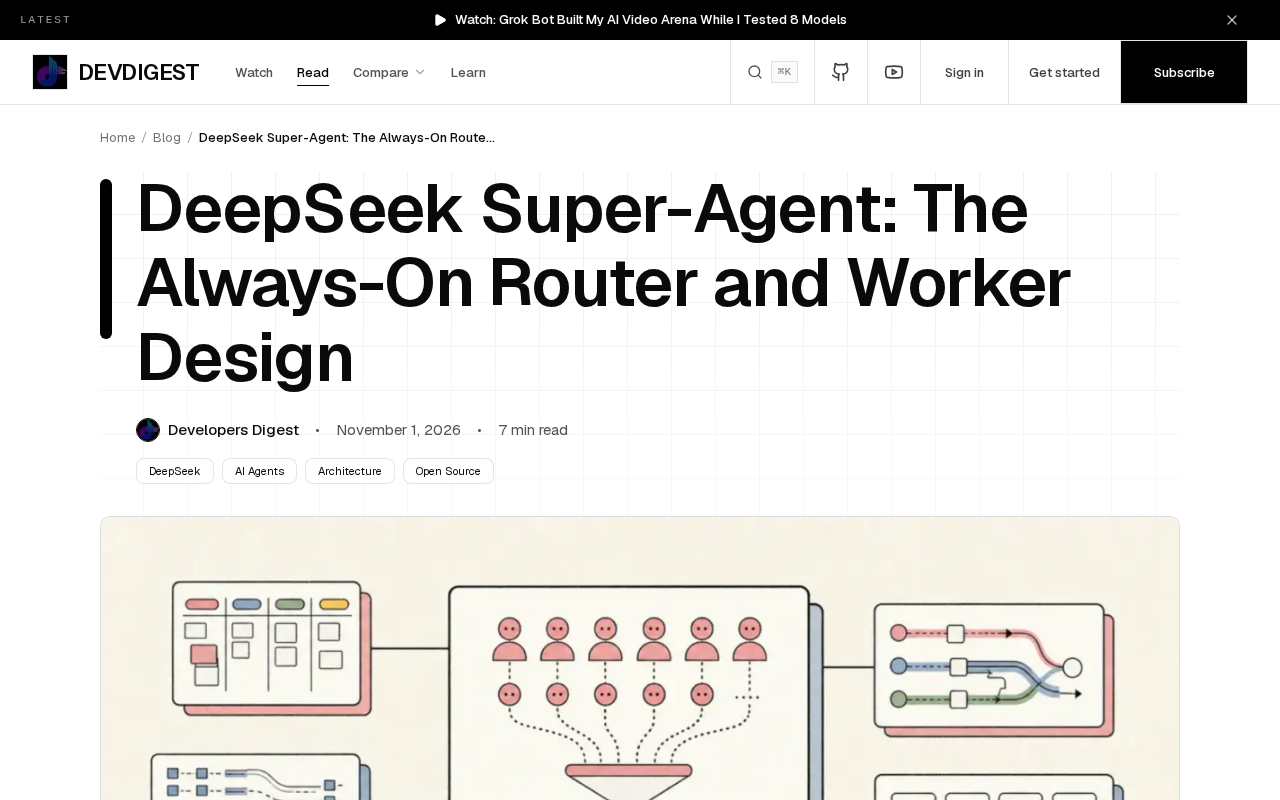
DeepSeek Open-Sources Super-Agent: An Architecture Deep Dive into the Router and Worker Design of an Always-On Coding Assistant
DeepSeek open-sources the always-on coding agent dsh-superagent, using a separated Router-Worker architecture that balances continuous operation and permission control. This article analyzes its design approach, what the code actually delivers, and the safety debate surrounding autonomous coding assistants, helping developers decide whether it is worth learning from.