Cursor Hacked: A Security Wake-Up Call from Third-Party Keys to Counterfeit Extensions
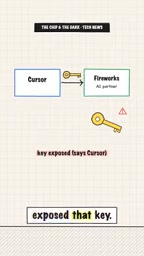
Cursor suffered a supply chain attack due to a partner key leak, and counterfeit extensions were briefly listed.
Cursor experienced a supply chain attack: attackers used an access key leaked by AI partner Fireworks to enter Cursor's systems, copied a small number of old programming logs containing passwords and API keys, affecting less than 0.01% of customers. The attackers then listed counterfeit Claude Code extensions in Cursor's extension marketplace, attempting to implant backdoors. The extension was online for about 11 hours, and up to about 5,000 users may have downloaded it, but backdoor implantation failed on most machines. Cursor has taken down the extension marketplace, rotated keys, and contacted affected customers, while clarifying that this matter is unrelated to Anthropic and that Privacy Mode data was not touched.
AI code editor Cursor recently suffered a supply chain attack that serves as a notable warning. The attacker did not breach Cursor's defenses directly; instead, they exploited an access key leaked by its AI partner Fireworks, penetrated Cursor's systems, and further planted counterfeit Claude Code extensions in the extension marketplace. This incident reveals an often-overlooked truth in the AI tool ecosystem: your security strength depends on the weakest link in the chain.
Incident Recap: A Chain Reaction Triggered by a "Spare Key"
According to reports from a YouTube channel, Cursor had issued an access key to its AI partner Fireworks. Cursor stated that Fireworks exposed this key. After obtaining this "spare key," the attacker copied some old programming logs. It's like a homeowner leaving a spare key under a partner's doormat, and the attacker, after entering, found more keys inside the house.
A small number of these logs still contained customer passwords and API keys. The proportion of affected customers was less than 0.01%. Although the percentage is extremely low, for the affected users, the leakage of passwords and API keys means real risks—attackers could use them to access other services or impersonate users to perform operations.

In a post-incident statement, Cursor emphasized that this was not Anthropic's responsibility and that data under Privacy Mode was never touched. This clarification helps delineate responsibility boundaries, but also indirectly illustrates that data flows behind AI features involve multiple partners, and the security responsibility chain is longer than it appears on the surface.
Access Keys and the Principle of Least Privilege
Access keys are credentials used for identity authentication in API calls, typically consisting of a pair: a public identifier and a secret private key. Once leaked, the holder can call services as the authorized party within the key's validity period. In supply chain attacks, attackers often prioritize such long-term static keys because they are not changed as frequently as passwords and are often granted broader permission scopes.
The Principle of Least Privilege requires that each credential has only the minimum permissions necessary to complete its task. If the key Cursor issued to Fireworks had been limited to specific purposes, with short validity periods and source restrictions, even if leaked, the space for lateral movement would be much smaller. In this attack, the attacker used this key to copy old programming logs, indicating that the key's permissions may have covered a broader data scope than expected. For platforms, partner keys should implement tiered authorization, regular rotation, and call auditing to avoid one key opening every door in the building.
Counterfeit Extensions Appear: An 11-Hour Window
More concerning is the second step of the attack. On October 29, the attacker mixed counterfeit Claude Code extensions into Cursor's extension marketplace. These fake extensions attempted to implant hidden backdoors on users' computers. The counterfeit extension was online for about 11 hours, and up to 5,000 users may have downloaded it.
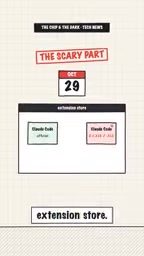
The extension marketplace has always been a trust entry point for the developer ecosystem; users assume by default that listed applications have been reviewed by the platform. The attacker exploited this trust by packaging malicious code as a commonly used developer tool. For Cursor, this means the attack surface extends from API key management to content review and listing processes.
The good news is that on most machines, the backdoor implantation failed. Cursor subsequently took down the extension marketplace, rotated keys, and contacted all affected customers. This response speed is commendable, but the incident itself has exposed the platform's shortcomings in third-party component review.

Extension Marketplace Review Mechanisms and Counterfeit Risks
The extension marketplace is a core distribution channel for IDE and editor ecosystems. When users install extensions, they are effectively executing third-party code, so the strength of the marketplace's review directly determines the size of the attack surface. Common review methods include automated malicious code scanning, developer identity verification, permission declaration review, and manual review, but against carefully disguised counterfeit extensions, automated scans often struggle to identify them in a short time.
Counterfeit extensions (typosquatting or brand impersonation) typically copy the name, icon, and description of well-known tools, leveraging users' trust in the brand to induce downloads. The counterfeit Claude Code extension was online for about 11 hours, indicating a clear time window from upload to discovery. Shortening this window requires multiple mechanisms working together: reputation scoring for developer accounts, staged rollout of newly listed extensions, fast response channels for user reports, and mandatory manual review for extensions with highly sensitive permissions. For developers, verifying signals such as publisher identity and download counts before installing extensions remains the lowest-cost self-protection measure.
Supply Chain Security: A Common Challenge in the AI Tool Ecosystem
This incident is not an isolated case but a typical microcosm of security risks in the AI toolchain. Modern AI programming tools often integrate multiple parties, including model providers, cloud service providers, and extension developers. A key leak or review oversight at any link can be amplified and exploited by attackers.
From the attack path, the attacker demonstrated clear thinking: first obtain a low-privilege key through a partner, then use it to steal sensitive credentials from logs, and finally distribute malicious extensions by leveraging platform trust. Each step builds on the results of the previous one, forming a complete attack chain.
For developers, this incident offers several practical takeaways: regularly rotate API keys, audit third-party integration permissions, and remain vigilant about extension sources. For platforms, it is necessary to re-examine partner key management standards and security review mechanisms before extensions are listed.
Supply Chain Attacks and Lateral Movement
Supply chain attacks refer to attackers not directly breaching the target's core defenses, but first compromising trusted third-party suppliers, partners, or software distribution channels, and then using this trust relationship to enter the target system. Because modern software is highly dependent on external components and services, the entry points for supply chain attacks are often more vulnerable than the target itself, and once successful, the attacks are more covert.
Lateral movement is a key stage in the attack chain: attackers use obtained low-privilege credentials to gradually seek higher-value assets within the system, such as passwords in logs, API keys, or access tokens for other services. In this incident, the attacker first used a partner key to enter Cursor, then extracted customer credentials from old logs, and finally distributed malicious code through the extension marketplace—a typical "foothold first, escalate privileges, then distribute" path. The core of defending against lateral movement lies in credential isolation, log desensitization, and abnormal call monitoring, so that even if an attacker obtains a key, they cannot move freely inside.
Responsibility Boundaries and User Trust
In post-incident communications, Cursor explicitly cleared Anthropic of responsibility and emphasized that Privacy Mode data was unaffected. This transparent stance helps maintain user trust, but it also raises a deeper question: when AI tools rely on multi-party collaboration, how should users judge which party's security commitments are trustworthy?
The answer may lie in verifiability. Platforms need to provide clearer key management policies, stricter extension review records, and more timely disclosure of security incidents. Users also need to realize that when choosing AI tools, they should look not only at features but also at the security practices of their ecosystem partners.
This incident ultimately ended with "a near miss," but the warning it sounded should not be easily ignored. In an era where AI tools are increasingly embedded in development workflows, security is no longer a problem of a single product but a shared responsibility of the entire ecosystem.
One-line Summary
Cursor suffered a supply chain attack due to a partner key leak, and counterfeit extensions were briefly listed.
Paragraph Summary
Cursor experienced a supply chain attack: attackers used an access key leaked by AI partner Fireworks to enter Cursor's systems, copied a small number of old programming logs containing passwords and API keys, affecting less than 0.01% of customers. The attackers then listed counterfeit Claude Code extensions in Cursor's extension marketplace, attempting to implant backdoors. The extension was online for about 11 hours, and up to about 5,000 users may have downloaded it, but backdoor implantation failed on most machines. Cursor has taken down the extension marketplace, rotated keys, and contacted affected customers, while clarifying that this matter is unrelated to Anthropic and that Privacy Mode data was not touched. The incident highlights a common challenge in supply chain security within the AI tool ecosystem: a platform's security strength depends on the weakest links, such as partner key management and extension review.
Related articles

Java4Shell Vulnerability Analysis: Has Java's Memory Safety Myth Been Shattered?
Computerphile breaks down the Java4Shell vulnerability: OpenJDK's native Base64 decoder mishandles AVX-512 mask calculation, causing out-of-bounds writes and RCE. Covers root cause, Base64 padding mechanics, AI-assisted discovery debate, and fixes.

Controversial US Surveillance Law Section 702 Nears Expiration: Congress Races to Renew
FISA Section 702 surveillance authority is nearing expiration. Congress is urgently pushing reauthorization, possibly attaching it to the NDAA. This article analyzes the controversies, legislative strategy, and future outlook.

iFood Manages 15,000 Repositories with Coding Agents: An Architectural Lesson at 4 Cents per Run
How iFood scaled coding agents to 15,000 repositories with its Remote Agents Platform: REST API-driven, GPT-5.6 Luna selection, structured output acceptance, $0.04 per run, security fixes doubled.