Dedica: One-Click Check to See If Your Website Works for AI Agents

Dedica scans website friendliness to AI agents in under a minute and provides fix instructions.
Dedica is a newly launched website testing tool that specifically evaluates website usability for AI agents like ChatGPT and Claude. After users paste a URL, the tool runs 125 checks covering discovery, access, usability, and payment stages, providing a score out of 100 and prioritized fix suggestions within a minute—free and without signup. For detected issues, a $30 starter kit generates instruction files that can be used directly with AI coding tools like ClaudeCode and Cursor for fixes. Dedica also offers a public API and MCP server, allowing agents to pre-check websites themselves. HunchBank research shows zero out of ten websites meet agent usability standards, highlighting the urgency of Agent Availability Optimization (AAO).
As AI agents like ChatGPT, Claude, and Grokbot start browsing, comparing, and signing up for websites on behalf of users, a site's friendliness to AI has become a metric that can't be ignored. Yet many websites still hide pricing behind JavaScript or put bot verification in the signup flow, causing AI agents to give up entirely. A new tool called Dedica has emerged to address this: it scans a website in under a minute, assesses how usable it is for AI agents, and offers optimization suggestions.
In the Age of AI Agents, Is Your Website Ready?
According to a Product Hunt post published on October 27, Dedica is a tool built specifically to test a website's usability for AI agents. It simulates how agents interact with a site, running a comprehensive set of checks across discovery, access, usability, and payments. As AI agents increasingly become the intermediary layer between users and websites, a site that agents can't navigate smoothly may mean missing out on a significant amount of automated traffic and conversion opportunities.
This trend isn't unfounded. A survey by independent research firm HunchBank found that not a single one out of ten websites could be used smoothly by AI agents. This data reveals the massive gap between current websites and AI agents, and explains why tools like Dedica are starting to attract attention.
AI agents are software programs capable of autonomously perceiving their environment, making decisions, and executing tasks. In the context of this article, it specifically refers to intelligent agents like ChatGPT, Claude, and Grokbot that can browse web pages, compare information, fill out forms, and even complete signups and payments on behalf of users. Unlike traditional crawlers, AI agents simulate the interaction paths of human users, understanding page content and performing clicks, inputs, and other actions. They typically rely on textual interface structures (such as the DOM tree, accessibility labels, and structured data) to locate elements, so when a website relies too heavily on JavaScript dynamic rendering, uses complex visual CAPTCHAs, or hides key information, agents struggle to complete tasks smoothly. Understanding the capability boundaries of AI agents is a prerequisite for evaluating a website's "agent usability."
How Does Dedica Work?
Dedica operates in an extremely simple way: users just paste a URL, and the tool runs 125 checks covering key dimensions such as discovery, access, usability, and payments. These checks simulate the paths AI agents take when actually using a website, identifying issues like hidden pricing, bot blocking, and complex forms that impede agent operations.

After the scan, Dedica provides a score out of 100 and lists the fixes most effective at improving that score. The entire process is free, requires no signup, and completes within a minute. For developers or product managers looking to quickly understand a website's AI compatibility, this undoubtedly lowers the barrier to assessment.
From Detection to Fix: Starter Kit and Developer Integration
Beyond the free scan, Dedica also offers a $30 starter kit. For each detected issue, the kit provides an instruction file that can be used directly with AI coding tools like ClaudeCode, Codex, Cursor, or Copilot, helping developers fix problems quickly. This "detect-and-fix" closed-loop design transforms diagnostic results into executable code modification instructions, enhancing the tool's practical utility.

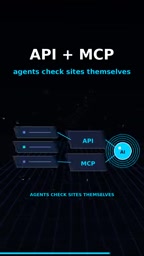
Additionally, Dedica offers a public API and an MCP server, allowing AI agents to check websites themselves. This means agents can assess a site's usability before visiting it, reducing wasted attempts. For companies building agent applications, this integration capability provides greater flexibility.
MCP (Model Context Protocol) server is a standardized protocol designed to let AI models connect to external tools and data sources in a unified way. In Dedica's case, the MCP server allows AI agents to call Dedica's detection capabilities through a standardized interface before visiting a target website, obtaining that site's agent usability score and issue list. This effectively provides agents with a "pre-check" channel, enabling them to dynamically decide whether to proceed with a visit or choose an alternative. For developers, integrating MCP means no need to write separate detection logic for each agent, reducing the complexity of building agent applications and improving the efficiency and reliability of agent decision-making.
Industry Status: The AI Agent Usability Gap Is Real
HunchBank's research findings—zero out of ten websites meeting agent usability standards—provide strong evidence for Dedica's existence. This gap is not coincidental; it reflects that current website design is primarily oriented toward human users and has yet to account for the interaction needs of machine agents. As AI agents become more widespread, website owners need to re-examine their technical architecture and user experience design.
The emergence of Dedica marks a new direction in website optimization: not just search engine optimization (SEO), but also agent availability optimization (AAO). Although the tool is still in its early stages, its free scanning and developer-friendly design may push more websites to start paying attention to agent usability.
AAO (Agent Availability Optimization) is a new concept emerging after SEO (Search Engine Optimization), referring to optimizing a website's technical architecture and content presentation for the interaction characteristics of AI agents. Unlike SEO, which focuses on keywords, link structure, and page load speed, AAO places greater emphasis on whether a website can be "understood" and "operated" by agents: for example, whether key information (such as pricing and inventory) is presented directly in HTML text rather than rendered solely via JavaScript; whether form fields have clear labels and semantics; and whether bot verification is blocking automated interaction. The goal of AAO is to enable agents to smoothly complete the entire flow of discovery, comparison, signup, and payment, thereby capturing the business opportunities brought by automated traffic.
How to Get Started?
Users can search for Dedica on Product Hunt to find the tool. The free scan requires no signup—just paste a URL to get a score and fix suggestions. For teams needing deeper fixes, the $30 starter kit provides instruction files that can be used directly with mainstream AI coding tools. Additionally, following the AI Unlocked channel and commenting "Dedica" grants access to a free checklist.
As AI agents gradually become an important part of the digital ecosystem, ensuring websites are agent-friendly may become as essential as traditional SEO. Whether Dedica can become the standard tool in this space is worth watching.
Related articles

AI Can Read Neural Network Weights Directly: Do Models Already Exceed Expectations?
A Reddit developer experiment shows language models can directly read neural network weights and infer their function. Astra, Opus 5.5, and Muse Spark 1.3 all passed the test, sparking discussion on model generalization and training sources.

India's Microdrama Market Explodes: EloElo Secures $80M Investment from NBCUniversal
EloElo secures $80M from NBCUniversal to boost StoryTV, its microdrama platform with over 33M monthly active users, as India's microdrama market draws global capital.

Acoustic Detection of Multi-Rotor UAVs: Fusing Handcrafted Features with Pre-Trained Embeddings
Study reveals data leakage from random splits in UAV acoustic detection, proposes source-disjoint protocol with stacked ensemble of handcrafted features and YAMNet embeddings, achieving 95.29% accuracy for low-cost drone detection.