DeepSeek Reportedly Raises $15 Billion: Capital Defies US Ban
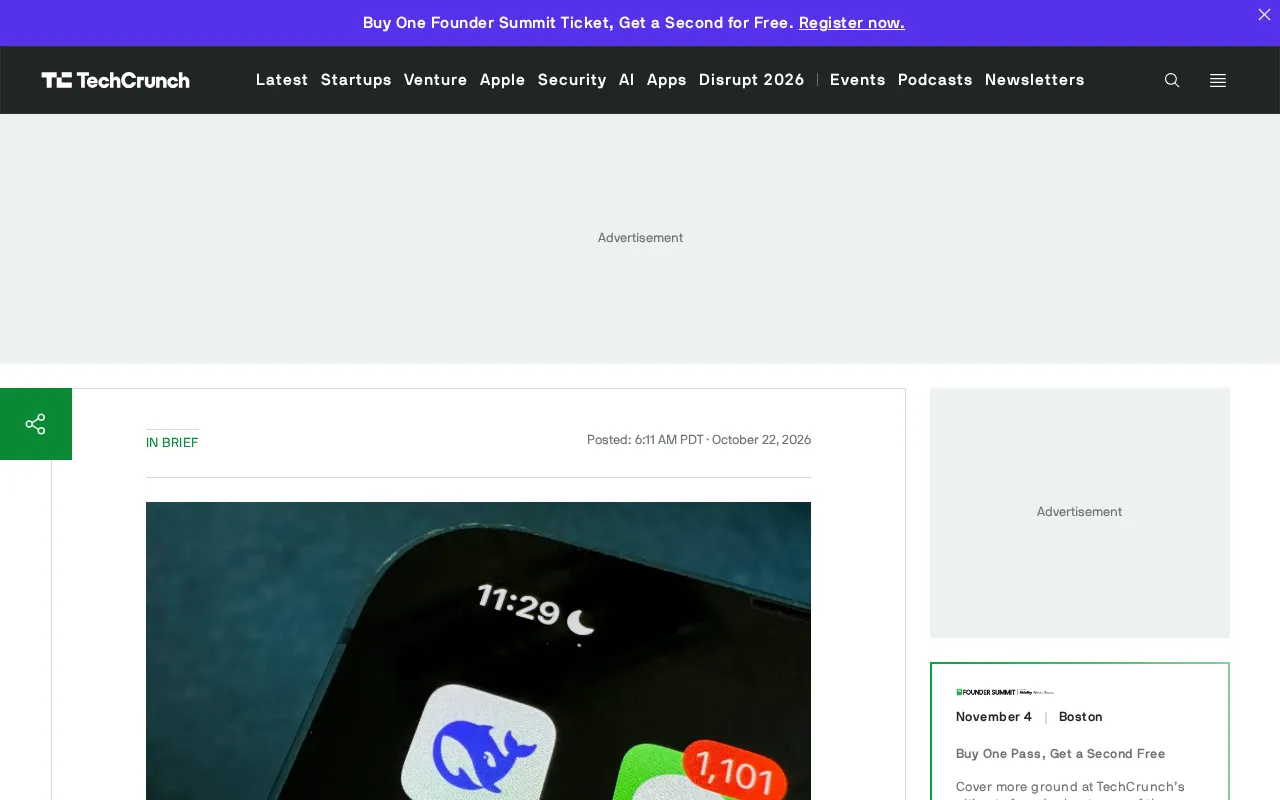
DeepSeek reportedly completes $15 billion funding, nearly simultaneous with the US ban requiring federal agencies to remove its technology.
The article centers on the reported completion of $15 billion in funding by DeepSeek, noting the scale is heavyweight in Chinese venture capital history and the news emerged just days after the US required federal agencies to remove its technology. The author analyzes that the ban and funding act on policy and capital market dimensions and do not necessarily contradict: clearer external restrictions may reinforce the logic of domestic substitution. If true, impacts include computing power and talent competition, open-source investment pace, and the domestic large model landscape. The article stresses that investor details, valuation, use of funds, and delivery status lack public information, and the ban's actual scope needs observation; the news should be treated as unconfirmed.
Event Overview: A Funding Round and a Ban Coincide
According to an RSS source, Chinese AI company DeepSeekAd has reportedly completed a funding round of $15 billion, placing it among the largest single rounds in the history of Chinese venture capital. Notably, this news emerged just days after the US ordered federal agencies to remove DeepSeek technology, citing national security concerns.
The proximity of these two events on the timeline creates a narrative of intense tension: on one side, policy-level blockade and exclusion; on the other, capital-level heavy bets and escalation. To understand this contrast, we need to place the funding rumor back into DeepSeek's industrial position and geopolitical context.
What the Funding Scale Means
The figure of $15 billion is heavyweight even on the global AI funding map. The report describes it as "one of the largest funding rounds in China," a phrasing that itself reveals two layers of information: first, the single amount approaches a scale rarely seen in China's primary market in recent years; second, investors are willing to concentrate their bets during a window of rising policy uncertainty.
It should be noted that this news is currently presented in the form of "reportedly," and key details such as the specific investor composition, valuation, and use of funds have not been elaborated in the original information. Therefore, the strategic intent behind this money can only be reasonably inferred based on DeepSeek's existing technology路线, rather than confirmed.
In the context of the primary market, "single-round funding scale" needs to be distinguished from valuation and the method of fund delivery. The amount of a funding round usually refers to the total committed by investors, which may be delivered in installments or may include a combination of strategic and industrial capital, and is not equivalent to cash received in a lump sum. In the history of Chinese venture capital, single rounds at the hundred-billion-dollar level are extremely rare, previously appearing mostly during the peak of the internet platform economy or in large state-owned industrial funds. On the global AI funding map, this scale approaches that of leading foundation model companies, meaning capital's positioning of the company has shifted from "technology upstart" to "infrastructure-level player." However, it should be noted that funding scale itself does not equate to technological capability or market share; it more reflects investors' bets on the future competitive landscape.
Why the Ban and Funding Are Nearly Synchronized
US federal agencies were required to remove DeepSeek technology, with national security cited as the official reason. This action is part of a broader framework of AI technology export and procurement restrictions, pointing to the connection between model origin, data flows, and government system security.
From a capital perspective, the ban may actually reinforce some investors' judgment: when a Chinese model is excluded by external markets through administrative means, its strategic value in the domestic market and expectations of policy support will be repriced. In other words, the clearer the external restrictions, the clearer the logic of domestic substitution. This is why the funding news and the ban news are close in time but do not necessarily constitute a contradiction—they act on different market dimensions.
US restrictions on DeepSeek are not an isolated event but are nested within the gradually tightening framework of AI technology export and government procurement controls in recent years. The core logic of this framework is that the capability of an AI model depends not only on algorithms but also on the source of training data, the ownership of computing infrastructure, and the security of the deployment environment. When federal agencies remove a certain type of AI technology, the authorizations typically cited include supply chain security reviews under executive orders and procurement bans targeting specific foreign technology products. The direct effect of such measures is limited to the federal government's own procurement and use and does not automatically extend to private enterprises or the open-source community, but their signal significance is often amplified by the market—it indicates policymakers' risk rating of the technology's origin. Understanding this hierarchical relationship is a prerequisite for judging the actual scope of the ban's impact: government-side usage restrictions and commercial market adoption decisions follow two different sets of logic.
Potential Impact on the AI Industry Landscape
If the $15 billion funding is true, the most direct impact would manifest at three levels.
Computing power and talent competition. Large funds typically flow first to computing power procurement and the contest for top researchers. Against the backdrop of restricted high-end chip supply, whether funds can be effectively converted into usable computing power is the key variable determining the actual utility of the funding.
Pace of investment in the open-source ecosystem. DeepSeek built its influence through open-source models, and continuous open-source releases require stable R&D investment. Ample funding means its open-source路线 can continue without having to shrink due to short-term commercialization pressure.
Domestic AI competitive landscape. A single ultra-large funding round will change the resource distribution in the domestic large model赛道, potentially accelerating industry concentration toward the top and possibly triggering follow-on funding by other players.
Open-source and closed-source models have structural differences in commercialization paths, which directly affect the efficiency of fund use and the return cycle. The open-source路线 gains developer ecosystem and industry influence by公开 model weights, and its revenue sources typically come from API services, enterprise customized deployment, and technology licensing rather than direct model sales. The advantage of this model is rapid ecosystem diffusion and dense community feedback; the disadvantage is that it is difficult to form stable cash flow similar to closed-source subscriptions, and continuous releases require uninterrupted R&D investment to maintain technological leadership. Therefore, the significance of large funding for open-source vendors lies more in ensuring the continuity of R&D pace, so that they do not have to shrink release frequency or turn closed due to short-term revenue pressure. Whether funds can be converted into ecosystem barriers depends on model iteration speed and developer retention, not simply on stacking computing power.
Points Requiring Caution
The original information is extremely brief and lacks details that can be cross-verified. Whether the funding has been completed and delivered, whether investors include state capital, and whether funds are delivered in installments all lack public information support. Equating the "reportedly" funding scale directly with cash already in place is overinterpretation.
Similarly, the actual scope and intensity of the ban's enforcement require observing subsequent operations of specific agencies, rather than judging solely from the text of an order. The real impact of both will ultimately be determined at the verifiable implementation level.
Frequently Asked Questions
Is the news of DeepSeek's $15 billion funding reliable? The current source is media reporting, and there is still a lack of official company confirmation and investor information disclosure; it should be regarded as unconfirmed news.
Will the US ban affect DeepSeek's business? The ban targets use by federal agencies, and its direct impact is concentrated at the government procurement level. The impact on commercial customers and the open-source community depends on subsequent implementation details.
Where will this funding be used? The original information did not disclose the use of funds. Based on its technology route, computing power, R&D, and talent are common directions, but this is inference rather than fact.
One-line Summary
DeepSeek reportedly completes $15 billion funding, nearly simultaneous with the US ban requiring federal agencies to remove its technology.
Paragraph Summary
The article centers on the reported completion of $15 billion in funding by DeepSeek, noting that the scale is heavyweight in the history of Chinese venture capital and that the news emerged just days after the US required federal agencies to remove its technology. The author analyzes that the ban and the funding act on two dimensions—policy and capital markets—and do not necessarily constitute a contradiction: the clearer the external restrictions, the clearer the logic of domestic substitution, which may instead reinforce some investors' judgment. If the funding is true, its impact will manifest in three areas: computing power and talent competition, the pace of investment in the open-source ecosystem, and the domestic large model competitive landscape. The article also emphasizes that the investors, valuation, use of funds, and delivery status of the funding all lack public information, and the actual scope of the ban's enforcement also needs to be observed; the news should be treated as unconfirmed rather than established fact.
Related articles
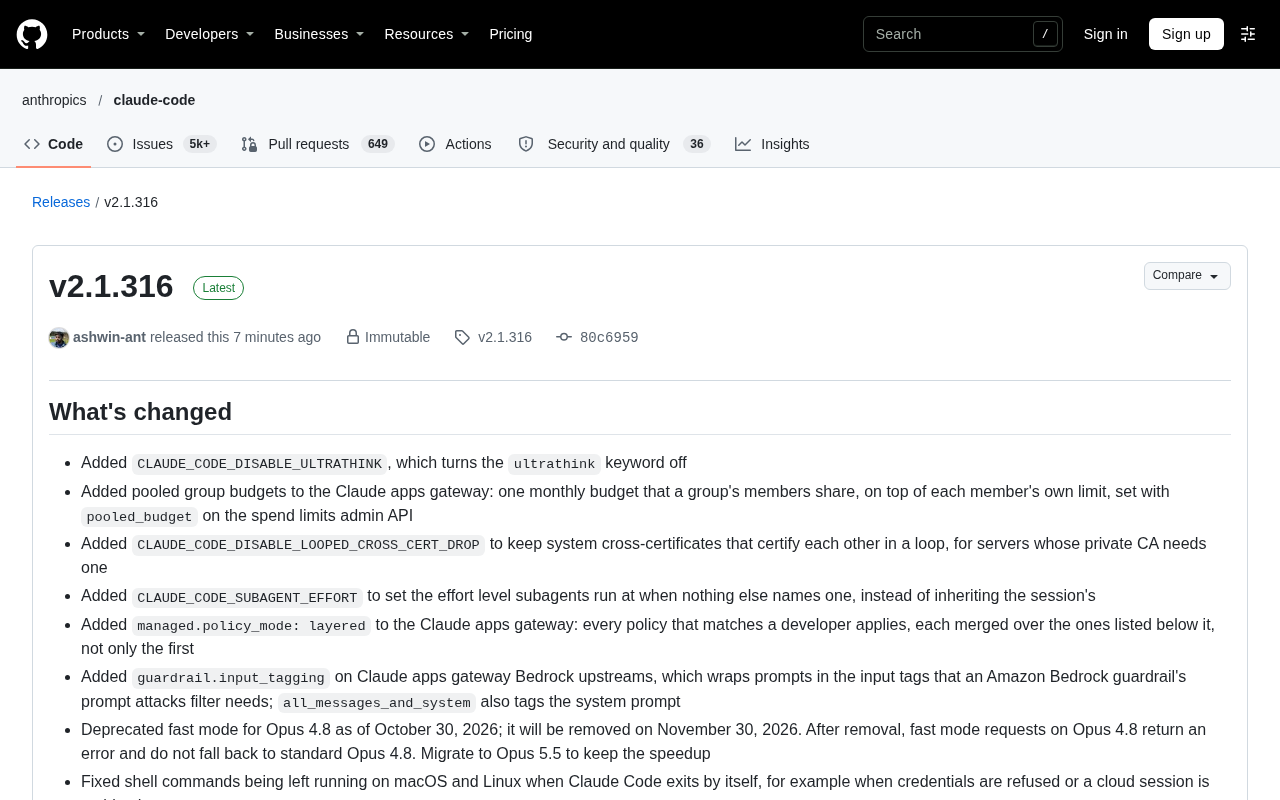
Claude Code v2.1.316 Update Analysis: Enterprise Gateway and Multiple Stability Fixes
Claude Code v2.1.316 released: new enterprise gateway pooled group budgets, layered policy mode, subagent effort control, dozens of Shell, network, and session recovery fixes, and Opus 4.8 fast mode deprecated.

17th-Century British Floods and Doomsday Panic: A New Perspective on Weather History
Based on a Hacker News discussion of '17th-Century British Floods and Foreboding,' this piece explores how extreme weather was given divine and political significance, and what weather history teaches us about contemporary climate communication.
Salesforce Acquires Rune for $375M: AI Logistics Tech Bolsters Defense Business
Salesforce reportedly acquires defense tech startup Rune for $375M. Rune's AI logistics tech will strengthen Salesforce's Missionforce defense platform, continuing its M&A spree.