ENGRAM: A Verified Consolidation Framework for Baking Agent Experience into Weights

ENGRAM uses dual gates for admission and release to make agent experience verifiably internalized and forgotten.
ENGRAM decouples training admission from memory release for language model agents. A demonstration-aware gate admits skills into training when the student has mastered them or enough successful teacher demonstrations exist, learning from action trajectories via Engram Trace Graph context. A verification gate compares the updated model against the retrieval-backed base on held-out probes without episodic retrieval, releasing external records only when a skill genuinely participated in training and meets both relative and absolute criteria. Experiments show verified release compresses the retrievable footprint, approaches retain-all performance, beats immediate and random release, and cuts token usage and model calls.
How language model agents "remember" experience has long been an open question. Should past trajectories be stored in a vector database for external retrieval, or internalized into weights through parameter learning? Each path has its costs: retrieval is flexible but consumes context, while parameter learning is efficient but makes it hard to judge when to learn and when to let go. ENGRAM proposes a framework that separates "training admission" from "memory release," attempting to make experience consolidation controllable.
Core Problem: What to Learn, When to Forget
Consolidating stored experience into model weights requires answering two questions at once: which experiences are worth training on, and when external records can exit retrieval. The original paper points out that using only the student model's mastery as the admission criterion would exclude useful teacher demonstrations; meanwhile, removing external records immediately after training ends would discard guidance the model still needs. This tension is the starting point of ENGRAM's design.
The trade-off between parameter learning and external retrieval: Parameter learning refers to writing experience into model weights via gradient updates, requiring no extra context at inference but incurring high update costs, susceptibility to catastrophic forgetting, and difficulty judging whether a given experience is already worth consolidating. External retrieval, by contrast, stores trajectories in a vector database and recalls them on demand at inference—flexible and reversible, yet continuously consuming context window and invocation overhead. The two are not mutually exclusive: ENGRAM's idea is to let retrieval serve as "scaffolding" that can be safely removed once experience has been internalized through training and verified, achieving a gradual balance between flexibility and efficiency.
Held-out probe: This refers to a set of representative tasks or skill samples held out from training data, used to evaluate after an update—without relying on episodic retrieval—whether the model has truly mastered the relevant capabilities. It acts as a "capability checkup without external memory," preventing the model from bluffing its way through on retrieval hints alone. ENGRAM's verification gate leverages held-out probes to compare the retrieval-backed base model against the no-retrieval updated model, thereby judging whether a given external record can be safely released.
Dual-Gate Mechanism: Decoupling Admission and Release
ENGRAM splits the process into two gates. The first is the demonstration-aware gate: a skill enters training as long as it satisfies either "the student has mastered it" or "there are enough successful teacher demonstrations." With context provided by the Engram Trace Graph (ETG), the student model learns from selected action trajectories.
The second is the verification gate. The updated model is compared against the retrieval-backed base model on held-out probes without episodic retrieval. Release requires two conditions simultaneously: the skill genuinely participated effectively in training, and the score meets both relative and absolute criteria. For skills that fail verification, their external records remain in retrieval. This decoupling means "training" and "forgetting" are no longer bound to the same point in time.
Engram Trace Graph (ETG): This can be understood as a structured organization of an agent's past interaction trajectories, indexing episodic memory (specific actions, observation sequences) in graph form so that skills and demonstration trajectories are traceable and retrievable. During training, the student model uses context provided by the ETG to learn from selected action trajectories, rather than relying solely on samples from its own current policy. The ETG also serves as the external memory carrier—the retrievable experience it records is precisely what gets progressively archived and reduced during verified release.
Adapter activation: This refers to attaching lightweight parameter modules (such as LoRA-style adapters) outside the model backbone, activating the corresponding module only when training a specific skill rather than fully updating weights. This reduces interference and forgetting risk, and makes it trackable and verifiable whether "a given skill actually participated in training"—the implementation basis for ENGRAM's selective adaptation and release decisions.
Experimental Results: The Trade-off Between Performance and Efficiency
On interaction and reasoning benchmarks, ENGRAM achieves consistent gains over the frozen-weight ETG control group. Ablation studies support the roles of demonstration-aware admission and selective adapter activation.
A set of controlled held-out comparisons is even more telling: verified release substantially compresses the retrievable footprint while performance approaches the "retain-all" configuration and outperforms immediate release and budget-matched random release. In addition, ENGRAM reduces input token usage and model invocation counts while improving task performance. Skill-level verification further shrinks retrievable experience through selective archiving, while retaining external guidance for skills that fail the release criteria.
Implications for Agent Memory Design
ENGRAM's value is not just the numbers on a few benchmarks. It turns "experience consolidation" from a one-shot action into a gradual, verification-backed process: admission looks at evidence, release looks at verification, and failure falls back to retrieval. This approach has direct reference value for building long-running agent systems—more memory is not always better, nor is earlier internalization always better; the key is having a testable set of rules for what goes in and what comes out. The code is available in an anonymous repository, and its generalization to more complex tasks is worth watching.
One-line Summary
ENGRAM uses dual gates for admission and release to make agent experience verifiably internalized and forgotten.
Paragraph Summary
Addressing how language model agents consolidate experience, ENGRAM proposes a dual-gate framework that decouples "training admission" from "memory release." The first demonstration-aware gate admits skills into training when the student has mastered them or sufficient successful teacher demonstrations exist, with the student learning from action trajectories via Engram Trace Graph context. The second verification gate compares the updated model against the retrieval-backed base on held-out probes without episodic retrieval, releasing external records only when a skill genuinely participated in training and meets both relative and absolute criteria. Experiments show verified release substantially compresses the retrievable footprint, approaches the retain-all configuration in performance, outperforms immediate and random release, and reduces input token usage and model invocation counts—offering a testable paradigm for memory in-and-out rules in long-running agents.
Related articles

Seven Years of Evolution: How Far Has the Foldable Come From the First Generation?
From the first foldable to today's latest models, what has seven years changed? Shallower creases, higher brightness, thinner bodies, and smoother software migration—has the foldable crossed the chasm from enthusiasts to ordinary users? This article discusses the question based on a video comparison.

When Did Humans Start Eating Salt? A 10,000-Year History of Salt
When did humans start eating salt? From salt use at the dawn of agriculture 11,000 years ago to ancient seawater evaporation and rock salt mining, and on to the salt trade, salt taxes, and Gandhi's Salt March, this article traces salt's key role in human civilization.
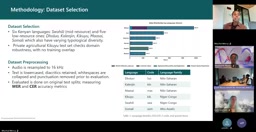
Microsoft Paza Research: How African Language Speech Recognition Breaks Through Architecture and Data Bottlenecks
Microsoft's Paza research evaluates 53 speech models across 39 African languages, revealing architecture choice matters more than pre-training coverage, 200-300 hours is the practical data threshold, and language typology deeply influences recognition performance.