FDE (Forward Deployed Engineer): The Human Bridge for AI Implementation and a New Career Opportunity

FDEs are stationed at client sites to solve the last-mile problem of AI system implementation, becoming a new career opportunity.
The article focuses on the emerging role of FDE (Forward Deployed Engineer), noting that AI systems often fail to run at client sites due to data format, environment configuration, and other issues, creating demand for on-site delivery. The term originates from military terminology and was pioneered by Palantir to serve classified government clients, later adopted by OpenAI, Anthropic, SenseTime, Volcano Engine, and others. Unlike regular engineers who face requirements documents, FDEs face clients directly—digging up requirements themselves, modifying code on-site, and verifying results immediately. Demand for the role has grown several times over the past year with attractive salaries, offering developers a career-change path into AI different from algorithm engineer, though it requires technical, communication, and stress-tolerance skills all at once.
When AI Won't Run, Who Steps In?
Many people working in enterprise software have had this experience: the requirements document is crystal clear, the product manager swears the client wants exactly this, the team pulls several all-nighters to build the system, and the moment it goes live the client says, "This isn't what I wanted." Even more frustrating, when you ask the client what they actually want, they can't articulate it themselves.
According to analysis by a Bilibili creator in a video, this problem is especially pronounced in AI system deployment. A R&D team in Beijing builds an AI system that performs beautifully, but the client is in Xinjiang, thousands of kilometers away, and the system simply won't run on their end—data formats don't match, environment configuration is off, and various factors are tangled together. R&D says, "Not our problem." The client says, "Then what's the point of buying your system?"
This is the direct reason the FDE role emerged.
What Exactly Is an FDE? From Military Term to AI Job
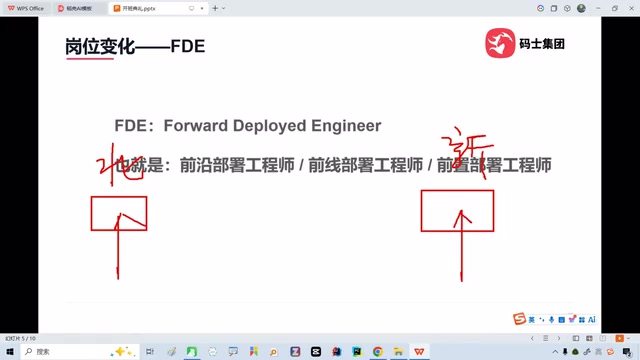
FDE stands for Forward Deployed Engineer, sometimes translated as "frontline deployment engineer." The term comes from military terminology, and the meaning is straightforward: send personnel directly to the front lines.
In the work context, FDE isn't about business trips—it's about being stationed on-site: working, attending meetings, and eating meals alongside the client. Whatever the client needs gets solved on the spot; if something can't be solved, the code gets changed right there, and the results are shown to the client immediately. The Bilibili creator summarized the role with a vivid metaphor: FDE is the "human bridge" between AI models and client business operations—the person who actually helps enterprises implement AI.
Many traditional enterprises have needs around large models but zero in-house technical capability. What they need isn't a remotely delivered system—they need a person who can be on-site and get everything related to large models implemented and working. FDE emerged in response to exactly this demand.
On-site Deployment is the underlying logic of how FDEs work. It refers to engineers leaving company headquarters and completing system installation, configuration, debugging, and iteration in the client's actual office environment. Unlike traditional remote delivery or cloud deployment, on-site deployment faces real-world constraints such as client intranet isolation, proprietary data formats, and uncontrollable hardware environments—constraints that often cannot be discovered in advance through documentation or remote meetings. On-site engineers must diagnose root causes in real time and write solutions directly into code or configuration, verifying results the same day. This model compresses the feedback cycle from "once every few months" to "once every few hours," and it's the key mechanism that enables FDEs to solve the "last mile" problem of AI system implementation.
The Essential Difference from Regular Engineers: Facing Requirements vs. Facing People
Regular engineers write code at their own company. Requirements are organized into documents by product managers and handed over. They deliver according to the document, follow email processes, and complete acceptance. FDEs work completely differently: they write code at the client site, dig up requirements themselves, show results directly to the client, iterate if it's not good enough, and solve problems on the spot.
The Bilibili creator's summary is precise: regular engineers face requirements; FDEs face people. This difference means FDEs need both technical skills and client communication skills—not just coding ability.
Origins: How Palantir Defined the FDE
This role model originated with software company Palantir. The company initially served government agencies and intelligence organizations, which have two characteristics: first, extremely high confidentiality requirements—many agencies use intranets, making remote meetings, emails, and phone calls impossible; second, the problems are extremely complex and classified, and engineers sitting remotely simply cannot imagine what the client site is like.
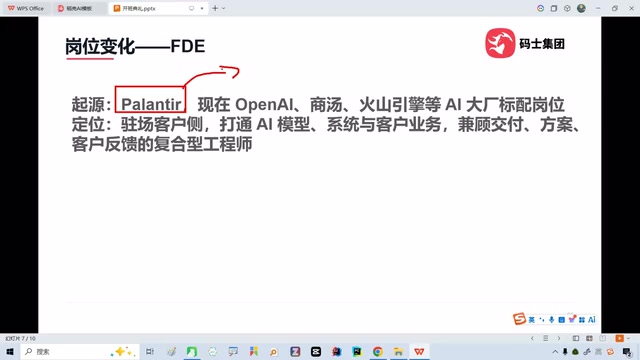
Palantir's approach was to send people directly. They found that the engineers they sent not only solved problems but also brought client pain points back to the product team, making the product better over time. So the model was institutionalized, and these people got an official name—FDE.
Palantir is an American software company founded in 2003, initially known for serving the U.S. Department of Defense, intelligence agencies, and law enforcement. Its core products include Palantir Gotham and Palantir Foundry for data integration and analysis. Because client operations are highly classified and data environments are closed, Palantir couldn't use conventional remote implementation models, so it pioneered the practice of stationing engineers directly at client sites—these engineers became known as Forward Deployed Engineers. Palantir's model was later adopted by multiple enterprise software companies in Silicon Valley and, with the rise of large model B2B business, was introduced to the AI industry, becoming the institutional source of the FDE role.
Big Players Are Hiring: FDE Demand Grows Rapidly
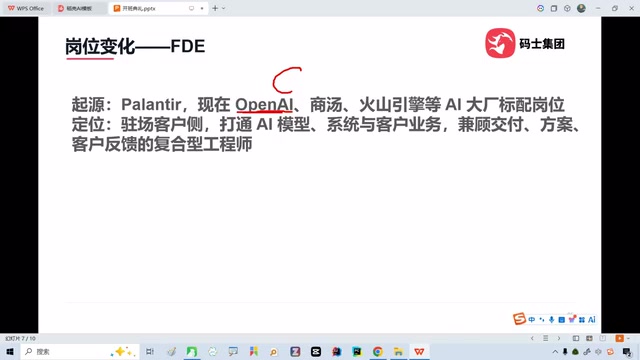
After this model proved effective, more and more companies began following suit. According to the Bilibili creator, OpenAI sends people to large enterprises to deploy large models on-site, Anthropic (referred to in the video as "the Cloud company") similarly uses on-site deployment to help clients with implementation, and domestic companies like SenseTime and Volcano Engine are also building FDE teams aggressively.
The video mentions that demand for this role has grown several times over compared to the past year. Searching "FDE 前沿部署工程师" on Boss Zhipin reveals nationwide hiring demand with quite attractive salary levels. The core logic: no matter how well a large model performs in a demo environment, it may be a different story in the client's real environment—only having someone on-site can truly solve the implementation problem.
Large Model B2B Implementation refers to integrating large language model capabilities into enterprise clients' real business processes, rather than stopping at demo or trial stages. This process typically involves data cleaning and anonymization, private deployment, prompt engineering, model fine-tuning, permission and compliance configuration, and more—and each client's IT environment, data structure, and business objectives vary enormously. A model that performs well in a demo environment may fail to run in a client's intranet due to data format mismatches, insufficient compute resources, or incompatible interfaces. Therefore, the success of large model B2B projects depends heavily on on-site engineering capability, which is the direct reason FDE demand has grown rapidly over the past year.
Why This Is a New Opportunity for Career Changers
FDEs aren't people sitting in an office waiting for requirements—they're the ones rushing to client sites to glue technology and business together. For developers who want to enter the AI field, this role offers a path different from algorithm engineer—technical depth doesn't need to be top-tier, but you need the ability to quickly understand client business, solve problems on-site, and have basic proficiency in working with large models.
The Bilibili creator suggested at the end of the video that viewers interested in this direction learn about it and apply as early as possible. Looking at the demand growth trend from the enterprise side, the last-mile problem of AI implementation will persist long-term, and the value of roles like FDE will continue to be prominent. However, it's worth noting that FDE demands a high level of overall capability—technology, communication, and stress tolerance are all essential—and you need a clear understanding of the actual working conditions before making a career change.
Related articles
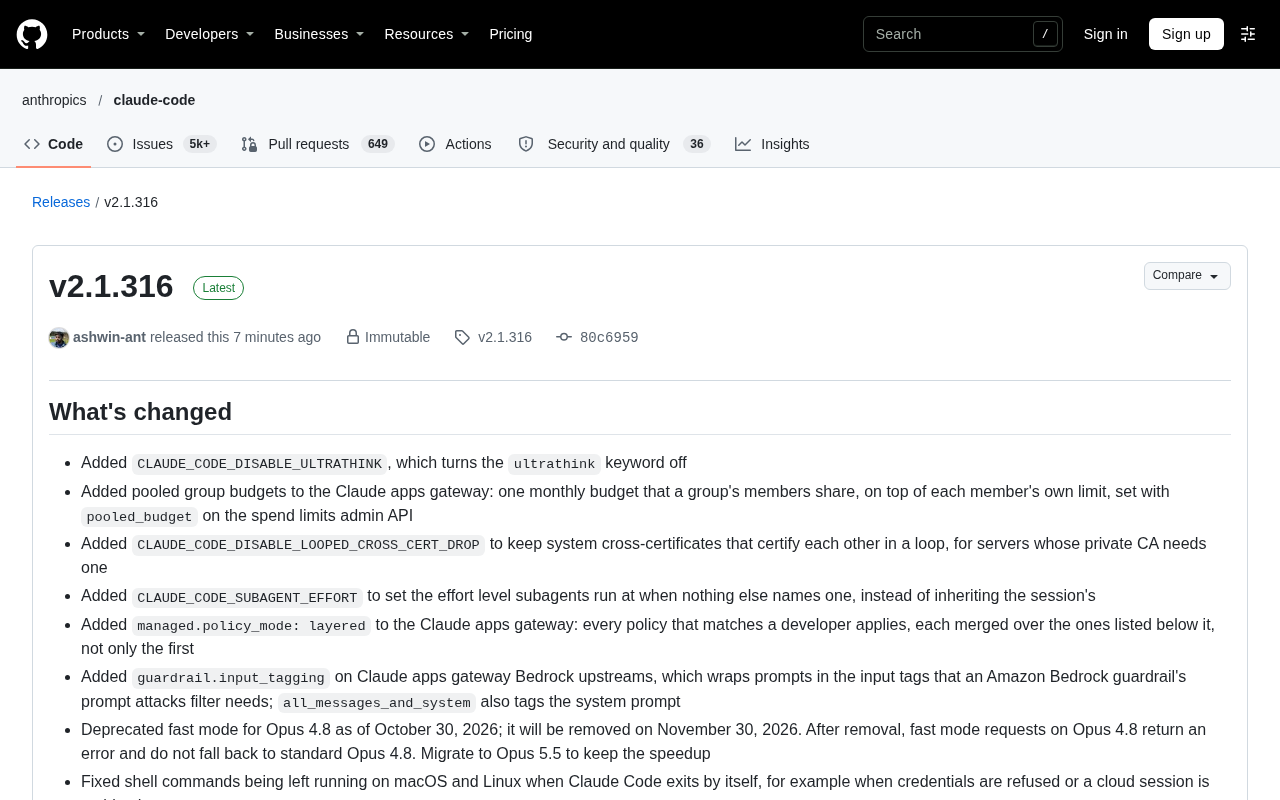
Claude Code v2.1.316 Update Analysis: Enterprise Gateway and Multiple Stability Fixes
Claude Code v2.1.316 released: new enterprise gateway pooled group budgets, layered policy mode, subagent effort control, dozens of Shell, network, and session recovery fixes, and Opus 4.8 fast mode deprecated.

17th-Century British Floods and Doomsday Panic: A New Perspective on Weather History
Based on a Hacker News discussion of '17th-Century British Floods and Foreboding,' this piece explores how extreme weather was given divine and political significance, and what weather history teaches us about contemporary climate communication.

Salesforce Acquires Rune for $375M: AI Logistics Tech Bolsters Defense Business
Salesforce reportedly acquires defense tech startup Rune for $375M. Rune's AI logistics tech will strengthen Salesforce's Missionforce defense platform, continuing its M&A spree.