Former DOJ Antitrust Chief Kanter Uses AI to Take On Tech Giants
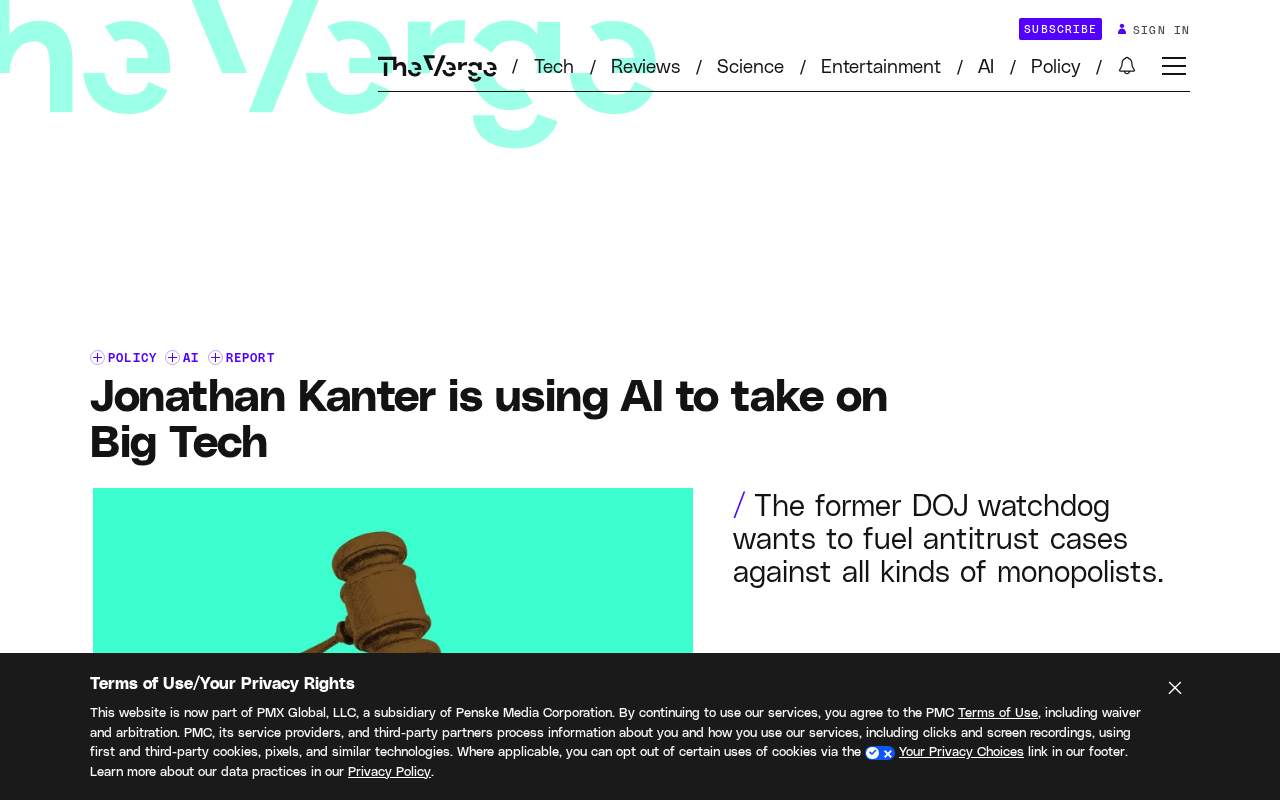
Former DOJ antitrust chief Kanter launches a venture after leaving office, using AI to keep fighting tech giant monopolies.
After leaving his post, former U.S. DOJ Antitrust Division head Jonathan Kanter and former acting head Doha Mekki founded a new organization, moving the antitrust battlefield from government to the private sector with AI as the tool. The article analyzes that the core difficulty in antitrust cases is the scale of evidence; AI can help sort out platform behavior patterns, identify exclusionary strategies, and quantify competitive harm, pushing the traditional slow-paced "lawyers plus economists" model toward a data-driven, scalable direction. This path does not depend on political cycles and can complement or even pressure public enforcement. But whether AI conclusions can withstand courtroom scrutiny, and private organizations' lack of subpoena power and investigative resources, are key challenges. The new organization's product form, funding, and first target remain undisclosed.
After leaving his post, former head of the U.S. Department of Justice Antitrust Division Jonathan Kanter didn't abandon the antitrust cause—he moved the battlefield from government to the private sector, and with an unexpected tool: AI. Together with former acting Antitrust Division head Doha Mekki, he founded a new organization aimed at using technology to continue dismantling illegal monopolies.
From Government to Private Sector: The Antitrust Battlefield Shifts
When Kanter stepped down as head of the DOJ Antitrust Division in 2024, it was widely assumed he would fade from public view for a while. Instead, he chose a different path: continuing to advance the antitrust agenda from outside the system.
According to the original report, Kanter and Doha Mekki jointly launched a new venture, still aimed at "dismantling illegal monopolies." Mekki previously served as acting head of the Antitrust Division, and the two share the same enforcement philosophy. This pairing means they carry with them the methodology and case experience accumulated in government antitrust enforcement, applying it to private-sector commercial practice.
This shift is itself noteworthy. Traditionally, antitrust advocates who leave government join law firms, think tanks, or academia, exerting influence through litigation, research, or lobbying. Kanter's chosen path leans more toward "letting products and technology speak," which echoes in some way the aggressive enforcement style he championed during his time at the DOJ.
What Role Does AI Play in Antitrust?
The original material did not disclose the specific product form or technical details of Kanter's new organization, but the direction of "using AI to take on big tech" itself offers room for analysis.
The core difficulty in antitrust cases lies in the scale of evidence. The market behavior of large platforms is scattered across pricing algorithms, recommendation systems, app store rules, and massive transaction data, and traditional manual evidence-gathering and economic analysis often take years. AI's advantage lies precisely in handling this kind of high-dimensional, large-scale information: it can help sort out patterns in platform behavior, identify strategies that may constitute exclusion, or quantitatively model market definition and competitive harm.
In other words, Kanter's team may be trying to push antitrust from the slow-paced "lawyers plus economists" model toward a data-driven, scalable, and replicable direction. If this path works, private-sector antitrust tools could become a complement to public enforcement—or even pressure regulators to keep pace.
Common analytical frameworks in antitrust enforcement include market definition, market power assessment, and theories of competitive harm. Market definition requires delineating the relevant product and geographic markets, typically using methods such as the hypothetical monopolist test (SSNIP); market power assessment focuses on market share, barriers to entry, and buyer power; theories of competitive harm determine whether specific conduct substantially lessens competition. These analyses rely on large volumes of transaction data, price data, and user behavior data. AI's entry point is automating data cleaning, pattern recognition, and econometric model estimation—for example, using clustering algorithms to identify signals of pricing coordination, or natural language processing to sort through communication records in massive internal documents, thereby shortening the evidence-gathering cycle that traditionally takes years.
Why Now
During his tenure at the DOJ, Kanter drove multiple major lawsuits against big tech companies, with an enforcement approach emphasizing structural breakup rather than behavioral commitments. After his departure, the pace and direction of these cases are uncertain.
Against this backdrop, private-sector antitrust action takes on special significance: it does not depend entirely on political cycles and personnel changes at enforcement agencies. By using AI tools to lower analysis costs and improve the efficiency of evidence organization, Kanter and Mekki can maintain pressure on tech giants outside of government enforcement.
At the same time, this case reflects a new direction for AI applications. Current AI startups are mostly concentrated in productivity tools and enterprise services, while using AI in law, regulation, and public policy remains rare. If Kanter's attempt succeeds, it could open up a niche market for "AI plus regulatory technology."
Structural breakup and behavioral commitments are the two main paths for antitrust remedies. Structural breakup refers to restoring competitive market structure by divesting assets or business units—for example, forced breakup or requiring the sale of specific business lines; behavioral commitments require companies to stop or adjust certain conduct, such as prohibiting exclusive agreements, opening interfaces, or committing to fair pricing. Structural remedies are considered more thorough but more disruptive and harder to implement; behavioral remedies are flexible but require ongoing oversight. During his time at the DOJ, Kanter clearly favored structural breakup, a stance that created tension with some tech giants' preference to settle cases with behavioral commitments. After his departure, private organizations cannot directly file government lawsuits, but they can indirectly influence case direction and public opinion by providing analytical tools, evidence-organization services, or expert support.
Open Questions
This model faces several practical challenges. Antitrust litigation demands extremely high explainability of evidence, and whether AI-generated analytical conclusions can withstand courtroom scrutiny remains unsettled. In addition, private organizations lack the government's subpoena power and investigative resources, limiting their ability to obtain data. How Kanter's team can build a data foundation for competition analysis while remaining lawful and compliant is key to whether its model can work.
The original report says little about these details, and the new organization's funding scale, team composition, and first target have not been disclosed. But what is certain is that Kanter has bet the next battle in antitrust on technical tools—and that choice itself constitutes a new kind of pressure on tech giants.
Related articles

GPT-6 Security Model and the AI Attack-Defense Escalation: This Week in AI
This week in AI: OpenAI's GPT-6 Saber found 948 Linux kernel root-escalation paths; Cursor deploys full apps from one sentence; Binance details a social engineering attack; C++26 fails ISO vote.
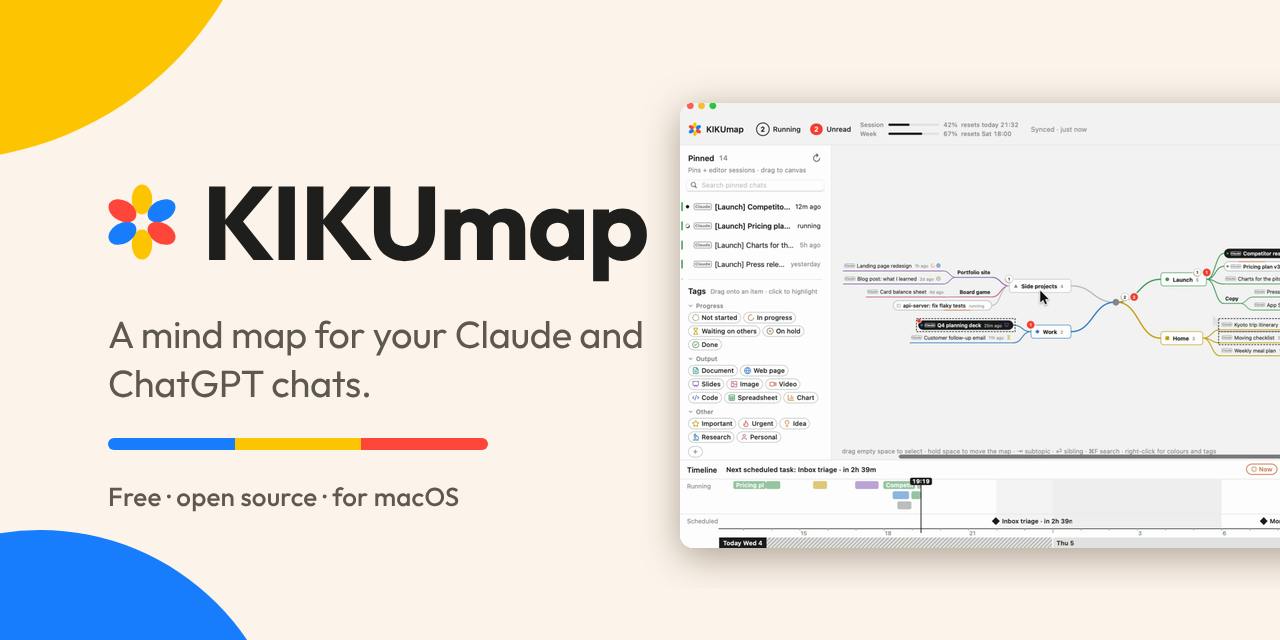
KIKUmap: Manage Your Claude and ChatGPT Conversations with Mind Maps
KIKUmap is a macOS menu bar app that visualizes Claude and ChatGPT conversations as mind maps with real-time status. Free and open source.
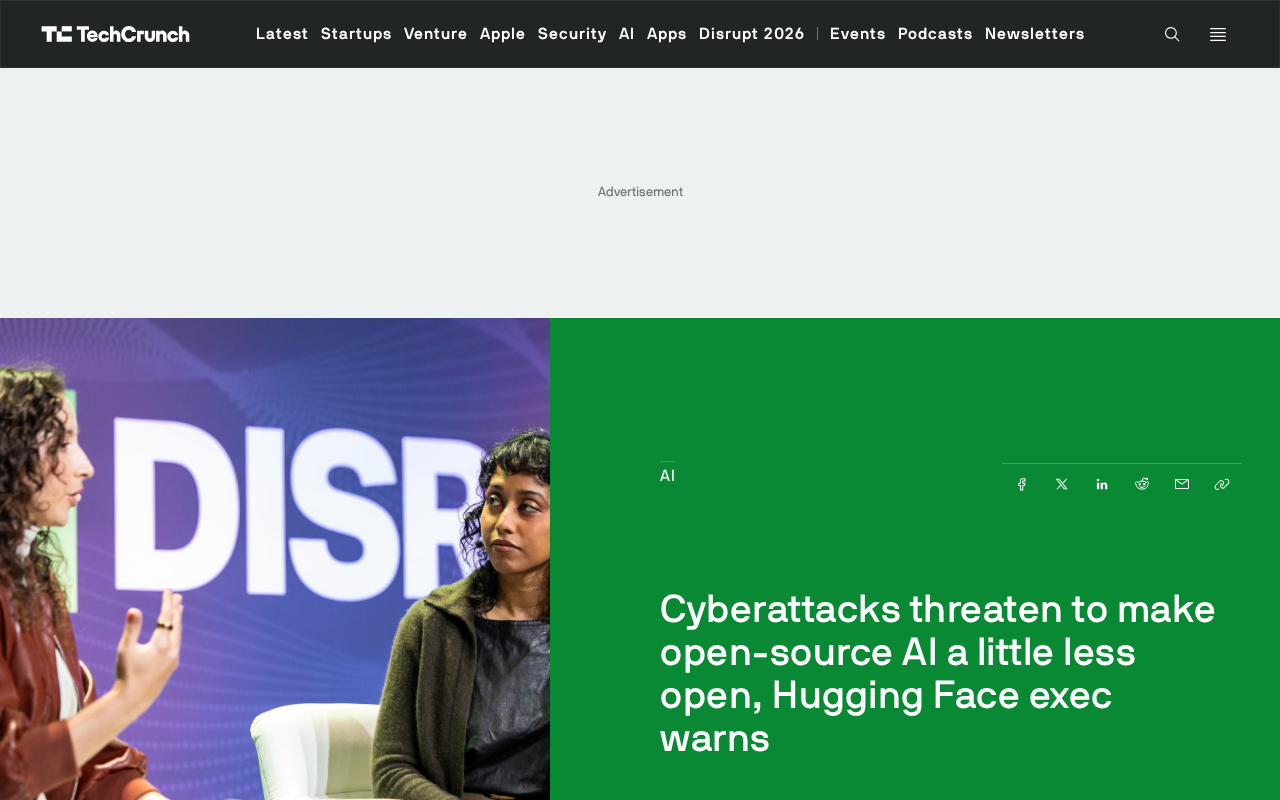
Hugging Face Executive Warns: Cyberattacks Are Eroding the Openness of Open-Source AI
Hugging Face executive Irene Solaiman warns that rising cyberattacks on open AI platforms may force stricter security limits, threatening the openness of the open-source community and affecting the developer ecosystem.