Four AI Security Agents Compared: Claude, Codex, Mantis, and Cloudflare
Four major AI security agents share a find—disprove—patch loop with distinct trade-offs.
Based on MarkTechPost's analysis, this article compares Anthropic Claude, OpenAI Codex, Mantis, and Cloudflare. They share a "find vulnerabilities—disprove false positives—generate patches" workflow, replacing rule-based static analysis with reasoning-driven multi-round verification to reduce false positives and raise repair automation. Differences lie in implementation: Claude and Codex embed security into code agents, Mantis focuses on deep verification, and Cloudflare works from edge and runtime protection. It also covers 12 similar tools and notes that selection hinges on false positive rate, patch acceptance, and workflow integration depth.
AI security agents are emerging as a new paradigm for hunting code vulnerabilities. Anthropic, OpenAI, Cloudflare, and Google have each launched their own agent products. They share the same "find—disprove—patch" loop logic, yet each emphasizes different implementation paths and ecosystem positioning. Based on MarkTechPost's comparative analysis, this article outlines the core differences among these four tools and discusses 12 other noteworthy tools in the same category.
The Common Foundation: Find, Disprove, Patch
The underlying workflow of the four agents is highly consistent: first locate potential vulnerabilities in the source code (find), then attempt to construct counterexamples or verification conditions to refute false positives (disprove), and finally generate a fix patch (patch). This loop replaces the rule matching of traditional static analysis tools with multi-round verification backed by reasoning capabilities, thereby reducing false positive rates while improving the degree of repair automation.
Differences lie in each vendor's model capabilities, the way codebases are integrated, and the depth of coupling with existing development workflows. Anchored to the same goal yet taking different routes, this precisely shows that security agents are still in an early stage where their form is not yet settled.
Static analysis refers to traditional detection methods that do not run code and only discover suspicious patterns through lexical and syntactic parsing, data flow, and rule matching. Representative tools include Semgrep and CodeQL. Its bottleneck is the lack of semantic reasoning, which easily produces large numbers of false positives and cannot determine whether a vulnerability is actually triggerable. False positive rate is a core metric in security detection, referring to the proportion of items flagged as vulnerabilities that are actually not exploitable; an excessively high false positive rate causes alert fatigue among developers, who eventually ignore alerts. The reason security agents emphasize the "disprove" step is precisely to use multi-round reasoning and counterexample construction to examine candidate vulnerabilities produced by static analysis one by one, thereby driving down false positives. Patch acceptance rate measures the proportion of fix suggestions generated by an agent that developers actually merge; it reflects the real value of a tool better than the number of vulnerabilities found.
Claude and Codex: Model Vendors' Extension into Agents
Anthropic's Claude and OpenAI's Codex both embed security capabilities into their respective code agent systems. Claude focuses on completing vulnerability reasoning and patch suggestions within conversational interaction, suitable for scenarios where developers review and fix side by side; Codex, meanwhile, continues its accumulation in code generation and completion, treating security scanning as part of the code workflow.
What the two have in common is that they rely on their own large models' reasoning capabilities and treat security tasks as a subset of programming tasks. The advantage of this path is seamless integration with the coding tools developers use daily, while the challenge is that security scenarios demand far higher certainty and verification than ordinary code generation.
Mantis and Cloudflare: Two Paths of Focus and Infrastructure
As an independent security agent, Mantis places more emphasis on the rigor of the vulnerability verification step, and the design goal of its "disprove" step is to minimize false positives as much as possible. Cloudflare, by contrast, enters from the infrastructure side, combining security agents with edge networks and protection systems so that vulnerability discovery can directly link to runtime protection policies.
According to MarkTechPost's comparison, although the four products share the same loop, they show different trade-offs in false positive control, patch quality, and integration depth. Focused tools go deeper in single-point verification, while infrastructure-oriented tools have advantages in coverage breadth and response speed.
Edge network refers to the infrastructure layer distributed across multiple locations close to users; Cloudflare's CDN, WAF, and Workers runtime environment fall into this category. Deploying security agents at this layer means vulnerability intelligence can be directly converted into runtime blocking rules (such as WAF custom rules and request filtering policies) that take effect without waiting for code releases, thereby shortening the time window from discovery to mitigation. The cost of this "infrastructure linkage" is that agents need to understand edge-side configuration and traffic semantics, which differs from the focus of pure source code scanning. By contrast, focused security agents handle only the code itself, with deeper verification but a longer response chain; the two form a complementary rather than substitutive relationship.
The Other 12 Tools and Selection Considerations
The original article also lists 12 similar tools, further showing that this track has moved from proof of concept to a proliferation of tools. For teams, the key to selection is not the length of the feature list, but whether the agent can be embedded into existing code review, CI pipelines, and vulnerability management processes.
The value of security agents must ultimately be measured by false positive rate, patch acceptance rate, and remediation cycle. The four leading products give different answers, and which answer is better still depends on the specific codebase and team workflow.
One-line Summary
Four major AI security agents share a find—disprove—patch loop, with different trade-offs along their paths.
Paragraph Summary
Based on MarkTechPost's comparative analysis, this article outlines the similarities and differences among four AI security agents: Anthropic Claude, OpenAI Codex, Mantis, and Cloudflare. They share a unified workflow of "finding vulnerabilities—disproving false positives—generating patches," replacing the rule matching of traditional static analysis with multi-round verification backed by reasoning capabilities, thereby reducing false positives and increasing repair automation. The differences lie in their implementation paths: Claude and Codex embed security capabilities into their respective code agent systems, Mantis focuses on vulnerability verification to minimize false positives, and Cloudflare enters from the edge network and runtime protection side. The article also mentions 12 other similar tools and points out that the key to selection lies in false positive rate, patch acceptance rate, and depth of workflow integration, rather than the length of the feature list.
Related articles
Google's Satellite AI Server Reaches Orbit: Gemma Model Generates First Reply in Space
Google's TPU-equipped satellite powers up in orbit, with the onboard Gemma 4 model generating the first reply from space. This article analyzes the technical path, real-world constraints, and implications for edge computing and satellite remote sensing.
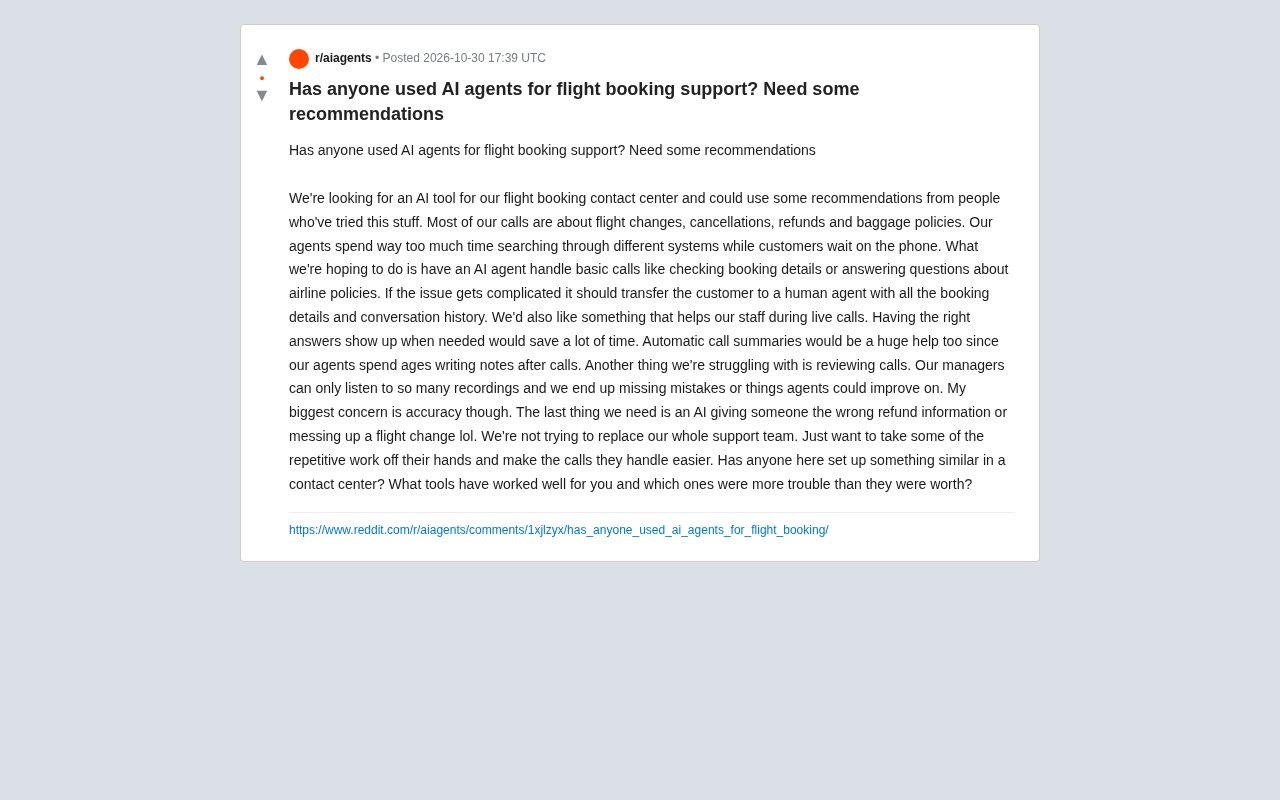
AI Agents for Flight Booking Customer Support: Real Needs and Implementation Challenges
Starting from a real Reddit question, this article breaks down four needs for introducing AI Agents into flight booking call centers: basic Q&A, agent assist, call summarization, and quality inspection, and analyzes accuracy concerns and handoff boundary design.
Vercel Unifies Runtime Cache: Data Cache Merges into Runtime Cache
Vercel merges Data Cache into Runtime Cache, unifying storage quotas and billing for Next.js fetch cache, unstable_cache, getCache, and use cache: remote. Pro and Enterprise projects get more storage, and cache reads/writes are now billed at Runtime Cache pricing.