Frameboy: A Real-Time Browser Demo of World Labs' Atlas World Model
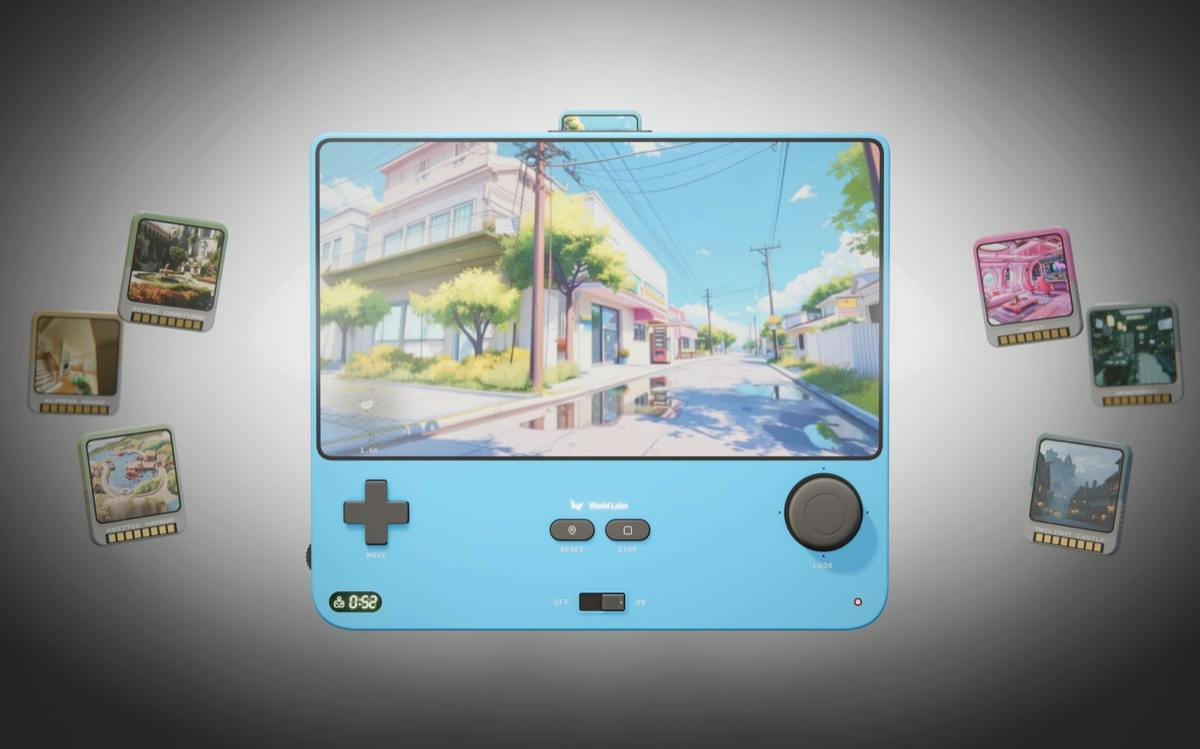
World Labs releases Frameboy, enabling real-time roaming of Atlas world model-generated scenes in the browser.
World Labs has released Frameboy on Product Hunt, a browser demo based on the Atlas world model. Users can move the camera within curated scenes, and cloud GPUs generate new viewpoints in real time and stream them to the browser at up to 15 fps, without requiring high-performance local hardware. This "generate-as-you-move" mode treats the world model as a real-time renderer, lowering the barrier to experience, but the frame rate cap and curated scene limitations indicate that it is currently still a demonstration window rather than a creation tool. It received 75 upvotes on Product Hunt, ranking 14th, and is categorized under AI, Games, and Video, hinting at potential applications of world models in gaming and video content. The significance of Frameboy lies in bringing world models from papers and demo videos into a publicly accessible browser, allowing users to intuitively assess the capability boundaries of Atlas.
World Labs has released a browser demo called Frameboy on Product Hunt, letting users explore interactive scenes generated by the Atlas world model directly in a web page. Rather than following the "yet another AI generation tool" path, this product focuses on "real-time explorable worlds"—as you move the camera, cloud GPUs instantly generate new viewpoints and stream them to the browser at up to 15 fps.
From Static Generation to Roamable Worlds
At the core of Frameboy is World Labs' Atlas world model. Unlike typical text-to-image or image-to-video models, Atlas aims to build a three-dimensional scene that can be continuously interacted with: when you move your viewpoint within curated scenes, the model generates the corresponding imagery based on the new camera position, rather than simply playing back pre-rendered clips.
This "generate-as-you-move" mode essentially uses the world model as a real-time renderer. Cloud GPUs handle the generation load, while the browser only receives the video stream and sends camera commands, greatly lowering the local hardware barrier. The 15 fps cap also indicates that at this stage it leans more toward experience validation than production-grade application, but the direction is worth watching.
World Model is a core concept in the AI field in recent years, referring to models that can learn and simulate the dynamic laws of an environment. Unlike traditional generative models (such as text-to-image or image-to-video), a world model not only generates single frames but also attempts to understand the three-dimensional structure of a scene, the spatial relationships between objects, and the visual changes brought by viewpoint shifts. It is typically presented in video or interactive form, with the goal of giving AI the ability to "imagine" a coherent world. World Labs' Atlas is a representative of this direction, focusing on building interactive 3D scenes rather than merely generating static content. World models have potential applications in robotics, autonomous driving, gaming, and virtual reality, but currently still face challenges such as high inference costs and insufficient real-time performance.
Trade-offs of the Cloud Streaming Architecture
Frameboy adopts an architecture of cloud generation plus browser streaming, and this is no accident. The inference cost of world models is far higher than ordinary image generation, making real-time operation on consumer-grade devices unrealistic. Putting generation in the cloud means World Labs can centrally schedule GPU resources and more easily update the model later without requiring users to upgrade their clients.
The cost is latency and bandwidth. A frame rate of 15 fps is only "usable" in terms of interactive experience; rapidly rotating the viewpoint may feel less than smooth. However, for demonstrating the capabilities of a world model, this compromise is understandable—after all, users don't need to install any software; they can enter an AI-generated world in real time just by opening a web page.
Cloud GPU streaming is a technical architecture in which graphics rendering or model inference is performed on remote servers, and the results are transmitted to user devices as a video stream. It is commonly used in cloud gaming (such as NVIDIA GeForce Now) and virtual desktop scenarios. Its core advantage is that users don't need high-performance local hardware—only a stable network connection to get a high-quality experience. But the challenges lie in latency and bandwidth: video encoding, network transmission, and decoding all introduce additional latency, affecting interactive smoothness. For applications like world models with extremely high inference costs, cloud streaming is currently a pragmatic choice for achieving real-time interaction, but the frame rate cap (such as 15 fps) also reflects the balance between experience and cost under current technology.
Product Thinking Behind the Curated Scenes
Frameboy currently offers only curated scenes, that is, scenes selected and tuned by the official team, rather than letting users freely input prompts to generate arbitrary worlds. This limitation reveals the product's current positioning: it is not a creation tool but a demonstration window.
According to Product Hunt data, Frameboy received 75 upvotes, ranking 14th, with only 1 comment. This level of popularity is above average on Product Hunt, indicating that the "world model" concept is attractive, but not many users have actually tried it and discussed it. In terms of categories, it is classified under Artificial Intelligence, Games, and Video, which also hints at potential application directions—gaming and video content may be the first scenarios where world models land.
A Public Appearance in the World Model Race
World Labs was co-founded with Fei-Fei Li, and Atlas is the core project in its world model direction. The significance of Frameboy is not that it is a mature product, but that it brings world models from papers and demo videos into a publicly accessible browser. Users can personally move the camera and observe how the scene is generated as the viewpoint changes—this experience is more convincing than any promotional material.
Of course, 15 fps, curated scenes, and a single comment also remind us: world models still have a long way to go before becoming "interactive general virtual worlds." But Frameboy at least provides a tangible starting point, allowing the outside world to assess the current capability boundaries of Atlas.
For those following the evolution of AI-generated content, Frameboy is worth a few minutes of experience. What it showcases is not just image quality, but a new interaction paradigm—the world is no longer a static generated image, but a real-time space that can be roamed and explored.
One-line Summary
World Labs releases Frameboy, enabling real-time roaming of Atlas world model-generated scenes in the browser.
Paragraph Summary
World Labs has released Frameboy on Product Hunt, a browser demo based on the Atlas world model. Users can move the camera within curated scenes, and cloud GPUs generate new viewpoints in real time and stream them to the browser at up to 15 fps, without requiring high-performance local hardware. This "generate-as-you-move" mode treats the world model as a real-time renderer, lowering the barrier to experience, but the frame rate cap and curated scene limitations indicate that it is currently still a demonstration window rather than a creation tool. It received 75 upvotes on Product Hunt, ranking 14th, and is categorized under AI, Games, and Video, hinting at potential applications of world models in gaming and video content. The significance of Frameboy lies in bringing world models from papers and demo videos into a publicly accessible browser, allowing users to intuitively assess the capability boundaries of Atlas.
Related articles

Did the US Midterms Vote No to AI Data Centers? A Map Reveals the Truth
After the US midterms, media claimed voters rejected AI data centers, but a map shows restrictive votes are concentrated in a few Ohio townships, affecting less than 1% of US towns—the national anti-AI wave is exaggerated.

ApexW Optimizer Benchmark: Matches 8-bit AdamW in Unsloth with Lower Memory Usage
Developer shares benchmark of ApexW optimizer in Unsloth: ApexW 8bit has lower optimizer state memory (47.101 MB) and slightly better final loss than 8-bit AdamW, but similar speed. Needs independent reproduction.

US Computer Science Enrollment Drops 12.4% — Is CS Still Worth Studying?
CS enrollment fell 12.4% while health majors grew 6.2%. A CS master's grad explains why the degree's real value isn't coding but systems thinking.