Free Access to Gemini, Claude, and GPT: Hands-On with the Antigravity CLI Terminal

A demo shows installing Antigravity with one command in the VS Code terminal to freely switch between Gemini, Claude, and GPT.
The article covers a YouTube demo: paste one command into the VS Code terminal to install Antigravity, type ag to open an integrated AI suite, and switch freely between Gemini 3.1 Flash, Claude Sonnet, and GPT—claimed to be completely free with no API key. The author notes this fits the CLI AI tool trend and cuts tab switching, but stresses that "free to use" isn't "free API": quota sources, rate limits, and data policies are unstated, and third-party aggregation stability is questionable. Best as a lightweight supplementary tool, not a sole production dependency.
A Free AI Power Pack in Your Terminal
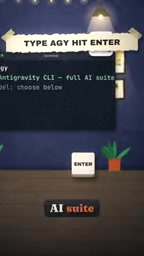
Paying for multiple AI subscriptions every month while constantly switching browser tabs during coding—that's the daily routine for many developers. A demo video on YouTube proposes another approach: paste a single command into the VS Code terminal to install Antigravity, type ag and hit Enter, and you get an integrated AI suite that lets you switch freely between Gemini 3.1 Flash, Claude Sonnet, and GPT models.
The video's core claim is straightforward: these top-tier models can be used "completely free," with no extra hassle and no need to buy an API key. For developers who prefer to do everything inside their editor, the experience of querying top models without leaving the terminal is genuinely appealing.

Installation and Launch: A One-Command Barrier
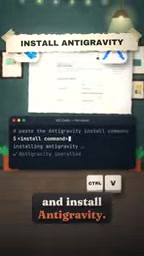
According to the demo, the entire onboarding process is reduced to the bare minimum: open the VS Code integrated terminal, paste the install command to deploy Antigravity, then type ag to enter the AI suite interface. The video doesn't go into the specifics of the install command, focusing instead on the low barrier of "one command + one short instruction."
This design aligns with the current trend of CLI-based AI tools—moving model access from web pages into the terminal environment where developers already spend their time, reducing context-switching costs. For those who don't want to jump back and forth between multiple subscription services, the shorter the entry point, the higher the willingness to try.

What Is Antigravity
Antigravity is not an official client for any single model—it's a type of third-party aggregation tool. It wraps interfaces from multiple model providers into a single UI, so users need only one entry point to call models from different vendors. Such tools typically operate by hosting API keys, sharing quotas, or proxying requests, so users don't have to apply for keys themselves. The difference from official CLIs (like Gemini CLI or Claude Code) is that official tools serve only their own models, while aggregation tools focus on "multi-model switching." These projects mostly depend on upstream services' openness policies, so stability and compliance need to be assessed on your own.
Model Switching and Use Cases
Once inside the suite, the demo shows the ability to switch between Gemini 3.1 Flash, Claude Sonnet, and GPT models. The use case emphasized in the video: querying top models directly while writing code, without jumping to browser tabs or paying for API keys.
It's important to distinguish between "free to use" and "free API." The video's description points to calling models within the Antigravity-provided interface, not to unlimited calls to official APIs from your own programs. The two usually differ in quota, stability, and terms of use, and the original content doesn't elaborate further.
Technical Background of CLI-Based AI Tools
CLI (command-line interface) AI tools have grown popular in recent years, with examples including GitHub Copilot CLI, Aider, and OpenCode. They wrap model calls into terminal commands or interactive sessions that run directly in the developer's project directory, so they can read local files, execute commands, and answer with code context. Compared to web chat, the advantage of CLI tools is that "context is at your fingertips"—no copy-pasting code; the disadvantage is that you usually need to configure your own API keys and bear the calling costs. Tools like Antigravity try to lower this barrier with "no keys, no subscriptions."
Taking "Completely Free" with a Grain of Salt
The video describes the experience as "zero extra hassle," but says little about the mechanics behind the free access—where the free quota comes from, whether there are rate limits, and how data is handled. These key questions have no answers in the original content. For users planning to use it for daily development, these are precisely the factors that determine whether it can be relied on long-term.
Another practical consideration is stability. The availability of third-party aggregation entry points often depends on upstream models' openness policies; once policies change, the free channel can shift at any time. Treating it as a supplementary tool for lightweight queries is reasonable, but relying on it as the sole dependency in a production environment requires more careful evaluation.
The video ends by noting that commenting "setup" gets you the full installation guide, suggesting that specific configuration details are intentionally left for follow-up channels. Developers who want to try it should start with the basic flow shown in the demo, then decide how much to invest based on the quota performance they observe in actual use.
The Difference Between "Free to Use" and "Free API"
A so-called "free API" usually refers to the free tier officially provided by a vendor (such as Gemini's free tier), with explicit rate limits (RPM/TPM) and terms. The "free use" of aggregation tools, by contrast, often means a third party calls the model on your behalf within its interface—users can't see the underlying keys and can't confirm where the quota comes from. The differences show up in: whether quotas are transparent, whether you'll be rate-limited or banned, which intermediary servers request data passes through, and whether upstream terms of service are violated. Before using an aggregation tool for sensitive code or commercial projects, confirm how it handles data to avoid having your code forwarded to uncontrolled third parties.
One-line Summary
A demo shows installing Antigravity with one command in the VS Code terminal and freely switching between Gemini, Claude, and GPT.
Paragraph Summary
The article covers a YouTube demo: paste one command into the VS Code integrated terminal to install Antigravity, type ag to open an integrated AI suite, and switch freely between Gemini 3.1 Flash, Claude Sonnet, and GPT models—claimed to be completely free with no API key purchase required. The author notes this design fits the CLI AI tool trend and reduces browser tab switching, but stresses that "free to use" is not the same as "free API": the source of free quota, rate limits, and data policies are all unstated in the original demo, and the long-term stability of third-party aggregation entry points is questionable. The conclusion: suitable as a supplementary tool for lightweight queries while coding, but not advisable as the sole dependency in production.
Related articles

Anthropic's IPO Crisis: Why $16.8B in Revenue Can't Buy a High Valuation
Anthropic posted $16.8B in Q3 revenue with 85% gross margin yet faces a cut to its IPO valuation. A deep dive into halved growth, the token price war, circular financing, and the clash between safety ideals and capital reality.

Anthropic Races Toward the Largest IPO in History: Can a $100 Billion Raise Ignite the AI Investment Boom?
Anthropic may file its prospectus as early as October 23, aiming to raise up to $100 billion at a valuation of up to $2 trillion, potentially the largest IPO ever. Q3 revenue hit $16.8 billion, up nearly 50% quarter over quarter, with adjusted profitability, but slowing growth has led some investors to cut valuation to $1.5 trillion. The IPO is a key test of whether the AI investment boom can continue.

Bessemer Partner on Anthropic IPO: The Public's First Direct Investment in AI Software
Bessemer partner Byron Theta on the Anthropic IPO: why it's called the moment everyone's been waiting for, the $650M four-round investment, the LP liquidity bind, and expectations of a 2027 IPO wave—plus open-source model pricing pressure, existential risk disclosures, and what the founders' 50.1% voting structure means for ordinary investors.