Free AI API Keys in Practice: A Zero-Cost Guide to Calling GPT, Claude, Gemini, and DeepSeek

Multiple platforms offer free access to mainstream LLM APIs without a credit card—here's the complete integration workflow and its practical limits.
Based on a YouTube creator's demo, this article outlines multiple paths to calling GPT, Claude, Gemini, and DeepSeek APIs for free without a credit card. It covers aggregator platforms (TokenRouter, Semantic Nova, Hugging Face), platforms with direct free quota (xKyro, Grok, Jimi Cloud), tools that integrate into development environments (Token Harbor + Kilo Code, Dahl Global), and free entry points not called APIs (Freebuf, Open Code, Tray AI, Cloudflare, MiniApps.ai). Each platform includes specific steps and pitfalls—like needing to Select All in Hugging Face's Inference Providers filter and ensuring exact model ID matches in Jimi Cloud—and concludes with three reality checks: restriction rules matter more than quota, model IDs must be exact, and free tiers aren't production-ready.
Why Free APIs Deserve Serious Attention
Free APIs don't mean a "degraded experience." The models featured in the demo include DeepSeekAd V3, MiniMax M3, GLM 5.3 Flash, Kimi K3, and more—many of them recently released flagship versions. For individual developers, prototype validation, and side projects, this "zero-cost start" capability significantly lowers the barrier to experimentation.
More importantly, most of these platforms don't require credit card pre-authorization. For users without access to international payment methods, this is a qualitative leap from "can't verify" to "can get the first request running." Of course, free quota doesn't mean unlimited—the rate-limiting strategies vary widely across platforms, as explained one by one below.
Step 1: Aggregator/Routing Platforms—One Key, Many Models
TokenRouter: One Key to Manage Multiple Models
According to the demo on that YouTube channel, TokenRouter is the first recommended platform. After logging in and navigating to the API keys page, you can check multiple model families—GPT, Claude, Gemini, Kimi, DeepSeek, etc.—from All Models to generate a key in one go; alternatively, you can select a specific model (e.g., Claude) first and then create a separate key.
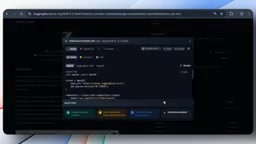
The value of this design: the same codebase only needs the model name swapped to compare output quality across models side by side. For developers evaluating model choices, it saves the hassle of registering with each provider individually.
Semantic Nova: Ready-to-Use Code Examples
Also offering multi-model APIs, Semantic Nova's standout feature is "out-of-the-box" code snippets—cURL, Python, and Gradio formats are all prepared; once the key is generated, just paste and run. In the Playground you can see options like DeepSeek V3, MiniMax M3 (referred to as the latest model in the demo), and Gamma 4.
Compared with TokenRouter, Semantic Nova's model pool leans more toward "new" rather than "comprehensive," making it suitable for scenarios chasing the latest model capabilities.
Hugging Face: Watch Out for That Easy-to-Miss Filter Toggle
Many developers underestimate Hugging Face's API capabilities. The key operation in the demo: after entering the Models page, first open the filter menu at the top, and under Inference Providers click Select All. Without this step, the API keys page won't display any available models at all—this is the biggest pitfall in the entire workflow.
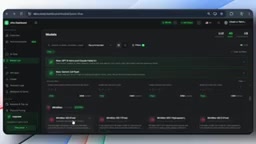
After completing the filter, select the target model (e.g., GLM 5.3 Flash) and click View API Code to get Python, JavaScript, and cURL code. The token generation path is: avatar → Access Token → Create Your Token. The presenter got stuck here because of a forgotten password, which also reminds us of a detail: creating a token on Hugging Face requires password re-verification, so it's advisable to confirm your account status in advance.
Hugging Face's Inference Providers is a model inference routing mechanism launched in 2024. Hugging Face itself hosts hundreds of thousands of models, but not all are connected to the inference API by default—only models designated as inference providers (such as Together AI, Fireworks, Replicate, etc.) appear in the fast inference entry point. Select All's function is to check all available inference providers at once, so that the API keys page lists all callable models. If only some providers are checked, only the corresponding models are displayed. Once you understand this mechanism, it becomes clear: Hugging Face's free quota is not uniformly allocated but varies by inference provider policy—some providers offer a limited free quota per month, with pay-as-you-go billing beyond that.
Step 2: Platforms That Directly Offer Free Quota
xKyro: 40 Free Models, But Don't Miss That $5 Easter Egg
In xKyro's model list, free and paid models are mixed together. The trick in the demo is to click the Free tag and center-filter to display 40 free models, including Codex 5.3 Spark, MiniMax, and Coin 3.1 Max, which the presenter clicked to try.
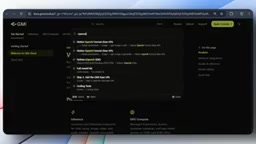
Interestingly, xKyro offers a $5 free trial credit, but it requires Telegram verification to claim. The presenter himself didn't complete the verification, so this part is an "optional" rather than mandatory step. API keys are generated in the dedicated API Keys section, with an expiration date that can be set.
Grok (referred to by the presenter as "groq"): The Personal Top Recommendation
The presenter explicitly states that Grok is the one he uses most often and likes best, citing that "the free experience is excellent, with fewer restrictions than other platforms." After logging in and entering the Playground, you can see OpenAI-series and Meta-series models, with code support for Python, JavaScript, and JSON. Keys are generated on the API Keys page—paste them into your code and run.
This is a subjective evaluation rather than an objective review, but "fewer restrictions" directly addresses the core pain point for free API users—many platforms' free quotas aren't insufficient; rather, the restriction rules are too obscure.
Jimi Cloud: Search "mini" in the model hopper
Jimi Cloud's model filtering entry is called model hopper. Unlike previous platforms, there's no direct "free" filter here. The presenter's approach is to search "mini" to find free models like MiniMax.
Here's an important reminder: the code provided on the model detail page may not contain the correct key placeholder. What the presenter encountered was that the correct code needed to be found under Docs → text by model ID, and the model id must exactly match what the platform displays; otherwise the request will fail.
Step 3: Connect Free APIs to Your Development Tools
Token Harbor + Kilo Code: A Free Model Pool in VS Code
Token Harbor offers free access to models like Claude Opus 5.5, Sonnet 5.5, Fable 5.1, and GPT 6 Astra. The demo flow is to generate a key in Dashboard's Manage Keys, then install the Kilo extension in VS Code and connect via Custom Provider.
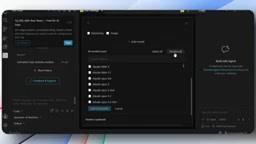
Key operational details: fill in "token" for Provider ID, "token harbour" for Display Name, and copy the Base URL from Integrations → Docs → Chat Apps. After the model list loads, first filter with the keyword "free," then Deselect All and re-check only the free models—if you skip this step, free and paid models will be mixed together, making it easy to accidentally use paid quota. Finally, enable the reasoning and image toggles for each model.
Kilo Code is an open-source AI coding assistant extension in the VS Code Marketplace that supports connecting to any service endpoint compatible with the OpenAI API format via Custom Provider. The so-called "Custom Provider" essentially lets users fill in their own Base URL and API Key, bypassing the official preset model list. The Base URL usually takes the form https://api.example.com/v1, which is the standard path prefix for OpenAI-compatible interfaces; Provider ID and Display Name are just local identifiers and don't affect the request itself. Kilo Code's model list comes from the JSON returned after sending a /models request to the Base URL, so the platform must support that endpoint for automatic model retrieval. The reasoning and image toggles correspond respectively to whether the model supports chain-of-thought reasoning and multimodal image input; when turned off, even if the model has that capability, it won't be invoked.
Dahl Global: A Generous Quota of 100 Million Tokens
Dahl Global gives you 100 million tokens right after signing up. When creating a new key in API Keys, you can allocate credits to that key—the presenter chose max (i.e., the full 100 million quota). The integration method is the same as Token Harbor, with the Base URL obtained under Model Routing. The platform offers models like DeepSeek V4, GLM 5.3, and MiniMax 2.7.
A quota of 100 million tokens is quite ample for individual developers, but note: this is total token volume, not request count—long-context calls will consume quota faster.
A token is the basic unit of text that language models process; 1 token roughly corresponds to 0.75 English words or 1.5 Chinese characters. 100 million tokens sounds enormous, but actual consumption speed depends on usage patterns: an ordinary conversational request might consume only a few hundred tokens, while a request with long documents or codebase context could consume tens of thousands of tokens per call. Taking a long-context model like DeepSeek V4 as an example, if each request carries 100,000 tokens of context, 100 million tokens would only be enough for about 1,000 calls. Additionally, input tokens and output tokens are usually priced or counted separately, and some platforms apply a higher deduction coefficient to output token quota. Therefore, when evaluating free quotas, you should estimate the number of usable calls based on your typical request's token consumption, rather than just looking at the total number.
Step 4: Free Entry Points That Aren't Called "APIs"
Freebuf: A 100% Free Coding Agent
Freebuf positions itself as "the only 100% free coding agent"—no API key required, no credit card needed, with support for desktop app, CLI, Web, and cloud versions. The presenter used it to modify a landing page's color scheme: after entering "change the color scheme to minimal," the Agent first asks whether you want minimal dark or minimal light—this clarifying-question mechanism makes it closer to Claude Code's interaction style, and the output is more targeted.
The actual time taken was about 20 minutes, during which the Agent automatically opened a browser on the side for self-testing. The final result was driven by DeepSeek V4, and the black-and-white color scheme and animation quality were praised by the presenter as "premium." Freebuf also internally offers free models like DeepSeek V4 and GLM 5.3.
Open Code and Tray: Free Models + Dedicated IDEs
Open Code offers free models like Claude Fable 5, Opus 4.6/4.7, and Kimi K3—after logging in, just enable them on the free models page and use them in the dedicated app.
Tray AI is an IDE form factor—the interface is close to VS Code, and after adding a project you can select a free model for vibe coding. These two tools represent another approach: rather than calling APIs, just use a development environment with integrated free models.
Cloudflare and MiniApps.ai: Supplementary Options
Cloudflare's AI section offers free models like GPT-6 Seoul, GPT-6 Luna, and Grok; after generating a key on the API page, you can add it following the Kilo Code integration method. MiniApps.ai offers free access to models like Claude Opus 5.5, GPT-6 Esther, and Fable 5.1—in the demo, simply select a model to use it.
Three Reality Checks for Free APIs
First, the "restrictions" on free quota often deserve more attention than the "quota" itself. The presenter repeatedly mentions that Grok has "fewer restrictions," indicating that what differentiates free platforms isn't how much they give, but how they deduct and how they limit. It's advisable to test rate-limiting rules with small requests on each platform first.
Second, model IDs must match exactly. The Jimi Cloud demo exposed this problem—if the model id in the code differs by a single character from what the platform displays, the request will fail. When integrating with any platform, first confirm the exact spelling of the model ID.
Third, free doesn't mean production-ready. The free quotas on these platforms are suitable for prototype validation, learning, and personal projects. If used for commercial products, you need to evaluate fallback plans after the quota runs out, as well as the constraints that each platform's terms of service impose on the free tier.
The real value of this toolkit is enabling developers to complete the full loop of "model selection—prototype building—effectiveness validation" at zero cost. As for which model to ultimately pay for, that's a question to answer only after validation.
One-line Summary
Multiple platforms let you call mainstream LLM APIs for free without a credit card—this article breaks down the complete integration workflow and practical limits.
Paragraph Summary
Based on a YouTube creator's demo, this article systematically outlines multiple paths to calling mainstream LLM APIs—including GPT, Claude, Gemini, and DeepSeek—without binding a credit card. It categorizes them into aggregator/routing platforms (TokenRouter, Semantic Nova, Hugging Face), platforms that directly offer free quota (xKyro, Grok, Jimi Cloud), platforms that can be integrated into development tools (Token Harbor + Kilo Code, Dahl Global), and free entry points not called APIs (Freebuf, Open Code, Tray AI, Cloudflare, MiniApps.ai). Each platform comes with specific operational steps and common pitfalls, such as needing to Select All in Inference Providers on Hugging Face, and Jimi Cloud's model ID needing to match exactly. Finally, it offers three reality checks: free restriction rules matter more than quota, model IDs must be exact, and free quota isn't suitable for production environments.
Related articles

Anthropic's IPO Crisis: Why $16.8B in Revenue Can't Buy a High Valuation
Anthropic posted $16.8B in Q3 revenue with 85% gross margin yet faces a cut to its IPO valuation. A deep dive into halved growth, the token price war, circular financing, and the clash between safety ideals and capital reality.

Anthropic Races Toward the Largest IPO in History: Can a $100 Billion Raise Ignite the AI Investment Boom?
Anthropic may file its prospectus as early as October 23, aiming to raise up to $100 billion at a valuation of up to $2 trillion, potentially the largest IPO ever. Q3 revenue hit $16.8 billion, up nearly 50% quarter over quarter, with adjusted profitability, but slowing growth has led some investors to cut valuation to $1.5 trillion. The IPO is a key test of whether the AI investment boom can continue.

Bessemer Partner on Anthropic IPO: The Public's First Direct Investment in AI Software
Bessemer partner Byron Theta on the Anthropic IPO: why it's called the moment everyone's been waiting for, the $650M four-round investment, the LP liquidity bind, and expectations of a 2027 IPO wave—plus open-source model pricing pressure, existential risk disclosures, and what the founders' 50.1% voting structure means for ordinary investors.