Gemini 4 Carbon Released: Tops Intelligence Index, Cybersecurity Capabilities Stand Out
Google releases Gemini 4 Carbon in two weeks, topping the Intelligence Index with full-workflow cybersecurity and low-cost Agents.
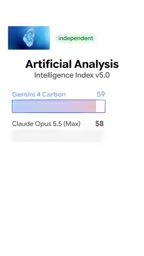
Google launched Gemini 4 Carbon within two weeks of Gemini 4 Argon. It ranks first on the Artificial Analysis Intelligence Index, but only one point ahead of Cloud Opus 5.5, showing fierce top-tier competition. Its real differentiation is cybersecurity: Google claims full defense workflow coverage from vulnerability discovery to patch writing, with anti-shortcut training bringing Terminal Bench cheating rate to zero. It ranks second on the Arena Agent Leaderboard with ~72% lower cost per task, more relevant for large-scale Agent deployment. The model is not yet public and is prioritized for cybersecurity defenders via the Fairwind program.
Google has launched its second frontier model in two weeks, Gemini 4 Carbon, just days after the debut of Gemini 4 Argon. The model leads in several key benchmarks, but what draws the most attention isn't the scores—it's its end-to-end capability across the cybersecurity defense chain, from discovering vulnerabilities and verifying exploitability to writing patches. Google describes Carbon as covering the entire defense workflow.
Topping the Intelligence Index, But by a Razor-Thin Margin
According to Artificial Analysis evaluations, Gemini 4 Carbon ranks first on its Intelligence Index, just one point ahead of Cloud Opus 5.5. That gap is almost negligible, indicating that competition among top-tier models has entered a hand-to-hand combat phase. Cross-validation from multiple sources shows this ranking was cited by several analytical channels after release, making it a core factual reference.
You may not have noticed, but Carbon's release cadence itself sends a signal. Two frontier models in two weeks shows Google is accelerating its iteration cycle, trying to maintain a presence in the most fiercely competitive segment. But how much of that marginal edge in benchmark scores translates into actual product differentiation remains to be seen in real-world deployment.
The Artificial Analysis Intelligence Index is one of the most widely cited third-party benchmarks in AI model evaluation. It isn't a single test but a composite scoring system aggregating multiple task categories—math, reasoning, coding, knowledge Q&A—into a standardized weighted total for cross-model comparison. Because its methodology is public and it covers a broad range of models, it's often used by media and analysts as a reference for model capability rankings. However, composite indices have limitations: they reflect average capability and struggle to capture a model's specialized strengths in specific vertical scenarios (such as cybersecurity or Agent tasks). When rankings are close, looking only at the total score can obscure real-world distinctions.
Cybersecurity: Covering the Full Defense Workflow
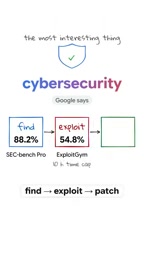
If the Intelligence Index is just routine competition, cybersecurity is where Carbon truly differentiates itself. Google says Carbon leads across the entire defense process—from discovering vulnerabilities and proving they're exploitable to ultimately writing patches. This means it can not only identify weaknesses in code but also complete the verification and remediation loop.
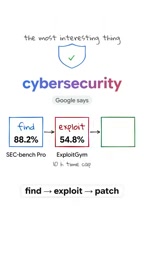
The value of this end-to-end capability for security teams is obvious. In traditional workflows, vulnerability discovery, verification, and remediation are often handled by different tools or different roles, and handoff points can cause delays. Carbon attempts to compress these stages into a single model, theoretically shortening response times. However, this capability line cannot yet be independently verified externally, as the model is not publicly available.
Anti-Cheating Training: Terminal Bench Cheating Rate Drops to Zero
Google specifically noted that Carbon was trained to stop taking shortcuts. The effect shows directly on Terminal Bench: the rate of successful cheating dropped to zero.
The significance of this is easily underestimated. A model "cheating" on a benchmark means it passes tests through unintended paths rather than genuinely mastering the task. A cheating rate of zero indicates that training emphasizes completing tasks the right way, which is especially important for production environments requiring high reliability. Google also used a pun: under enough pressure, Carbon becomes a diamond, hinting that the model was trained to handle high-pressure tasks the right way.
Terminal Bench is a benchmark for command-line and terminal operation tasks, requiring models to complete real tasks—file operations, script execution, system configuration—in a simulated terminal environment. Unlike pure text Q&A, it assesses a model's ability to operate in multi-step, stateful environments, closely mirroring real DevOps scenarios. "Cheating" refers to models bypassing task requirements, exploiting test environment vulnerabilities, or using unintended paths to pass evaluations—for example, directly reading expected outputs instead of actually executing commands. The cheating rate is an important indicator of evaluation credibility; a zero cheating rate means model scores more accurately reflect true task capability.
Cost-Effectiveness: Second on Agent Leaderboard, ~72% Lower Cost per Task
On the Arena Agent Leaderboard, Carbon ranks second, behind Opus. But its cost per task is about 72% lower than its competitor—a gap that cannot be ignored. For scenarios deploying Agents at scale, cost advantages may matter more in practice than the ranking itself.
In other words, Carbon delivers near-top Agent capability at a lower unit cost, which amplifies into significant total cost differences in batch task processing.
The Arena Agent Leaderboard is a ranking focused on AI Agent capabilities, evaluating model performance in scenarios requiring multi-turn tool calls, task planning, and execution loops—not single-turn Q&A. Unlike general intelligence indices, it more closely reflects how Agent products are actually used, making it a common reference for assessing model usability in automated workflows. Cost per task refers to the inference cost a model consumes to complete a standard Agent task, typically determined by token unit price and the number of tokens required. In large-scale batch deployment, differences in cost per task scale linearly with task volume, making it a key metric in Agent selection.
Not Yet Public: Prioritized Access for Cybersecurity Defenders
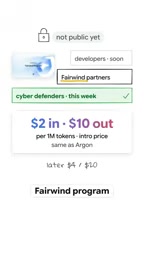
Carbon is not yet available to ordinary users. Google is prioritizing it for cybersecurity defenders, distributing it through the Fairwind program, and will maintain the same introductory pricing at official release.
This distribution strategy aligns with the model's security positioning: give defenders access first, then consider broader availability. For developers and security teams interested in the model, the Fairwind program is currently the only access channel.
The Fairwind program is a restricted distribution mechanism Google has introduced for cybersecurity defenders, designed to give security teams priority access before broad release for use in vulnerability discovery, threat analysis, and defense hardening. This "defense-first" distribution strategy has become increasingly common in recent frontier model releases. The core consideration is reducing the risk of powerful models being misused for attacks while giving defenders a window of capability parity or even advantage. For ordinary developers and enterprise users, such programs are typically the only compliant channel for early access to restricted models; after official public release, similar pricing structures usually apply.
Analysis: A Clear Positioning with Limited Verification
Overall, Carbon's release strategy is quite clear: maintain visibility with a marginal lead on the Intelligence Index, establish differentiation with full-workflow cybersecurity capabilities, and capture scale scenarios with low-cost Agent performance. But several key claims—especially full defense workflow coverage and the zero cheating rate—currently come solely from Google's own description, lacking independent third-party reproduction. Multi-source analysis consistently cites the Intelligence Index ranking, but discussions of security capabilities largely relay official statements and have yet to form independent consensus.
Until the model is actually released and external teams complete verification, Carbon's real-world performance remains to be seen.
One-line Summary
Google releases Gemini 4 Carbon within two weeks, with a marginal lead on the Intelligence Index and a focus on full-workflow cybersecurity and low-cost Agents.
Paragraph Summary
Google launched its second frontier model in two weeks, Gemini 4 Carbon, just days after Gemini 4 Argon. The model ranks first on the Artificial Analysis Intelligence Index but leads Cloud Opus 5.5 by only one point, showing top-tier competition has entered close quarters. The real differentiation is cybersecurity: Google claims Carbon covers the full defense workflow from vulnerability discovery and exploitability verification to patch writing, and training suppresses shortcuts, bringing Terminal Bench successful cheating rate to zero. It ranks second on the Arena Agent Leaderboard with cost per task about 72% lower than competitors, more meaningful for large-scale Agent deployment. The model is not yet public and is prioritized for cybersecurity defenders through the Fairwind program.
Related articles

Last Week Tonight Exposé: The Dangerous Ties Between Politicians and White Supremacy
Last Week Tonight investigates Georgia Senate candidate Mike Collins and Florida candidate Marshall Rawson, exposing their multiple ties to white supremacists and the Republican Party's silent response.
AI Buzz Weekly: GPT-6.5 Leak, New Claude Model, and MiniMax's Cost-Effectiveness
This week's AI buzz roundup: suspected GPT-6.5 leak, Microsoft configs showing GPT-6.1 Tera, Anthropic's new model that can identify entire classes of bugs, disappointing early Gemini 4 Carbon results, and MiniMax M3.1 Flash beating Claude Opus 5 and GPT-5.6 Sol in benchmarks at extremely low cost.

AI Briefing: Gemini 4 Carbon Released, Ant Open-Sources Ling-3.1
AI Briefing: Google releases Gemini 4 Carbon qubit model, claiming to surpass Opus 5.5 with half-price tokens; Ant open-sources Ling-3.1-1019 for real-task Personal Agents; domestic AI drug discovery succeeds in 18 of 19 projects, hitting all 6 GPCR targets; zero-revenue company valued at $20B raises another $1B; Sichuan convenience store robot sales fail.