Generative AI Consumes More Energy on Non-English Text: Analyzing Multilingual Efficiency Gaps

Generative AI consumes more energy on non-English text, rooted in tokenization efficiency and training data bias.
Starting from tech community discussions that "generative AI uses more energy on non-English text," the article analyzes the possible causes of this phenomenon. Mainstream models are trained primarily on English corpora, and tokenizers also favor English, causing non-English text with equivalent meaning to be split into more tokens and increasing inference computation. At the same time, training data bias forces the model to use more parameters for pattern matching on non-English input, further raising energy consumption per request. The article notes that this directly drives up API call costs for applications targeting the global market and increases carbon emission pressure. Optimization directions include improving multilingual tokenizers, adopting MoE architectures or language-specific adapters, and increasing the proportion of non-English corpora in training.
Starting with the Energy Gap
Generative AI is used widely around the world, but its energy consumption is drawing increasing attention. Recent discussions in the tech community point out that generative AI tends to consume more energy when processing non-English text than English text. Although the original discussion provided only clues (the source platform was Hacker News, with a title that directly stated "Generative AI uses more energy on non-English text"), this phenomenon involves multiple factors such as model training, tokenization efficiency, and inference cost. This article analyzes the possible sources of the energy gap from a technical perspective and explores the implications for AI application developers and enterprises.
Why Is Non-English Text More "Power-Hungry"?
Tokenizers and Language Coverage
Most mainstream generative AI models (such as language models based on the Transformer architecture) are trained primarily on English corpora. The construction of tokenizers also tends to favor English vocabulary and grammatical structures, causing non-English text to be split into more subword units. For example, an English word may correspond to one token, while a non-English word with equivalent meaning may be split into 2-3 tokens. An increase in the number of tokens directly raises the amount of computation during inference, and energy consumption rises accordingly.
Tokenizer is the bridge connecting raw text and neural network input. Taking the common BPE (Byte Pair Encoding) as an example, it starts at the character level and repeatedly merges the most frequent adjacent symbol pairs in the corpus, ultimately forming a subword vocabulary. The vocabulary size usually ranges from 30,000 to 150,000. If the training corpus is primarily English, the merge rules will prioritize high-frequency English fragments such as "ing," "tion," or the whole word "the." Non-English scripts (such as Chinese, Japanese, and Arabic) account for a low proportion of the corpus, and their common characters and words can hardly obtain independent merge entries, so they can only fall back to finer-grained byte or single-character representations; as a result, the same meaning is cut into more tokens. The number of tokens directly determines the scale of the attention matrix and the number of matrix multiplications in the Transformer forward computation, so the more tokens there are, the greater the FLOPs and memory read/write volume, and energy consumption grows linearly or even superlinearly. This is also why tokenization efficiency is regarded as the primary source of multilingual energy differences.
Training Data Bias and Model Efficiency
Because English accounts for a relatively high proportion of training data, the model is more "familiar" with English and is more efficient when predicting. Non-English text requires the model to invoke more parameters for pattern matching, and over time, the energy difference per request accumulates considerably. Although the original discussion did not provide specific figures, qualitatively speaking, the energy consumption per request for non-English text is higher than for English text.
The Transformer architecture is the backbone of current mainstream generative models, and its core is the self-attention mechanism: each token must compute relevance weights with other tokens in the sequence. The amount of computation is proportional to the square of the sequence length, so when the number of tokens doubles, the computation in the attention part becomes about four times as large. In addition, the model has seen massive context in English, and its internal representations form a more compact distribution for English grammar and collocations; when faced with non-English input, the activation distribution deviates from the training distribution, and the model must rely on more layers and more parameters to converge to a reasonable prediction, equivalent to "taking a longer road." This distribution shift is not reflected in the unit price of the API bill, but it is reflected in actual compute consumption and response latency, making it the second layer of efficiency loss beyond tokenization differences.
Potential Impacts of the Energy Gap
Cost Impact on Developers
For AI applications targeting the global market, if the main users speak non-English languages, API call costs may be higher. Under the token-based billing model of cloud services, non-English text consumes more tokens, directly driving up operating costs. Developers need to consider cost optimization in multilingual scenarios during product design.
Considerations for Sustainable Development
AI energy consumption has become an environmental issue of industry concern. If non-English text consumes significantly more energy, then the carbon emission pressure will also increase accordingly when promoting AI applications globally. This prompts model providers to optimize multilingual support, for example by improving tokenizers or introducing language-adaptive mechanisms.
Optimization Directions and Industry Practices
Tokenizer Improvements
Optimizing tokenizers for non-English languages is a direct means of reducing energy consumption. For example, expanding the vocabulary to cover high-frequency words in more languages reduces subword splitting. Some open-source communities are already promoting the standardization of multilingual tokenizers.
Model Architecture and Training Strategies
Adopting Mixture of Experts (MoE) architectures or language-specific adapters can allow the model to activate fewer parameters when processing non-English text, thereby reducing energy consumption. In addition, increasing the proportion of non-English corpora in training can also improve model efficiency.
The Mixture of Experts (MoE) architecture splits the feed-forward layer into multiple parallel "expert" subnetworks, and a gating network selects and activates only a few of them for each token. In this way, the model's total parameter count can be very large, but a single inference uses only a small portion, thereby controlling compute overhead while maintaining capability. Introducing language or language-family features into gating routing can in theory allow different languages to activate more suitable experts and reduce ineffective computation caused by cross-lingual interference. Language-specific adapters are small trainable modules inserted into a frozen backbone network, with each language maintaining a lightweight set of parameters that are switched by language during inference. The two approaches share the same idea: replacing full-parameter participation with conditional activation, so that non-English requests do not have to bear the full computational burden of a large model optimized for English.
Conclusion
The higher energy consumption of generative AI on non-English text reveals the efficiency shortcomings of current AI systems in multilingual support. Although the original discussion did not provide quantitative data, factors such as tokenization efficiency, training data bias, and model architecture jointly cause the difference. For developers and enterprises, paying attention to energy consumption and costs in multilingual scenarios and optimizing tokenization and model strategies is a key step toward promoting the sustainable development of AI applications.
(Note: This article is based on discussions in the Hacker News community and general knowledge in the AI field, and does not introduce specific data beyond the original material.)
Related articles
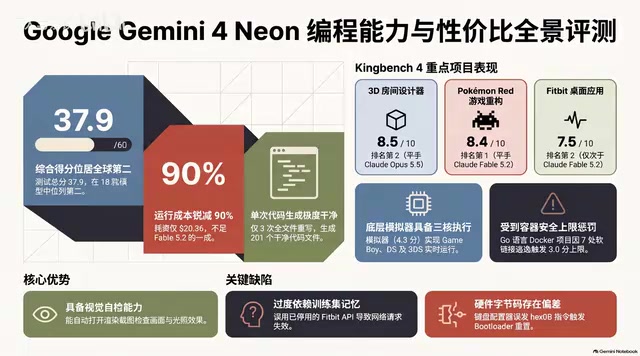
Gemini 4 Neon Hands-On: Value King or Confident Catastrophe?
Gemini 4 Neon review: 1M-token context, four thinking levels, 201 files in one KingBench4 pass at one-tenth Fable 5.2's cost—but it hallucinates fake data, leaves 7 symlink escapes, and bricks keyboards.

Google Gemini 4 Neon Hands-On: 6 3D Works That Impress and Fail
Hands-on with Google Gemini 4 Neon on a 3060 laptop: 6 3D works tested. Sunshower Fishing Harbor and mechanical keyboard impress; soft-body physics and faces fall short.
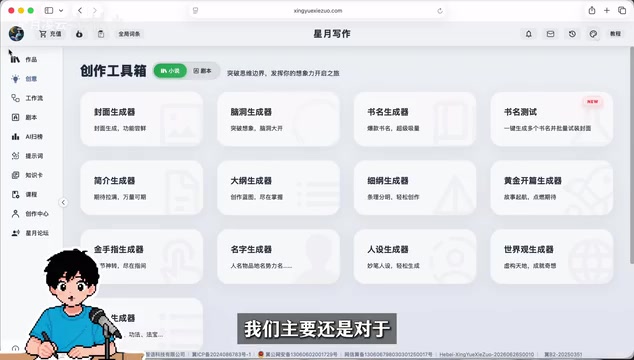
Gemini 4 Neo Web Novel Writing Test: Faint AI Flavor, Textured Dialogue
Bilibili creator's first-look review of Gemini 4 Neo for Chinese web novel writing: testing a Three Kingdoms transmigration opening with faint AI flavor, emotionally textured dialogue, and strong crisis building, plus comparison of 4A/4H/4C models and full workflow demos.