Goodbye Claude, Hello Pi: The Real Considerations Behind a Developer's Migration
Developer's migration record from Claude to Pi reflects AI coding tool selection and differentiated competition.
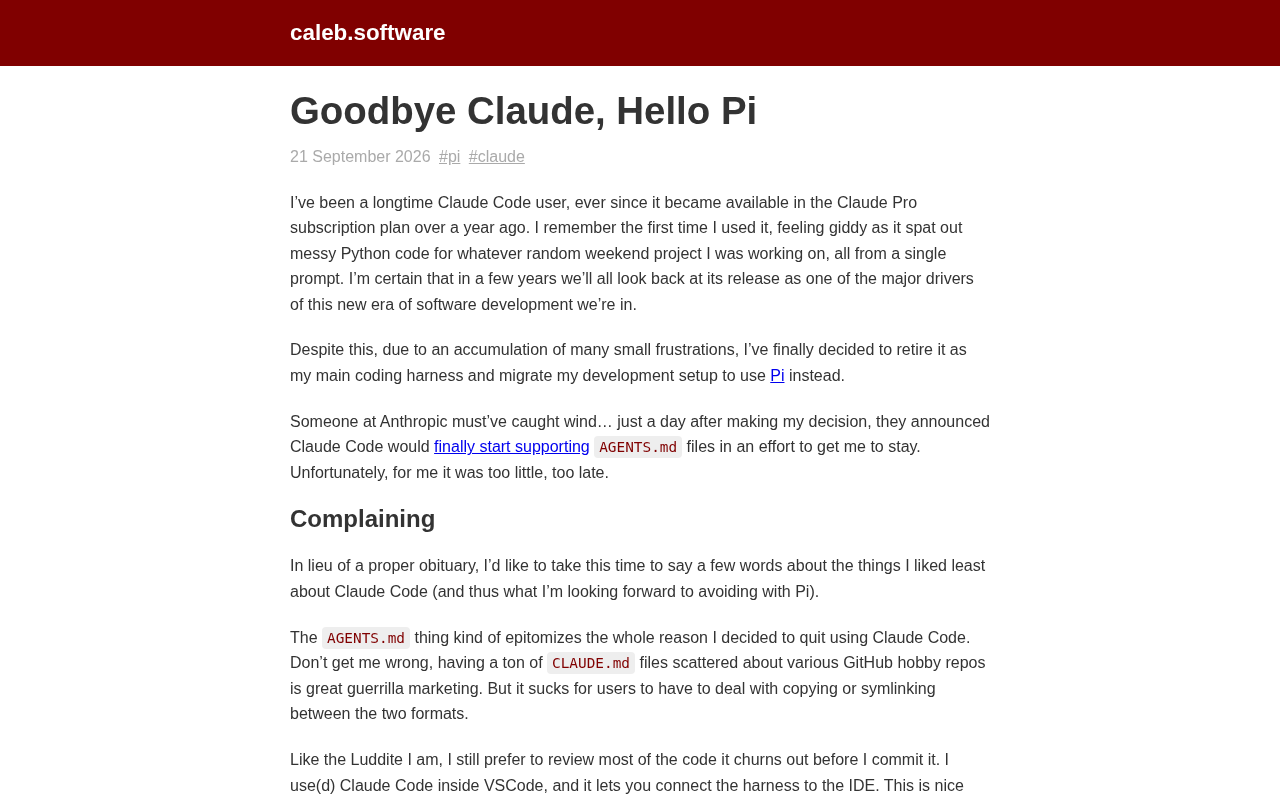
The article centers on a developer's self-account "Goodbye Claude, Hello Pi" on Hacker News, outlining a personal migration from Anthropic's Claude to AI coding assistant Pi. The author points out that the migration is not due to serious problems with Claude, but more likely because Pi fits personal needs better in certain workflow links. The 223 upvotes and 133 comments on HN reflect the developer community's high attention and efficiency anxiety regarding AI coding assistant selection. The article further analyzes that individual migration is not enough to change the market landscape, but it shows that the field has not yet formed an absolute monopoly, and new entrants can still gain space through differentiated experiences. For ordinary developers, a more pragmatic approach is to regularly review whether tools match their own workflow rather than blindly following popular products.
From Claude to Pi: Observations on a Developer Tool Migration
On Hacker News, an article titled "Goodbye Claude, Hello Pi" sparked widespread discussion, garnering 223 upvotes and 133 comments. In his blog, the author Caleb documented his journey of switching from Anthropic's Claude to Pi (an AI coding assistant). These kinds of tool migration stories usually don't involve groundbreaking technical principles, but they often reveal the real-world experience differences of AI coding assistants in actual use. For developers who are choosing or considering switching AI coding tools, these first-hand user observations are worth reading carefully.
Motivation: Not That Claude Got Worse, but That Pi Fits Better
Judging from the article title and the discussion's popularity, this migration was not because Claude had serious problems. The core logic Caleb expressed in the original article is that Pi fits his workflow better in certain respects. Although the source material does not elaborate on specific feature comparisons, the high engagement in the HN comments indicates that many developers have their own preferences and pain points when it comes to tool selection. Common migration motivations usually center on response speed, context management, code completion accuracy, and support for specific languages or frameworks. The fact that Pi, a relatively new AI coding tool, can attract developers away from mainstream products suggests it offers differentiated value in certain scenarios.
This article is based on a single developer's self-account; specific migration reasons should refer to the original article.
Workflow integration of AI coding assistants refers to whether such tools can smoothly embed into a developer's existing editing, debugging, version control, and terminal operation chains, rather than answering questions in isolation. Common evaluation dimensions include: whether completion is low-interference, whether it can understand context across files, the degree to which it follows project conventions, and the cost of switching between the IDE and the command line. Different tools emphasize different dimensions, so "fitting better" often means the tool reduces friction in a few high-frequency links the author uses. Understanding this helps view individual migration as a workflow-matching issue rather than a simple ranking of product pros and cons.
Tool Selection Anxiety Reflected in Community Discussion
The 133 comments on HN reflect the developer community's high attention to AI coding assistant selection. Such discussions often present two voices: one side believes the cost of tool migration is underestimated and frequent switching disrupts accumulated experience; the other side believes AI tools iterate quickly and maintaining an open mind to try new products is necessary. Judging from the comment engagement, the Claude vs. Pi comparison touches a sensitive nerve among developers about whether "efficiency tools truly improve efficiency." One detail: the original title uses the symmetrical structure of "Goodbye" and "Hello," carrying obvious personal emotion, which makes it more a choice based on personal experience than an absolute judgment of product pros and cons.
Tool migration cost is often underestimated in AI coding assistants. It includes not only resubscribing and installation, but also prompt habits, keyboard shortcut muscle memory, familiarity with the model's "temperament," and custom scripts and team conventions built around the tool. Frequent switching disrupts these implicit accumulations, reducing efficiency in the short term. On the other hand, AI tools iterate quickly, and long-term lock-in to a single product may mean missing more suitable new capabilities. Therefore, the essence of the community debate is the trade-off between "switching cost" and "missing-out cost," rather than a simple new-vs-old dispute.
Implications for the AI Coding Tool Market
A single individual migration is not enough to indicate a change in the market landscape, but it provides a signal: the AI coding assistant field has not yet formed an absolute monopoly, and new entrants still have opportunities to win users through differentiated experiences. Claude already has a strong reputation in coding assistance, but developers' needs are diverse—some value long-context reasoning, while others care more about completion speed and low interference. If Pi can find its niche positioning, it may secure a place in the competition. For ordinary developers, the greatest value of such migration stories is reminding themselves: regularly reviewing whether tools match the current workflow is more important than blindly following popular products.
Long-context reasoning is a key capability of AI coding assistants, referring to the model's ability to process large amounts of code, documents, and conversation history in a single interaction while maintaining consistency. For tasks such as large codebase refactoring, cross-module troubleshooting, and following complex project conventions, long context can significantly reduce repeated pasting and information loss. In contrast, completion speed and low interference lean more toward the immediate experience of daily coding. These two types of needs correspond to different usage scenarios, which also explains why developers give very different evaluations of the same set of tools.
Conclusion: Migration Is an Individual Choice, Just View It Rationally
Caleb's sharing is a typical record of a developer's personal experience. It does not mean Claude is no longer excellent, nor does it mean Pi suits everyone. In the stage of rapid evolution of AI coding tools, maintaining a neutral evaluation of tools and choosing according to one's own needs is a more pragmatic strategy. If you are also using an AI coding assistant, you might extract useful judgment dimensions from this migration record rather than simply imitating others' choices.
Related articles
 Tech Frontiers
Edge AI on Microcontrollers: When Is It Actually Worth Deploying?
Drawing on Reddit discussions and Arm case studies, this article analyzes the real-world use cases for edge AI on microcontrollers: when each device needs independent inference, when a gateway or cloud is more reasonable, and the costs and boundaries of specialized hardware.
 Tech Frontiers
Pushing the Limits of Extreme Sudoku on a 16GB GPU: Insights from Depth and Flow Matching
A researcher trained a 16.54M-parameter model on a 16GB GPU to solve extreme Sudoku, finding effective depth breaks the 60% plateau and flow matching with improved sampling pushes accuracy past 99% with ~50× lower layer-evaluation budget.
 Tech Frontiers
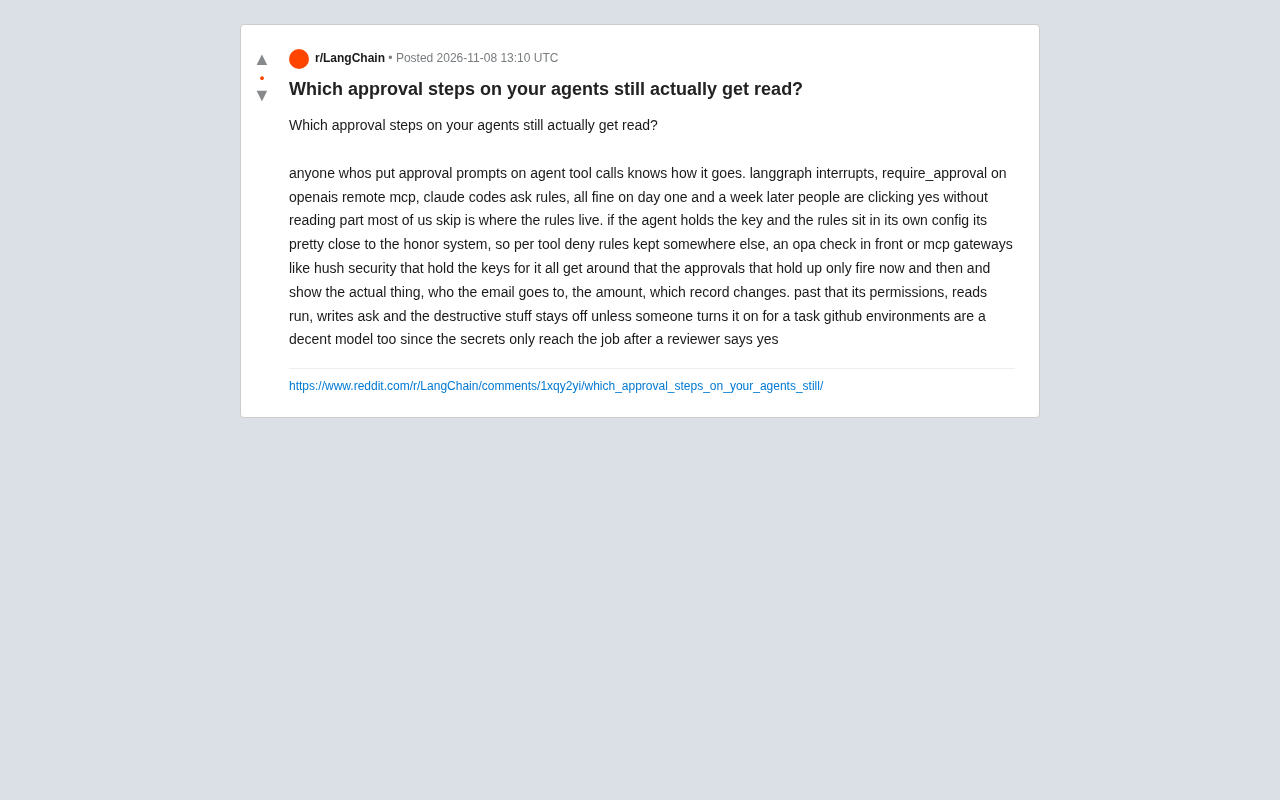
AI Agent Approval Workflows: Why Human Confirmations Always Get Mindlessly Clicked
Why do AI agent approval workflows always get mindlessly clicked? A Reddit discussion shows that separating rules from keys, low-frequency high-risk approvals, and GitHub Environments-style gates are the keys to effective approvals.