Google Adds New Feature to Pixel HiLight, Practicality Still Questionable

Google adds frequent contacts SMS notification to Pixel 11 Pro's HiLight light, only a modest practicality improvement.
In the November 2026 Pixel Drop update, Google added a new feature to the HiLight light on the back of the Pixel 11 Pro: when frequent contacts send texts via Google Messages, the light illuminates, letting users perceive important messages without touching the screen. The article notes that the feature only supports Google Messages and is limited to frequent contacts, so scenarios are limited; plus, HiLight is on the back and hard to see during normal handling unless the phone is face down. The original article describes this update as "slightly more useful" and directly states that HiLight's previous uses were disappointing. Overall, this is a small expansion of passive notification capability, and whether it can shed negative reviews still depends on whether more substantial features follow.
Google is adding a new feature to the HiLight light on the back of its Pixel 11 Pro phone: as part of the November 2026 Pixel Drop update, this light will illuminate when users receive Google Messages texts from frequent contacts. It's admittedly a small addition, but given HiLight's previously disappointing uses, whether it can truly improve practicality remains to be seen.

HiLight's New Notification Feature: Limited to Frequent Contacts
According to the original report, the core of this feature is: when your frequent contacts send you texts via Google Messages, the HiLight light on the back of the Pixel 11 Pro will light up. This means users can perceive the arrival of important messages through light changes without turning on the screen.
However, this feature currently only supports the Google Messages app and is limited to "frequent contacts." This limitation means its applicable scenarios are relatively limited—users need to set up a frequent contacts list in advance, and the other party must also use Google Messages to send texts.
Background on Google Messages and RCS
Google Messages is Google's flagship messaging app on the Android platform, and in recent years it has heavily promoted RCS (Rich Communication Services) as an upgrade to traditional SMS. RCS supports read receipts, typing indicators, high-definition images, and end-to-end encryption, but its full experience requires both sender and receiver to use RCS-capable clients and carrier networks. The article mentions that the notification feature is limited to Google Messages, meaning it relies on that app's message reception channel rather than a system-level SMS service. This also explains why the other party must also use Google Messages: if messages are delivered via traditional SMS or other apps, HiLight won't be triggered. This app-level binding, while improving experience consistency, also limits the feature's coverage.
Why "Slightly More Useful"?
The original article uses "slightly more useful" to describe this update and directly states that HiLight's previous uses were "disappointing." This suggests that HiLight may have been given high expectations at launch, but its actual performance failed to meet user expectations. The new SMS notification feature, while expanding use cases, is essentially still a passive notification indicator light rather than a more interactive or creative feature.
From a product design perspective, HiLight is located on the back of the phone, and users typically cannot see it during normal handling, which limits its actual value as a notification light. Unless users place the phone face down, this light's presence is not strong.
The Interaction Design Challenge of Rear Lights
Placing indicator lights on the back of phones is not a new attempt in the industry. Previous breathing lights, secondary screens, or ring light designs all face the same contradiction: when users normally hold and look at the screen, the back is in a visual blind spot, and the light can only be perceived through ambient reflection or when the phone is placed face down on a table. Therefore, such designs often need to be paired with always-on, gradient color, or notification priority-binding strategies to reduce misjudgment and disturbance. HiLight's SMS notification is similarly constrained—it provides "presence" rather than "information," and users still need to turn on the screen to know the message content. This is also a common criterion when evaluating such features: whether it conveys sufficiently valuable information without adding operational steps.
Continuation of Pixel Drop Update Strategy
This feature is launched as part of the November 2026 Pixel Drop, continuing Google's strategy of adding new capabilities to Pixel devices through regular feature updates. Pixel Drop typically includes multiple feature improvements, and this HiLight update is just one of them.
From a competitive perspective, smartphone manufacturers have been exploring differentiated designs such as rear lights or secondary screens, but how to truly integrate these designs into daily use scenarios remains a common challenge for the industry.
What Is Pixel Drop
Pixel Drop is a quarterly feature update mechanism established by Google for Pixel devices, typically pushed alongside Android security patches or system versions, bringing new features in areas such as camera, calling, accessibility, and AI rather than just fixing vulnerabilities. It stands alongside monthly security updates as one of Google's software support strategies that distinguishes it from most Android manufacturers, aiming to extend device feature lifecycles and strengthen Pixel's differentiation. Since Pixel Drop covers multiple models on sale, whether specific features are delivered depends on hardware capabilities and device generation, so the HiLight update in the article only appears on the Pixel 11 Pro, making it an exclusive feature relying on specific hardware.
Summary
Google has added a frequent contacts SMS notification feature to the HiLight light on the Pixel 11 Pro, a modest improvement to the feature's practicality. However, limited by app support scope and user habits, whether this light can shed its "disappointing" reputation still depends on whether more substantial features are added in the future.
One-line Summary
Google adds frequent contacts SMS notification to Pixel 11 Pro's HiLight light, only a modest practicality improvement.
Paragraph Summary
In the November 2026 Pixel Drop update, Google added a new feature to the HiLight light on the back of the Pixel 11 Pro: when frequent contacts send texts via Google Messages, the light illuminates, letting users perceive important messages without touching the screen. The article notes that the feature only supports Google Messages and is limited to frequent contacts, so scenarios are limited; plus, HiLight is on the back and hard to see during normal handling unless the phone is face down. The original article describes this update as "slightly more useful" and directly states that HiLight's previous uses were disappointing. Overall, this is a small expansion of passive notification capability, and whether it can shed negative reviews still depends on whether more substantial features follow.
Related articles

Microsoft Open-Sources Token Economizer: Saving 18%-31% on AI Coding Agent Costs
Microsoft's free open-source plugin Token Economizer cuts AI coding agent costs through micro skills, tool pruning, and failure loop intervention. Tests show 18.4% to about 31% average savings with Claude Code, Codex, and more.
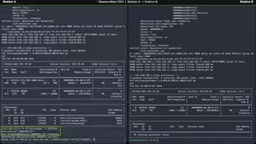
Running GLM-5.3 on Two DGX Stations: A vLLM Tensor Parallelism Hands-On
NVIDIA engineers show how to run the 753B-parameter GLM-5.3 locally on two DGX Stations using vLLM tensor parallelism, covering RDMA setup, launch args, NCCL checks, and performance baselines.
97KB Single-File HTML Underwater World: A WebGPU Experiment in AI Programming
A developer used a single prompt in Claude Code to generate a 97 KB single-file HTML underwater world, fully procedurally generated with WebGPU—kelp forests, a shipwreck, and fish, no images or model libraries, MIT-licensed, playable on mobile.