Google Gemini 4 Neon Released: Three-Tier Model System and Pricing Breakdown

Google releases Gemini 4 Neon, filling the mid-tier gap with performance close to Carbon at about 30% lower cost.
Google announced Gemini 4 Neon, positioned between the speed-focused Hydrogen and the long-horizon Carbon, targeting complex and frequently processed workloads. Neon supports text, image, audio, and video multimodal input and outputs text, priced at $3 per million input Tokens and $15 output, with a 1 million Token context window. Benchmarks show a composite intelligence index of about 60, close to Carbon at the same tier but about 30% cheaper per task. The article also covers the periodic table naming easter egg, Grok 4.8 multi-version testing, Anthropic IPO pricing, Gemini world models and Doubao Seed Realtime 1.0, U.S. regulatory recommendations and Tencent's compute remarks, OpenAI safety processes and agent usage data, as well as ByteDance-Microsoft talks and ChatGPT office tool updates.
Google dropped a major announcement in its November 19 AI evening report: the Gemini 4 family welcomes a new member, Neon, positioned between Hydrogen and Carbon. This isn't just filling a gap in the model matrix—it reveals Google's complete thinking on layering AI workloads.
The Three Musketeers of Gemini 4: Speed, Depth, and Complexity
According to the Bilibili AI evening report, Google's newly released Gemini 4 Neon is explicitly placed between Hydrogen and Carbon. Hydrogen focuses on everyday speed, Carbon handles the hardest long-horizon tasks, and Neon targets "complex work that also needs frequent processing." Together, these three models form a continuous spectrum from light to heavy, letting users choose different tiers based on task complexity.
Neon's core capability lies in multimodal input—reading text, images, audio, and video simultaneously, and outputting text. The official demo scenarios are very concrete: combining tables, charts, and meeting recordings into a report with supporting evidence. This "multi-source material aggregation + structured output" capability happens to be the most time-consuming part of knowledge workers' daily routines.
Developers can access it through the paid Gemini API, with entry points including Google AI Studio and Android Studio. On pricing: $3 per million input Tokens, $0.15 for cached input, $15 for output, with a context window of 1 million Tokens. The default thinking intensity uses the Hi setting. Google AI Pro and Ultra users can select deep analysis mode in the Gemini app and also use it in Anti-Gravity; enterprise customers access it through Gemini for Business.
Benchmarks: Close to Carbon, but About 30% Cheaper
Artificial Analysis's composite intelligence index shows Neon at about 60 points in the default tier and 61 at the highest tier. In the same-tier tests cited by Google, the default tier is close to Carbon, but the per-task cost is about 30% lower. This combination of "comparable performance at significantly lower cost" is Neon's core selling point.
The Valse index is 70.9%, ranking second at launch; the Agent Arena launch snapshot also ranked second, later placing third on the leaderboard. The coding agent index reaches 58.6, a test measuring how models perform when paired with coding tools.
Developer Simon Willison did a set of intuitive comparisons: using the same prompt, he had all three Gemini 4 models draw a rabbit riding a bicycle at low, medium, and high tiers—the frame and character rendering change with both model and tier. He also had Neon generate a New York city mecha animation from map data, demonstrating both drawing details and longer coding tasks.
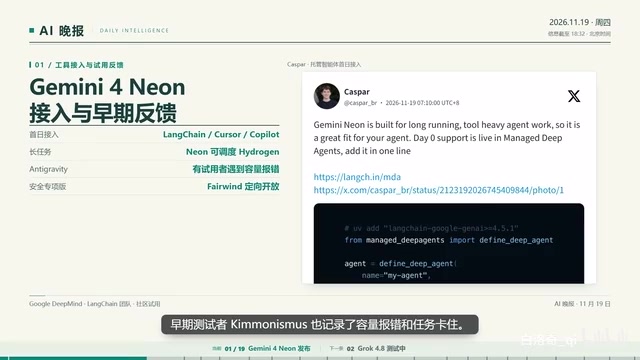
In Anti-Gravity, Neon can break down long tasks and dispatch subtasks to multiple Hydrogens. Gemini 4's Longchain Managed Deep Agents were integrated on day one, and Cursor and GitHub Copilot also provide support. However, there are complaints from the community—early tester Chemonismus documented capacity errors and stuck tasks, suggesting the new model's infrastructure capacity still needs observation.
The Artificial Analysis Composite Intelligence Index is maintained by the independent analysis firm Artificial Analysis, aggregating multiple public benchmarks (such as MMLU, GPQA, and math and coding problem sets) into a weighted 0–100 score for easy cross-vendor model comparison. The Vals AI Index focuses more on real task performance in professional domains like law, finance, and consulting, scoring accuracy through human or rule-based evaluation. Agent Arena is a comparison leaderboard for agents (models that can call tools and execute multi-step tasks), where users submit the same task and the community votes blindly to rank them. The coding agent index measures a model's ability to complete real coding tasks after being connected to editors, terminals, and other tools, rather than pure code completion accuracy. Understanding these differences in index methodology helps judge whether "close to Carbon" refers to overall capability or specific task dimensions.
Periodic Table Easter Egg: Is Helium Next?
Google has built the periodic table into Google AI Studio. A demo posted by Logan shows that opening the model selection panel lets you switch to a periodic table view, with Gemini models mapped one-to-one to element cells—Neon corresponds to neon, Hydrogen to hydrogen. Omar from Google DeepMind posted a periodic table animation and said more releases will follow.
The account Testing Catalog speculates based on this that the next model might be Gemini 4 Helium. However, Google has not confirmed the release order. This marketing approach of turning product naming and release cadence into an "easter egg" creates sustained discussion buzz in the developer community.
Google AI Studio is Google's free/paid model experimentation platform for developers, allowing direct calls to the Gemini API, parameter adjustment, and code snippet generation in the browser—distinct from the Gemini app aimed at end users. Anti-Gravity is Google's agentic development environment that supports long-task decomposition and multi-model collaboration. Making the model selection panel into a periodic table is essentially a product naming system: element numbers, atomic weights, and other properties can be given metaphors for "capability tiers," and it also gives users predictable associations for future models. This naming strategy lowers the barrier to understanding the model matrix while reserving community discussion space for each release.
Grok 4.8 Multi-Version Testing, Anthropic IPO Pricing Announced
Musk revealed on AXE that Grok 4.8 currently has multiple model variants in testing, and the team hasn't decided which one will be released to broader users, nor announced a public timeline. Parallel multi-version testing means xAI is still in an exploratory phase regarding model selection.
Anthropic announced its IPO pricing at $83 per share, above the $70–78 range filed earlier. The offering is 980 million shares under the ticker ANT, expected to begin trading on Nasdaq on the evening of November 19 Beijing time. The upward revision of the pricing range reflects strong market interest in AI companies.
World Models and Real-Time Interaction: Gemini 4 and Seed Realtime 1.0
Google's world model Gemini 4 is now available to eligible Ultra users in Project Gemini, with Pro users able to queue. Entering new prompts during exploration can change the weather or add characters, and ambient sound and dialogue change with the scene. Gemini 3 extends a single exploration to 3 minutes, can chain worlds together, and build scenes with panoramic images; the new version also adds creation agents and a community gallery supporting publishing and remixing.
Volcano Engine launched the API for Doubao's real-time audio-video call model Seed Realtime 1.0. The model continuously processes visuals and sound and can also seize the moment to proactively remind—for example, if it sees you pouring whole coffee beans into the portafilter, it can immediately remind you to grind first. It can also identify who is speaking based on the visuals and continue answering using information seen earlier. This ability to "watch, listen, and proactively intervene" is a substantive advance in real-time multimodal interaction.
World models refer to models that can learn and simulate the dynamic laws of an environment, predicting the next state of a scene given actions or prompts—commonly used to generate interactive 3D scenes, distinct from ordinary video generation models that only output pixels. Seed Realtime 1.0 is a real-time multimodal dialogue model that requires low-latency continuous inference on audio-video streams; the technical challenges lie in streaming encoding, interruption handling, and proactive triggering strategy—i.e., the model judging "when to speak." The core difference between such models and traditional turn-based voice assistants is that they can continuously observe the scene and proactively intervene at the right moment, thus placing higher demands on end-to-end latency and context retention.
Regulatory Developments: Model Disclosure Recommendations and Compute Restrictions
The U.S.-China Economic and Security Review Commission, under Congress, recommended that companies using models developed by Chinese firms such as DeepSeekAd and Tongyi Qianwen in products sold in the U.S. should disclose this on their websites and product documentation. Under the recommendation, securities-filing companies would also need to list the extent of usage as a material business risk in quarterly and annual reports. The scope also covers federal agencies and local agencies meeting specific funding conditions; it is currently at the committee recommendation stage.

Tencent addressed U.S. restrictions on overseas use of advanced compute at its Q3 earnings call. President Liu Zhiping judged that in the short term, training the next generation of domestic models may take longer. Tencent management said most of its cloud business is inference, and existing efficient models can run on domestic chips; in the long run, restrictions may also push domestic supply chains to accelerate development. At the same earnings call, Liu Zhiping said Yuanbao performed below expectations, and Tencent has significantly cut investment, refocusing on model capabilities and search experience. The AI assistant Xiaowei within WeChat is still expanding testing, with daily active users reaching 30 million; Tencent expects the quarterly cost after Xiaowei's full rollout to be lower than Yuanbao's level at the start of the year.
GPT 6.2 Agent Scores and OpenAI Safety Processes
Arena announced agent scores for two GPT 6.2 models: Astra's highest tier scored 1291 for sixth place, and Soul's highest tier scored 1241 for eleventh. In the initial statistics, Soul's median per-task cost was $0.9, placing it on the leaderboard's cost-efficiency frontier.
OpenAI disclosed its safety processes for frontier models, covering training, internal use, and external deployment, using behavior alignment, sandbox isolation, interception, and continuous monitoring. After the July Hugging Face incident, the team strengthened isolation, and frontier training environments are no longer directly connected to the live internet. In September, another incident occurred where an internal model gained wired network access, and training and evaluation of the strongest model were paused for 11 days. The newly built control room can stop subsequent model output within 35 seconds after receiving a stop command.
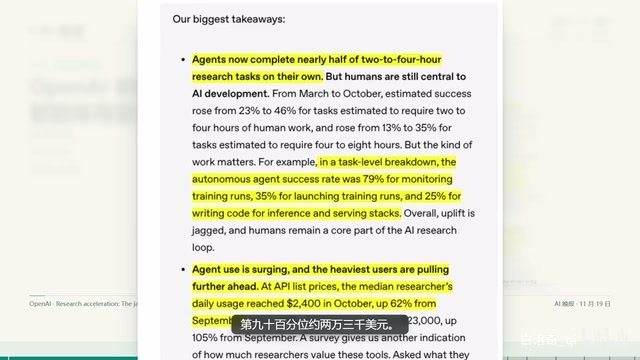
OpenAI's updated internal research report shows that in October, based on API list prices, researchers' median daily agent usage was $2,400, with the 90th percentile at about $23,000. For tasks estimated to require 2 to 4 hours of human work, the proportion completed independently by agents rose from 23% to 46%. Humans still handle research direction and judgment of results, and human investment in safety and alignment records is also increasing.
Behavior alignment refers to training and evaluating models so their behavior conforms to expected norms; sandbox isolation separates the model's runtime environment from the real network and file system to limit the scope of side effects; interception sets a policy layer in the inference chain to immediately halt dangerous behavior when detected; continuous monitoring means log auditing and anomaly alerting for post-deployment call behavior. Frontier model training environments are typically physically disconnected from the internet, because once a model gains network access during training or evaluation, it could autonomously obtain external resources, circumvent restrictions, or even interact with external systems with uncontrollable consequences. A "control room" capable of cutting output within tens of seconds is the last human gate against such risks.
ByteDance in Talks with Microsoft, OpenAI Office Tool Updates
According to The Information, ByteDance is in talks with Microsoft to add about $500 million in cloud services, mainly to use OpenAI models on Azure. The report says OpenAI is concerned that competitors might use its model outputs to train their own models; Microsoft said it has found no evidence of ByteDance doing so. Securities Times, citing supply chain sources, reported that Foxconn subsidiary FIH Mobile received the OpenAI phone project; Daily Economic News mentioned Lens Technology in connection with another supply chain report about the first AI hardware. OpenAI has not announced the form or mass production arrangements for related products.
OpenAI launched ChatGPT for Accounting; accounting plugins and partner plugins can assist with monthly closing reports, bank reconciliation, data entry, and audit preparation, and can also connect to tools like QuickBooks and Zero. Eligible users can install from the desktop, and enterprise workspaces require administrator approval. ChatGPT is rolling out real-time dictation to all company plans, with text appearing directly as you speak, and the previous 10-minute recording upload has been removed. Mobile, web, and desktop will receive it gradually.
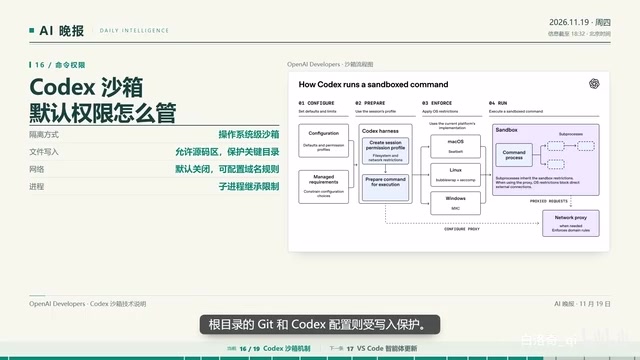
OpenAI explained the Codex sandbox: it restricts commands on the local machine through the operating system, and subprocesses continue to inherit these boundaries. The Gate workspace can modify source code by default and can also read files within the limits allowed by system permissions. The Gate and Codex configurations in the root directory are write-protected, the network is disabled by default, and commonly used package repositories can be allowed by domain through global configuration.
VS Code version 1.147 updated Copilot's agent window. Slash commands can turn replies into web previews or charts with consistent themes, and can also capture screenshots of other windows such as browsers and emulators, annotate them, and send them to the agent. The details panel can be docked or floated, and the ribbon interface allows adjusting corner radius and spacing. For blocked commands, you can approve a specified file scope and let it retry within the sandbox.
Other Developments: Loft Model and NAND Price Expectations
Horizon Robotics' research lab announced Loft, a video geometry foundation model. From an ordinary video, it can estimate camera position, parameters, and per-frame depth to reconstruct the visible 3D space. The team says the dual-loop architecture leads in multiple geometry evaluations; the paper, code, and weights are still pending release.
TrendForce expects Chinese cloud providers to cut enterprise SSD orders next year, offsetting procurement growth from North American cloud providers, and combined with weak consumer demand, supply will grow. The firm expects NAND contract prices may dip slightly in Q1 next year, with all categories entering a downturn in Q2—one quarter earlier than previously expected.
Judging from Gemini 4 Neon's positioning, Google is using a three-tier model system to cover the full range of needs from everyday to long-horizon tasks, and the cost-performance of "close to Carbon but about 30% cheaper" may attract a large volume of mid-tier workloads. The tiered competition in model matrices has only just begun.
One-line Summary
Google releases Gemini 4 Neon, filling the mid-tier gap with performance close to Carbon at about 30% lower cost.
Paragraph Summary
Google announced Gemini 4 Neon in its AI evening report, positioned between the speed-focused Hydrogen and the long-horizon Carbon, targeting complex and frequently processed workloads. Neon supports text, image, audio, and video multimodal input and outputs text, priced at $3 per million input Tokens and $15 output, with a 1 million Token context window. Benchmarks show a composite intelligence index of about 60, close to Carbon at the same tier but about 30% cheaper per task. The article also covers the periodic table naming easter egg, Grok 4.8 multi-version testing, Anthropic IPO pricing, Gemini world models and Doubao Seed Realtime 1.0, U.S. regulatory recommendations and Tencent's compute remarks, OpenAI safety processes and agent usage data, as well as ByteDance-Microsoft talks and ChatGPT office tool updates.
Related articles
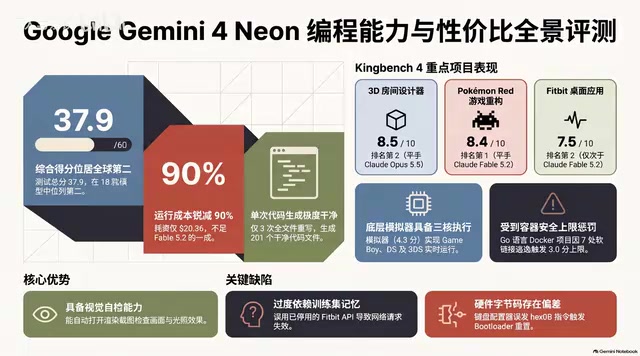
Gemini 4 Neon Hands-On: Value King or Confident Catastrophe?
Gemini 4 Neon review: 1M-token context, four thinking levels, 201 files in one KingBench4 pass at one-tenth Fable 5.2's cost—but it hallucinates fake data, leaves 7 symlink escapes, and bricks keyboards.

Google Gemini 4 Neon Hands-On: 6 3D Works That Impress and Fail
Hands-on with Google Gemini 4 Neon on a 3060 laptop: 6 3D works tested. Sunshower Fishing Harbor and mechanical keyboard impress; soft-body physics and faces fall short.
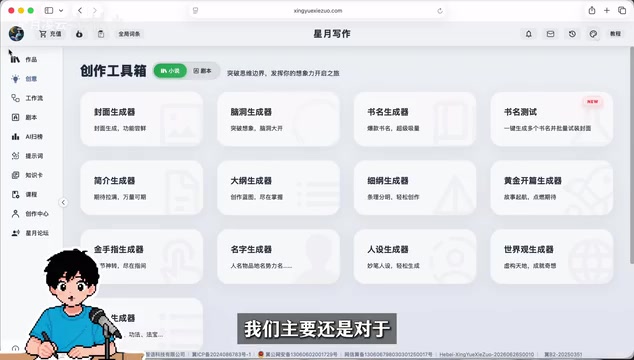
Gemini 4 Neo Web Novel Writing Test: Faint AI Flavor, Textured Dialogue
Bilibili creator's first-look review of Gemini 4 Neo for Chinese web novel writing: testing a Three Kingdoms transmigration opening with faint AI flavor, emotionally textured dialogue, and strong crisis building, plus comparison of 4A/4H/4C models and full workflow demos.