Google's Gemini 4 Triple Launch: Hydrogen's Cost-Effectiveness Comeback and the Decisions API
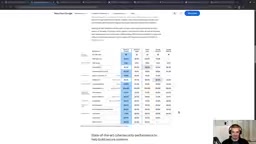
Google fills out its lineup with three Gemini 4 models, and the lightweight Hydrogen beats the flagship on some tasks.
Google rapidly released three frontier Gemini 4 models—Argon, Carbon, and Hydrogen—forming a complete gradient from general flagship to lightweight high cost-effectiveness, with Carbon and Argon sharing identical developer API pricing. Beyond official benchmarks, Arena blind tests show the Anthropic lineup still leads, while Hydrogen outranks Argon at the same reasoning tier; the author's custom benchmarks note the Gemini series is generally verbose, with Argon among the most long-winded. In a one-shot prompt MOBA mini-game test, Hydrogen at X High delivered the best result in the Gemini camp, even beating Argon. Google also launched a Decisions API with audio modality support for real-time emotion and topic judgments, and the Omni 1.2 Flash video model fills the low-price short-clip niche.
Google Returns to the Table: The Gemini 4 Family Fills Out the Product Line in One Go
The sheer density of Google's recent moves makes it hard to call the company "a step behind" anymore. According to a review of recent releases by a YouTube channel, Google has rolled out Gemini 4 Argon, Gemini 4 Carbon, and the latest Gemini 4 Hydrogen in quick succession. All three models are positioned at the frontier level and hold the upper hand in most comparisons outside the Anthropic camp.
The strategy behind this lineup is clear: Argon takes on general-purpose flagships in the Opus class, Carbon handles heavier reasoning and complex tasks (similar to the positioning of Fable or Astra), and Hydrogen targets the lightweight, high cost-effectiveness range occupied by Sonnet and even Haiku. One detail worth noting: Carbon and Argon share identical developer API pricing—according to the pricing information cited in the video, starting December 1 both are $4 per million input tokens and $20 per million output tokens. Google hasn't disclosed much about the architecture, only stating that Carbon is built on top of Argon, so whether the two are different inference configurations of the same architecture remains speculation.
Beyond the Benchmarks: Arena Leaderboards and the "Yapping Index"
The benchmark charts in official release notes have always been "leading from the moment of launch." The video's author cautions that these numbers are best taken with a grain of salt—for instance, Carbon comprehensively beats Argon in Google's own charts, while Hydrogen is claimed to surpass Sonnet and GPT 6.1 Terra on most benchmarks.
Two types of independent signals are more informative.
Arena User Blind Tests: Small Models Beat Their Big Brothers
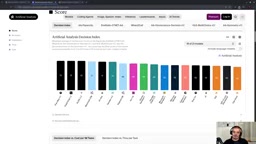
On leaderboards like Arena AI, where users score purely by feel without knowing which model they're evaluating, the full Anthropic lineup (Fable, Opus, Sonnet) still occupies the top ELO spots, with Carbon close behind. What's genuinely interesting is this: at the same reasoning tier, Hydrogen ranks above Argon. According to the video author's observations, this "small model beats big model" phenomenon is especially noteworthy on the coding and web development sub-leaderboard, since that board tends to best reflect a model's real-world usability.
Arena ELO and the blind-test mechanism: Arena AI (usually referring to LMArena, formerly Chatbot Arena) uses pairwise blind testing—users vote on two responses to the same prompt without knowing which model produced which, and rankings accumulate using an Elo rating system similar to chess. The essence of an Elo score is relative win rate: a 100-point gap corresponds to roughly a 64% win rate. The leaderboard therefore reflects "human subjective preference" rather than objective correctness; models with appealing style and clean formatting tend to get inflated rankings, while tasks with a single correct answer, like math and code, are better measured with verifiable benchmarks. This also explains why Arena rankings can diverge from the conclusions of the author's custom coding tests.
Custom Benchmarks: The Gemini Series Is Surprisingly Chatty
The author used custom benchmarks to measure model "yapping"—counting catchphrases, Markdown formatting, and response length under bare API calls with no system prompt. The results weren't kind to Gemini: Argon is nearly the most long-winded model in terms of response length, and Carbon is also longer than Opus 5. On the catchphrase dimension, the Gemini series sits in the middle—not the most annoying, but overall verbosity ranks high. The author's stance is blunt: he doesn't like chatty models, and models that are verbose on the API tend to stay verbose even with a system prompt added.

Hands-On MOBA Mini-Game Test: Hydrogen X High Is the Hidden Ace
Leaderboards alone aren't enough, so the author designed a one-shot prompt coding task: build a MOBA proof of concept using the Ursina game engine, with a single character carrying Q/W/E/R abilities, requiring that it "look good," and with no second round of bug fixes allowed.
The results showed a clear stratification: Fable 5.2 and Opus 5.5 produced smooth animations and polished visuals, still the top tier; Carbon added a minimap and a more Dota-like camera angle, but the model itself looked like a few polygons hastily glued together; Argon performed surprisingly poorly, with a chaotic, hard-to-parse scene that the author even compared to DeepSeekAd's output.
The turning point came from Hydrogen. At the default high reasoning tier, Hydrogen's output had obvious bugs and was nearly unplayable—the worst tier of all; but switching to X High reasoning, it delivered the best result in the Gemini camp: a Nexus, working abilities, and smooth animations, though the character model still looked odd. The author also tried orchestrator mode (Argon or Carbon dispatching, Hydrogen executing), and the Carbon + Hydrogen combination came close to Hydrogen X High running solo.
This points to a counterintuitive conclusion: on some tasks, Hydrogen's actual capability may exceed Argon's. The cost ledger supports it too—according to the figures given in the video, Hydrogen is priced at 150 input / 750 output per million (units consistent with the above), far lower than Argon on unit price alone, but the cost of completing the whole task depends on the reasoning tier, and at X High the per-task cost can actually exceed Argon at its standard tier. The author's own daily choice: use Hydrogen X High for hobby projects, switch to Carbon only when a task is extremely complex; truly critical work still goes to Claude Fable and Opus.
Reasoning tiers and test-time compute: Tiers like High and X High refer to the token budget or sampling count a model uses for internal thinking before generating an answer. Raising the tier is equivalent to investing more compute at inference time, letting the model try more and check more, which typically significantly improves performance on multi-step tasks at the cost of higher latency and expense. This also explains a seemingly contradictory phenomenon: a lightweight model at X High can outperform a flagship model at its default tier—because the former converts its lower unit-price budget into more thinking steps. Orchestrator mode is another approach: a strong model breaks down tasks and dispatches them, while small models execute the sub-steps, trading division of labor for a balance of cost and quality.
Decisions API: Audio Input Is the Real Differentiator
Google also launched its own decision model API this time. A decision model is what you might call a "System 1" model in the Jeff vein: the output space is predefined, and it only does classification, binary judgments, or scoring, with extremely fast responses. What makes Gemini's decision model unique is its support for the audio modality—something OpenAI's counterpart can't do, and something local Ollama solutions can't do either.
According to Artificial Analysis's decision model index, Gemini Decision 1 performs roughly on par with Jeff and better than GPT-6 Luna Decision and Cloudflare's Clef series.
The author benchmarked multiple approaches on the same email classification task (locally running Tef1 and Nimble, Jeff's hosted API, OpenAI's Decisions API, and Gemini): the local models were fastest after warm-up (about 1.2 seconds), Jeff about 2 seconds, Gemini about 3.4 seconds, and GPT about 6.5 seconds. Speed isn't Gemini's strength—audio is.
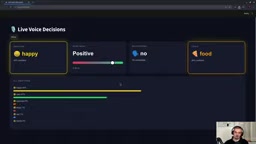
In the demo app, the author speaks while watching the model output in real time: emotion, sentiment polarity, whether the speaker is whispering, and topic classification. Talking about pizza gets identified as food, making certain sounds triggers "sad" or "surprised," and topic tags jump as the conversation shifts. The author readily admits the demo isn't perfect—when "whisper" is mentioned it judges yes, but during actual whispering it's hit-or-miss. What's truly valuable is the scenario it opens up: real-time, low-latency judgments on audio streams, which in the past required transcription first and then inference—a much longer pipeline.
Decision models and "System 1": These models don't do open-ended generation of free text; instead, they constrain the output space to a set of labels, booleans, or scores—essentially a high-throughput, low-latency classifier. The difference from large language models is akin to the "System 1" vs. "System 2" distinction in psychology—the former is fast and intuitive, the latter slow and deliberate. In engineering terms, decision models are typically fine-tuned from small-parameter models, paired with constrained decoding to guarantee outputs fall within a legal set, thus returning results in milliseconds to seconds. The key challenge of audio decisions lies in end-to-end processing: the traditional pipeline first does ASR transcription and then feeds it to a text model, losing paralinguistic information like intonation, volume, and speech rate, whereas native audio input preserves these signals for emotion and intent judgment.
Gemini Omni 1.2 Flash: Cheap and Good Enough for Short Video Generation
The last release is the video generation model Gemini Omni 1.2 Flash, which can generate clips up to 15 seconds long with sound, priced at seven cents per second for 720p video. The author made three attempts with "a dog doing a backflip on the beach," adding prompts like "dachshund" and "barking mid-air": the first time the dog was just jumping to catch something, the second time the backflip wasn't completed, and the third time it barely came close to success, with audio and video roughly in sync. The author admits he's no expert in video generation, and his conclusion is measured—cheap enough for short-clip scenarios like educational content, but stability isn't reliable yet.
Overall, Google's latest round fills out the product gradient from flagship to lightweight, with Hydrogen even creating internal competition for Argon on cost-effectiveness and some task performance; the Decisions API's audio capability is a genuine step that widens the gap; and Omni 1.2 Flash is more of a low-price filler. For developers, the model-selection logic is becoming subtle: you don't necessarily need the most expensive tier.
Background Notes
A note on the pricing units in this article: The original text explicitly states Argon and Carbon pricing as "$4 per million input tokens and $20 per million output tokens," while Hydrogen's "150 input / 750 output" doesn't specify currency or unit. By industry convention, this is more likely fractional-dollar levels per million tokens (i.e., $0.15 and $0.75), consistent with the statement that the unit price is "far lower than Argon"; if taken as dollars, it would instead be dozens of times more expensive, contradicting the context. When reading cross-model cost comparisons like this, it's advisable to first unify on the "per million tokens" basis and factor in the token-consumption multiplier from the reasoning tier to get the true per-task cost.
Related articles
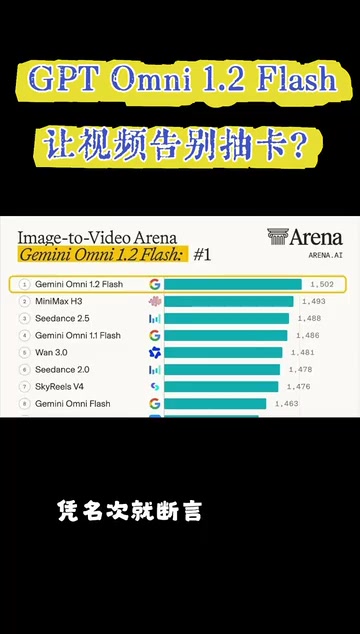
Gemini Omni 1.2 Flash Tops Two Leaderboards: Is AI Video Done With the Gacha Era?
Google Gemini Omni 1.2 Flash tops both Arena text-to-video and image-to-video leaderboards. We break down its 15-second duration, iterative editing workflow, and 30% price cut at $0.07/sec for 720p—while noting that fast motion and complex physics still need work, and rankings don't equal real creative experience.
Design Extract: Extract Website Design Styles and Let Claude Code Build Pages to Match
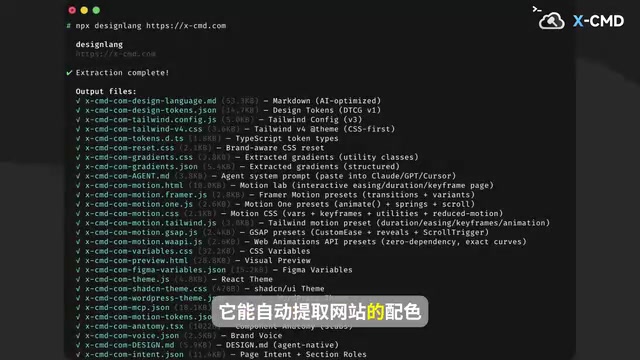
Design Extract automatically extracts a website's colors, fonts, layout, and animations, generating Tailwind CSS configs, Shadcn UI themes, and Figma variables, plus MCP integration for Claude Code.

Sixgill Sharks and the Titanic Digital Twin: How Deep-Sea Exploration Is Rewriting Science
National Geographic's deep-sea team tagged sixgill sharks from a submersible and recorded their hunting behavior, while the Titanic was rebuilt as a digital twin from 700,000 scans.