Hallmark: The Free Open-Source Skill That Rids Claude Code of AI-Flavored Websites

Open-source skill Hallmark uses real materials and random themes to stop AI from generating homogeneous websites.
Hallmark is a free open-source "skill" launched by Together AI, aimed at solving the problem of cookie-cutter websites generated by AI coding tools such as Claude Code and Cursor. Its core approach intervenes at the workflow level: first, it requires users to provide real photos and data to eliminate fabricated content; then it randomly selects three from 50 handcrafted themes and lays out from scratch, ensuring that the same prompt produces different designs; after completion, it automatically checks for AI tells such as colorful heading words in a real browser; it also supports the /hallmark redesign command to refactor existing websites while preserving content. It is said that nearly 50,000 developers have used it, but public information comes mainly from a single video source, and its actual effectiveness and compatibility still need verification.
When using Claude Code, Cursor, or Codex to generate web pages, have you ever encountered that all-too-familiar "AI-flavored" design? The generic oversized headlines, the colorful word in every heading, the empty placeholder copy. Recently, an open-source project called Hallmark is trying to solve this problem, and it's said that nearly 50,000 developers have already downloaded and used it.
According to the YouTube channel Tech Lens, Hallmark is launched by Together AI and is a free, open-source "skill" specifically designed to stop AI coding tools from generating cookie-cutter websites. Its core approach isn't simply swapping templates—it intervenes at the workflow level, making the AI "speak like a human" before it starts writing code.
Why Do AI-Generated Websites Always Look the Same?
The root of the problem lies in the tendency of large language models to choose the most probable design patterns. Repeated prompts lead to repeated layouts, repeated color schemes, and repeated copy structures. In its video, Tech Lens made an intuitive comparison: using the same prompt to have the AI generate two pages, the result was 26 "design errors" across the two pages—and with Hallmark, the error count was zero.
These errors aren't necessarily bugs at the code level; they're more about aesthetic "laziness"—for instance, embedding a bright-colored word in every heading, or filling the page with fabricated statistics.
When generating designs, large language models tend to choose the most probable patterns, a phenomenon closely related to sampling strategies and training data bias. By default, models often generate content with lower temperatures or greedy decoding, causing outputs to converge heavily on the most common layouts and copy clichés in the training corpus. In addition, web design data contains a large number of templated sites, so the "design priors" the model learns are themselves biased toward homogeneity. Even if randomness is increased, the model lacks understanding of specific business contexts and easily falls back on generic structures. Therefore, adjusting prompts alone cannot cure the "AI flavor"; it requires something like Hallmark to inject real materials and randomized human design elements at the workflow level to break the pattern.
How Hallmark Works: Gather Real Materials First, Then Design
Hallmark's first step asks users to provide real photos and real data, and it insists on never making things up.

This point is crucial. AI-generated websites often use "Lorem ipsum"-style fake copy or fabricated "5000+ users" to pad things out, and Hallmark cuts off this possibility at the source. Next, it selects three from 50 handcrafted themes and then lays out the page from scratch. This means that two projects using the same prompt will not end up with identical-looking websites.
According to Tech Lens, this combination of randomness and human design allows each site to have its own independent visual language.
Lorem ipsum is a Latin placeholder text long used in the design world, originating from ancient Roman writings, and is used for typographic demonstrations because it has no actual meaning. In the context of AI-generated web pages, models often automatically fill in similar placeholder copy or fabricated statistics (such as "5000+ users"), making pages look complete while lacking real information. Hallmark requires users to provide real photos and data precisely to eliminate this "placeholder dependence" at the source, forcing the design to revolve around real content and thus naturally producing differentiated layouts and copy.
Automatic Review Before Publishing: Catching AI Tells in a Real Browser
After the page is built, Hallmark has a "quality check" step: it opens your page in a real browser and then hunts for various AI tells, such as the signature colorful word in the heading.

This inspection method, based on actual browser rendering, is closer to the real user experience than static code review. It can catch visual patterns that are only discoverable after the page is rendered, such as typographic rhythm and color repetition.
Real browser rendering inspection refers to loading a page through a headless browser (such as Puppeteer or Playwright) to obtain the final computed styles and layout information. Unlike static code review, post-render inspection can reveal dynamic effects such as CSS cascading, font fallbacks, and responsive breakpoints, making it especially suitable for catching visual repetition patterns (such as colorful heading words and monotonous spacing rhythm). This automated quality check turns "AI tells" into quantifiable visual features, which is more efficient than manual visual inspection and makes up for the inability of pure code analysis to perceive the final look and feel.
Existing Websites Can Also Be Refactored with One Command
If you already have a website but want to rid it of the AI flavor, you can use the slash command /hallmark redesign. Hallmark will rebuild the page structure while preserving your existing content.

This feature is especially friendly for projects already live—no need to start over, and no need to manually migrate content.
Free and Open Source, but Information Is Still Limited
Hallmark is completely free and open source, with the project link in the description of the Tech Lens video. However, it should be noted that public information about Hallmark currently comes mainly from this single video introduction, and there is still a lack of more independent sources verifying its actual effectiveness, compatibility, and long-term maintenance. The download count of nearly 50,000 developers is a positive signal, but if you plan to use it in a production environment, it's advisable to test it on a small project first.
AI coding tools have greatly improved the efficiency of building websites, but they have also brought about the problem of aesthetic homogenization. Hallmark represents a new approach: rather than changing the model itself, it uses workflow constraints and the injection of real materials to make AI output more distinctive. For developers who care about design quality, this may be a free tool worth paying attention to.
One-line Summary
Open-source skill Hallmark uses real materials and random themes to stop AI from generating homogeneous websites.
Paragraph Summary
Hallmark is a free, open-source "skill" launched by Together AI, aimed at solving the problem of cookie-cutter websites generated by AI coding tools such as Claude Code and Cursor. Its core approach intervenes at the workflow level: first, it requires users to provide real photos and data to eliminate fabricated content; then it randomly selects three from 50 handcrafted themes and lays out from scratch, ensuring that the same prompt produces different designs; after completion, it automatically checks for AI tells such as colorful heading words in a real browser; it also supports the /hallmark redesign command to refactor existing websites while preserving content. It is said that nearly 50,000 developers have used it, but public information comes mainly from a single video source, and its actual effectiveness and compatibility still need verification.
Related articles
 Tech Frontiers
Edge AI on Microcontrollers: When Is It Actually Worth Deploying?
Drawing on Reddit discussions and Arm case studies, this article analyzes the real-world use cases for edge AI on microcontrollers: when each device needs independent inference, when a gateway or cloud is more reasonable, and the costs and boundaries of specialized hardware.
 Tech Frontiers
Pushing the Limits of Extreme Sudoku on a 16GB GPU: Insights from Depth and Flow Matching
A researcher trained a 16.54M-parameter model on a 16GB GPU to solve extreme Sudoku, finding effective depth breaks the 60% plateau and flow matching with improved sampling pushes accuracy past 99% with ~50× lower layer-evaluation budget.
 Tech Frontiers
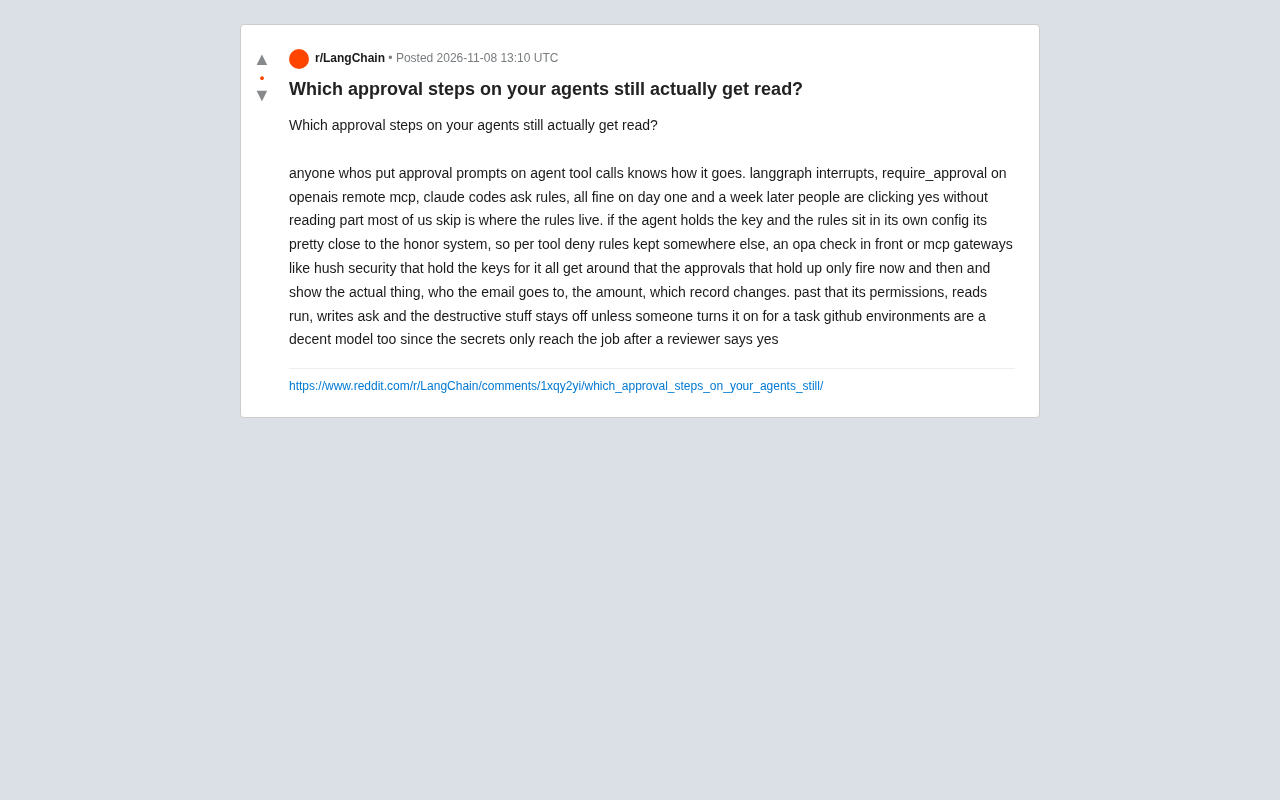
AI Agent Approval Workflows: Why Human Confirmations Always Get Mindlessly Clicked
Why do AI agent approval workflows always get mindlessly clicked? A Reddit discussion shows that separating rules from keys, low-frequency high-risk approvals, and GitHub Environments-style gates are the keys to effective approvals.