Herdr Launches Native App: Open-Source Collaboration Tool Evolves Again

Open-source collaboration tool Herdr releases a native desktop app, sparking heated discussion on Hacker News.
Open-source collaboration tool Herdr released a native desktop app on GitHub, earning 285 points and 186 comments on Hacker News, showing strong community expectations for a native experience. The article notes that the native app is not just a new shell but brings deeper system integration, lower latency, and local capability access, clearly improving efficiency for teams that frequently switch development environments. Herdr continues its open-source strategy with code hosted in the herdrdev/herdr-app repository for review and participation. A high comment-to-point ratio suggests controversy or details worth digging into, likely around performance, cross-platform support, workflow compatibility, and maintenance cadence. The article also discusses the web-first versus native-first debate in the collaboration tool space and the cost challenges of maintaining multi-platform product lines for open-source projects, arguing that Herdr's move reflects users' returning demand for a lightweight, responsive experience, with long-term value depending on sustained polish.
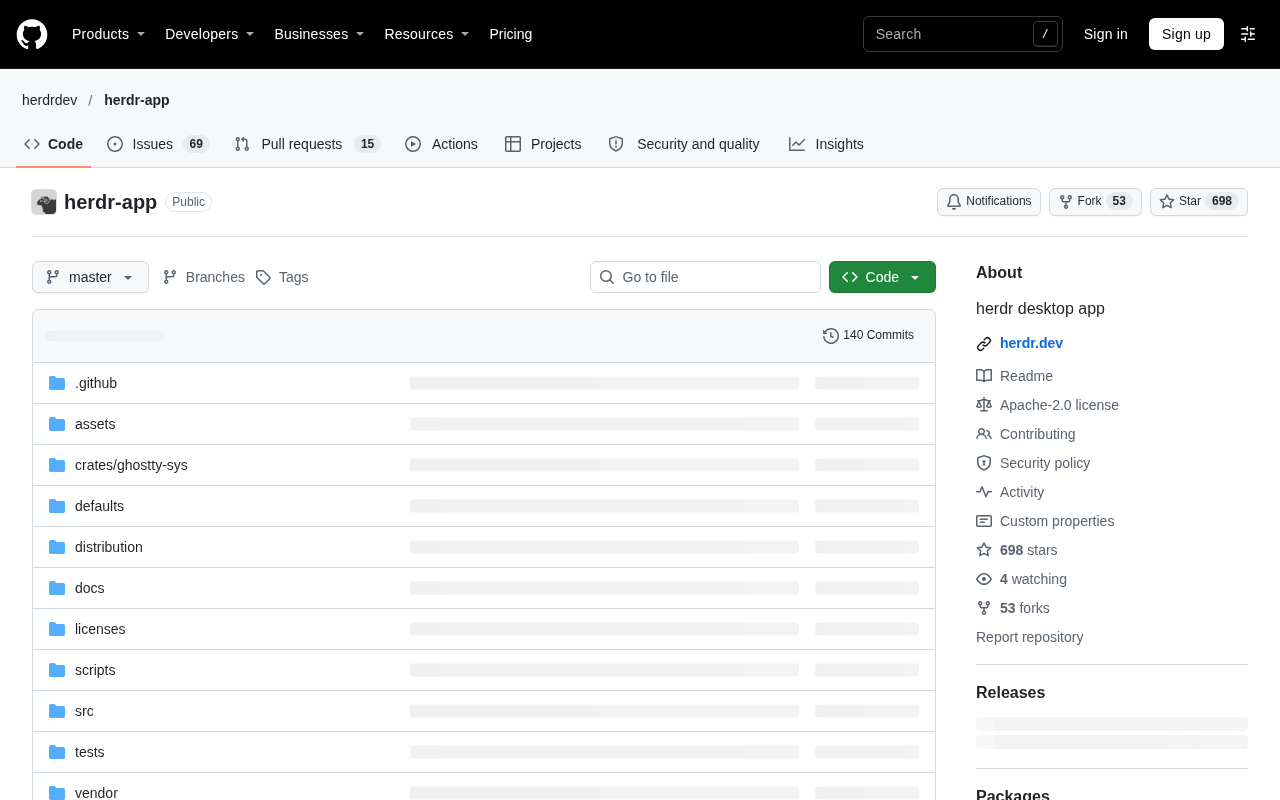
Open-source collaboration tool Herdr recently released its native desktop app on GitHub, drawing attention on Hacker News with 285 points and 186 comments in a short time. For a tool aimed at developers and technical teams, this level of discussion shows the community has real and strong expectations for a "native experience."
From Web to Native: What Herdr's Move Means
Herdr previously served users as a web app, and the launch of a native app is not simply a "new shell." Native apps typically mean deeper system integration, lower interaction latency, and direct access to capabilities such as local files and system notifications. For technical teams that frequently switch between collaboration tools and local development environments, these differences show up directly in daily efficiency.
Judging by the discussion heat on Hacker News, the community's focus is on whether the native app can deliver an experience the web version cannot replace. 186 comments mean a large number of users expressed their expectations and questions right away—a density that usually appears at key milestones for tooling projects.
Technical differences between native apps and web apps
Native apps are applications developed for a specific operating system (such as Windows, macOS, Linux) using its official SDK and APIs, and can directly call system resources. By contrast, web apps run in a browser sandbox, render interfaces via HTML/CSS/JavaScript, and are limited to APIs provided by the browser. Advantages of native apps include lower input latency (no browser event loop), direct file system access, system-level notifications, tray icons, global shortcuts, and more. The cost is that each platform must be built and maintained separately, and distribution requires app stores or handling installers and auto-updates yourself. Herdr expanding from web to native means the team needs to establish a cross-platform build pipeline and handle behavioral differences across operating systems.
Continuation of the Open-Source Strategy and Community Signals
Herdr hosts the app code in the herdrdev/herdr-app repository on GitHub, continuing its open-source approach. For developers, this means they can review implementation details, file issues, or even participate in improvements; for the project itself, a public repository is also an important way to build trust.
Looking at the ratio of 285 points to 186 comments, discussion activity is relatively high. In Hacker News terms, when comments approach two-thirds of the points, it often indicates controversy or details worth digging into—not just casual upvotes.
A few directions the community may care about
Given common topics around native apps for collaboration tools, discussion is likely to revolve around performance, cross-platform support, compatibility with existing workflows, and the maintenance cadence of an open-source project. These are also the questions similar tools generally need to answer when moving from web to native.
Hacker News points and comment mechanics
Hacker News (HN) is a tech community operated by Y Combinator. Content ranking is based on upvotes and time decay, while comment count does not directly affect ranking but reflects the depth of discussion. A post receiving 285 points means it was recognized by many users and pushed to the front page within hours of posting; 186 comments indicate users were not only upvoting but also willing to spend time expressing opinions. In HN terms, a high comment/point ratio (e.g., above 0.5) is often seen as a signal that a topic is controversial, has details worth scrutinizing, or prompts experience sharing. Therefore, this combination of data shows that Herdr's native app not only gained exposure but also triggered substantive discussion, rather than merely "drive-by" support.
Common technology choices for cross-platform native development
When collaboration tools move from web to native, teams usually face a stack choice: first, use frameworks like Electron or Tauri to build a desktop shell with web technologies, balancing code reuse and system integration but potentially sacrificing some performance and package size; second, adopt cross-platform UI frameworks like Flutter or React Native, sharing business logic but requiring adaptation to native rendering; third, write pure native code for each platform (Swift/Kotlin/C++), offering the best experience but at the highest cost. As an open-source project, Herdr's technology choices in its repository will directly affect the community's judgment of performance, cross-platform support, and maintenance costs—details likely to be probed in the comments.
Implications of Native Apps for the Collaboration Tool Space
The collaboration tool market has long had two competing routes: web-first and native-first. Web apps win on easy distribution and instant updates; native apps excel in responsiveness and system capabilities. Herdr choosing to fill in the native piece reflects, to some extent, users' returning demand for an experience that is "lightweight but responsive."
For open-source projects, maintaining a multi-platform product line is itself a cost challenge. Herdr advancing both web and native requires finding a balance between code reuse and platform adaptation, which is also worth watching in subsequent version iterations.
Conclusion
Herdr releasing a native app is a clear signal: open-source collaboration tools are moving toward a more complete desktop experience. The heated community discussion shows users are willing to invest attention in experience upgrades, and whether the project can turn that attention into sustained product polish will determine the long-term value of this step.
If you are evaluating team collaboration tools, it is worth following Herdr's open-source repository and community discussion—the implementation details of a native app often say more than the launch itself.
One-line Summary
Open-source collaboration tool Herdr releases a native desktop app, sparking heated discussion in the Hacker News community.
Paragraph Summary
Open-source collaboration tool Herdr released a native desktop app on GitHub and, after landing on Hacker News, received 285 points and 186 comments. The discussion heat indicates strong community expectations for a native experience. The article argues that the native app is not merely a new shell but brings deeper system integration, lower latency, and local capability access, clearly improving efficiency for teams that frequently switch development environments. Herdr continues its open-source strategy, with code hosted in the herdrdev/herdr-app repository for review and participation. A high comment/point ratio suggests controversy or details worth digging into, likely around performance, cross-platform support, workflow compatibility, and maintenance cadence. The article also explores the web-first versus native-first debate in the collaboration tool space and the cost challenges of maintaining multi-platform product lines for open-source projects, arguing that Herdr's move reflects users' returning demand for a lightweight, responsive experience, with long-term value depending on sustained polish.
Related articles
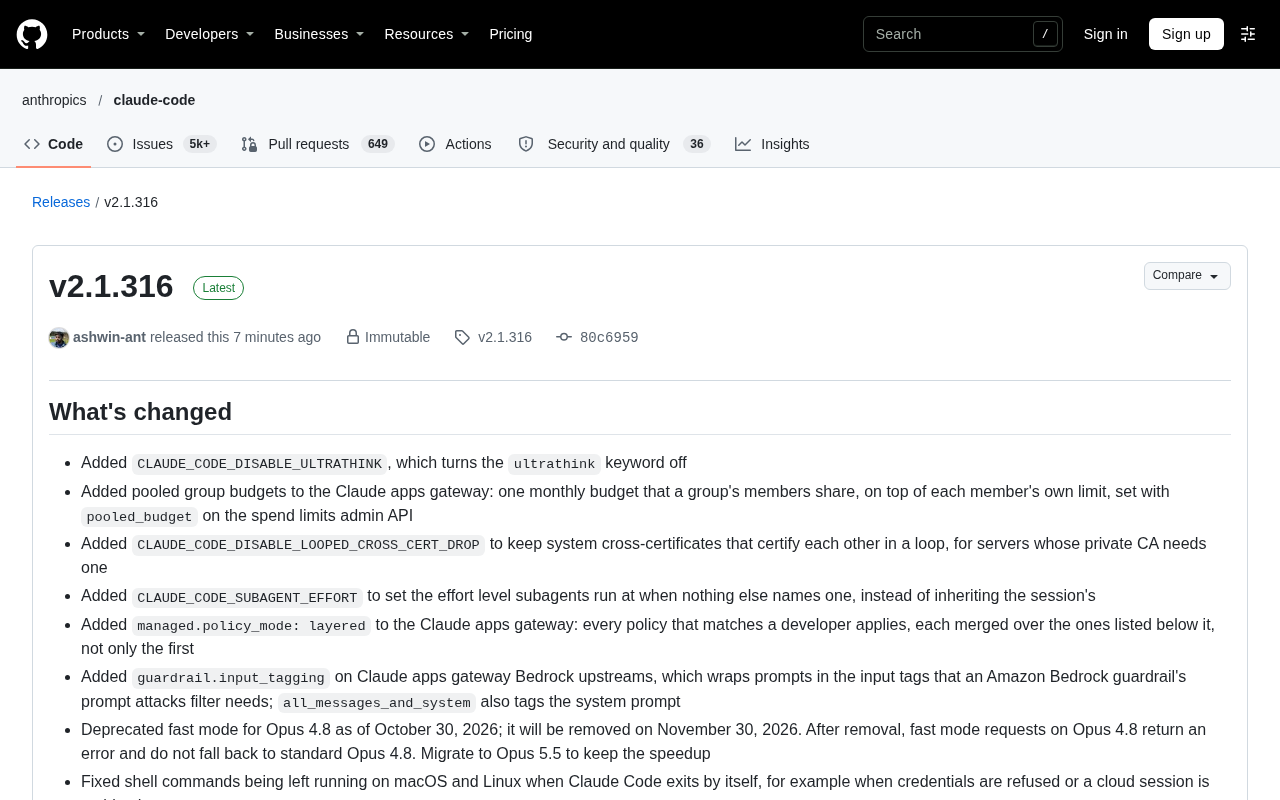
Claude Code v2.1.316 Update Analysis: Enterprise Gateway and Multiple Stability Fixes
Claude Code v2.1.316 released: new enterprise gateway pooled group budgets, layered policy mode, subagent effort control, dozens of Shell, network, and session recovery fixes, and Opus 4.8 fast mode deprecated.

17th-Century British Floods and Doomsday Panic: A New Perspective on Weather History
Based on a Hacker News discussion of '17th-Century British Floods and Foreboding,' this piece explores how extreme weather was given divine and political significance, and what weather history teaches us about contemporary climate communication.

Salesforce Acquires Rune for $375M: AI Logistics Tech Bolsters Defense Business
Salesforce reportedly acquires defense tech startup Rune for $375M. Rune's AI logistics tech will strengthen Salesforce's Missionforce defense platform, continuing its M&A spree.