How Anthropic Uses a Four-Layer Narrative to Prop Up a $2 Trillion Valuation
Anthropic uses four-layer narrative and precise positioning to build a trust loop for its high enterprise-AI valuation.
The article deconstructs Anthropic's valuation logic from a marketing and narrative perspective: facing encirclement by OpenAI and other giants, it applied positioning theory to abandon the consumer market and focus on the high-compliance enterprise AI programming track, validated by high average revenue per customer and renewal rates. On this foundation it built a four-layer narrative — civilization-level fear, identity sacrifice, product values, and business trustworthiness — forming a marketing loop from fear to trust. In communication, low-cost methods such as the founder's personal long essays, technical documentation replacing launch events, and cultivation of opinion leaders efficiently amplify its voice, extending into government and religious domains. The article ultimately points out that what it is really fighting for is the right to interpret AI, but the identity contradiction of a commercial company acting as both referee and player remains questioned.
Introduction: When Marketing Becomes the Leverage for Valuation
As the capital markets prepare for a highly anticipated IPO, the name Anthropic keeps coming up. According to analysis by a Bilibili creator, its estimated valuation is as high as $2 trillion — equivalent to four Tencent, seven Alibaba, and even surpassing Musk's SpaceX, potentially making it the largest IPO in history. Technical discussion of the company across the internet has already been thorough, but today I want to approach it from a different angle: its marketing strategy and narrative system — to see how a company less than six years old has paved the way for a $2 trillion valuation through storytelling.
When Anthropic was founded, OpenAI had already released GPT-3, was recognized as the industry's beacon, and had deep-pocketed Microsoft behind it. Giants like Google and Meta were also betting heavily, encircling Anthropic on all fronts — product capability, talent team, and compute resources. Facing this situation, Anthropic reached for the classic positioning theory from marketing.
Positioning Strategy: Abandon the Masses, Anchor on Enterprise-Grade Security Needs
The core of positioning theory is to occupy a unique place in the minds of potential customers. Anthropic's positioning is very clear: to be the most responsible AI company. This means it gave up from the start competing with OpenAI for the massive consumer market, and instead focused on enterprise customers with high compliance requirements, especially mid-to-large enterprises with strong willingness to pay.
In terms of product strategy, Anthropic did not spread its energy across AI image generation or video generation, but instead poured almost all R&D resources and compute into the niche track of enterprise-grade AI programming, launching Claude Code, which is directly embedded in customers' R&D core. For enterprise customers with high security and compliance requirements, quantifiable cost-reduction and efficiency gains, and clear ROI, willingness to pay is extremely strong. According to industry estimates, Anthropic's user scale and enterprise user count are less than one-sixth of OpenAI's, but its average revenue per customer is more than ten times that of its competitor, and the number of customers paying over $1 million annually is three to five times that of its competitor. This result validates the strategic vision of its positioning.
Positioning theory was proposed by Al Ries and Jack Trout in the 1970s. Its core claim is that competition takes place in the customer's mind, and companies should establish advantage by occupying a unique mental position not held by competitors, rather than simply competing on product features. Classic principles include "be the first," "focus on a niche," and "opposition positioning." Facing the reality that OpenAI already occupies the "general AI leader" mindshare, Anthropic chose opposition positioning as "the most responsible AI company" and proactively narrowed the battlefield to enterprise-grade high-compliance scenarios. The cost of this strategy is giving up economies of scale; the benefit is a trust premium that is hard to replace within a specific customer segment, which is mutually corroborated by its high average revenue per customer and high renewal rates.
The Four-Layer Narrative Structure: A Marketing Loop from Fear to Trust
Anthropic's marketing logic is built on a contradictory yet self-consistent foundation: we are building something that could destroy humanity, and precisely because of that, we must be the one to build it. This is the origin of all narratives, from which the four-layer narrative structure unfolds.
Layer One: Civilization-Level Narrative — Fear Is the Best Medium of Transmission
Founder Dario Amodei gives interviews or publishes long essays at almost regular intervals, expounding on the doomsday narrative of AI: unconstrained AI development will bring social chaos, biosecurity risks, and mass unemployment. He even issued a public letter at the critical moment of the company's upcoming IPO, calling on the entire industry to collectively hit the brakes, and predicted that without restrictions, runaway agent swarms could take over the entire internet within 6 to 12 months. Fear becomes the most effective medium of transmission, keeping the AI safety issue constantly in the public eye.
Existential Risk is a core concept in AI safety discussions, referring to the risk that technological development could cause overall harm to or even the end of human civilization, often listed alongside issues such as biosecurity, runaway agents, and mass unemployment. The concept has a long history of discussion in philosophy and policy circles, but its entry into mass communication depends on the repeated citation of specific figures and specific numbers. Amodei's "25% disaster probability" is exactly this kind of rhetoric: it cannot be scientifically verified, yet it simultaneously satisfies the media's craving for certainty and the public's anxiety about the unknown, thereby transforming an abstract technical governance issue into a public topic that can be reported and debated.
Layer Two: Identity Narrative — Sacrifice Is the Strongest Proof of Conviction
To establish the persona of "safe, controllable, and beneficial to humanity," Anthropic registered the company as a public benefit corporation at the institutional level, and its board of directors is legally required to consider both commercial interests and public interests when making decisions. It also established a long-term benefit corporation, preventing investors like Google and Amazon from interfering with the company's development path. Recently the company also announced that it will donate up to about 20% of its shares to a newly established public welfare fund.
The most powerful identity narrative comes from that well-known entrepreneurial story: Amodei, then Vice President of Research at OpenAI, disagreed with Sam Altman over safety philosophy and business philosophy, and left OpenAI with his sister and five key staff to found Anthropic. In this narrative, sacrifice is the strongest proof of conviction — they could have enjoyed high salaries at the world's top AI lab, but chose a thorny path for the ideals in their hearts. This story is repeatedly mentioned and continuously elaborated, bringing frequent exposure to the company.
Layer Three: Product Narrative — Capable AI, with the Right Values
Claude is not just a capable AI, but an AI with the right values. Technically, Anthropic pioneered Constitutional AI, using a written set of constitutional principles to regulate the model's behavioral guidelines, replacing the manual annotation in traditional RLHF, so that the model can still make judgments consistent with the overall interests of humanity when facing various new situations. At the same time, the company invests heavily in research on model interpretability, trying to figure out the operating logic of the neural network inside AI, and then take safety prevention and control measures. According to Anthropic, Claude is designed to be an honest, helpful but not blindly obedient assistant; it will say no, and it will uphold principles even when no one is watching.
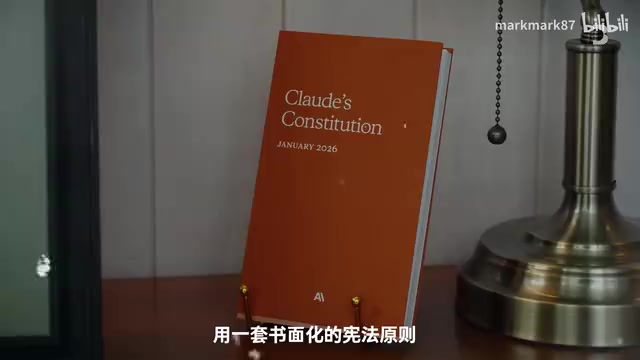
What is commendable is that the company also airs some of its dirty laundry to a certain extent, having repeatedly disclosed to the public that despite implementing what may be the industry's strictest constraint mechanisms, Claude still exhibits deceptive and out-of-bounds behavior. This is completely different from the style of other companies, which like to package their AI as harmless.
Constitutional AI is a model alignment method proposed by Anthropic: first humans write a set of principled "constitution," then the model critiques and revises its own outputs according to these principles, replacing part of manual annotation with AI feedback. Compared with traditional RLHF, which relies on large amounts of human preference annotation, this method has advantages in scalability and consistency, at the cost that the final behavior is highly dependent on the design quality of the constitutional provisions. Interpretability research attempts to open the black box of neural networks, understand the model's internal representations and decision paths, and provide a basis for ex-ante prevention and ex-post auditing. Together, the two form the technical foundation of Anthropic's product narrative of "equal emphasis on capability and safety."
Layer Four: Business Narrative — Responsible Development Is Becoming the Best Business
Anthropic's pricing in the enterprise market has long been higher than its peers, relying on its trustworthiness in high-responsibility, high-difficulty scenarios such as complex programming, finance, law, and healthcare. From the customer's procurement perspective, the cost of an AI making one mistake far exceeds the price difference between different models. When facing models with similar capabilities, choosing the seemingly most reliable and safest vendor also tends to minimize internal resistance, or the cost of explanation.
Communication Chain: How to Get the Narrative Out
With the four-layer narrative as ammunition, the next step is to get it out through communication.
Internal Narrative: Ideological Construction Before Business Management
Amodei rarely participates in the company's operations, but he spends more than one-third of his time on ideological construction. He has a fixed ritual that no one in the company misses: the biweekly Dario vision exploration talk, each lasting a full hour. He hopes in this way to make every employee understand that they have joined a company responsible for the long-term interests of humanity. This kind of identity recognition is far stickier than stock options.
Founder's Personal Long Essays: Zero-Cost Global Communication
What Amodei presents to the outside world is the image of a technical evangelist: introverted, rational, idealistic, and concerned about the world. Since October 2024, he has published six articles to output his ideas, two of which focus on the AI worldview and four on policy appeals, most of them over ten thousand words. These articles have almost zero promotion cost, yet each one triggers global media coverage and public discussion.
He has also thrown out many widely circulated numbers, such as human lifespan in the future reaching 150 years, 50% of white-collar jobs disappearing, and the probability of AI causing catastrophic consequences being 25%. This is a number that can never be reasoned out or verified, and Amodei himself admits it is a subjective prediction. But the brilliance lies in the value of 25%: it is not so high as to create the urgency for everyone to immediately stop AI research and development, yet it is enough to make everyone alert and discuss.
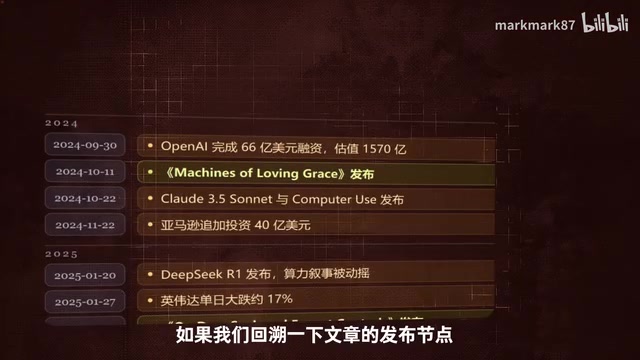
Looking back at the publication timing of the articles, one finds that they are always closely related to the company's major moves. For example, 14 days after its product Cowork launched, "The Adolescence of Technology" was published, a 20,000-word article comparing AI to a child who has not yet grown up and needs supervision; on the same day, seven co-founders announced they would donate 80% of their wealth; 17 days later, the $30 billion funding round landed. Within one month, the loop of "I have strong capabilities, I deserve to be trusted, I deserve to be invested in" was completed.
Product Launches: Cancel the Press Conference, Let Technical Documentation Speak
Anthropic simply canceled traditional launch events — no keynote, no countdown. The usual process is to release a short video, publish a technical document, update the API, and that's it. The video is usually less than a minute long and is only responsible for notification, not persuasion; those appearing on camera are generally engineers. By contrast, the technical documents are much longer: when Opus 5 launched, the technical document was 194 pages, and when Metals launched, the document was even longer at 240 pages.
Anthropic is well aware that it is not selling everyday consumer goods; the decision-makers buying it are CTOs and CISOs, who do not need flashy, cool materials. Instead, a 200-page document will be written into their procurement evaluation forms, into internal supplier risk reports, and read line by line by the security team. It is both a safety proof and a sales document.
Developer Relations (DevRel) and technical documentation marketing is a common approach in the B2B software industry: replacing mass-market advertising with detailed technical documentation, API descriptions, and security white papers, directly serving the evaluation process of technical decision-makers such as CTOs and CISOs. Such documents are often incorporated into enterprise procurement supplier risk assessment forms, and thus have the dual attributes of compliance credentials and sales materials. Anthropic's near-200-page documents essentially turn "being reviewable line by line" itself into a trust signal, in sharp contrast to the consumer-oriented press conference logic.
The Role of the Marketing Team: Connection and Diffusion
Marketers are by no means dispensable here. They hold a series of exchange events such as developer conferences, founder salons, enterprise briefings, and partner summits to bring themselves closer to various partners. In addition, Anthropic is trying to spread ideological promotion from a company department into a group of individuals with independent identities, letting more people become opinion leaders.
For example, co-founder Jack Clark, a former tech journalist who has briefed the United Nations and the U.S. Congress, still publishes newsletters weekly, and is best at translating technical issues like parameters and trends into grand topics such as national security, biosecurity, and existential risk. Another public policy lead, Sarah Heck, even turned AI safety into an election issue during election periods and pushed provisions related to AI regulation into the legislative system.
Relations with the Government: Subtle and Astute
Facing the U.S. government, the company deliberately maintains a subtle relationship: it does not refuse cooperation, but it also holds the bottom line. Earlier this year, the company publicly rejected the Pentagon's demand to lift all restrictions. This will indeed lose some revenue, but compared with the sensational effect it bought back in terms of public livelihood and public opinion, the calculation is a win no matter how you look at it.

In marketing to the public, there is also a faint hidden thread. According to leaks cited by a Bilibili creator, since the beginning of this year a large number of researchers at public institutions have been creating volume about the AI crisis in various news media, and many YouTube and TikTok creators have followed suit in discussing it, many of whom are not even creators in the AI or tech field. Some bloggers have leaked that wealthy backers are spending heavily behind the scenes to have these creators promote the dangers of AI to the public, even providing prepared scripts on what to say and which literature to cite. And among these wealthy backers, quite a few happen to be early investors in Anthropic.
Reaching Religion: The Ultimate Boundary of Influence
Anthropic even attempts to extend its influence into the most sacred domain of the Western world. On May 25, 2026, Pope Leo XIV of the Vatican issued the first encyclical of his tenure, addressed to about 1.4 billion Catholics worldwide, with a theme directly aimed at artificial intelligence. And the person standing beside the Pope speaking on behalf of the tech world was Anthropic's number three, Christopher Olah.
The Ultimate Goal: Fighting for the Right to Interpret AI
Digging further down this line, we finally reach the ultimate goal of this AI empire's narrative. The core of Anthropic's $2 trillion valuation is the setting of "guardian of AI world safety." It has never been selling a simple model business; what it is really fighting for is the right to interpret how AI should be understood, constrained, and used. Possessing this power not only allows deep influence over policy and regulation, building a solid moat for itself, but may even make it, in the longer term, the definer of "what is intelligence, what is consciousness, what is a human being."
Controversy and Boundaries: The Narrative Is Not Universally Bought
Although Anthropic's narrative is logically self-consistent, it cannot win everyone over. After all, no matter how it glosses things over, it is ultimately a commercial company; don't expect it to be both referee and player. The latest cover of TIME magazine directly used Claude's chat window, asking it "just how dangerous are you?" On the eve of this IPO, model and technical capability have seated Anthropic at the table, while its storytelling ability has further raised its market ceiling. As for whether it can reach a $2 trillion or even higher valuation, let us keep watching.
Related articles

Anthropic's IPO: Is a $1.4 Trillion Valuation AI's Future or the Peak of a Bubble?
Anthropic is about to list on Nasdaq with a valuation of up to $1.4 trillion, potentially raising over $60 billion to become the second-largest IPO in history. This article breaks down its revenue, the truth behind its hundred-billion-dollar book loss, compute costs, control design, and lock-up pressure, and analyzes the IPO's chain effects on the AI sector.

Anthropic Races Toward Nasdaq: Ticker ANT, Can a Trillion-Dollar Valuation Hold?
Anthropic files its S1 for a Nasdaq IPO under ticker ANT, led by Goldman Sachs and Morgan Stanley. We break down revenue, massive compute lease commitments, founder voting control, and the valuation debate.
Anthropic's $1.4 Trillion IPO Bid: Hidden Concerns in AI Hardware
Bilibili UP host rounds up five major AI stories: Anthropic's $1.4T Nasdaq valuation bid with $26B from seven giants; OpenAI's 20% price cut and Altman's chip bubble warning; Nvidia's $109B revenue expectation; compute cloud revenue surge with widening losses; robot firm's $500M raise but robotic hand durability bottleneck.