How Did Trump Personally Turn Nvidia into the "Twelfth Board Member"?
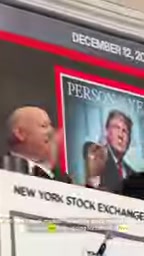
Commentator says Trump's deep involvement in Nvidia makes him like a "twelfth board member," reflecting distorted government-business relations.
Based on a YouTube political commentary program, the article analyzes the political factors behind Nvidia's market cap milestone. The commentator argues that when economic indicators weaken across the board, Nvidia — the largest weight in US equities — becomes the president's only showcaseable achievement, causing "economic face" to override "national security." Trump doesn't just post on social media but is deeply involved, jokingly called the "twelfth board member." The commentator notes the Republican small-government creed has been broken this term, that Nvidia is not an isolated case, and describes this as an "imperial presidency." The article also quotes *The Big Short* as a warning: future opponents may investigate, but the president will respond with a "bragging" rather than "confessing" posture — and this unapologetic power intervention is what's most alarming.
As Nvidia tops the global market capitalization rankings, an analysis from a YouTube political commentary program offers a sharp perspective: behind Jensen Huang and Nvidia's turning point, there may stand an "outside director" — Trump. The commentator summed up his observation with a half-joking remark: "The president is basically Nvidia's twelfth board member."
When the Stock Market Becomes the Only Scoreboard
The commentary opens with this picture: when almost every economic indicator is flashing red, consumer confidence has hit rock bottom, housing prices remain sticky, interest rates stay high, and everyday consumption feels increasingly expensive — at this point, the stock market becomes the only scorecard the president can show.
And Nvidia happens to be the largest piece of the puzzle in US equities. The commentator's logic chain is straightforward: under such an economic and political landscape, policy protection for Nvidia is almost "inevitable."
The key phrase here is that "economic face" trumps "national security." The commentator states bluntly: "National security was defeated by economic considerations." This points to a thought-provoking shift in priorities — in the face of votes and markets, national security issues once deemed non-negotiable have shown room for flexibility.
US Equity Weighting and Index Linkage Mechanism: Among major US stock indices, the S&P 500 uses market-cap weighting, meaning the larger a company's market cap, the greater its contribution to index movements. After Nvidia's market cap surpassed one trillion dollars, its stock price fluctuations have significantly amplified their impact on the Nasdaq and S&P 500. This means that as long as a handful of tech giants like Nvidia maintain their upward momentum, the index can still post positive returns even if most other stocks perform mediocrely. For a leader who treats stock market performance as political achievement, this structure of "a few heavyweight stocks propping up the broader market" makes protecting Nvidia almost equivalent to protecting overall market confidence — which also explains why policy resources tilt toward leading companies.
Not Just Posting: The President's Deep Involvement
The commentator specifically emphasizes one point: Trump isn't just cheering for Nvidia on social media — he has "genuinely gotten himself involved." As for how deep that involvement goes, the commentator doesn't disclose specific details, but uses the metaphor of "twelfth board member" to suggest that the involvement has gone beyond the scope of conventional government-business interaction.

The impact of this metaphor lies in how it blurs the boundary between government and business. Traditionally, the board of directors is the core governing body of a company, and the president is neither a shareholder nor management — yet being called a "director" is itself a satire on the distortion of government-business relations.
The Break from the Republican Small-Government Tradition
The commentator places this phenomenon in a broader historical context: the Republican Party has traditionally championed small government and minimal intervention in business. But during this president's second term, that creed has been "torn to shreds."

And Nvidia is not an isolated case. The commentator explicitly mentions "not just Nvidia, but other companies too," though without listing them one by one. This suggests that the president's direct involvement in companies may be a pattern of behavior rather than an exception targeting a single company. The commentator uses the term "imperial presidency" to describe this expansion of power, arguing that it has been pushed to unprecedented levels with Nvidia.
Imperial Presidency: This concept was systematically introduced by historian Arthur Schlesinger Jr. in his 1973 book of the same name, originally referring to the increasingly inflated power of the US president in foreign affairs and national security that escapes congressional constraints. Its core features are proactive expansion of executive power, bypassing legislative oversight, and centralizing decision-making in the name of national interest. In recent years, the term has been extended to describe the president's direct intervention in economic and industrial affairs. The commentator borrows this term to point out that the president's involvement in companies like Nvidia has gone beyond conventional government-business lobbying, carrying the flavor of unilateral expansion of executive power and weakened checks and balances.
From "Confession" to "Showoff": A Warning Sign
The most analytically sharp part of the commentary quotes a classic scene from the film The Big Short: "I don't understand — why are they confessing?" "They're not confessing. They're bragging."
The commentator uses this to predict: after Democrats or other political forces return to power, they will likely launch investigations and summon relevant individuals before committees for questioning. But the key point is that the president won't feel embarrassed — because "he's proud of his involvement in this company, he's proud of having this kind of power, it's an incredible affirmation."
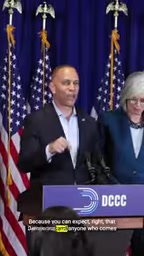
This posture of "showing off rather than covering up" is precisely what the commentator considers most alarming. When power intervention no longer needs to be concealed but instead becomes political capital, institutional checks and balances face a real test.
Nvidia's "Inevitability" and Contingency
Back to Nvidia itself. The commentator acknowledges that in hindsight, Nvidia's rise has its "inevitability" — the explosion of AI computing demand and the moat of the GPU ecosystem are all structural factors. But he also implies that political protection has played an underestimated role in this growth curve.
The value of this analytical perspective lies not in providing a definitive conclusion, but in reminding observers: when we discuss a company's success, the intertwining of technology, markets, and political power is often more complex than what appears on the surface. Nvidia's chips are sold globally, and its fate may also be partly tied to an office in Washington.
The commentator ends with a rather ironic summary: the president has "never been more" deeply involved in a company, and he is proud of it all.
(This article is based on analysis of content from a YouTube political commentary program; the views expressed are the commentator's personal positions.)
Background Notes
The Political Metaphor of The Big Short Dialogue: The Big Short tells the story of a few investors who saw through the subprime mortgage bubble before the 2008 financial crisis and profited by shorting it. The characters' confusion over Wall Street institutions' "confession" posture after the crisis is actually satire: those institutions weren't genuinely repentant — they settled with fines and even treated being investigated as a display of strength. The commentator uses this scene to transplant the "confession vs. bragging" binary onto government-business relations — when power intervention no longer needs concealment but instead becomes political capital, it shows that accountability mechanisms can no longer form substantive constraints. This metaphor reinforces the article's concern about the failure of institutional checks and balances.
One-line Summary
The commentator claims Trump's deep involvement in Nvidia's affairs makes him like a "twelfth board member," reflecting the distortion of government-business relations.
Paragraph Summary
Based on a YouTube political commentary program, the article analyzes the political factors behind Nvidia's market cap milestone. The commentator argues that when economic indicators weaken across the board, Nvidia — the largest weight in US equities — becomes the only achievement the president can showcase, causing "economic face" to override "national security" considerations. Trump doesn't just speak out on social media but is deeply involved in Nvidia's affairs, jokingly called the "twelfth board member." The commentator notes that the Republican Party's traditional small-government creed has been broken during this term, that Nvidia is not an isolated case, and describes this power expansion as an "imperial presidency." The article also quotes The Big Short as a warning: future political opponents may launch investigations, but the president will face them with a "bragging" rather than "confessing" posture — and this kind of power intervention that needs no concealment is what's most alarming.
Related articles
Nvidia CEO Removal Saga: Trump Intervenes Over the Weekend, Jensen Huang Reinstated Monday
Vergecast podcast reveals Nvidia CEO drama: earnings call said he wouldn't return and a new CEO was being sought; Trump intervened over the weekend, with J.D. Vance brokering a security guarantee to the board; Jensen Huang reinstated at 9 a.m. Monday.
Semantic Caching Explained: Reusing the Same Answer for Similar Questions
Semantic caching uses embeddings to judge whether queries are similar in meaning and reuses cached results for similar prompts. This article explains how it works, the difficulty of threshold tuning (such as the risk of misjudging negations), and its applicable boundaries.

ASPECT: Getting AI Agents to Truly Learn Your Communication Style
ASPECT uses a 92-item communication style inventory to compress personal communication history into an auditable communication DNA profile, with raw data staying on-device and preferred in 42.5% of blind-test scenarios.