How Hard Is It to Shoot an IMAX Film on Everest? The Technical Challenge Rivals the Climb
Shooting an IMAX film on Everest requires becoming a climber first, then overcoming technical limits together.
This behind-the-scenes story reveals the challenges of bringing an IMAX camera to Everest. Aiming for immersion, the team chose IMAX to capture the raw landscape, but that meant carrying every piece of gear by human power to about 29,000 feet and camping on the North Side for two months. Their core rule: be climbers first, filmmakers second, passing all safety checks before shooting. Called the most technically complex film they've made, with tent collapses routine, success relied on collective effort—and became the greatest journey of their lives.
Filming on Mount Everest is itself a game against the limits. This behind-the-scenes YouTube segment about Everest The Other Side reveals the challenges of bringing an IMAX camera to the top of the world.
Why shoot IMAX on Everest?
The team's goal was clear: bring audiences to "places few people have ever even seen." They decided to shoot in IMAX format because only that technology could capture Everest's "wild, raw, unbelievable landscapes." This wasn't just documentation—it was a pursuit of immersive experience.
But high specification means a heavy burden. At around 29,000 feet (about 8,848 meters), every piece of equipment must be carried by human power. The team camped on the North Side for two months at a time—itself "a real technical achievement."
IMAX is a large-format film format whose frame is far larger than traditional 35mm film, offering higher resolution and a wider field of view. But IMAX cameras are also known for being bulky and extremely heavy—early models weighed tens of kilograms and required special power and cooling support. In an extreme environment like Everest, this means equipment transport and operation become exponentially more difficult. In addition, loading and unloading IMAX film must be done in a clean environment, while the high-altitude cold, windblown sand, and low air pressure all threaten the film and mechanical structures. Choosing IMAX is therefore not only an artistic pursuit but also an extreme test of logistics and engineering capability.
First be climbers, then filmmakers
Facing such a harsh environment, the team's methodology was very clear: always see yourself first as a climber and mountaineer. Before even considering shooting, you must pass all the climbing safety and acclimatization "checkboxes." This climbing-first mindset is the prerequisite for completing the shoot.
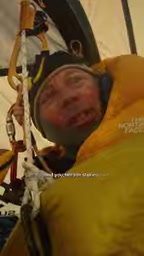
When asked, "Was there a part of this that was supposed to be fun?" the answer was rather darkly humorous: the fun part is when you've descended and are telling these stories. The process itself is more a test of technique and willpower.
"Acclimatization" in high-altitude climbing refers to the body's gradual physiological adjustment to a low-oxygen environment, typically promoted through repeated ascents and descents to stimulate red blood cell production and cardiopulmonary adaptation. On Everest's North Side, climbers need weeks of acclimatization climbs before attempting the summit, otherwise they risk high-altitude cerebral edema or pulmonary edema. The filming team's emphasis on "passing all the climbing checkboxes first" was precisely to avoid disrupting the acclimatization rhythm because of filming tasks. In extreme environments, any unnecessary physical exertion can endanger life, so putting climbing safety above filming is not just discipline but a survival rule.
Technical complexity: the most complex film they've made
The team admits this is "the most technically complex film" they have ever produced. From equipment transport and operation in extreme environments to guaranteeing IMAX image quality, every step is full of variables. The collapsing tent is just one microcosm of many unexpected events.
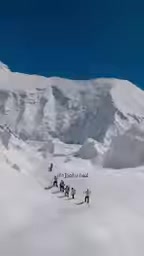
This complexity comes not only from the equipment but also from environmental uncertainty. Weather windows are fleeting—"it looks like there's going to be a window in the weather, okay, we're going"—all preparation is aimed at seizing that brief moment.
When filming on Everest, a weather window refers to a brief period when wind speed and visibility are relatively suitable for climbing and shooting. Wind speeds at the summit often exceed 100 kilometers per hour, and the perceived temperature can drop below minus 40 degrees Celsius. Such windows may last only a few hours and are extremely difficult to forecast. The team's line "it looks like there's going to be a window in the weather, okay, we're going" reflects a decision-making pattern common in polar exploration: all preparations must be ready in advance, and once the window appears you act immediately, or you may wait days or even weeks. This uncertainty is a major source of technical complexity and a core feature that distinguishes extreme filming from conventional production.
Collective collaboration and the ultimate reward
The success of the shoot is attributed to "a collective effort." In extreme environments, no individual heroism can replace teamwork. From porters to photographers, everyone is part of the summit puzzle.
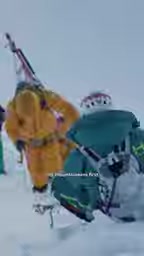
In the end, when the team stood at the "top of the world," that sense of achievement was described as "the greatest journey of my life and career." And that line "it was kind of fun" may be the most understated summary of all the hardship.
Takeaway: the barrier to extreme content creation
The lesson this sharing offers content creators is this: high-quality content is often born from an extreme pursuit of technique and absolute respect for basic safety. First become an expert in the field (a climber), then layer on creative skills (a filmmaker)—this order cannot be reversed. Only when equipment, environment, and team all reach their limits can the final work possibly reach heights others find hard to attain.
One-line Summary
Shooting an IMAX film on Everest requires becoming a climber first, then overcoming technical limits through collective collaboration.
Paragraph Summary
This behind-the-scenes sharing reveals the challenges of bringing an IMAX camera to Everest. Aiming for an immersive experience, the team chose IMAX to capture Everest's raw landscapes, but high specification meant carrying every piece of equipment by human power to about 29,000 feet and camping on the North Side for two months. Their core methodology was "first be climbers, then filmmakers," considering shooting only after passing all climbing safety checks. The team calls the film the most technically complex they have made, with incidents like collapsing tents being normal, and success depending on collective effort. Ultimately, they describe the experience as the greatest journey of their lives and careers, offering the lesson that extreme content creation requires becoming a field expert first before layering on creative skills.
Related articles
 Tech Frontiers
Edge AI on Microcontrollers: When Is It Actually Worth Deploying?
Drawing on Reddit discussions and Arm case studies, this article analyzes the real-world use cases for edge AI on microcontrollers: when each device needs independent inference, when a gateway or cloud is more reasonable, and the costs and boundaries of specialized hardware.
 Tech Frontiers
Pushing the Limits of Extreme Sudoku on a 16GB GPU: Insights from Depth and Flow Matching
A researcher trained a 16.54M-parameter model on a 16GB GPU to solve extreme Sudoku, finding effective depth breaks the 60% plateau and flow matching with improved sampling pushes accuracy past 99% with ~50× lower layer-evaluation budget.
 Tech Frontiers
AI Agent Approval Workflows: Why Human Confirmations Always Get Mindlessly Clicked
Why do AI agent approval workflows always get mindlessly clicked? A Reddit discussion shows that separating rules from keys, low-frequency high-risk approvals, and GitHub Environments-style gates are the keys to effective approvals.