How Smart People Use AI to Remove Junk: 7 Real-World Cases

AI's high-value use isn't generating more—it's filtering and deleting junk.
The article compiles seven cases shared by tech creator Riley Brown, showing an overlooked logic of AI usage: having AI subtract rather than add. A Portuguese user used Claude to rebuild a TV's system, removing ads and preinstalled software, cutting memory usage by 70% and tripling speed; others jailbroke Kindles and modded Game Boys. AI editing's core is identifying segments to delete and repeated points, not replacing editors. Nick Dobos has agents clear 99% of his email, and Riley uses agents to filter Twitter feeds and bypass algorithms. He also replaces subscription apps with agents and built internal software Native Note in about three hours, keeping only essential features at API-call cost. The common logic: AI is best at identifying and cleaning human-made junk, but only if users proactively configure it and give instructions.
While mainstream voices still worry that AI is generating junk content, a group of proactive people have used AI to do the opposite: remove junk. Tech creator Riley Brown shares 7 cases on Bilibili that reveal an overlooked logic of AI usage—not having AI generate more, but having AI delete what you don't need.
Writing Your Own Software for Your TV
The smart TV business model is itself designed to generate junk. Hardware is sold cheap or even at a loss, and manufacturers recoup costs through preinstalled software, ads, and data collection. One Portuguese user's approach: use Claude to "vibe code" the TV, removing all preinstalled software and ads, and rebuild the operating system with reference to Apple TV. According to his account, memory usage dropped by 70% and interface speed tripled.
This isn't an isolated case. Another user told Claude Code the model of his parents' TV, located it over WiFi, removed 25 Xiaomi packages, and wrote a new launcher. Someone else built a voice controller for the TV—just say "play Stranger Things" and it jumps straight to playback.
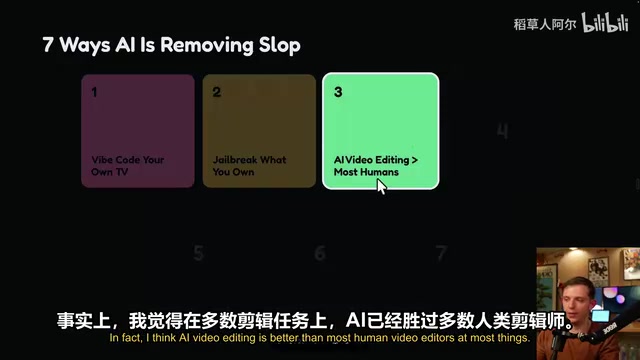
The core idea here is subtraction: a TV has a ton of features, but what you actually need might just be Netflix, YouTube, and a few common functions. Use AI to keep what you need and remove the rest.
Vibe Coding is a concept proposed by Andrej Karpathy in early 2025, referring to a programming approach where you describe requirements in natural language and a large language model directly generates runnable code. Users don't need to master syntax and APIs—they just express intent, run, observe results, and iterate. It's the opposite of the traditional "learn the language first, then write programs" path, shifting focus from "how to write it" to "what you want." The cases in this article—rebuilding a TV's system and writing a new launcher—are exactly this: leveraging Claude to understand the hardware environment and requirement descriptions, generate scripts, and debug them repeatedly. Vibe coding lowers the barrier to modifying devices, but it also requires users to judge whether the generated code is safe and whether it might brick the device, so some troubleshooting ability and initiative are still needed.
Extending the Same Logic to All Devices
Beyond TVs, any device can be "cleaned up." One user connected a Kindle to a computer with a USB-C cable, had Claude Code help jailbreak it, removed Amazon's preinstalled software, and installed Tailscale. A jailbroken Kindle can also enable new features: when you see an article you want to read, save it via Readwise and sync it to a home server—once the Kindle syncs, the article is on the device.
Riley himself did something similar on a Modretro—connecting Meta's AI agent Muse to turn a Game Boy into a conversational AI device. His judgment is blunt: jailbreaking and modding used to require professional skills, but now all you need is a USB-C cable and Claude Code, and anyone can do it.
Jailbreaking in the consumer electronics context refers to bypassing manufacturers' software restrictions on a device to gain root or administrator privileges, thereby installing unofficial apps, uninstalling preinstalled software, or modifying system behavior. A jailbroken Kindle can run third-party readers, sync service clients, or even connect to a self-hosted server. It should be noted that jailbreaking usually voids the warranty, improper operations can brick the device, and some firmware versions patch known vulnerabilities. The approach described here—connecting via USB-C and having Claude Code assist—essentially hands the process of consulting forum tutorials and command-line experience to the model for planning and troubleshooting, but the risks and responsibilities remain with the operator.
AI Editing: From "Can Cut" to "Knows What to Delete"
Video editing is one of the areas where AI capability has improved most noticeably. Riley's judgment: on most editing tasks, AI already beats most human editors. He uses Claude Projects to create video intros, generating them in a single prompt from start to finish.
More noteworthy is "junk detection" style editing. He has Claude analyze his video transcripts to identify sections that should be deleted entirely, repeated points that should be merged, and places that should be tightened. The list AI produces is used directly to revise the edit.
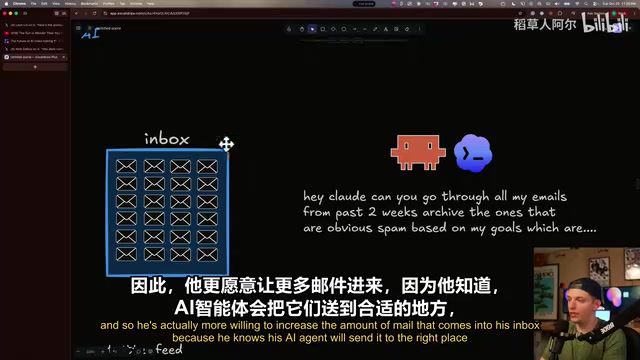
His usage isn't about replacing editors with AI, but about using AI as a filter: delete meaningless segments and irrelevant tangents, and save viewers time. He admits that the most he uses AI for is "deleting and trimming the boring parts," which actually helps retention.
Adding an AI Filter to Your Information Feed
Nick Dobos, who has drawn much attention on Twitter, shared a more radical approach to information management: he no longer reads his own email. AI agents clear 99% of his emails, and he does a manual inbox-zero once a week. The result is that email value actually increased—he started actively subscribing to more email notifications, such as having electronic receipts automatically forwarded to an expense-tracking bot.
Riley's approach is similar. He uses AI agents to search Twitter with very specific instructions: find reliable explainers in the AI video editing space, exclude self-promoters who just use quote tweets to shill, and compile a list. Because Grokbot has built-in Twitter functionality, no extra API is needed. Meta's Muse can do similar research on Instagram, and can set up automated tasks to log new followers and flag people who might be helpful to the business.
Bypassing algorithm-recommended feeds and letting agents do the filtering—that's the key to this approach.
Replacing Apps with Agents
Riley's phone home screen is "almost empty," filled entirely with agents and AI tools. His view: many say agents will kill apps, but more accurately, agents can operate apps and can also do what apps do.
Take CalAI, which tracks dietary calories, at about $50 a year. You can simply open Grokbot and tell it to log calories every time you take a photo and give instant feedback. Most AI models are already close to dedicated apps in accuracy, and you skip the subscription nagging and feature upsells.
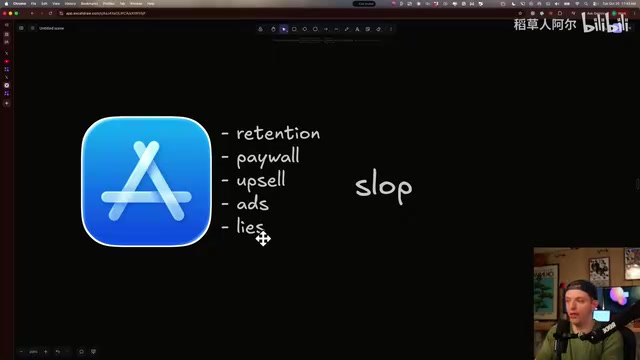
When he edits videos with CapCut, he's always prompted to upgrade plans or try new features, but most of these needs can be addressed directly by asking an agent. His habit now: if an app's job can be handed to an agent, he doesn't operate it himself.
AI agents differ from ordinary chatbots in that they can call tools, execute multi-step tasks, and retain context. Agents can read email, search the web, operate other apps, and trigger actions based on conditions—not just return a block of text. Grokbot and Meta's Muse mentioned in this article are of this type; they have built-in platform connectivity, so they can directly search Twitter, Instagram information, or process email. The key to agents replacing apps lies in "orchestration": stringing together actions like photo-logging calories, scheduled email checks, and writing webhooks into workflows. This also explains why Riley's phone home screen is almost empty—functionality is folded into a few agents that can act on his behalf, rather than scattered across dozens of subscription apps.
Building Internal Software for Your Company
The most important of the seven cases—and the one Riley uses every day: building his own internal software Native Note with Claude Opus. It combines the essential features he likes from Notion, MyMind, Typefully, and others, with a total investment of about three hours.
All video scripts live there; scripts can be linked to Excalidraw boards, and previews display directly at the top of the script. Inside the app, AI can do as much as he can—while on a walk, he can say by voice, "Help me create an Excalidraw board and draw a diagram explaining what this video is about," and it's done. The app also checks email every 30 minutes and pushes things he needs to know into an activity feed; when writing revision notes for a video, it sends a webhook to Claude Code, which actually makes the changes.
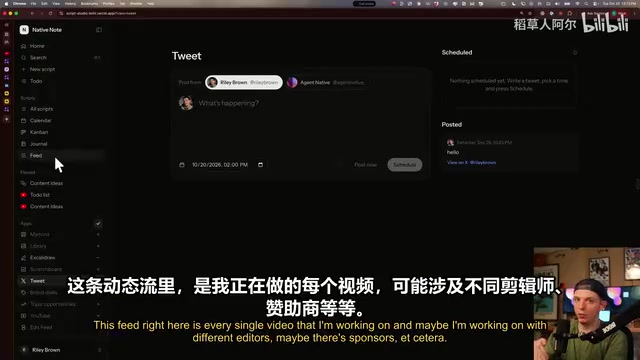
His math is clear: he uses only 5% of Notion's features but has to buy user seats for the whole team. Building his own, keeping only the needed features, costs just API calls. He also used a single prompt to build a Raycast-like desktop app with built-in image search and generation, accessing models through Versal AI Gateway, for making video thumbnails—no subscription fees and no unused features.
Webhook is an event-triggered reverse HTTP callback: when a specified event occurs in a system, it proactively sends a request to a preconfigured URL, pushing data to another system. In this article, "sends a webhook to Claude Code when writing revision notes for a video" means the internal software, upon receiving revision notes, automatically notifies Claude Code to execute the corresponding changes, with no manual copy-paste. Compared with polling, webhooks are event-driven, real-time, and more resource-efficient, commonly used for payment notifications, CI build triggers, and cross-app automation. In the context of self-built internal software, webhooks act as the "nerves" between modules, letting AI capabilities and business actions connect automatically.
The Common Logic Behind This Approach
All seven cases point to the same pattern: one of AI's strongest abilities isn't generation—it's filtering and deletion. TV ads, preinstalled software, redundant emails, filler in videos, unused software features—these "junk" items created by humans happen to be exactly what AI is best at identifying and cleaning up.
But Riley also makes the prerequisite clear: all of this requires initiative. Agents won't set themselves up for you—you have to configure them personally, give instructions, and iterate. The so-called "smart people" usage is essentially treating AI as a pair of scissors, not a printing press.
One-line Summary
AI's high-value use isn't generating more—it's filtering and deleting junk.
Paragraph Summary
The article compiles seven cases shared by tech creator Riley Brown, revealing an overlooked logic of AI usage: having AI subtract rather than add. A Portuguese user used Claude to rebuild a TV's system, removing ads and preinstalled software, cutting memory usage by 70% and tripling interface speed; others jailbroke Kindles and modded Game Boys. The core of AI editing isn't replacing editors but identifying segments to delete and repeated points. Nick Dobos has agents clear 99% of his email, and Riley uses agents to filter his Twitter feed and bypass algorithmic recommendations. He also uses agents to replace subscription apps and spent about three hours building internal software Native Note, keeping only essential features at the cost of API calls alone. The common logic: AI is best at identifying and cleaning up human-made junk, but only if users proactively configure it and give instructions.
Related articles

LLM Application Development: A High-Paying Career Guide for Ordinary People
LLM application development offers fresh graduates up to 35K/month, with SP offers reaching 600K. This article explains the core skills, how to break in, and how ordinary people can seize AI opportunities through learning by doing.

Say Goodbye to AI Influencer Faces: A Complete Guide to Creating Visual Assets for AI Comic Dramas from Scratch
Bilibili creator shares a full workflow for zero-basics AI comic drama visual assets: use Doubao Work skills with script-first, visual references, and real-person texture to escape AI influencer faces, then lock character and scene consistency with asset sheet layouts, weapon detail images, scene nine-grids, and cinematic color palettes.

The AI Production Pipeline Behind Great Videos: From Research to Agent Validation
AI video production isn't just a model race. This article breaks down a transferable four-step pipeline: researching professional workflows, organizing a skill checklist, configuring agents, and experimental validation—and explains how general-purpose LLMs like DeepSeek can replace paid tools to run the entire process.