Instagram Tests 90-Minute Long-Form Video: Is YouTube's Real Rival Finally Here?

Instagram launches 90-minute long-video uploads, probing YouTube's turf; success hinges on its creator ecosystem.
Instagram has begun rolling out 90-minute long-video uploads to select users, seen as a direct challenge to YouTube and a sign that the lines between short video, long video, and social content are blurring. Instagram's edge is its social graph plus recommendation algorithms, which help long-video cold starts; its weakness is the lack of a mature creator monetization system. Success depends not on the upload duration parameter but on ecosystem building in creator incentives, content discovery, and viewing mindset.
Instagram is breaking free from the "short-video platform" label. According to an RSS source report, the platform has begun rolling out a long-video upload feature of up to 90 minutes to select users. This move is widely interpreted as a direct probe into YouTube's core territory, and it also signals that the boundary between social media and video platforms is blurring further.
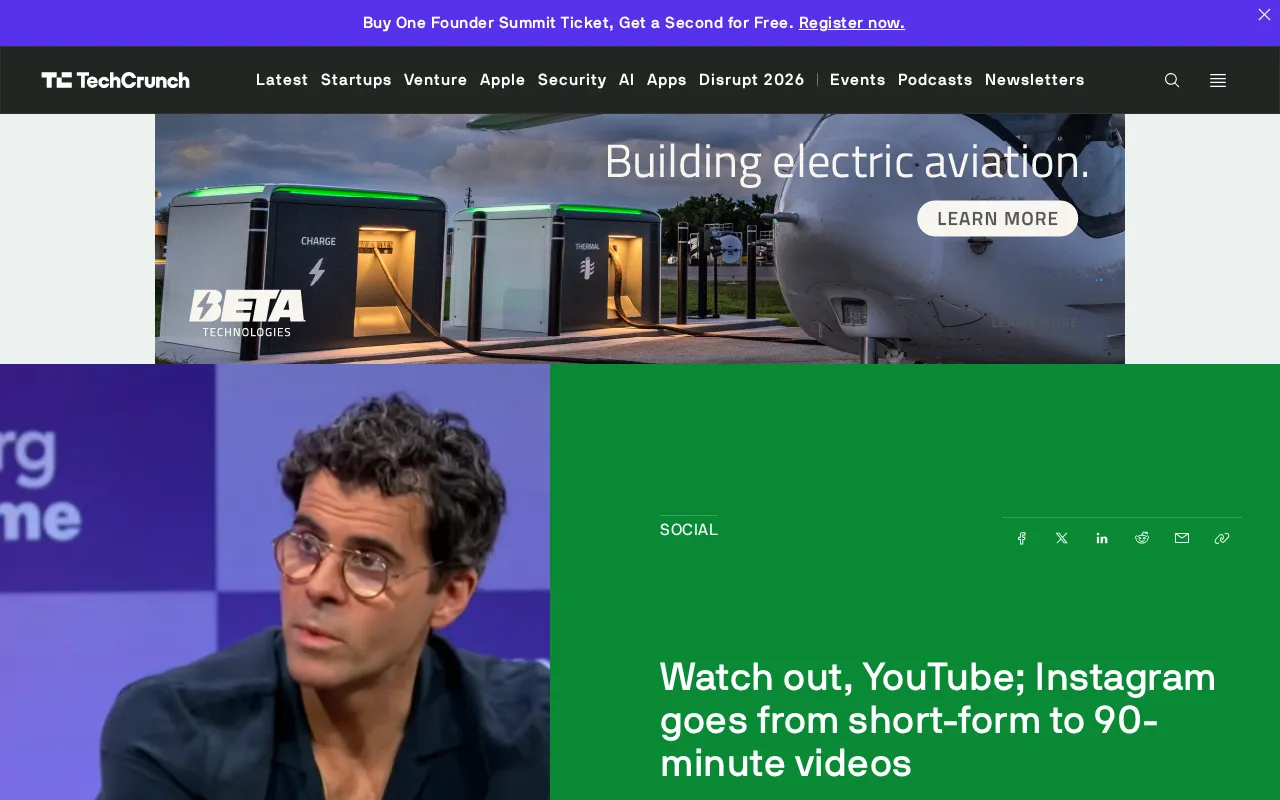
From 15 Seconds to 90 Minutes: Instagram's Ambitions Go Beyond Reels
Over the past few years, Instagram's product focus has been almost entirely on Reels, using short, snappy content to counter TikTok. But the traffic logic of short video differs from the creative logic of long video: the former pursues completion rates and quick consumption, while the latter relies on in-depth storytelling and sustained subscription relationships. Opening up 90-minute upload permissions shows that Instagram is no longer content to be just a "watch-and-go" content pipeline.
From the perspective of product evolution, this looks more like a deliberate effort to fill a capability gap. Now that users have already formed the habit of watching video within Instagram, the question the platform needs to answer is: beyond killing fragmented time, can it carry heavier content formats? Long video is that answer.
Reels is a short-video feature launched by Instagram in August 2020, directly targeting TikTok. It supports vertical videos of up to 90 seconds (later gradually relaxed) and has its own dedicated recommendation feed entry point. Alongside Instagram's main feed and Stories, it has been the core engine driving user time-spent growth over the past few years. Reels distribution relies heavily on algorithmic recommendation rather than follow relationships, and content consumption is measured primarily by fast swiping and completion rates—fundamentally different from long video's logic of subscription relationships and in-depth storytelling. Understanding this product positioning helps clarify why Instagram needs to build long-video capabilities separately from Reels: short video addresses user acquisition and retention, while long video relates to creator stickiness and content depth.
Challenging YouTube: What Cards Does Instagram Hold?
YouTube's advantage lies in its mature creator economy, advertising revenue-sharing system, and search-driven long-tail traffic. Instagram's筹码 (chips) lie in the combination of its social graph and recommendation algorithms—it knows who you are, who you follow, and who you interact with, and these signals are enormously helpful for long-video distribution during the cold-start phase.
The report also notes that if Instagram plays its cards right, it does have a chance to pose a challenge to YouTube. "Plays its cards right" is the key qualifier here. Long video isn't something you can pull off just by raising the upload duration cap; it requires creators willing to invest production costs, and whether creators are willing to invest depends on whether the platform can provide a sustainable return expectation.
The social graph refers to the connection network platforms build based on user follows, interactions, mutual friends, and other relationships. Unlike YouTube, which relies on search and viewing history, Instagram's recommendation system can directly leverage social signals such as "what the people you follow watched and liked" for content distribution. This advantage is especially critical during the cold-start phase of long video: a newly published long video can quickly gain initial exposure through the social relationship chain without having to wait for search rankings or algorithms to slowly accumulate data. This is also an important technical basis for why observers believe Instagram has the potential to challenge YouTube—but whether social signals can sustain long-video consumption over time remains to be seen.
Long Video Is Not a Feature Problem—It's an Ecosystem Problem
Relaxing the upload cap from a few minutes to 90 minutes isn't technically complicated. The real difficulty lies in three things: creator incentives, content discovery mechanisms, and the migration of users' viewing mindset.
YouTube spent years building a whole set of infrastructure around long video—ad revenue sharing, channel subscriptions, playlists, and more. Instagram has not yet publicly announced a corresponding plan in this regard. If long-video creators can't find a clear monetization path on the platform, the 90-minute upload permission is just a parameter, not an ecosystem.
Another easily overlooked point is the viewing scenario. The default behavior for users on Instagram is swipe-browsing, whereas long video requires users to stop, sit down, and watch to the end. Switching between these two behavioral patterns is far slower than adjusting product features.
Creator incentives typically refer to the economic reward mechanisms platforms provide to content producers, mainly including ad revenue sharing, creator funds, brand collaboration tools, and subscription payments. YouTube's Partner Program (YPP) is the industry benchmark: creators earn ad revenue shares based on watch time, forming a positive cycle of "content investment—traffic—revenue." Instagram's current main monetization tools are brand collaboration tags and tipping, among others; it has not yet established a public revenue-sharing system tied to long-video watch time. Without this piece, creators find it hard to evaluate the economic return of investing in 90-minute long content, and the platform will struggle to attract high-quality long-video supply.
What It Means for Creators and the Industry
For creators, having one more distribution channel is always a good thing—especially for those who have already built a following on Instagram but have been forced to put long-form content on other platforms. The 90-minute upload capability gives them a chance to keep complete content within the same account system.
For the industry, this further confirms a trend: the lines between short video, long video, and social content are disappearing. Competition among platforms is shifting from "who has more features" to "who can satisfy both fragmented consumption and in-depth consumption." Whether Instagram's experiment succeeds depends on what it does next with creator tools and revenue mechanisms—not just the single number of upload duration.
At present, the feature is still in a gradual rollout phase, and the actual coverage and follow-up product support are not yet fully clear. What's worth watching is whether Instagram will build a dedicated recommendation entry point around long video, and how it will define the traffic allocation relationship between long video and Reels.
One-line Summary
Instagram rolls out 90-minute long-video uploads, probing YouTube's territory—success hinges on the creator ecosystem.
Paragraph Summary
Instagram has begun rolling out a long-video upload feature of up to 90 minutes to select users, seen as a direct challenge to YouTube's core territory and a sign that the boundaries between short video, long video, and social content are blurring further. The article notes that Instagram's focus had been on Reels, but short video and long video follow different creative and consumption logic; opening up upload permissions is a deliberate effort to fill a capability gap. Instagram's advantage lies in combining its social graph with recommendation algorithms, which helps long-video cold starts; its weakness is the lack of a mature creator monetization system. The success of long video doesn't depend on the upload duration parameter but on ecosystem building across three areas: creator incentives, content discovery mechanisms, and users' viewing mindset. The feature is still in gradual rollout, and follow-up product support deserves continued observation.
Related articles

Last Week Tonight Exposé: The Dangerous Ties Between Politicians and White Supremacy
Last Week Tonight investigates Georgia Senate candidate Mike Collins and Florida candidate Marshall Rawson, exposing their multiple ties to white supremacists and the Republican Party's silent response.
AI Buzz Weekly: GPT-6.5 Leak, New Claude Model, and MiniMax's Cost-Effectiveness
This week's AI buzz roundup: suspected GPT-6.5 leak, Microsoft configs showing GPT-6.1 Tera, Anthropic's new model that can identify entire classes of bugs, disappointing early Gemini 4 Carbon results, and MiniMax M3.1 Flash beating Claude Opus 5 and GPT-5.6 Sol in benchmarks at extremely low cost.

AI Briefing: Gemini 4 Carbon Released, Ant Open-Sources Ling-3.1
AI Briefing: Google releases Gemini 4 Carbon qubit model, claiming to surpass Opus 5.5 with half-price tokens; Ant open-sources Ling-3.1-1019 for real-task Personal Agents; domestic AI drug discovery succeeds in 18 of 19 projects, hitting all 6 GPCR targets; zero-revenue company valued at $20B raises another $1B; Sichuan convenience store robot sales fail.