LangChain Deeply Integrates Async Subagents, Deep Agents Officially Launches
LangChain widely uses async subagents internally and opens parallel agent capabilities to developers via Deep Agents.
The LangChain team revealed that the vast majority of agents they build internally substantively leverage async subagents, a capability now opened to external developers through the Deep Agents product. Async subagents allow a main agent to decompose complex tasks into parallel subtasks handled simultaneously, reducing serial waiting and improving overall efficiency. The article notes this is not experimental but a core pattern validated at scale internally, marking a shift in agent design from serial execution to parallel orchestration. Asynchrony also introduces challenges such as state synchronization, error propagation, and result aggregation, but LangChain's internal practice shows reusable solutions exist. The move reflects agent framework competition shifting from basic tool calling to built-in advanced orchestration.
Async Subagents: A Core Paradigm for Building Agents at LangChain
The LangChain team revealed on social media that the vast majority of agents they build internally leverage async subagents in a meaningful way. This practice is now being opened up to external developers through the Deep Agents product. Async subagents allow a main agent to decompose complex tasks into parallel subtasks, handled simultaneously by multiple subagents, thereby improving overall efficiency and response speed. LangChain's official statement indicates that this is not an experimental feature, but a core pattern validated at scale internally.
Original quote: "most of the agents we're building inside langchain leverage async subagents in a meaningful way now available in deep agents!"
LangChain is an open-source framework for building large language model (LLM) applications, providing abstraction layers for chaining, tool integration, memory management, and more—making it one of the most popular agent development frameworks today. An agent refers to a program entity driven by an LLM that can autonomously plan steps and call external tools to complete tasks. Traditional agents typically execute the "think—act—observe" loop in a single-threaded, serial manner. An async subagent is an independent execution unit spawned during the main agent's operation; these run concurrently in an asynchronous (non-blocking) manner, each with its own context and toolset, and return results to the main agent upon completion. This pattern resembles coroutines or concurrent tasks in operating systems, allowing the main agent to continue scheduling without waiting for a single subtask to finish, thereby significantly reducing the total time for multi-step tasks.
Deep Agents is an agent development product/library launched by LangChain, positioned to provide higher-level orchestration capabilities on top of basic agent abstractions, including task decomposition, subagent spawning, context isolation, and result aggregation. Compared with earlier LangChain components like AgentExecutor, Deep Agents places greater emphasis on supporting long-running, multi-step complex tasks, packaging async subagent scheduling, state management, and other logic that developers previously had to implement themselves into out-of-the-box capabilities, thereby reducing the engineering cost of building production-grade agent systems.
Deep Agents: Productizing Async Capabilities
As LangChain's new product, Deep Agents packages async subagent capabilities into usable development components. Developers can introduce parallel subtasks into agent workflows without implementing scheduling and state management from scratch. Although the official announcement did not disclose specific performance metrics, the phrase "in a meaningful way" suggests that async subagents handle substantive task division within LangChain's internal agents, rather than being a marginal optimization. For teams building complex multi-step agents, this means less serial waiting and higher resource utilization.
Implications for Developers: A Mindset Shift from Serial to Parallel
The proliferation of async subagents will drive a shift in agent design patterns. Traditional agents often execute tool calls sequentially, whereas async subagents encourage developers to decompose tasks into parallelizable units. By productizing this capability, LangChain lowers the barrier to adoption. However, asynchrony also brings new challenges: state synchronization between subagents, error propagation, and result aggregation require more careful engineering. The widespread use of async subagents in LangChain's internal agents indicates that reusable solutions to these challenges already exist, but external developers still need to assess complexity based on their own scenarios.
In an async subagent architecture, state synchronization refers to managing read/write consistency of shared context or intermediate results across multiple concurrent subagents. Common practices include allocating an independent context copy to each subagent, communicating via message passing rather than shared memory, and centrally merging results at the main agent. Error propagation refers to how a subagent failure is safely passed back to the main agent without affecting other parallel branches, typically requiring timeout controls, retry strategies, and partial-failure tolerance mechanisms. Result aggregation is the main agent's deduplication, ordering, and integration of outputs from multiple subagents, potentially using additional LLM calls to synthesize them. These engineering concerns are not prominent in serial agents, but they are critical aspects that must be planned in advance for parallel agent design.
Industry Observation: Agent Framework Competition Enters Deep Waters
LangChain's move reflects a trend in agent framework competition: shifting from providing basic tool calling to building in advanced orchestration capabilities. Async subagents becoming a differentiator indicates that market expectations for agents have upgraded from "can answer questions" to "can efficiently complete complex tasks." The launch of Deep Agents may prompt other frameworks to follow suit with similar capabilities, further accelerating the move of agent applications into production environments.
Key Takeaways
- Most agents inside LangChain have substantively adopted the async subagent pattern.
- Deep Agents opens this capability to external developers, lowering the barrier to parallel agent development.
- Async subagents drive agent design from serial to parallel evolution, but engineering issues such as state synchronization must be addressed.
- Agent framework competition is focusing on advanced orchestration capabilities, accelerating the deployment of production-grade agent applications.
Related articles
 Tech Frontiers
Edge AI on Microcontrollers: When Is It Actually Worth Deploying?
Drawing on Reddit discussions and Arm case studies, this article analyzes the real-world use cases for edge AI on microcontrollers: when each device needs independent inference, when a gateway or cloud is more reasonable, and the costs and boundaries of specialized hardware.
 Tech Frontiers
Pushing the Limits of Extreme Sudoku on a 16GB GPU: Insights from Depth and Flow Matching
A researcher trained a 16.54M-parameter model on a 16GB GPU to solve extreme Sudoku, finding effective depth breaks the 60% plateau and flow matching with improved sampling pushes accuracy past 99% with ~50× lower layer-evaluation budget.
 Tech Frontiers
AI Agent Approval Workflows: Why Human Confirmations Always Get Mindlessly Clicked
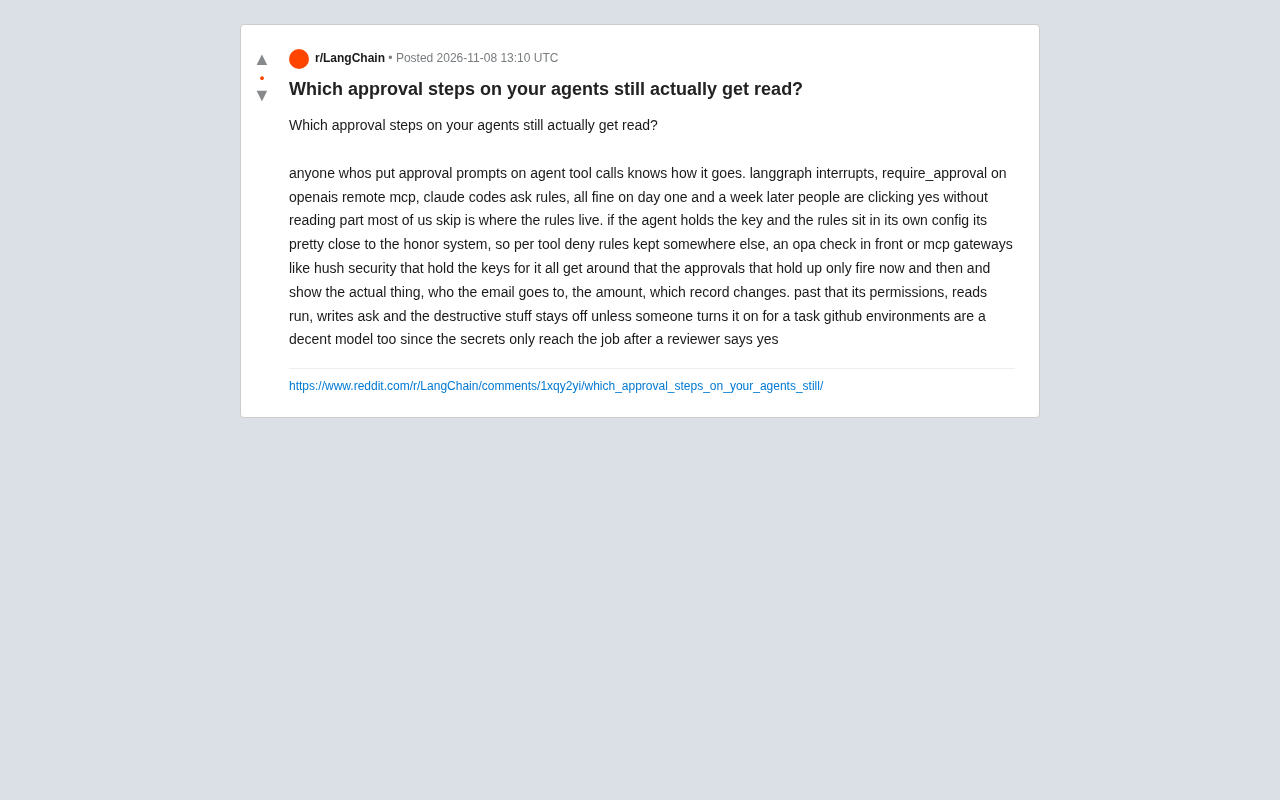
Why do AI agent approval workflows always get mindlessly clicked? A Reddit discussion shows that separating rules from keys, low-frequency high-risk approvals, and GitHub Environments-style gates are the keys to effective approvals.