LCOS 1.0.1 Update: Kernel Upgrade and Expanded Hardware Support
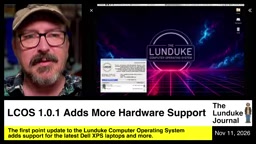
LCOS 1.0.1 updates the kernel and expands hardware support while sticking to rigorous testing and minimalism.
LCOS 1.0.1 is the first point update of the Lunduke Computer Operating System, syncing to the Linux 7.2.15 kernel (removing Rust components) and adding support for the 2026 Dell XPS 13, Intel touchscreens, and WireGuard improvements. With over 7,000 test cases required to pass 100%, kernel and Xlibre updates were delayed. Future plans include the Elkaz Command Center, a new terminal to replace the high-memory CoolRetroTerm, and migration from Devuan to a self-hosted repository with AI-assisted compatibility testing.
LCOS 1.0.1 Update: Kernel Upgrade and Expanded Hardware Support
Lunduke Computer Operating System (LCOS) has released version 1.0.1, its first point update since the 1.0 release. According to the author of the YouTube channel Lunduke Journal, this update brings no major feature changes but makes solid improvements in kernel synchronization, hardware compatibility, and system stability, continuing the project's philosophy of "over-testing."
Kernel Upgrade and Hardware Support
The core change in LCOS 1.0.1 is the Linux kernel update. LCOS maintains its own kernel branch, and this release syncs to the changes from Linux 7.2.15 but removes all Rust components. The author explains that these Rust components currently offer no real value to LCOS, so they were removed entirely. This adjustment brings broader support for new hardware.
New support includes the latest 2026 Dell XPS 13 laptop, whose suspend/resume and lid-close sleep features work out of the box on LCOS—something most mainstream Linux distributions cannot yet achieve. In addition, WireGuard support has been improved, and compatibility with Intel touchscreens, MSI laptops, and Galaxy Book laptops has been enhanced. The sound card emulated in VMware is now correctly recognized, allowing VMware Workstation users to use the default sound card directly. The installer's handling of encrypted partitions has also been fixed.
Xlibre is a fork of the X11 display server that originated from dissatisfaction with the stalled maintenance of the X.Org server, aiming to more actively fix bugs, merge patches, and keep the code clean. It remains the traditional X11 architecture (unlike Wayland), so it offers better compatibility with older hardware and specific workflows. LCOS chose to customize Xlibre rather than use the upstream version directly in order to control the update cadence and ensure integration with its own testing process; the "several build versions" mentioned in the article refer to recompiling Xlibre multiple times during the 1.0.1 cycle to incorporate security fixes.
Customized Xlibre and a Rigorous Testing Process
LCOS uses its own customized Xlibre (X11 server), with several build versions updated in 1.0.1 to incorporate bug fixes and security enhancements. The author emphasizes that these updates are not aggressive but have been thoroughly tested.
Testing is a core principle of the LCOS project. The test suite currently contains more than 7,000 individual test cases, and these are not simple startup checks but complex multi-step tests involving software installation and memory checks. The author has a hard rule: any LCOS release must pass 100% of all tests before it can ship. Because of this process, although the kernel and Xlibre for 1.0.1 were built before the 1.0 release, they were not pushed with this update until all tests passed.
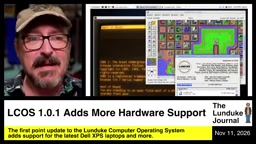
Devuan is a fork of Debian whose core feature is the removal of the systemd init system in favor of traditional init schemes such as sysvinit, which aligns closely with LCOS's "no systemd" principle. LCOS previously used Devuan's software repositories directly, meaning it could reuse a large number of packages from the Debian ecosystem, but at the cost of software compatibility being constrained by Devuan's packaging policies and server performance. After migrating to a self-hosted repository, LCOS can independently control package building, testing, and distribution, but it must maintain mirrors, signatures, and dependencies itself—which is why the project needs AI bots for large-scale compatibility checks.
Future Plans: Elkaz Command Center and Terminal Replacement
The author revealed plans for upcoming versions. LCOS currently uses the XFCE desktop environment, whose settings management is rather scattered. In the future, a from-scratch "Elkaz Command Center" will be introduced to unify all system settings applications and provide a more unified, polished settings experience.
Another plan is to replace the default terminal CoolRetroTerm. CoolRetroTerm is based on the Qt framework and is feature-rich and highly customizable, but since there are very few Qt applications in LCOS, it alone loads a large number of libraries, resulting in high memory usage. The team is writing a new terminal from scratch (tentatively called Lunduk Terminal), aiming to significantly reduce memory and disk usage while improving performance and preserving the default amber CRT look. The new terminal will be available in the repository within the coming days or weeks for users to test alongside CoolRetroTerm. The author emphasizes that replacement requires the new solution to be clearly superior to the old one and thoroughly tested, to avoid repeating the hasty replacements of other distributions.
Repository Migration and AI-Assisted Testing
LCOS currently uses the Devuan repositories (with permission from the Devuan project), but to more strictly control software compatibility and server performance, the project will migrate to a self-hosted repository. This is a massive undertaking, and the author is using a series of AI bots to perform compatibility checks and testing on every package in the Devuan repositories, and to build rules, test suites, and hosting servers. The goal is to ensure that all packages work well with LCOS-specific versions and libraries while gaining autonomous control over server performance.
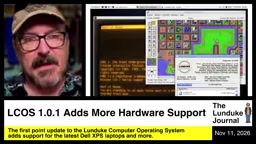
CoolRetroTerm is a Qt-based terminal emulator featuring a retro CRT visual style (such as amber phosphor screens and scanlines). Qt is a cross-platform C++ application framework that is powerful but has many dependencies, loading a large number of shared libraries at startup and resulting in high memory usage. For a lean system like LCOS, if there are few Qt applications in the system, loading the entire Qt runtime just for the terminal is not worthwhile. The team therefore plans to replace it with a lightweight terminal written from scratch while preserving the CRT look that users like—reflecting the principle that "a replacement must be clearly superior to the old solution."
Project Philosophy and Community Involvement
The author reiterated several principles of LCOS: no age verification, no identity verification, no online accounts, no built-in AI features, no systemd, no forced software cloning, and no rewrite in Rust. Hardware support remains a long-term challenge; the project relies on community financial contributions to purchase test hardware and encourages users to write reviews on platforms such as DistroWatch to expand its reach.
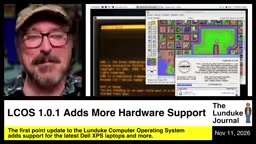
Overall, LCOS 1.0.1 is a stability- and hardware-compatibility-oriented update that reflects the project's extreme commitment to testing. For existing 1.0 users, the upgrade process is smooth and painless; for potential users, it demonstrates this niche distribution's unique dedication to quality control.
One-line Summary
LCOS 1.0.1 updates the kernel and expands hardware support while adhering to rigorous testing and minimalism.
Paragraph Summary
LCOS 1.0.1 is the first point update of the Lunduke Computer Operating System. Its core changes are syncing to the Linux 7.2.15 kernel (with Rust components removed) and adding hardware support for the 2026 Dell XPS 13, Intel touchscreens, WireGuard improvements, and more. The project insists on 100% of over 7,000 test cases passing before release, which is why the kernel and Xlibre updates were delayed. Future plans include launching the Elkaz Command Center to unify settings, replacing the high-memory CoolRetroTerm with a new terminal, and migrating the repository from Devuan to self-hosted infrastructure, using AI bots for compatibility testing. The project reiterates principles such as no systemd and no built-in AI, and relies on community contributions to expand hardware testing.
Related articles
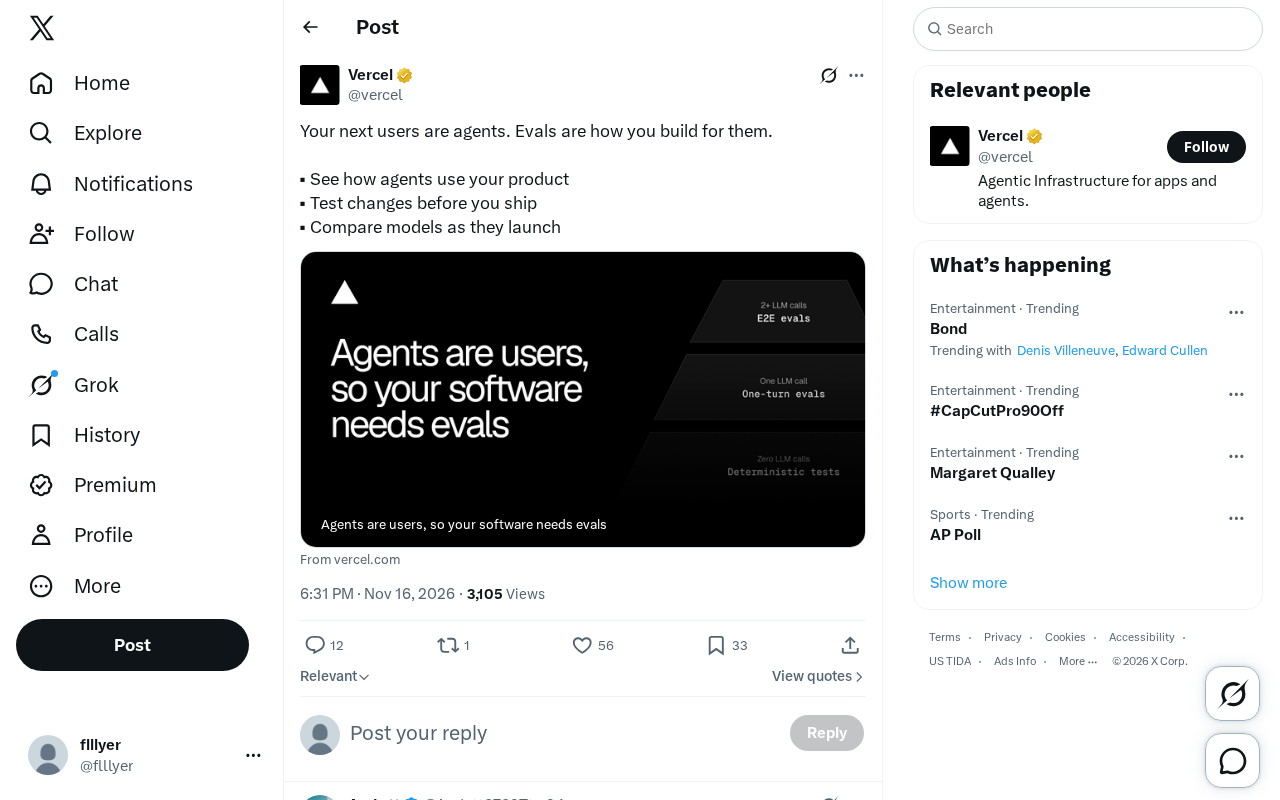
The AI Agent Era: Building a New Product Paradigm with Evals
AI Agents are becoming the next users of products. This article explains how to use Evals to observe Agent usage behavior, test changes before launch, and compare new model performance, helping product teams establish a development methodology for the Agent era.
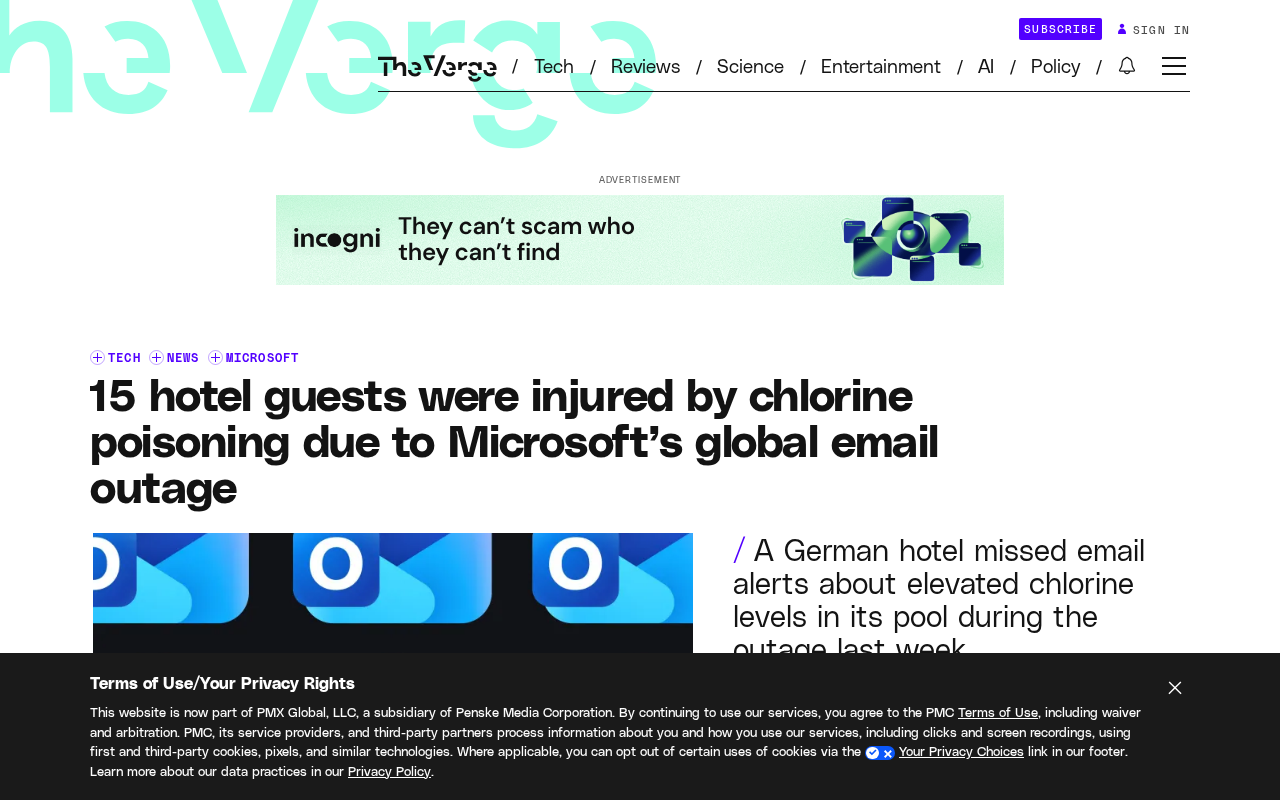
Microsoft Global Email Outage Leads to Chlorine Leak at German Hotel, Injuring 15
A Microsoft 365 and Outlook global outage prevented a chlorine safety alert from reaching a German Phantasialand hotel, injuring 15 guests and exposing the fragility of cloud-dependent safety systems.
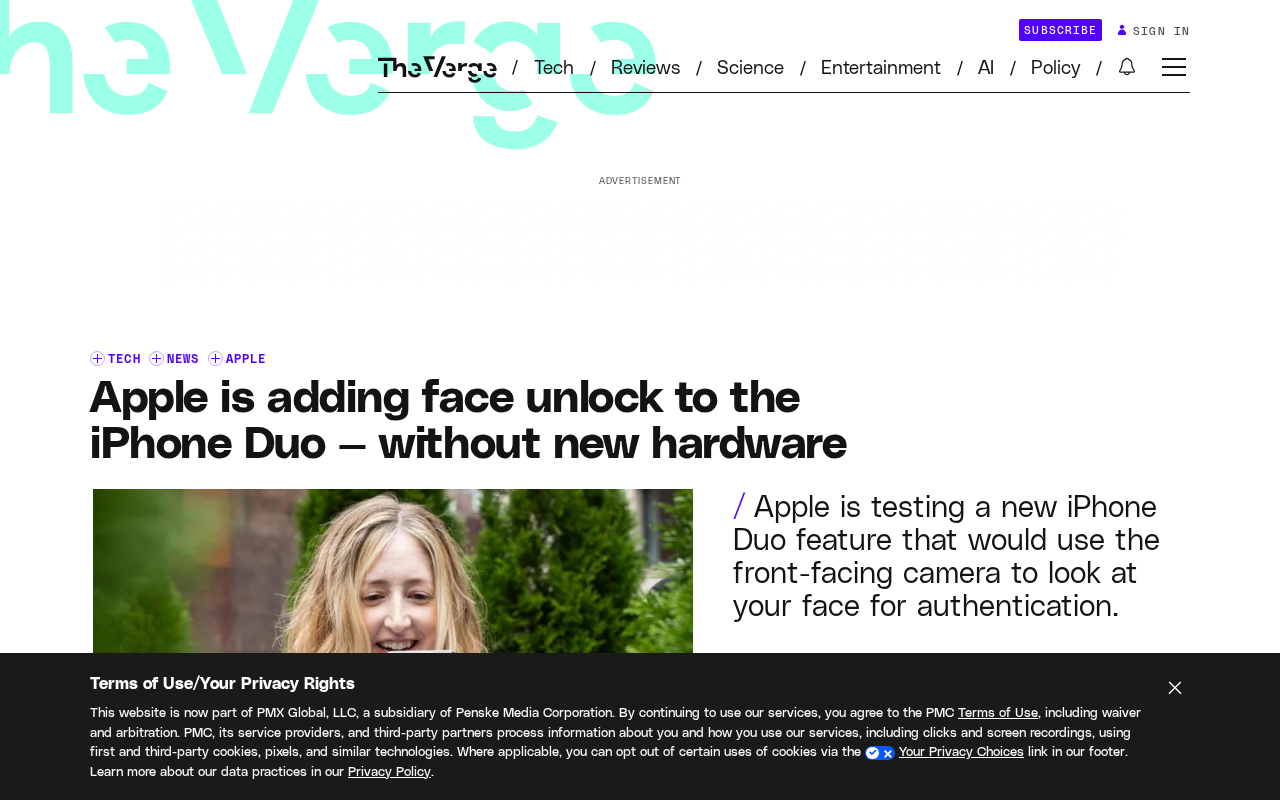
iPhone Duo to Support Face Unlock Using Only the Front Camera
Apple is developing front-camera-only face unlock for the iPhone Duo, now testing in the iOS 27.3 beta. We analyze the technical approach, user experience, and security trade-offs.