Li Xiaolai's "The Craft of Self-Teaching" Hits 18K Stars on GitHub

Li Xiaolai's open-source tutorial "The Craft of Self-Teaching" hits 18K GitHub stars, arguing self-teaching is the foundational competitiveness of the AI era.
Li Xiaolai's "The Craft of Self-Teaching" has surpassed 18,000 Stars on GitHub. Using Jupyter Notebook as its medium, it combines learning methodology with hands-on Python programming, emphasizing that self-teaching is a craft that can be broken down and trained. The article notes that amid rapid AI iteration, self-teaching ability becomes foundational competitiveness, while Notebook's interactivity reduces friction from reading to practice, and the Fork count being close to the Star count reflects its strong tool-like utility. It also reminds readers that methodology effectiveness depends on execution—avoid the illusion that "bookmarking equals learning"—and that exercises can be adapted to other fields to form a loop of "encounter the unknown—break it down—practice—output."

At a time when AI tools are proliferating, an open-source tutorial about "how to teach yourself" has unexpectedly gone viral. Li Xiaolai's "The Craft of Self-Teaching" (the-craft-of-selfteaching) has surpassed 18,000 Stars on GitHub, gaining 143 stars today, with a project tagline that states bluntly: "One has no future if one couldn't teach themself."
Project Overview: A Self-Teaching Guide Written in Jupyter Notebook
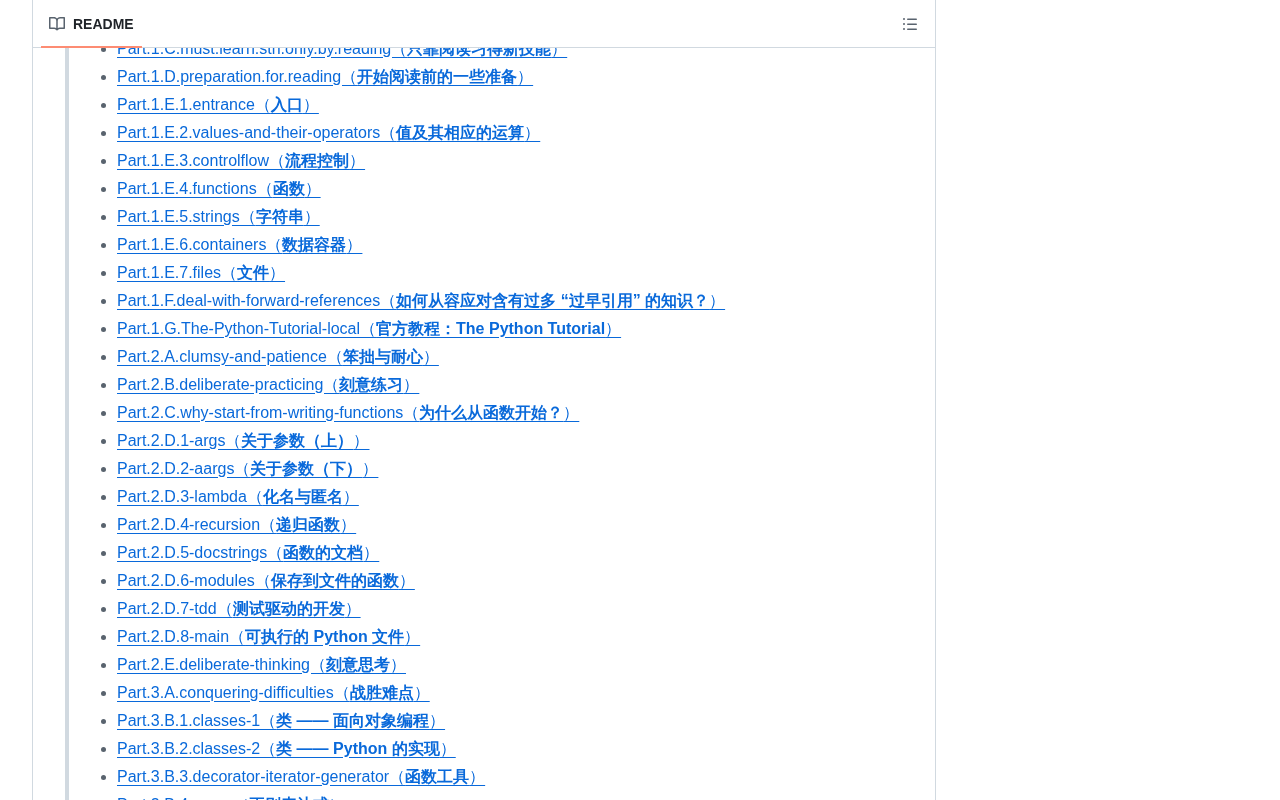
The project uses Jupyter Notebook as its primary medium, integrating learning methodology, introductory programming, and deliberate practice into one package. The repository is clearly structured, covering a complete path from "why you must learn on your own" to "how to get hands-on with Python." One detail worth noting: the project is not merely a technical tutorial—it treats "learning how to learn" as its core proposition, with programming serving only as a vehicle for validating self-teaching ability.
Both the Star count and Fork count are high, indicating that many users not only bookmark it but also use it as a modifiable, reusable learning template. In technical repositories, a Fork count close to the Star count usually means the content has strong tool-like utility and value for derivative works.
Jupyter Notebook is a web-based interactive computing environment originally designed for scientific computing and now widely used in data analysis, machine learning, and education. It integrates code, rich text (Markdown), mathematical formulas, and visual outputs into a single document, allowing readers to run code cell by cell and view results instantly. This "literate programming" characteristic makes it not only a programming tool but also a vehicle for knowledge dissemination. On GitHub, Notebook files (.ipynb) can be rendered directly as static pages containing code and outputs, lowering the barrier to reading. For a self-teaching tutorial, the interactivity of Notebooks allows learners to modify examples and observe changes, forming a "read—experiment—understand" loop—precisely the key reason this project chose it as its medium.
Core Viewpoint: Self-Teaching Ability Is the Foundational Competitiveness of the AI Era
"One Has No Future If One Couldn't Teach Themself"
The author defines self-teaching as a "craft" that can be broken down and trained, rather than a talent. This view is even more relevant against the backdrop of rapid AI iteration: tools, frameworks, and languages are all becoming obsolete faster, and the only stable ability is the method for quickly mastering new things. The project title directly throws out this judgment, carrying a strong call to action.
Shifting from "What to Learn" to "How to Learn"
Traditional tutorials often focus on knowledge itself, whereas this project places its emphasis on the learning process: how to break down goals, how to find materials, how to use output to force input, and how to design practice feedback. These methodologies are especially friendly to programming beginners, because code's instant feedback is naturally suited to validating self-teaching effectiveness.
Why It's Worth Attention: A Paradigm Shift in Open-Source Learning Resources
Executable Learning Materials
Unlike ordinary e-books or video courses, the Jupyter Notebook format lets "reading" and "hands-on work" happen in the same interface. Readers can directly run code, modify examples, and observe results—this interactivity greatly reduces friction from understanding to practice. The open-source license allows anyone to fork, supplement, and localize the content, forming a continuously iterating learning community.
An open-source license is the legal foundation that ensures a project can be freely used, modified, and distributed. Common permissive licenses such as MIT and Apache 2.0 allow users to use the code with almost no restrictions, including for commercial purposes, as long as copyright notices are retained; while copyleft licenses such as GPL require derivative works to also be open source. For learning repositories, the choice of license directly affects whether they can be widely forked and built upon. If this project uses a permissive license, readers can freely copy the Notebooks locally, add or remove content, adapt them to their own learning paths, and even translate them into other languages. This legal openness, combined with GitHub's Fork mechanism, enables high-quality learning resources to iterate continuously like software, forming a community-driven model of knowledge evolution.
Implications for AI-Assisted Programming Learners
Currently, many developers use AI-assisted programming, but tools cannot replace an understanding of problem structure. The self-teaching framework emphasized in this project—defining problems, breaking down steps, validating assumptions—is exactly the prerequisite for efficiently using AI programming assistants. Treating AI as a "sparring partner" in the learning process rather than as "the answer" aligns closely with the project's advocacy of active learning.
An Objective Perspective: Beyond the Hype, Rationality Is Needed
The project's high Star count reflects the real demand among self-learners, but the effectiveness of methodology content depends heavily on execution. Readers need to select chapters based on their own foundation and avoid the illusion that "bookmarking equals learning." At the same time, programming is only one application scenario for self-teaching ability; the exercises in the project lean toward Python basics, and learners in other fields need to adapt them accordingly.
For developers hoping to build systematic learning habits, this repository provides an actionable starting point: first get a minimal example running, then expand at your own pace. The core of self-teaching is not how much content you finish, but whether you have formed a loop of "encounter the unknown—break it down—practice—output."
One-line Summary
Li Xiaolai's open-source tutorial "The Craft of Self-Teaching" has gained 18,000 stars on GitHub, arguing that self-teaching ability is the foundational competitiveness of the AI era.
Paragraph Summary
Li Xiaolai's "The Craft of Self-Teaching" has surpassed 18,000 Stars on GitHub. Using Jupyter Notebook as its medium, the project combines learning methodology with hands-on Python programming, emphasizing that self-teaching is a craft that can be broken down and trained. The article notes that amid rapid AI tool iteration, self-teaching ability becomes foundational competitiveness, while Notebook's interactivity reduces friction from reading to practice, and the Fork count being close to the Star count reflects its strong tool-like utility. At the same time, the article reminds readers that methodology effectiveness depends on execution, that they should avoid the illusion that "bookmarking equals learning," and that the exercise design can be adapted to other fields to form a loop of "encounter the unknown—break it down—practice—output."
Related articles

LangChain Retry Middleware Configuration: Practices and Selection Guide
Based on Reddit community discussion, this article analyzes LangChain ModelRetryMiddleware retry parameter configuration practices, covering the selection logic and alternatives for key options like max_retries, backoff_factor, and jitter.

Texas Senate Race in Trouble: Why Are Republicans Nervous?
Texas Senate race stirs Republican anxiety. Based on street interviews, this article analyzes the Democratic offensive in funding, organization, and running everywhere, and how Republicans are defending "Texas, Texas" amid the political pendulum effect.

Gemini Chat Now Generates and Edits Google Docs Directly, a New Breakthrough in Office Productivity
Google Gemini's chat interface now generates and edits PDF, Google Docs, Sheets, Slides, Markdown, TXT, and code files. Available to all users; web supports all formats, mobile only PDF for now.