LLM Prices Plunge 80%: Open-Source Local AI Is Rewriting the Industry Rules

AI price plunges and the rise of open weights are redefining the frontier threshold, while engineering judgment still determines success.
Starting from the sharp price cuts by OpenAI and Anthropic, the article notes that low prices may stem from vendor subsidies and compares local open-weight models with proprietary cloud services, concluding that the choice depends on privacy, engineering capability, and scale rather than price alone. IBM's CEO says open-weight models have reached 90% of frontier performance at 10% of the cost, though enterprises are constrained by operational complexity. The context engineering section argues that larger windows cannot solve poisoning, distraction, confusion, and conflict—quality and organization matter more than length. It also covers a reasoning model course, a tab-neglect extension, a modular keyboard, Faro 14, and the F-Zero X port, concluding that AI is simultaneously lowering costs and raising expectations.
OpenAI and Anthropic have cut large language model prices by as much as 80% in just a few months. This is not an ordinary promotion—it is a signal that the economic structure of the entire AI industry is changing. At the same time, IBM CEO Arvind Krishna publicly stated that open-weight models are already good enough—reaching 90% of frontier model performance at only 10% of the token price. Taken together, the two pieces of news suggest that the barrier to frontier AI is being redefined.
Behind the Price War: Cloud Vendors' Subsidies and the Rise of Local Deployment
According to the tech podcast Daily Tech Digest, this round of price cuts is directly changing how enterprises and developers use frontier models. The most informative part of the discussion comes from the community's breakdown of "cheap": one commenter, from a macroeconomic perspective, pointed out that the low prices of current mainstream AI subscriptions are likely being subsidized by the companies, and that prices may not reflect true costs.
This leads to another frequently discussed comparison—the trade-off between local open-weight models and proprietary cloud services. Supporters of local deployment emphasize that self-hosted models mean completely escaping cloud vendors' content filtering and arbitrary bans; opponents, drawing on real operational experience, warn that complex local environments are not always cheaper than cloud services. Based on cross-discussions among multiple tech bloggers on Bilibili and YouTube, the consensus is that the choice between local and cloud depends on privacy needs, team engineering capability, and scale of use—not simply on the price tag.
"Open-weight models" refer to models whose parameters (weights) are publicly downloadable, can be self-deployed and fine-tuned—such as the Llama, Mistral, and Qwen series. This is not entirely equivalent to "open source" in the strict software sense: public weights do not mean the training data, training code, or the complete training pipeline are public, so licenses often come with usage restrictions. The core value of open-weight models lies in deployment autonomy—enterprises can run inference on their own infrastructure, keeping data within the internal network and free from the content moderation policies in cloud service terms. IBM's Granite series falls into this category. Precisely because the weights are obtainable, third parties can provide inference services at near-cost prices, which is the structural reason their token prices can be significantly lower than those of proprietary frontier models.
IBM's Calculus: A 90% Performance, 10% Price Enterprise Narrative
Krishna's statement deserves a close reading. The numbers he gave are: open-weight models reach 90% of frontier model performance at only 10% of the token price. But he also acknowledged that the real obstacle for enterprises is not hardware but operational complexity—network proximity management and a shortage of specialized engineering talent. IBM's response is to launch new deployment software and expect rising demand for its mainframe accelerator cards.
The community reaction splits into two camps. One camp uses firsthand experience to confirm that local deployment is indeed feasible, but provides specific metrics that challenge the idea that "local is always cheaper"; the other emphasizes the freedom that local models bring—no content filtering, no arbitrary bans by platform operators. Another commenter further lowers the perceived barrier, pointing out that high-quality inference does not require the multi-rack high-end hardware described in the article.
Context Engineering: No Matter How Big the Window, It Can't Cure "The Model Isn't Smart"
An article titled The State of Context Engineering puts forward a counterintuitive view: even as context windows expand dramatically, challenges remain because models have no consciousness. The author identifies four failure modes—context poisoning, distraction, confusion, and conflict—and uses a case to illustrate: the model can erroneously "poison" the context with irrelevant details from its training weights.

The additions in the discussion section are valuable. One commenter introduces the concept of "dependency length minimization," arguing for grouping related content together to shorten dependency distance; another proposes an architectural approach that compresses each message into a single line and then organizes summaries using a binary tree; and a forward-looking view holds that the next big problem is "strategic forgetting"—perfect memory is itself a flaw. Most of these views come from single sources, but the direction is consistent: the quality and organization of context matter more than length.
A context window refers to the total number of tokens a model can read in a single inference, including system prompts, conversation history, retrieved documents, and tool return results. Early model windows were typically only 4K to 8K tokens; today mainstream models have expanded to 128K or even millions. However, a larger window does not equal effective utilization: attention mechanisms exhibit the "lost in the middle" phenomenon on long sequences, meaning information located in the middle of the context is more easily ignored; at the same time, long contexts significantly increase inference latency and cost. Therefore, context engineering focuses not on "how much can be stuffed in" but on "what to put in, in what order, and how to compress and organize it"—directly related to the ideas mentioned in the article, such as dependency length minimization and line-by-line compressed summaries.
From an 11-Hour Course to Creative Extensions: Both Ends of the AI Toolchain
Sebastian Roschka released an 11-hour video course on how to build a reasoning model from scratch with Python and PyTorch, covering evaluation, reinforcement learning, inference-time scaling, and distillation, accompanied by a book of the same name. He clearly distinguishes the concept: a reasoning model is the core engine within a larger AI agent harness. Commenters rated the teaching highly, but some questioned whether a video course is sufficient to support serious model development, and whether it is merely a monetization vehicle. One commenter pinpointed the most real dilemma for self-learners: outside academia and enterprise, it is hard to find a practical path that does not rely on massive compute and is not overly theoretical.
At the other end is the creative project Overgrown—a Chrome extension that brings "digital neglect" to your tabs. Tabs you haven't looked at for a long time grow plants; once overgrown, they are sealed off by vines and must be cut open with a chosen weapon to be visited again. After a knowing laugh, the community quickly turned to serious discussion: tab hoarding is essentially temporary bookmarks and visual reminders; the extension is fun but does not solve the cognitive load problem. One commenter shared an experience of accumulating 12,000 tabs across multiple machines, pointing out directly that browsers were not designed for this scale.

A reasoning model refers to a model that, before generating a final answer, first produces a longer internal chain of thought and improves performance on complex tasks through reinforcement learning or inference-time scaling (test-time scaling), such as OpenAI's o series and DeepSeekAd-R1. Its key difference from traditional "direct continuation" models is that the reasoning process itself consumes additional tokens and compute in exchange for improved accuracy in math, code, and multi-step planning. An "agent harness" refers to the outer system built around the model, responsible for tool calling, loop control, memory management, and error retry; the model is merely the decision engine within it. What Roschka's course teaches—building from scratch—is precisely intended to help learners understand this entire reasoning and orchestration mechanism, not just call an API.
Hardware and Languages: A Reality Check for Niche Projects
A modular keyboard project turns each key into a 1U PCB, equipped with a CH32V003 RISC-V microcontroller, with the main board using an STM32WB55RGV6 for Bluetooth and USB; keys are powered through pogo pins and communicate via I2C. The cost per key is about $8 to $10, and the firmware is still under development. Discussion focused on scalability: the limitations of the I2C bus, the lack of direction-agnostic connectors, and how to support split and staggered ergonomic layouts.
The release of Faro 14 sparked a different discussion. This purely object-oriented dynamic language's latest update focuses on modernizing development tools, rebuilding refactoring and command infrastructure, and upgrading the virtual machine, adding RISC-V JIT support. One commenter suggested that in the age of AI programming, language choice matters less for "getting the job done"; others argued that Faro's dynamic features happen to suit agent-assisted development, allowing agents to directly manipulate running programs.
Echoes of the Past and New Divergences
The program also looked back at early tech startup culture. Discussants compared the collaborative atmosphere of the past with today's layers of stakeholders and top-down management, while others offered a calmer judgment: the shift from doing cool technology to pursuing financial success is an inevitable stage of technological maturity.
One detail: a retrospective on porting the F-Zero X decompilation project to the 3DS. The project had two phases: first, achieving a native 60fps stereoscopic racer on the New 3DS in 24 days; then, supporting the old 3DS and the 64DD expansion pack in 43 days, ultimately producing three console versions from a single source tree. The median frame rate on the New 3DS was 59.6fps. The controversy centers on the use of AI: one side emphasizes the huge productivity gains from AI tools, with API token costs slightly under $5,000, estimated to be equivalent to hundreds of thousands of dollars in human labor; the other side points out that the limitations claimed by the project do not hold, as debugging tools were already available in earlier versions.
Together, these stories point to the same thing: AI is simultaneously lowering costs and raising expectations, and what truly determines success or failure is still engineering judgment and an understanding of the essence of the problem.
One-line Summary
AI price plunges and the rise of open weights are redefining the frontier threshold, while engineering judgment still determines success.
Paragraph Summary
Starting from the sharp price cuts by OpenAI and Anthropic, the article notes that low prices may stem from vendor subsidies, and compares the trade-offs between local open-weight models and proprietary cloud services; the consensus is that the choice depends on privacy, engineering capability, and scale rather than price alone. IBM's CEO says open-weight models have reached 90% of frontier performance at only 10% of the cost, but enterprises are constrained by operational complexity. The context engineering section argues that larger windows cannot solve the four failure modes—poisoning, distraction, confusion, and conflict—and that quality and organization matter more than length. It also covers a reasoning model course, a tab-neglect extension, a modular keyboard, the Faro 14 language, and the F-Zero X port, ultimately concluding that AI is simultaneously lowering costs and raising expectations.
Related articles
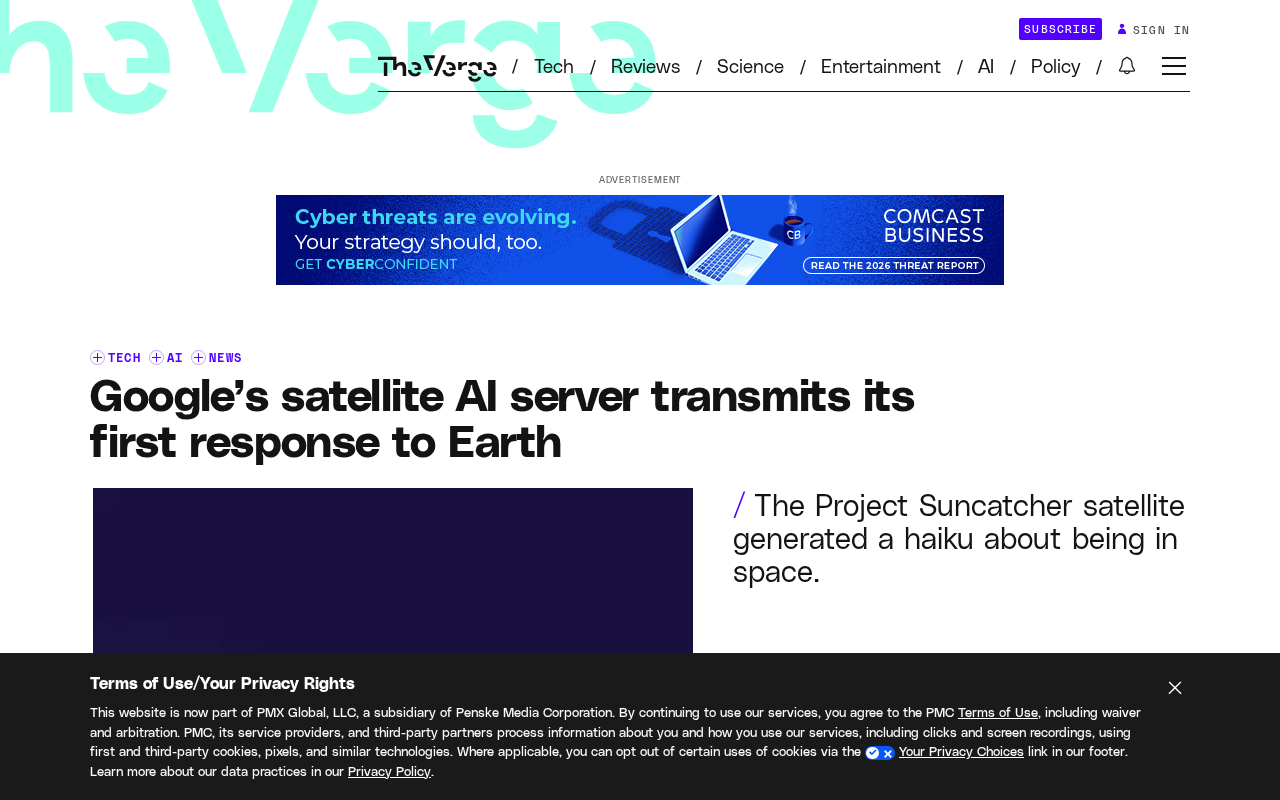
Google's Satellite AI Server Reaches Orbit: Gemma Model Generates First Reply in Space
Google's TPU-equipped satellite powers up in orbit, with the onboard Gemma 4 model generating the first reply from space. This article analyzes the technical path, real-world constraints, and implications for edge computing and satellite remote sensing.
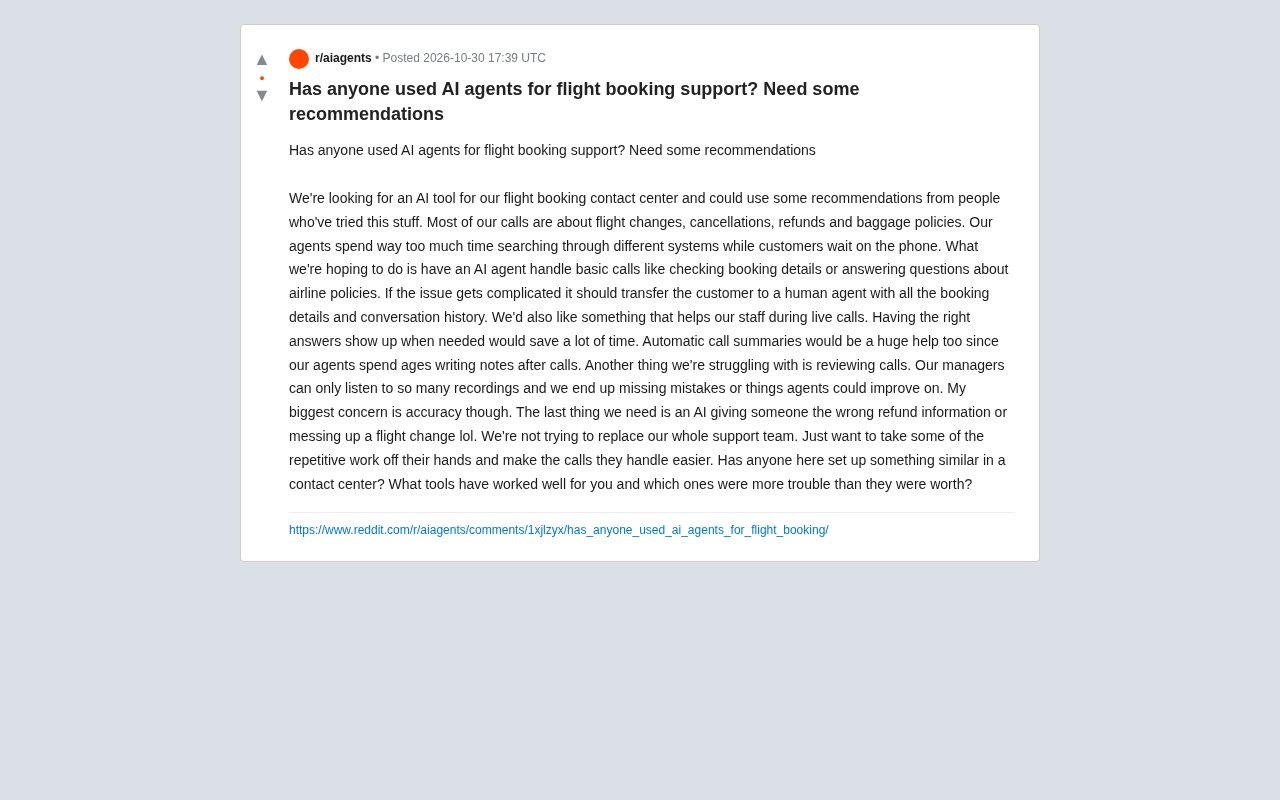
AI Agents for Flight Booking Customer Support: Real Needs and Implementation Challenges
Starting from a real Reddit question, this article breaks down four needs for introducing AI Agents into flight booking call centers: basic Q&A, agent assist, call summarization, and quality inspection, and analyzes accuracy concerns and handoff boundary design.
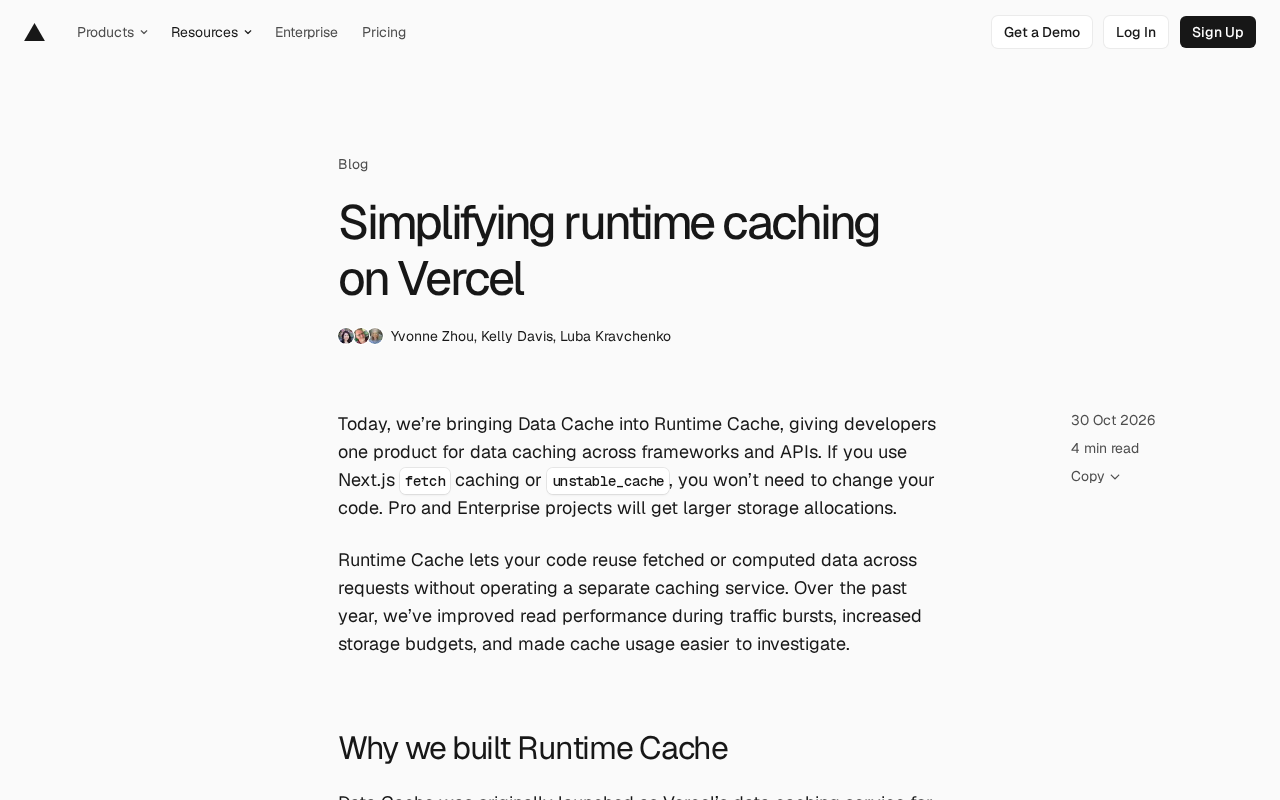
Vercel Unifies Runtime Cache: Data Cache Merges into Runtime Cache
Vercel merges Data Cache into Runtime Cache, unifying storage quotas and billing for Next.js fetch cache, unstable_cache, getCache, and use cache: remote. Pro and Enterprise projects get more storage, and cache reads/writes are now billed at Runtime Cache pricing.