Lovable App Leaks Passports and 200,000 Private Messages: A Wake-Up Call for Low-Code Security
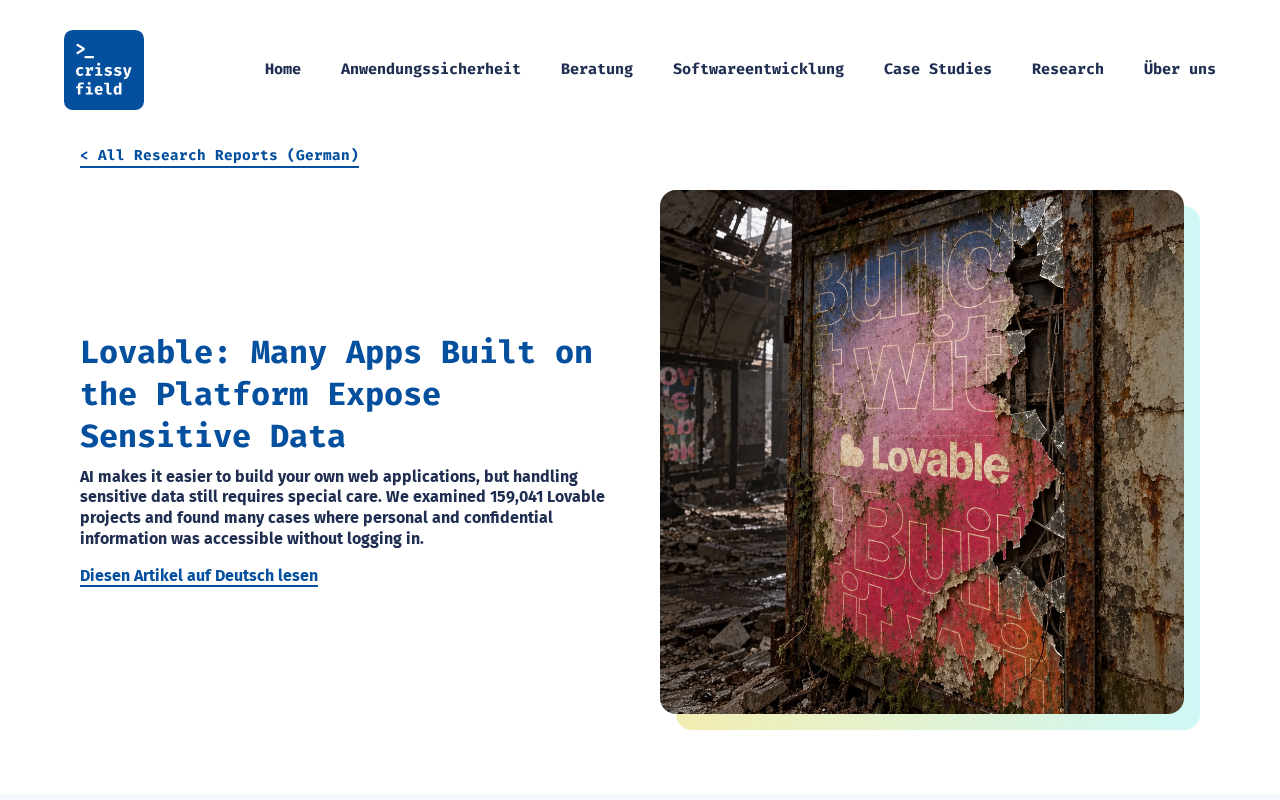
AI low-code platform Lovable app exposed a serious vulnerability, leaking passports and 200,000 private messages, revealing security blind spots.
An app built with the AI low-code platform Lovable was found to have a serious security vulnerability, exposing passport details and over 200,000 private messages. The incident, discussed on Hacker News, points to systemic access control flaws caused by permissive defaults and users' lack of security awareness even as low-code lowers the development barrier. The article analyzes low-code security blind spots and the trust dilemma of AI-generated apps, noting this may be an industry-wide problem and calling for enforced least privilege, built-in security checks, and industry standards.
Incident Overview
According to a discussion on Hacker News, an app built with the AI low-code platform Lovable was found to have a serious security vulnerability, exposing passport details and more than 200,000 private messages. The news drew attention in the tech community—though discussion volume was modest, the incident itself points to a critical question: when AI-assisted development makes building apps easier than ever, is security being systematically overlooked?
The Security Blind Spots of Low-Code Platforms
Lovable is one of the AI app-building platforms that have emerged in recent years, where users can generate a working application simply by describing it in natural language. The selling point of such platforms is speed and a lowered barrier to entry—you can launch a fully functional product without deeply understanding backend architecture, database permissions, or access control. The problem is hidden precisely in that "without needing to understand."
When developers are unfamiliar with the underlying mechanisms, default configurations become the security line of defense. And to lower the barrier to use, low-code platforms often lean toward permissive permission settings. Passport information is highly sensitive personal data, and private messages involve users' private communications; the simultaneous exposure of both types of data suggests the problem is not a single-point mistake but likely a systemic flaw at the access control layer. According to information on Hacker News, the affected data includes more than 200,000 private messages—a scale that implies the vulnerability may have persisted for some time without being discovered.
Access control is a core mechanism of application security, referring to the system's ability to determine which resources a user can access based on their identity and permissions. In low-code platforms, access control is typically configured through a graphical interface, such as setting read/write permissions on data tables and authentication requirements for API endpoints. Improper configuration—for example, setting a database table to be publicly readable, or failing to authenticate API requests—can lead to data exposure. The principle of least privilege requires that each user and component have only the minimum permissions necessary to accomplish its task, and this is a fundamental rule for preventing data leaks. In low-code scenarios, platforms should enable strict access control by default rather than relying on users to configure it manually.
The Trust Dilemma of AI-Generated Apps
This incident reflects a deep contradiction in AI-generated code: the imbalance between generation speed and auditability. In traditional development workflows, code review, security testing, and penetration testing are routine steps before launch. In AI-assisted or even AI-driven build processes, users tend to trust the platform's output and skip or streamline these verification steps.
What's notable is that the target users of such platforms are precisely non-technical people lacking security engineering experience. They may not know they need to check whether a database is publicly accessible, nor understand the consequences of an unauthenticated API endpoint. Whether the platform builds in reasonable security defaults when generating apps, and whether it clearly warns users of data exposure risks—the answers to these questions directly determine the probability of similar incidents.
Auditability refers to the ability to trace and verify system behavior, code changes, and security configurations. In traditional development, code review, version control, and logging ensure auditability; AI-generated apps often lack a transparent build process, making it difficult for users to understand the generated code logic and security settings. Penetration testing is a security assessment method that discovers system vulnerabilities by simulating attacks, typically including checks for unauthorized access and injection attacks. For AI-generated apps, automated security scanning and penetration testing tools can help identify risks in default configurations, but non-technical users may not know how to perform these tests. Platforms should provide built-in security audit features and generate easy-to-understand security reports.
Implications for the Low-Code Ecosystem
The impact of this leak extends beyond Lovable itself. The entire low-code and AI building tools sector is expanding rapidly, with a large number of apps being produced by non-professional developers and put into actual use. If security defaults are unsound, similar data exposures could become an industry-wide problem.
From the platform perspective, the principle of least privilege must be enforced at the generation stage, access control prompts should be added for sensitive data fields, and one-click security check features should be provided. From the user perspective, before any app involving personal data goes live, at minimum one should verify whether the data interfaces require authentication. From the industry perspective, security standards for low-code platforms still lack unified specifications, which may be a direction that regulators and the community need to push forward together.
Conclusion
The details disclosed so far about the Lovable app leak are limited, and the Hacker News discussion has only a handful of comments, but the two keywords "passport details" and "200,000 private messages" are enough to show the severity of the problem. AI has lowered the barrier to building apps, but it should not simultaneously lower the floor for security. For teams currently using or planning to use low-code platforms to build apps, this news is a timely reminder: convenience and risk often go hand in hand.
One-line Summary
An app on the AI low-code platform Lovable exposed a serious vulnerability, leaking passports and 200,000 private messages, revealing security blind spots.
Paragraph Summary
An app built with the AI low-code platform Lovable was found to have a serious security vulnerability, exposing passport details and more than 200,000 private messages. The incident sparked discussion on Hacker News, pointing to systemic flaws at the access control layer caused by permissive default configurations and users' lack of security awareness, even as low-code platforms lower the development barrier. The article analyzes the security blind spots of low-code platforms and the trust dilemma of AI-generated apps, and notes that this may be an industry-wide problem, calling on platforms to enforce the principle of least privilege, add security check features, and push for the establishment of industry standards.
Related articles

Gemini 4 Neon Hands-On: Value King or Confident Catastrophe?
Gemini 4 Neon review: 1M-token context, four thinking levels, 201 files in one KingBench4 pass at one-tenth Fable 5.2's cost—but it hallucinates fake data, leaves 7 symlink escapes, and bricks keyboards.

Google Gemini 4 Neon Hands-On: 6 3D Works That Impress and Fail
Hands-on with Google Gemini 4 Neon on a 3060 laptop: 6 3D works tested. Sunshower Fishing Harbor and mechanical keyboard impress; soft-body physics and faces fall short.
Gemini 4 Neo Web Novel Writing Test: Faint AI Flavor, Textured Dialogue
Bilibili creator's first-look review of Gemini 4 Neo for Chinese web novel writing: testing a Three Kingdoms transmigration opening with faint AI flavor, emotionally textured dialogue, and strong crisis building, plus comparison of 4A/4H/4C models and full workflow demos.