MCP Protocol Explained: The N×M to N+M AI Integration Revolution
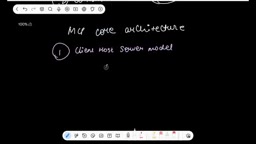
MCP is a standard protocol unifying AI model connections to external tools, reducing integration complexity from N×M to N+M.
MCP (Model Context Protocol) is an open standard protocol for AI models, analogous to USB-C unifying hardware interfaces, that standardizes how LLMs connect to external tools, databases, and APIs. Traditionally, N models and M tools require N×M sets of integration code; MCP reduces the number of connectors to N+M by having each tool implement one standard Server. The architecture consists of Host, Client, and Server, communicating via JSON-RPC 2.0 and supporting stdio and SSE transports. Servers expose three primitive types: Tools (model-controlled), Resources (application-controlled), and Prompts (user-controlled). Compared with Function Calling and LangChain Tool, MCP offers advantages in interoperability, separation of concerns, and permission isolation. Production environments should follow four principles: stateless design, narrow tool scope, optimized token usage, and readable error messages.
If you're using large language models to connect to external tools, you've almost certainly run into this headache: you want Claude to query PostgreSQL, so you write one set of code; you want ChatGPT to read GitHub files, so you write another; you switch models, and all your glue code has to be torn down and rebuilt. MCP (Model Context Protocol) was created to put an end to this chaos.
What Exactly Is MCP? A USB-C Analogy
MCP stands for Model Context Protocol, and it is essentially a standard open protocol for AI models. A YouTube tech creator offered a precise analogy in their explanation: MCP is to AI applications what USB-C is to hardware devices.
Before USB-C, every device had its own dedicated charging cable and adapter; after USB-C unified the interface, a single cable could power laptops, phones, and all kinds of peripherals. MCP does exactly the same thing—it unifies how LLMs connect to external tools, databases, and APIs.
Previously, developers had to write separate integration code for every combination of model and data source. MCP standardizes this process: tool providers only need to implement it once, and any MCP-compatible client can use it directly.
Why Do We Need MCP? The N×M Problem Hurts
To understand MCP's value, you first need to see clearly the pain point it solves. Suppose you have N models (Claude, ChatGPT, various open-source models) and M data sources or tools (PostgreSQL, local GitHub files, Slack, etc.). Under the traditional approach, you need to write independent wrappers and logic for every "model × tool" combination, and the number of connectors is N times M.
According to the YouTube channel's analysis, this architecture has two direct consequences: first, complexity expands multiplicatively; second, models cannot safely access local files, development environments, or internal tools directly without proprietary plugins.
MCP's solution turns multiplication into addition. Tools and data sources each only need to implement one MCP Server, and any MCP Client (Claude Desktop, Cursor, or a custom AI Agent) can use it plug-and-play. The number of connectors drops from N×M to N+M, and the engineering burden decreases by orders of magnitude.
Architecture Breakdown: Host, Client, and Server
MCP operates through the collaboration of three core components.
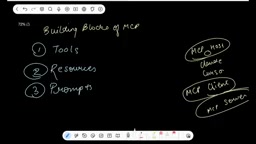
MCP Host is the application the user interacts with directly, such as Claude Desktop, Cursor, or a custom Agent built with Streamlit or FastAPI. The Host embeds an MCP Client, which is responsible for establishing connections and handshakes with Servers.
MCP Client is the protocol layer inside the Host, responsible for the actual connection and handshake.
MCP Server is a lightweight service that exposes data sources and tools according to the MCP specification, such as a GitHub Server or SQLite Server. Behind the Server are local or remote resources—files, databases, Web APIs.
The entire communication chain uniformly uses JSON-RPC 2.0.
JSON-RPC 2.0 is a lightweight remote procedure call protocol that uses JSON as its data format. It defines three message types: requests, responses, and notifications, with each message containing fields such as jsonrpc, method, params, and id. MCP chose JSON-RPC 2.0 as its communication foundation because it is simple, language-agnostic, and naturally supports bidirectional communication (the Server can also proactively send notifications to the Client, such as resource update alerts). Unlike REST, JSON-RPC does not rely on HTTP method semantics; a single endpoint can handle all operations, which allows non-HTTP transports like stdio to seamlessly reuse the same message specification.
Three Building Blocks: Tools, Resources, Prompts
A standard MCP Server exposes three types of primitives, each with different ownership of control.
Tools: Model-Controlled
Tools are controlled by the model and are used to execute functions with side effects, such as running SQL queries, sending Slack messages, or triggering model training. The model autonomously decides whether to call them based on user intent.
Resources: Application-Controlled
Resources are controlled by the application and provide read-only context, such as schema files in a project folder. The user or Host passes the data directly into the model's context window.
Prompts: User-Controlled
Prompts are controlled by the user and are reusable pre-written templates. The creator gave an example: give the model a template similar to a programming task, keep the main body of the prompt unchanged, and simply replace the variable tags within it, so it can be reused repeatedly.
Two Transport Methods: stdio and SSE
There are two main communication paths between the Server and Client, suited to very different scenarios.
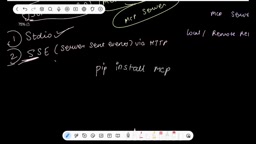
Standard Input/Output (stdio) is suitable when the MCP Server runs as a process on the same local machine. The Client directly spawns the service process and sends/receives messages via stdin and stdout. This method is fast and secure, making it the first choice for local file systems and development scenarios.
SSE (Server-Sent Events) is suitable when the Server is hosted in a remote container or cloud VM, such as GCP Cloud Run or a microservices architecture. The Client sends commands via HTTP POST and then receives updates from the SSE stream.
SSE (Server-Sent Events) is a server push technology defined in the HTML5 specification. After the client initiates a normal HTTP request, the server keeps the connection open and continuously pushes text messages to the client in text/event-stream format. It only supports a one-way stream from server to client, so MCP adopts a "dual-channel" design in SSE mode: the client sends requests to the Server via HTTP POST, and the Server's responses and notifications are returned through the SSE stream. Compared with WebSocket, SSE is lighter and easier to pass through proxies and firewalls, making it suitable for scenarios where the MCP Server is deployed in a cloud environment and needs to be accessed remotely by multiple clients. However, long connections also mean you need to handle reconnection and session recovery.
Hands-On Implementation: A Python MCP Server
The official Python MCP SDK is provided, and the barrier to entry is very low. Installation requires just one command:
pip install mcp
Next, create a server.py file on the server side. Suppose you want to build an analytics MCP Server for inspecting metrics of machine learning datasets and executing queries.
On the client side, taking Claude Desktop as an example, you need to register the Server's path in the configuration file. When Claude Desktop starts, it launches this server.py in the background, completes the initialization handshake via standard input/output, pulls the tool schemas, and injects them into the model context. When the user asks "What is the MAE between actual and predicted values?", the model automatically triggers the tool for computing metrics and executes it.
The initialization handshake when an MCP Server starts is a key step in the entire chain. After the Client and Server establish a connection, both parties first exchange protocol versions and their supported capabilities, after which the Client can request the list of tools exposed by the Server (tools/list), and the Server returns the name, description, and JSON Schema of input parameters for each tool. These schemas are injected into the model's context, and the model uses them to determine when to call which tool and how to construct parameters. When the model decides to call a tool, the Client sends a tools/call request, and the Server executes it and returns the result. Understanding this "discover first, call later" flow helps troubleshoot common issues such as tools not being triggered or parameter validation failures.
Differences Between MCP, Function Calling, and LangChain Tool
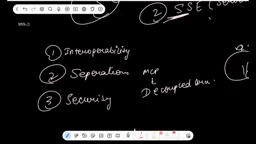
The three differ noticeably across three dimensions.
Interoperability: Function Calling is often tied to a specific vendor, with differing JSON schema formats; LangChain Tool is framework-bound; MCP is a universal standard that any Client or model can run.
Separation of concerns: With Function Calling via API, tool logic is written in the application code; LangChain tightly couples tool logic with Python code; MCP uses a decoupled architecture, with the Server running in a separate process or container.
Security and permissions: Function Calling requires developers to manage security manually; LangChain has no framework-level isolation; MCP supports client-level isolation, allowing users to inspect exactly what a tool accesses.
Function Calling is a capability provided by large model vendors: developers pass a set of function descriptions (usually JSON Schema) in an API request, and the model returns a structured call intent when needed, with the application code actually executing the function and passing the result back to the model. Its essence is "the model outputs a call instruction," and tool execution and lifecycle management are entirely the application's responsibility, so it is deeply bound to a specific vendor's API format. MCP, by contrast, abstracts "how tools are described, discovered, and called" into a protocol layer independent of the model vendor; the Server can be deployed and upgraded independently, and the model only needs to initiate standardized calls through the Client. In other words, Function Calling solves "how the model expresses what it wants to call," while MCP solves "how tools can be integrated into any model in a unified way."
Four Production Best Practices
The video concludes with production best practices worth following.
Keep it stateless: Design MCP tools to be idempotent or stateless where possible, avoiding interference between concurrent requests.
Narrow tool scope: Rather than building one giant monolithic Server, split by domain—one for the database, one for GitHub, one for model monitoring. Splitting effectively prevents context token bloat.
Optimize token usage: When Resources return data, don't stuff tens of thousands of rows of raw data directly into the context window; instead return aggregated summaries, schemas, or filtered head data.
Make error messages readable: Tool output should include descriptive errors, such as "invalid SQL syntax" or "type mismatch," so the LLM can self-correct and retry with corrected context.
Conclusion
MCP's value lies not in inventing new concepts, but in reducing the engineering complexity of connecting AI to the external world from multiplication to addition. For developers who write glue code every day between multiple models and multiple data sources, this protocol is worth the time to understand.
Related articles
Microsoft Fabric Database Agent in Action: From Reactive Firefighting to Intelligent Detective
A deep dive into the Microsoft Fabric Database Agent: how to enable it, supported monitoring scenarios, a blocking-issue demo, and the roadmap from reactive to autonomous operations.

Zendesk Uses ChatGPT Enterprise to Build a Sales Agent with 1,000 Daily Active Users
Zendesk opened ChatGPT Enterprise to all employees, who built about 600 apps themselves, including a sales expansion agent with about 1,000 daily active users. This article analyzes how it turns internal data into sales opportunities and its "don't wait" implementation strategy.

Google Releases Gemini 4 Carbon: Its Strongest Model Yet, Debuting with a Cybersecurity Focus
Google releases Gemini 4 Carbon, calling it its strongest model, with a cybersecurity focus. It tops the third-party composite ranking at 59 points but leads by only one or two. This article analyzes its security test results, staged rollout, token pricing, and the divergence between self-reported and third-party tests on hallucinations.