Memorias: Turn Your Story Into a Book With an AI Biographer
Memorias turns spoken stories into memoirs via conversational AI interviews, with anti-hallucination checks for authenticity.
Memorias is an AI biography-writing tool launched on Product Hunt, positioned as an "AI biographer." Instead of requiring source material upfront, it asks questions through multi-turn conversational interviews, guiding users to narrate their life stories and mapping people, places, and years into a timeline, then organizing chapters in the user's own words. It emphasizes anti-hallucination checks against what the user actually said, and supports photo additions plus EPUB, PDF, and DOCX export with pay-per-use credits. Target users are older adults and their children, plus ordinary writers lacking structure. Still early-stage, its follow-up question quality, timeline accuracy, and long-project context retention remain unverified.
From Spoken Words to a Finished Book: Memorias Redefines Life Writing
Writing a memoir is a high bar for most people: it takes time, writing skill, and structural ability. Memorias, a new product on Product Hunt, tries to solve this with AI—positioning itself as an "AI biographer" that turns your spoken stories into a complete memoir through conversational interviews.
Its core logic is simple: you just talk. The AI biographer guides you through your life experiences one session at a time with warm follow-up questions. Memorias transcribes everything, maps people, places, and years into a life timeline, and organizes it into chapters using your own words.
Core Mechanism: Guided Conversation + Timeline Mapping
What sets Memorias apart is that it "interviews" rather than "generates." Most AI writing tools require users to provide source material first, while Memorias takes the initiative to ask questions, lowering the barrier to getting started. In each session, the AI asks follow-up questions based on your answers to gradually uncover details.
The system then structures the spoken content: it identifies people, places, and years to build a life timeline. Chapters are assembled based on this structured information to ensure narrative coherence. This design lets users without writing experience produce an organized memoir.
Conversational Interviewing in AI products refers to an interaction paradigm that replaces form filling with multi-turn Q&A. Unlike one-shot prompts, a conversational system dynamically generates follow-up questions in each round based on the user's answers, gradually narrowing the topic and digging into details. The advantage of this model is that it lowers the user's startup cost—users don't need to organize material in advance, they just respond to specific questions. In the context of biography writing, conversational interviewing also mimics the interview Q&A process of a professional biographer: first build trust, then probe for details, and finally confirm facts. Its technical implementation usually relies on the context memory capabilities of large language models, allowing the model to maintain a coherent understanding of relationships and event threads across multiple sessions. The challenges lie in context window limits on long projects and the heavy dependence of follow-up quality on the model's comprehension.
Anti-Hallucination Design: Every Chapter Is Checked Against Your Own Words
What biography writing fears most is AI fabrication. Memorias explicitly emphasizes "Nothing invented"—every chapter is checked against what you actually said.
This verification step is key to the product's credibility. It means the AI's role is organizer and editor, not creator. For a highly personal, fact-sensitive genre like memoir, this constraint matters more than literary flair. It's unclear how granular the verification is (sentence-by-sentence comparison or semantic checking), but the direction is worth endorsing.
Anti-hallucination is a technical direction in generative AI aimed at the problem of large language models "making up facts." Large language models essentially generate text based on probabilities; when contextual information is insufficient, they tend to produce plausible-sounding but actually fabricated content, which is especially dangerous in fact-sensitive scenarios such as biographies and news. Common anti-hallucination approaches include retrieval-augmented generation (RAG, having the model answer based on given documents), fact-checking (comparing generated content with source material), and constrained decoding (restricting the model to specific vocabulary or structures). Memorias's claimed "check against original words" falls under the fact-checking approach, i.e., comparing AI output with the user's interview transcripts for consistency to ensure chapter content does not go beyond what the user actually stated. The difficulty of such mechanisms lies in the granularity of verification: sentence-by-sentence comparison is strict but may wrongly penalize reasonable language polishing, while semantic checking is lenient but may let subtle factual drift slip through.
Multimedia and Export: Photos, EPUB, PDF, DOCX
After completing chapters, you can add your own photos and export to EPUB, PDF, or DOCX. The multiple formats cover different scenarios: EPUB is suitable for e-readers, PDF for printing and sharing, and DOCX for later editing.
Pricing uses a usage-based credit system with no subscription. For this kind of low-frequency, project-based need, pay-per-use is more reasonable than a monthly fee—users don't need to keep paying for a memoir they write once a year.
EPUB is an open e-book standard based on XML and XHTML, developed by the International Digital Publishing Forum (IDPF) and now maintained by the W3C. Unlike fixed-layout PDFs, EPUB supports "reflowable" content, where text automatically adjusts to screen size, so it reads better on small-screen e-readers and phones. EPUB also supports embedded fonts, images, table-of-contents navigation, and metadata, and is the common format for mainstream e-book stores (such as Apple Books and Kobo). For text-heavy works that require long reading sessions, such as memoirs, EPUB is better suited for distribution than PDF. PDF, meanwhile, wins on fixed layout and cross-platform consistency, making it suitable for printing and formal sharing; DOCX, as an editable office document format, makes it easy for users to modify later or hand off to someone else for polishing. The combination of the three covers three typical needs: reading, printing, and editing.
Who Memorias Is For
The most direct users are older adults who want to leave a record of their lives and their children. The oral interview format is especially friendly to users who are not comfortable typing. Next are ordinary people who want to write but lack structural ability, and families who need to organize oral family histories.
On Product Hunt, the product received 72 votes and ranked 17th; discussion热度 is not high, indicating it is still at an early stage. In the AI writing tools space, Memorias has chosen a vertical niche with high emotional value, which makes it easier to build user trust than a general-purpose writing assistant.
Limitations Worth Noting
The quality of conversational interviewing depends heavily on the AI's follow-up questioning ability, which cannot be judged from the product description. The accuracy of timeline mapping, multilingual support, and the ability to maintain context on long projects are all issues that will only surface in actual use. In addition, whether the "check against original words" mechanism can run stably once chapters get longer also needs verification.
Overall, Memorias's approach is clear: lower the barrier with interviews, ensure authenticity with verification, and ensure usability with multi-format export. Whether it can deliver on its promises depends on the sophistication of the conversation engine—which is precisely the hardest part of biography writing.
One-line Summary
Memorias uses conversational AI interviews to turn spoken stories into memoirs, with anti-hallucination checks to ensure authenticity.
Paragraph Summary
Memorias is an AI biography-writing tool launched on Product Hunt, positioned as an "AI biographer." Rather than requiring users to provide material first, it asks questions proactively through multi-turn conversational interviews, guiding users to narrate their life experiences and mapping people, places, and years into a life timeline, organizing chapters in the user's own words. The product emphasizes anti-hallucination design, checking every chapter against what the user actually said to ensure "Nothing invented." After completion, users can add photos and export to EPUB, PDF, or DOCX, using a usage-based credit system rather than a subscription. Its target users are older adults who want to leave a record of their lives and their children, as well as ordinary writers lacking structural ability. The product is still at an early stage, and the quality of follow-up questions, timeline accuracy, and the ability to maintain context on long projects remain to be verified.
Related articles
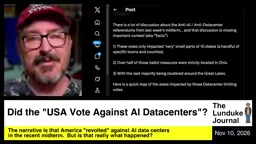
Did the US Midterms Vote No to AI Data Centers? A Map Reveals the Truth
After the US midterms, media claimed voters rejected AI data centers, but a map shows restrictive votes are concentrated in a few Ohio townships, affecting less than 1% of US towns—the national anti-AI wave is exaggerated.
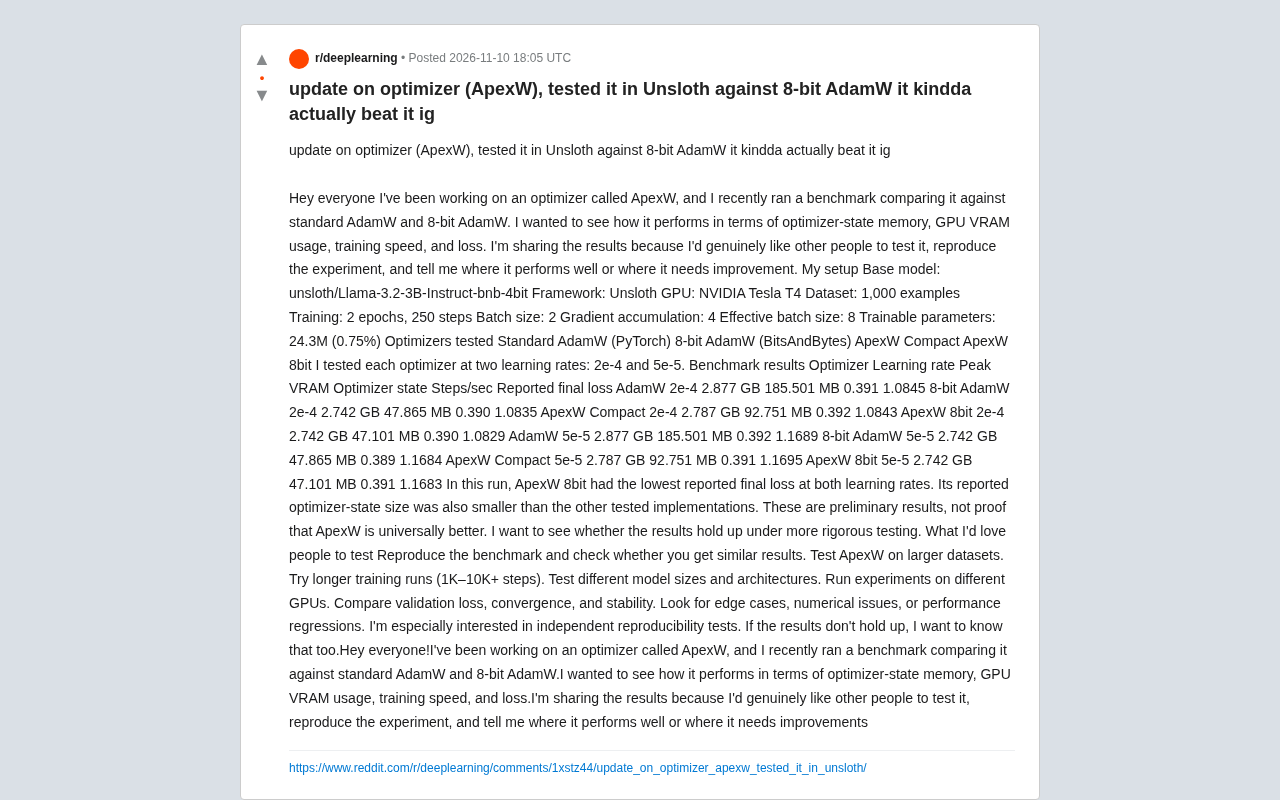
ApexW Optimizer Benchmark: Matches 8-bit AdamW in Unsloth with Lower Memory Usage
Developer shares benchmark of ApexW optimizer in Unsloth: ApexW 8bit has lower optimizer state memory (47.101 MB) and slightly better final loss than 8-bit AdamW, but similar speed. Needs independent reproduction.

US Computer Science Enrollment Drops 12.4% — Is CS Still Worth Studying?
CS enrollment fell 12.4% while health majors grew 6.2%. A CS master's grad explains why the degree's real value isn't coding but systems thinking.