Meta Employees Accuse Company of Interfering in Brazilian Elections: Algorithm Regulation Sparks Renewed Controversy
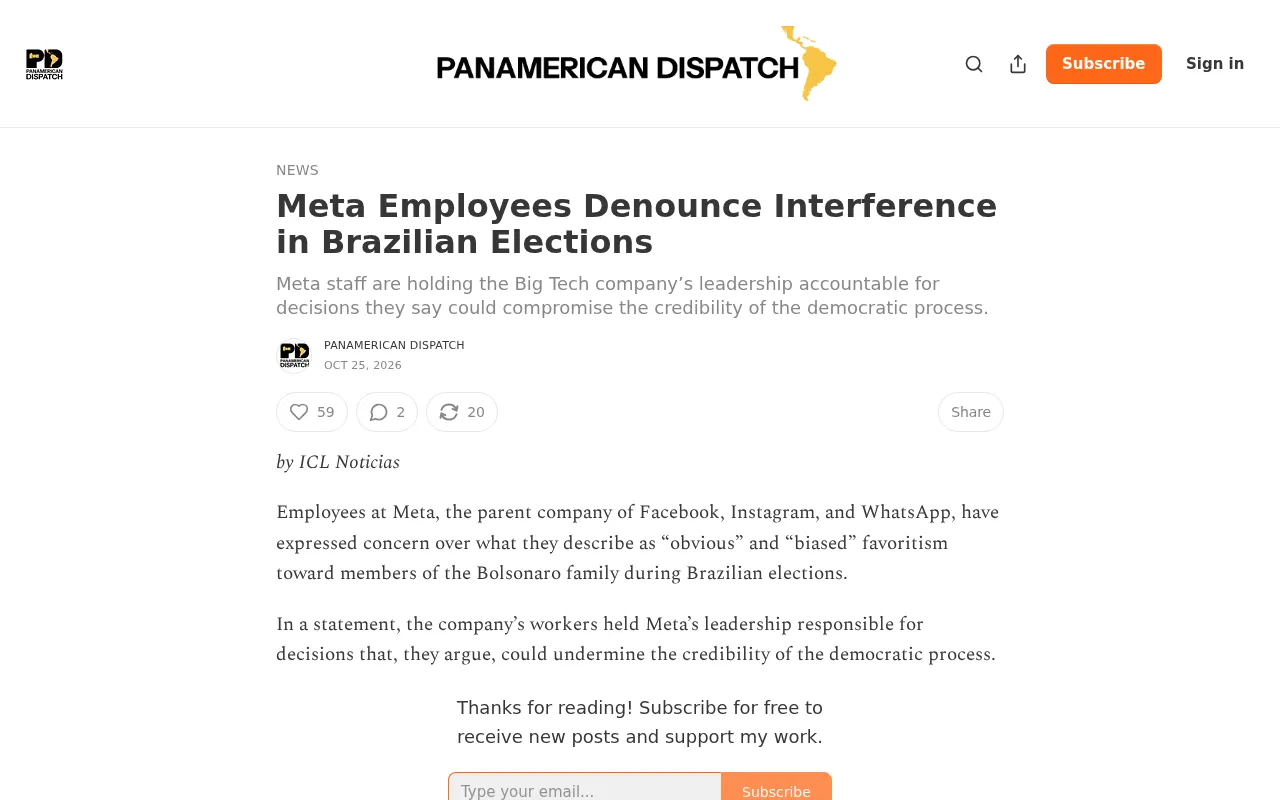
Meta employees publicly accuse the company of interfering in Brazilian elections, sparking controversy over platform governance transparency.
Some Meta employees publicly accused the company of improper interference in Brazil election-related content, triggering hundreds of comments on Hacker News. The controversy has shifted from technical compliance to value conflicts within the organization: employees can observe rule implementation up close, and their questioning carries more impact than external speculation. The article notes that deviations in any link—recommendation algorithms, moderation rules, or political ad systems—can be interpreted as systematic interference, and AI-driven decisions embed designers' value trade-offs. The incident exposes the transparency dilemma of platform governance—algorithm details cannot be disclosed, yet excessive secrecy breeds distrust. Employee voices become an informal accountability pathway, but long-term solutions still require institutionalized external audits and algorithmic accountability mechanisms.
On Hacker News, a report from Pan-American Dispatch garnered over two hundred upvotes and hundreds of comments. The headline directly points to Meta employees publicly accusing the company of interfering in Brazilian elections. This is not the first time Meta has been in the hot seat over election-related content governance, but the dimension of "employees collectively speaking out" shifts the issue from a technical compliance problem to a value conflict within the organization.
The Core of the Incident: Why Employees Spoke Up
According to the Pan-American Dispatch report, some Meta employees expressed concerns through public channels about how the company handled Brazil election-related content, alleging improper interference in content recommendation, moderation, or political ad placement. The report uses employee voices as its core source but does not disclose specific technical details or internal documents in its summary.
The Hacker News comment section quickly split into two camps: one side argued that social media platforms' influence on elections has long exceeded reasonable boundaries and that employees have the right to dissent; the other questioned the vagueness of the employees' allegations, arguing that verifiable evidence is lacking and that position-taking comes first. This divide itself reflects long-standing external distrust of platform governance transparency.
Algorithmic Election Interference: A New Variant of an Old Controversy
The role of social media platforms in elections has always walked the line between "maintaining the information ecosystem" and "interfering in public discussion." Recommendation algorithms determine what users see, moderation rules determine what content gets downranked or removed, and political ad systems directly affect the reach efficiency of campaign communications. Any deviation in any of these links can be interpreted as systematic interference.
Meta has previously established dedicated content governance teams and emergency mechanisms for elections in multiple countries worldwide. But when internal employees speak out in accusation, it suggests the focus may not be on whether mechanisms exist, but on how they are executed, who oversees them, and whether the decision-making process is transparent. The special position of employees is that they can observe rule implementation up close, and their public questioning carries more impact than speculation by external observers.
Political Ad Systems: Meta's political advertising system includes advertiser identity verification, labeling of issue/election ads, and placement restrictions set by country/region. Platforms typically require political ads to disclose funding sources and set "election silence periods" or restrict new political ads before a country's election. But moderation relies on a combination of automated classifiers and human review, and both false positives and false negatives can occur: ads incorrectly approved may amplify disinformation, while ads incorrectly blocked may be accused of biased suppression. For this reason, political ad placement rules, enforcement consistency, and appeal mechanisms are key observation points for outsiders judging whether a platform is "interfering."
Warnings for AI Content Governance
The impact of this incident extends beyond the Brazilian elections themselves. Meta is increasingly delegating content moderation and recommendation decisions to AI systems. The selection of model training data, the setting of classifier thresholds, and the prioritization of political content all embed the value trade-offs of designers and operators. When employees point to "interference," what they are actually pointing to are the human choices behind these technical decisions.
For the AI industry, this is a classic transparency dilemma: platforms cannot disclose algorithm details (to prevent manipulation), but excessive secrecy breeds distrust. Employees speaking out publicly is an informal externalization pathway that exposes internal disputes to the public and forces the organization to respond. But this approach itself relies on employees' professional courage rather than institutionalized oversight mechanisms.
Classifier Thresholds and Downranking: Content moderation systems typically use machine learning classifiers to assign each piece of content a "violation probability" score, then use thresholds to decide whether to remove, downrank, or send for human review. Lowering the threshold increases recall but also increases false positives; raising it does the opposite. This seemingly purely technical parameter choice actually determines which types of political expression are more likely to be restricted. The same applies to recommendation systems: the weight that ranking models assign to "political content" and their preference for "trusted sources" systematically affect visibility. Therefore, when employees allege "interference," they are often pointing to human decisions behind these parameters and weights that lack public explanation, rather than malicious intent in the code itself.
Observation: The Trust Deficit Is Harder to Fix Than Technical Flaws
The relatively high discussion volume on Hacker News indicates that the developer community remains sensitive to platform governance topics. But as of now, the incident remains at the level of employee statements and media reports. Whether Meta officially responds and whether specific allegations enter investigation procedures remains unclear.
More noteworthy is the long-term trend: every election controversy depletes the stock of trust between platforms, regulators, and the public. While AI-driven recommendation and moderation systems improve efficiency, they also make the question of "who decides what content should be seen" more opaque. Employee accusations may only be the beginning; real solutions still require institutionalized external audits and algorithmic accountability mechanisms.
One-line Summary
Meta employees publicly accuse the company of interfering in Brazilian elections, sparking controversy over platform governance transparency.
Paragraph Summary
Some Meta employees publicly accused the company of improper interference in Brazil election-related content, triggering hundreds of comments on Hacker News. The controversy has shifted from technical compliance to value conflicts within the organization: employees can observe rule implementation up close, and their questioning carries more impact than external speculation. The article notes that deviations in any link—recommendation algorithms, moderation rules, or political ad systems—can be interpreted as systematic interference, and AI-driven decisions embed designers' value trade-offs. The incident exposes the transparency dilemma of platform governance—algorithm details cannot be disclosed, yet excessive secrecy breeds distrust. Employee voices become an informal accountability pathway, but long-term solutions still require institutionalized external audits and algorithmic accountability mechanisms.
Related articles

Gemini 4 Carbon Tops AI Benchmark, 72% Cheaper Than Leader
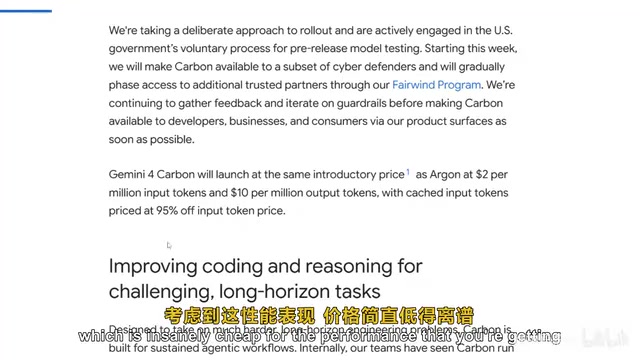
Google DeepMind releases Gemini 4 Carbon, topping the Archital Analysis Intelligence Index B5 with 59 points and Arena text leaderboard with 1528. Median task cost is only $80, 72% lower than leader Cloud Office 1.5.
Gemini 4 Carbon Hands-On: The Strongest AI Model? Compared with Claude Opus 5.5
Google's Gemini 4 Carbon tops the Artificial Analysis leaderboard with 71% on CW Bench and leads Vending Bench. Hands-on comparison with Claude Opus 5.5: stunning front-end design but slightly behind in web development, with a clear price advantage.

Gemini 4 Carbon Tops Global Rankings as AI Productivity and Open-Source Ecosystems Surge
Google DeepMind's Gemini 4 Carbon tops global benchmarks, built for complex agents and system security. ByteDance launches Doubao Work integrated with Feishu, Anthropic's AI autonomously breaches 5 system-level attack chains, and ModelBest and Fudan open-source on-device multimodal and image generation models.