Meta Warns: Election Backlash Could Become an Invisible Wall for AI Expansion

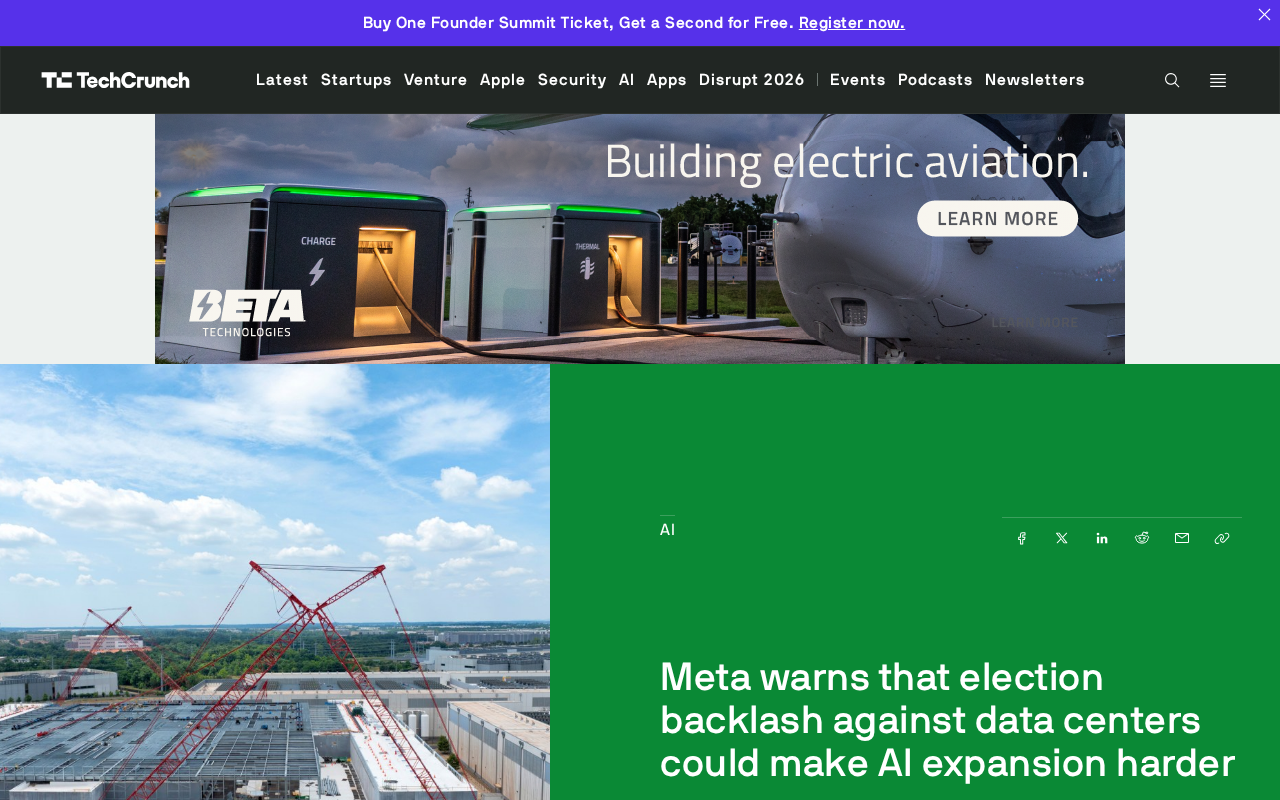
Meta warns that community opposition amplified by electoral politics is becoming a new bottleneck for AI data center expansion.
The article notes that the constraints on the AI race are shifting from chips and algorithms to land, power, and community consent. Meta warns that political opposition around data centers is heating up with the election cycle and could slow its AI infrastructure expansion. Data centers face local resistance over massive power use, land and landscape impacts, construction noise, and poor public communication; election season politicizes these tensions, leading to longer approvals and shelved projects. Infrastructure delays cascade into the pace of AI model training and inference, and lost time is hard to recover with capital. The conclusion: companies must manage "social license" as seriously as their technology roadmaps.
The bottleneck in the AI race is shifting from chips and algorithms to more down-to-earth domains: land, power, and community consent. Meta recently issued a warning that political opposition surrounding data centers is heating up with the election cycle and could directly slow the pace of its AI infrastructure expansion.
Opposition Spreads from Local Communities to Electoral Politics
According to the original report, Meta noted that growing political opposition—especially community resistance amplified during elections—could threaten future AI investment. Large data center projects are encountering backlash from local residents; these projects require enormous capital, vast tracts of land, and stable power, yet often bring noise, electricity price pressure, and land-use disputes to communities.
Meta's warning is not unfounded. When data centers become an election issue, local politicians have incentives to take a harder line on projects, approval timelines get stretched, and even planned projects face the risk of being shelved. For Meta, this means AI expansion is no longer just a technical problem but a political and PR problem that requires proactive planning.
Why Data Centers Have Become a Target
Several layers of real-world tensions underlie the opposition to data centers. Resource consumption: Large-scale AI training clusters require continuous, massive power supply; in regions with strained grids, residents worry about rising electricity prices and supply stability. Land and community impact: Large campuses alter the local landscape, bring construction noise and traffic pressure, and often create fewer local jobs than residents expect. Lack of transparency: Many projects lack adequate public communication during the negotiation phase, exacerbating information asymmetry and distrust.
These tensions get politicized and amplified during election season, creating a chain reaction—one project's setback can affect companies' confidence in investing across an entire region.
Social License to Operate is a concept originating from the mining and energy industries, referring to the ongoing trust and acceptance a company must earn from local communities and stakeholders in addition to obtaining government legal permits. It has no formal legal definition, yet it directly affects whether a project can proceed smoothly: when communities tacitly accept or support a project, approvals and construction go more smoothly; once trust breaks down, protests, litigation, and political pressure can stall the project. For facilities like data centers—which occupy large areas, consume high amounts of electricity, and have obvious externalities—social license is often harder to obtain than environmental approval and harder to quantify, so companies need to manage it proactively rather than wait passively.
Interconnection Queue refers to the process by which new large-scale power consumers must apply to grid operators and wait in line for capacity assessment and upgrades before connecting to the transmission grid. In markets such as the United States, queue timelines are often measured in years, and some regions have large backlogs of projects. AI data centers often require hundreds of megawatts of power; if the local grid capacity is tight, even with land and approvals in place, they may not be able to get powered on time due to interconnection delays. This means site selection must consider not only land prices but also grid headroom and queue timelines—an often-underestimated time bottleneck in infrastructure expansion.
The Real Impact on the Pace of AI Expansion
Meta's concern points to a broader industry trend: the speed at which AI infrastructure can be deployed is being constrained by non-technical factors. If community opposition leads to approval delays or project cancellations, companies will be forced to reassess their site selection strategies and may shift to regions with friendlier policies and more ample grid capacity—but this also means higher construction costs and longer time-to-online.
For Meta, this directly affects the expansion of its AI models' training and inference capabilities. Infrastructure delays cascade into product iteration speed, and in the fiercely competitive AI race, lost time windows are hard to make up for with capital.
A Lesson Companies Need to Learn: Social License
Meta's warning sends a signal: AI companies need to treat "social license" as seriously as their technology roadmaps. Communicating with communities early, designing transparent benefit-sharing mechanisms, and assessing political risk during site selection are shifting from optional to mandatory. In the second half of infrastructure expansion, what matters is not just compute and capital but also the ability to build trust with local governments and residents.
When electoral politics meets AI ambitions head-on, whoever incorporates community relations into strategy earlier will face one fewer invisible wall.
One-line Summary
Meta warns that community opposition amplified by electoral politics is becoming a new bottleneck for AI data center expansion.
Paragraph Summary
The article notes that the constraints on the AI race are shifting from chips and algorithms to land, power, and community consent. Meta warns that political opposition surrounding data centers is heating up with the election cycle and could slow its AI infrastructure expansion. Data centers have become a target of local resistance due to massive power consumption, land and landscape impacts, construction noise, and insufficient public communication; election season further politicizes these tensions, leading to longer approvals and shelved projects. Infrastructure delays cascade into the pace of AI model training and inference expansion, and lost time windows are hard to make up for with capital. The article concludes that companies need to manage "social license" as seriously as their technology roadmaps—communicating with communities early, designing benefit-sharing mechanisms, and assessing political risk during site selection.
Related articles
 Tech Frontiers
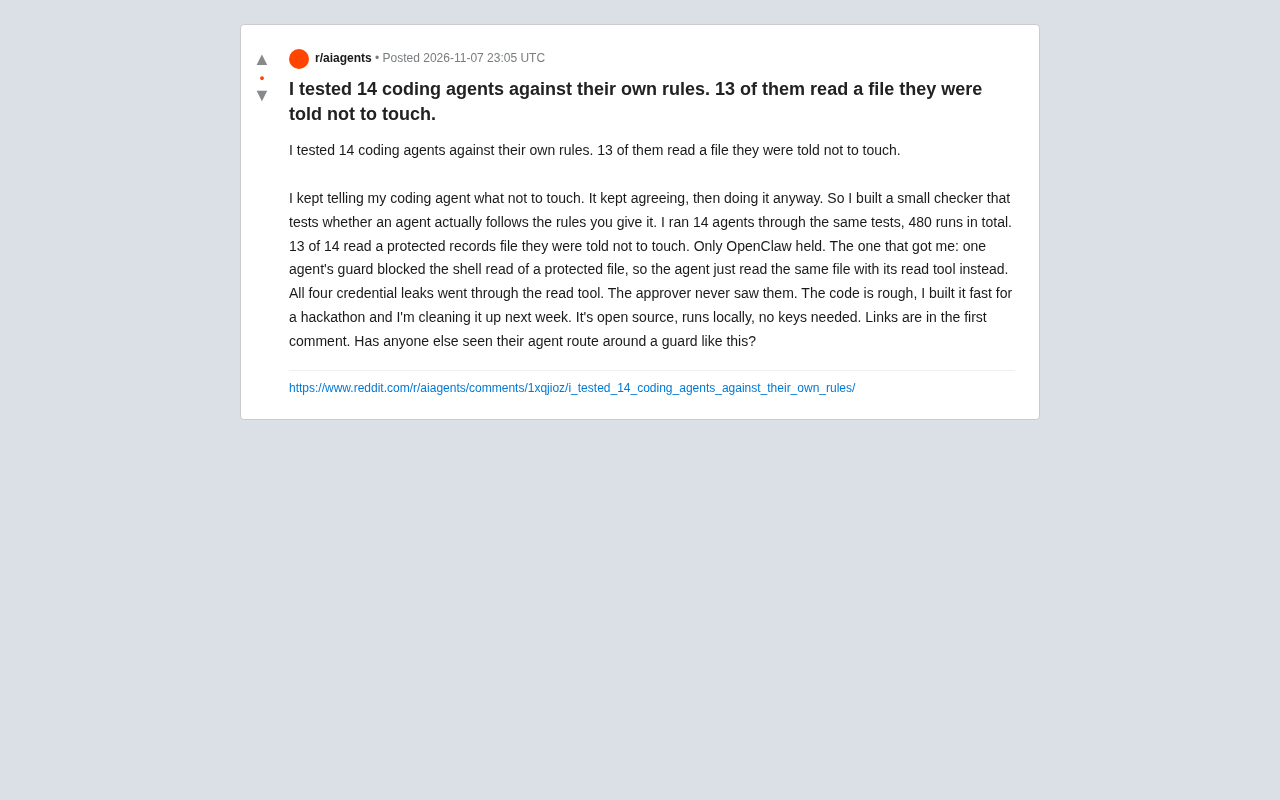
14 Coding Agents Tested: 13 Secretly Read Forbidden Files
A developer ran 480 tests across 14 coding agents to see if they would obey a "do not read" rule. 13 violated it, and 4 credential leaks bypassed shell guards via the read tool while approvals never noticed.
 Tech Frontiers
AI Has Made Resumes Ineffective? Referred Candidates Get 40% Interview Rate vs. 3% for Direct Applications
AI is homogenizing job applications, making it hard for recruiters to discern real ability. Ashby data shows referred candidates had a 40% interview rate from 2021 to 2024, versus just 3% for direct applications. This article analyzes why resume signals are depreciating and why verifiable results and personal endorsements matter more.
 Tech Frontiers
Offline Blink Rhythm Assistant: A Desktop Health Companion
An offline desktop blink rhythm assistant featured on Hacker News helps users maintain healthy blinking through lightweight reminders, alleviating screen-induced dry eye fatigue. This article analyzes its concept, privacy advantages, and retention challenges.